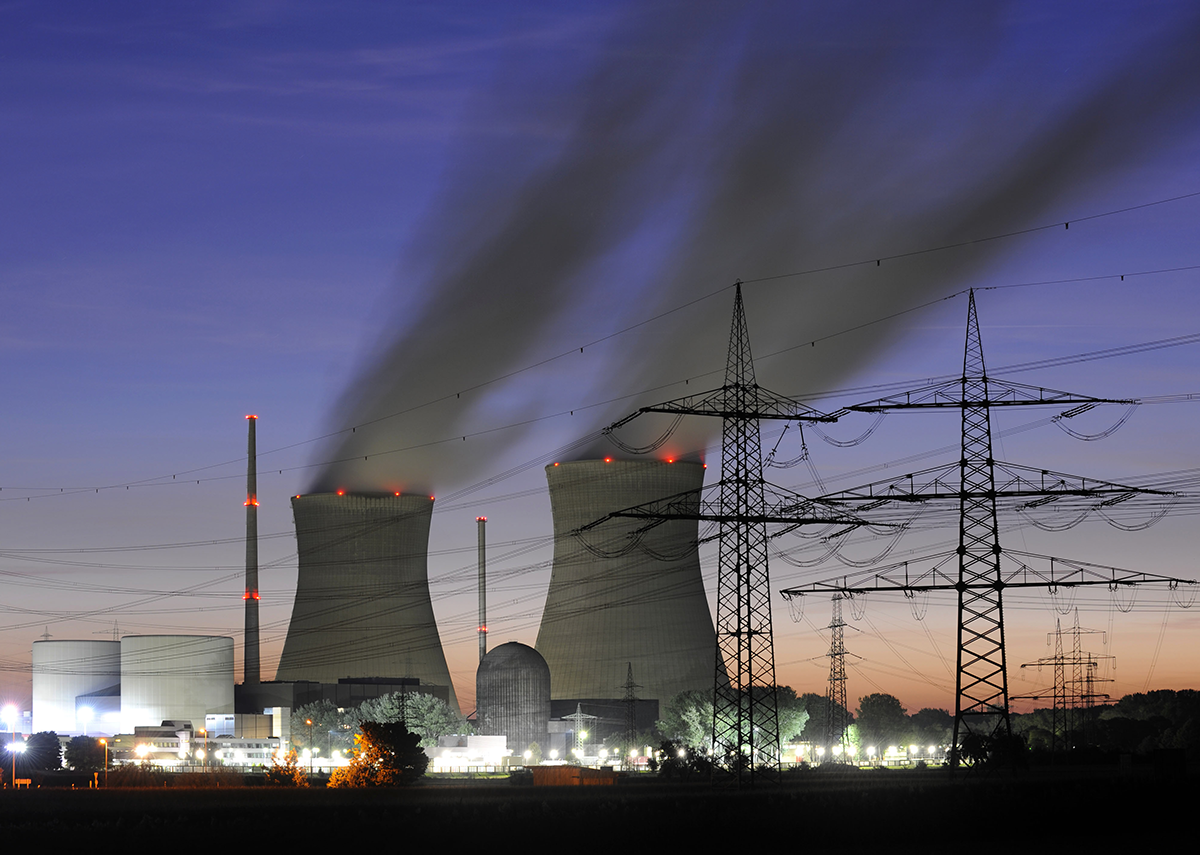
Nuclear power generation with its associated costs – Image: Wolfilser|Shutterstock.com
The social costs of nuclear and coal-fired power are currently up to three times higher than the costs of electricity from renewable energy sources
The costs of electricity generation from coal-fired and nuclear power plants tend to be underestimated in the public perception, while the costs of electricity generation from renewable energies tend to be overestimated.
Rising energy costs in Germany are fueling calls for extending the operating lives of the remaining nuclear power plants. As the graphic based on a study by the Forum for Ecological and Social Market Economy (PDF download) shows, the overall societal costs of nuclear power are higher than those of any other form of electricity generation. These total costs include not only the market price and government subsidies, but also consequential costs such as environmental, climate, and health damage. Besides nuclear energy, electricity generation from hard coal and lignite is also associated with significantly higher overall societal costs than electricity generation from wind and solar power. For example, the use of wind energy incurs only one-third of the overall societal costs caused by lignite.
After three nuclear power plants in Germany were shut down last year, three plants are currently still in operation. According to the Atomic Energy Act, the three newest reactors will be shut down by the end of 2022 at the latest. However, a debate has been ongoing since January of this year regarding the sustainability of electricity from nuclear and gas-fired power plants. The background: On New Year's Day, the EU Commission presented a draft for sustainability criteria for investments. According to this draft, investments in new nuclear power plants can only be classified as green if the plants meet the latest technical standards and if a concrete plan for the operation of a disposal facility for highly radioactive waste is presented by 2050 at the latest.
Despite potential energy supply shortages due to Russia's war of aggression in Ukraine, Economics Minister Robert Habeck and Environment Minister Steffi Lemke already spoke out against extending the operating lives of the remaining three nuclear power plants a month ago. These plants would not be able to produce electricity until autumn 2023 at the earliest, after being refueled with newly manufactured fuel rods. Furthermore, continued operation would require a comprehensive safety review and the training of personnel for each of the three nuclear power plants.
The “hidden” costs of electricity generation make the difference
1. Government subsidies with budgetary impact (direct and indirect subsidies, such as tax breaks on energy taxes or research expenditures for technology development)
2. Non-internalized external costs (costs that must be paid by society because the polluter does not cover them, such as unpriced consequential costs due to environmental,
climate and health damage)
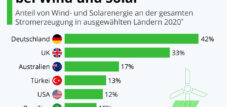
The graphic shows the total societal costs of electricity generation in Germany by energy source

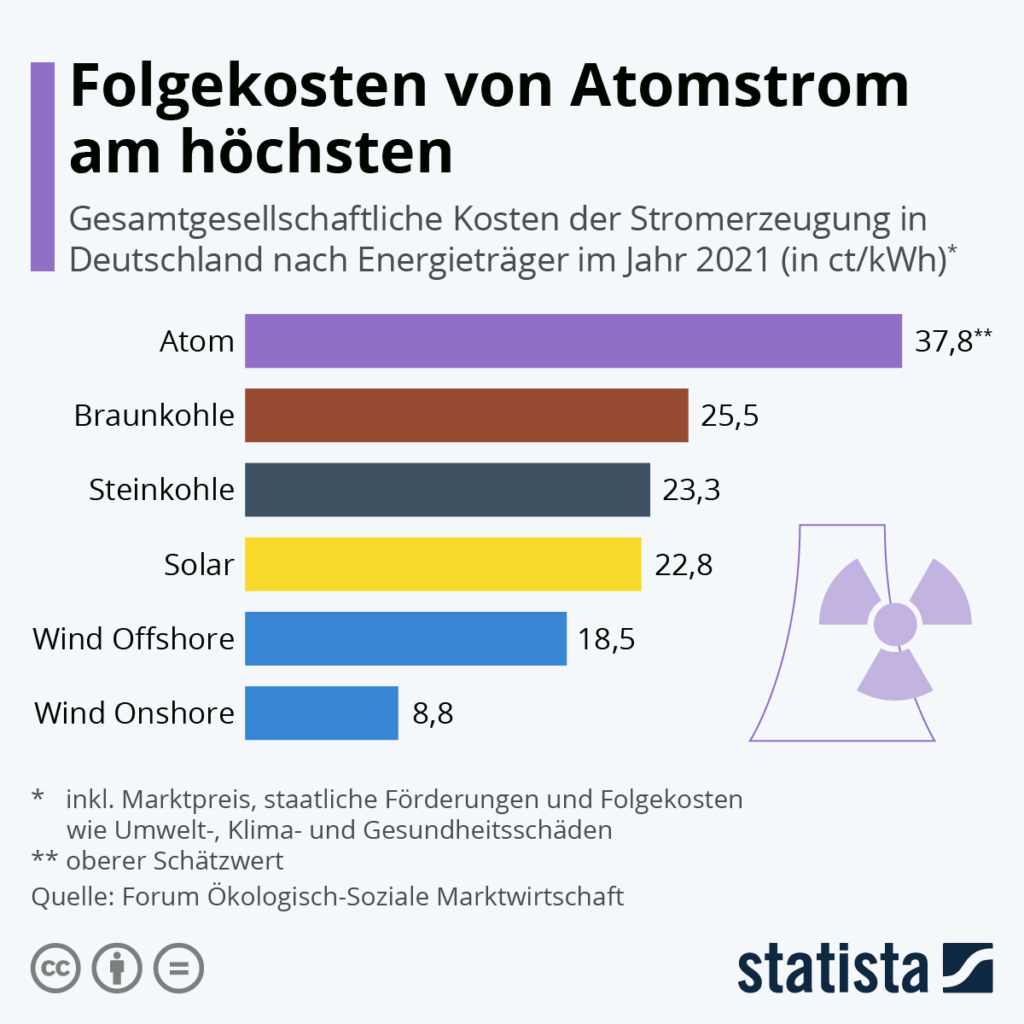
The graphic shows the total societal costs of electricity generation in Germany by energy source – Image: Statista
English Version: Consequential costs in electricity generation highest for nuclear power and coal-fired power plants
Societal costs of nuclear and coal-fired electricity today up to three times as expensive as costs of electricity from renewables. Public perception tends to underestimate the costs of electricity generation from coal-fired power plants and nuclear power plants, while the costs of electricity generation from renewables tend to be overestimated.
Rising energy costs are prompting calls in Germany for an extension of the operating lives of the remaining nuclear power plants. As the chart based on a study by the Forum for an Ecological-Social Market Economy (PDF download) shows, the overall social follow-up costs for nuclear power are higher than for any other type of power generation. In addition to the market price and state subsidies, these total costs also include consequential costs such as environmental, climate and health damage. In addition to nuclear energy, the electricity generation types from hard coal and lignite are also associated with significantly higher overall social costs than electricity generation from wind and solar energy. The use of wind energy, for example, incurs only one-third of the overall social costs that lignite does.
After three nuclear power plants were shut down in Germany last year, three power plants are currently still in operation. According to the Atomic Energy Act, the three newest reactors will be shut down by the end of 2022 at the latest. However, a debate has been going on since January of this year about how sustainable electricity from nuclear and gas-fired power plants is. Background: On New Year's Day, the EU Commission presented a draft for sustainability criteria for investments. According to this, investments in new nuclear power plants should be able to be classified as green if the plants meet the latest technical standards and if a concrete plan is presented for the operation of a disposal facility for highly radioactive waste from 2050 at the latest.
Despite possible energy supply bottlenecks due to the Russian war of aggression in Ukraine, Economics Minister Robert Habeck and Environment Minister Steffi Lemke already spoke out a month ago against extending the operating lives of the remaining three nuclear power plants. These would not be able to produce electricity until fall 2023 at the earliest, after being filled with newly manufactured fuel rods. Continued operation would also involve extensive safety testing and staff training for each of the three nuclear plants.
“Hidden” costs of electricity generation make the difference
1. government subsidies with budgetary impact (direct and indirect subsidies, such as energy tax credits or research expenditures for technology development).
2. non-internalized external costs (costs that have to be paid by society because the polluter does not pay for them, eg non-priced consequential costs due to environmental,
climate and health damage)
Write to me


Xpert.Digital – Konrad Wolfenstein
Xpert.Digital is a hub for industry focusing on digitalization, mechanical engineering, logistics/intralogistics and photovoltaics.
With our 360° Business Development solution, we support renowned companies from new business to after-sales.
Market intelligence, smarketing, marketing automation, content development, PR, mail campaigns, personalized social media and lead nurturing are part of our digital tools.
You can find more information at: www.xpert.digital – www.xpert.solar – www.xpert.plus
Keep in touch