Why decades-long top rankings for terms like "buffer storage" are collapsing – and what this really means for B2B publishers – Image: Xpert.Digital
SEO earthquake in B2B: Why Wikipedia & Co. suddenly crash when searching for technical terms
The "buffer warehouse" phenomenon: What a logistics term reveals about Google's future
Encyclopedias are dying a double death: How Google updates and AI are destroying the old SEO formula
For years, an unwritten, seemingly immutable rule prevailed in the world of search engine optimization: anyone wanting to rank for industry-specific terms needed a short, precise definition, an established domain, and a massive number of backlinks. Online encyclopedias and glossaries were the undisputed leaders on the first page of search results. But that era is definitively over. The unassuming logistics term "buffer warehouse" exemplifies a quiet but radical revolution in Google search results (SERPs).
Driven by profound algorithm adjustments—from the Helpful Content Update to the massive Core Updates of 2024, 2025, and 2026—Google is fundamentally restructuring the internet. Sheer backlink volume and superficial dictionary entries are giving way to genuine experience (EEAT), thematic depth (Topical Authority), and AI-generated answers (AI Overviews). For B2B publishers, industrial companies, and niche portals, this upheaval marks nothing less than the end of the classic click economy. At the same time, it opens up a historic opportunity: those who replace mere definitions with genuine, practical expertise can break the former dominance of the Wikipedia-like giants. This article analyzes the forces behind this change and shows which strategies will enable B2B platforms to emerge as winners in the new SEO reality.
From the encyclopedia to number one: A brief look back at what worked for a long time
Experience beats backlinks: This is how B2B publishers now dominate Google search
Anyone who entered a technical term like "buffer storage" into Google in the 2000s and early 2010s would have encountered a virtually unchanging landscape in the top ten results: Wikipedia usually reigned supreme in first place, followed by the Gabler Business Dictionary, supplemented by entries on business portals, industry glossaries, sector dictionaries, and occasionally company websites with multi-page definitions. These providers shared a common strategy: They offered short, precise definitions in a dictionary-like format, garnished with a massive backlink profile that had been built up organically or through active link building over the years. The result was a remarkable stability in the SERP landscape, which seemed almost frozen for many search terms in the industrial and logistics sector. Competition from medium-sized businesses or specialized industrial suppliers barely penetrated this top-ten stronghold.
The underlying mechanics were simple and had been taught by generations of SEO practitioners: Whoever provided a clear, well-structured definition, accumulated a massive number of backlinks from thematically related pages, and operated on a strong domain ranked well—regardless of whether their content truly met modern user needs. Statistically, results in the top spot had 3.8 times more inbound links than those in positions two through ten. The marketplace for visibility was effectively closed in many niches, including industrial terminology from logistics and production.
What a buffer stock is – and why this term is a good lesson for SEO
In logistics terms, a buffer warehouse is a short-term storage facility located between two successive production processes or transport stages. It compensates for differing processing speeds, buffers delivery delays or fluctuations in demand, and ensures a continuous flow of materials – particularly in automated intralogistics environments. Terms such as short-term storage, balancing storage, or intermediate storage are often used synonymously, creating a broad semantic search intent. Typical applications include production lines, order picking systems, distribution centers, and the receiving and shipping areas of industrial plants.
This term is particularly well-suited for SEO analysis because it combines several characteristics that are especially interesting in the search engine ecosystem: It is informational in nature, thus ideally suited for dictionary entries; it originates from the B2B sector with comparatively low search volumes but high target group relevance; and for years it was the domain of the same providers. At the same time, it represents thousands of industrial terms from logistics, manufacturing, supply chain, and intralogistics, where similar patterns can be observed. What happened with "buffer storage" is not an isolated case—but rather a symptom of a systemic shift in the ranking ecosystem.
The upheaval: Which forces destabilized the old power structures
The first significant impetus came with the Helpful Content Update, which Google rolled out gradually starting in August 2022 and, through several iterations, finally integrated as a standalone ranking signal into its core algorithm by the March 2024 Core Update. This step was more than a technical update: it marked a philosophical shift. Google officially committed to no longer favoring the page with the most backlinks or the oldest domain, but rather the page that best addresses a specific information need. Content written primarily for search engines and not for people was to be identified and penalized.
The March 2024 Core Update was the most comprehensive to date: With a duration of 45 days and the simultaneous rollout of a spam update introducing new guidelines against Expired Domain Abuse, Scaled Content Abuse, and Site Reputation Abuse, Google took a multi-pronged approach. Google stated its goal of reducing low-quality content in search results by up to 40 percent. According to SISTRIX data, the update hit news and advice portals, glossary sites, and encyclopedias particularly hard—precisely those formats that had dominated for informational keywords for years. For many publishers and operators of encyclopedic resources, this marked the beginning of an era of declining visibility, the end of which is not yet in sight.
In addition, the December 2025 Core Update fundamentally changed the ranking logic once again. According to an analysis by SISTRIX, Wikipedia experienced the largest absolute decline of all German domains in the entire search index in the first quarter of 2026, with a drop of 370.77 visibility points – despite Wikipedia still maintaining by far the largest presence on the German internet with over 7,000 points. This decline illustrates that even platforms with a virtually unbeatable backlink profile and decades of trust history are not immune to algorithmic re-evaluation.
EEAT: When experience becomes more important than backlink quantity
The concept that has most profoundly changed the SEO world is called EEAT – Experience, Expertise, Authoritativeness, and Trustworthiness. Google originally formulated this quality framework in its Quality Rater Guidelines, added the dimension of "Experience" in 2022, and made it a central evaluation criterion by 2024 at the latest, directly impacting ranking signals. The addition of "Experience" is crucial: it requires that it be evident that content has emerged from genuine, practical engagement with the topic – not from simply copying definitions or summarizing other sources automatically.
In the context of the technical term "buffer bearing," this means that a page providing a correct lexical definition but lacking application knowledge, case studies, practical examples from real-world production environments, contextualization within current automation debates, or verifiable expertise will be increasingly penalized by Google's algorithm. Conversely, a mechanical engineering company, an intralogistics systems provider, or a B2B publication platform with proven industry know-how can deliver precisely those EEAT signals that traditional encyclopedias structurally lack. Authorship, manufacturer logos, linked case studies, and author profiles with demonstrable expertise—all of these are now ranking-relevant signals.
The March 2026 Core Update significantly amplified this trend. According to SE Ranking, 79.5 percent of the top three positions in Germany shifted during the rollout, with pages lacking clear EEAT signals being hit the hardest. Pages with original data gained an average of 22 percent in visibility after the update, while AI-paraphrased content lost up to 71 percent of its traffic. The algorithm rewards depth, originality, and demonstrable experience—and systematically penalizes redundancy.
The backlink structure: Another ranking factor, but no longer a free pass
For a long time, the sheer number of backlinks was considered the decisive differentiator between the perennial top ten search engines and the rest of the world. This logic hasn't disappeared, but it has shifted. Backlinks will remain a top-three ranking factor for Google in 2025 and 2026. However, the weighting has fundamentally changed: the quality and thematic relevance of the linking pages far outweigh the sheer quantity. A single high-quality, specialized link from a relevant industry association, a manufacturer of automated warehouse systems, or a respected logistics publication can have a greater impact than a dozen generic directory links or guest articles on thematically unrelated platforms.
At the same time, since the March 2024 Spam Update, Google has been rigorously cracking down on so-called expired domain abuse – the practice of buying and redirecting expired domains with historical backlink profiles to quickly gain authority. For years, this tactic had supported encyclopedias and glossary pages on old domains with seemingly organically grown link structures. With the new spam policy, such fabricated authority signals drastically lose their effectiveness or even trigger algorithmic penalties. The consequence: Anyone who had built their previous ranking position on such foundations now finds themselves without a viable base.
Interestingly, 73.2 percent of SEO professionals surveyed in recent studies believe that backlinks also influence the likelihood of appearing as a source in AI-generated search results (AI Overviews). This broadens the strategic horizon: Those working on a robust, thematically coherent backlink profile today are not only investing in traditional rankings but also positioning themselves as a citable source for the AI-generated search communication of the future.
🎯🎯🎯 Data-driven B2B industry hub as a quasi-in-house solution

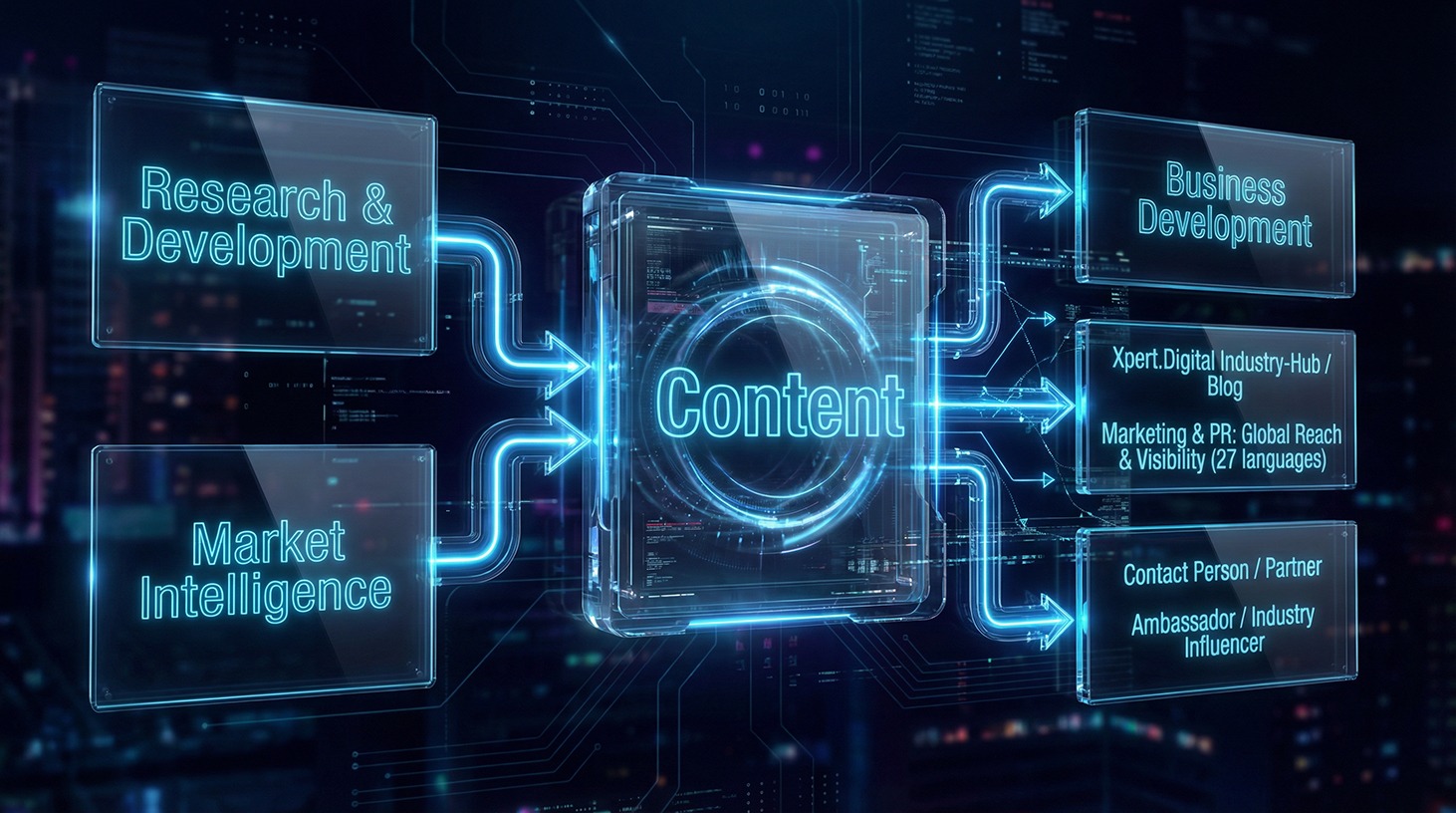
The quasi-in-house solution: How Xpert.Digital closes operational gaps in B2B marketing and sales – Smart Content-Driven Business - Image: Xpert.Digital
Xpert.Digital is a data-driven B2B industry hub led by Konrad Wolfenstein . The company acts as an external, quasi-in-house solution for industrial partners, closing operational gaps in marketing, content, and sales – without requiring additional resources on the client side.
More information here:
Topical Authority: The strategy that replaces encyclopedias
AI Overviews and the end of the click economy: Encyclopedias are dying a double death
In addition to the structural pressure from algorithm-driven re-evaluations, a new threat has emerged since March 26, 2025, striking at the very core of the model of informational terminology pages: Google AI Overviews. These AI-generated summaries appear above the organic search results and provide users with condensed answers from multiple sources – without requiring a click on an external website. A comprehensive SISTRIX analysis revealed that the click-through rate (CTR) for organic results drops from 27 to 11 percent due to AI Overviews, which translates to a loss of 265 million organic clicks per month in Germany alone.
Informational search queries are particularly hard hit – precisely the category that includes terms like "buffer storage." The SISTRIX analysis quantifies the loss of clicks on Wikipedia alone, caused by AI Overviews, at up to 31.6 million clicks per month in Germany. A platform that has dominated dictionary entries for decades is therefore not only losing its ranking position, but even if it still appears in the top ten, it is generating significantly less traffic than before. The model that worked for years – write a definition, collect backlinks, maintain a top ranking, and harvest traffic – is damaged from two sides: lower rankings and fewer clicks per remaining ranking.
For purely definitional short content, this means the end of the classic traffic model. Anyone who wants to succeed in such an environment in the future must provide content that goes beyond the purely lexical – content that AI cannot fully summarize in a single paragraph because it offers depth, context, practical application, and differentiation, giving users a real reason to actually click on the page.
Topical Authority as a new paradigm: breadth and depth instead of individual definitions
The transformation in SEO can be summarized in a term that is gaining increasing importance in the professional world: Topical Authority. Google no longer evaluates individual pages for individual keywords, but assesses whether an entire domain is considered a thematic authority for a field of knowledge. Someone who covers the topic of "buffer storage" with only a single definition page sends Google a weak signal. In contrast, someone who has built a networked content offering consisting of pillar pages, cluster articles on automated buffer storage, FIFO principles, intralogistics automation, warehouse management software, and application examples from the automotive or food retail industries, supplemented by case studies and interviews with logistics experts, sends a strong authority signal to the algorithm.
Analyses show that multi-page content hubs rank for an average of 40 percent more related search queries than isolated single pages. The hub-and-spoke model—a central pillar page connected to specific cluster articles via bidirectional internal links—achieves approximately 25 percent higher rankings for thematically clustered keywords than unconnected single pages, according to consistent SEO studies. This architectural principle benefits B2B industry publications that have built thematic depth across a broad range of industries—the exact opposite of the encyclopedia model, which relied on isolated, concise definitions.
For the SERP landscape for industrial terms like "buffer storage," this signifies a fundamental shift. The top ten results are increasingly dominated not by universal dictionary domains, but by specialized B2B industry hubs, manufacturers of storage and conveyor technology, intralogistics portals, and trade journalism platforms. These new players owe their visibility not to a legacy of backlinks, but to genuine thematic depth, demonstrable practical expertise, and a content strategy that engages users with further information—thus sending the user signals that Google interprets as indicators of relevance and quality.
Wikis, databases and industry directories: A category under pressure
The category of online encyclopedias and glossaries is facing a fundamental reassessment of its SEO role. SISTRIX data from the first quarter of 2026 shows that wikis, databases, and business directories are more prominently represented among the biggest losers than before – even though Wikipedia, with over 7,200 SISTRIX points, is still the strongest domain in the German index. The decline is systemic: Wikipedia alone lost around 370 visibility points in the first quarter of 2026, representing a drop of almost 5 percent. The trend began with its all-time high in August 2025 and has continued steadily ever since.
The paradox is that Wikipedia is not affected by any penalty measures. The content is high-quality, the backlink structure is uniquely strong, and brand awareness is unparalleled. The decline reflects a structural problem: In 2026, the added value of a static dictionary definition is simply less for Google than the benefit of a contextually embedded, practical, and authoritative article. According to SISTRIX calculations, the March 2026 Core Update produced four times more losers than winners, with shops and traditional publishers dominating the losers – both categories that have relied heavily on informational keywords. The winning cluster, on the other hand, is dominated by official institutions, industry players with clear expertise, and platforms with authentic user signals.
The observation that Wikidata-like resources such as Wiktionary (-4.93 percent) or Britannica (-29.86 percent) also recorded losses in the SISTRIX index in Q1 2026 underlines that this is not a random market fluctuation, but an algorithmically driven devaluation of the pure definition format.
The paradigm shift in numbers: What the update history teaches us
The chronology of Google's algorithm updates since 2022 reads like a systematic dismantling of the old ranking order. The Helpful Content Update (August 2022) provided the initial impetus. The December 2022 global rollout and the September 2023 update refined the classification of "unhelpful content." The March 2024 Core Update combined new spam guidelines with a fundamental overhaul of the core ranking systems. The August 2024 Core Update responded to feedback from small, independent publishers and attempted to rehabilitate genuine quality content.
The December 2025 Core Update is described as one of the most volatile in Google's history: Dozens of publishers reported traffic collapses of 70 to 85 percent, Google Discover lost up to 98 percent of impressions for many news sites, and the SISTRIX Update Radar recorded peak values of 3.54 points. Finally, the March 2026 Core Update—the first comprehensive Broad Core Update of the year—left measurable ranking changes for around 55 percent of all monitored websites, according to SISTRIX data, with four times as many losers as winners. Each of these updates has further widened the gap between purely encyclopedic content and deeply embedded specialist content.
The long-term decline in visibility of traditional publishers in Germany is also tangible in hard data: In 2024, 45 of the 100 biggest SISTRIX losers lost their status as publishers or advice portals, including business dictionaries and specialist services. According to the SISTRIX conclusion for 2024, there is unequivocally "hardly any room left on the search results page" for general publishers.
What remains, what disappears: Strategic consequences for B2B content platforms
The SEO shift regarding terms like "buffer storage" isn't the end of visibility for informational content—it's the end of visibility for shallow, context-free definitions lacking demonstrable expertise. Those who recognize this shift as a warning sign and draw the right conclusions gain significant strategic opportunities, especially in this environment. The displacement of the formerly dominant dictionaries creates space for players who can deliver genuine depth.
For B2B content platforms in industry, logistics, and intralogistics, this results in concrete strategic areas of action. The transformation from isolated articles to a networked topic architecture is not optional, but a fundamental prerequisite for sustained ranking. A pillar page on the topic of "buffer storage"—embedded in a semantic cluster of articles on automated storage systems, comparisons between buffer and safety stock models, FIFO and LIFO strategies, modern WMS solutions, and supply chain resilience—sends precisely the topical authority signals to Google that traditional, isolated definitions cannot structurally provide. Internal links, which distribute link equity between these pages, form the architectural backbone of visibility.
Furthermore, EEAT signals are gaining importance as direct ranking factors: Prominent author profiles with verifiable industry backgrounds, linked reference projects, and the inclusion of practical insights from the industry highlight content that falls short of generic definitions. According to analyses, pages appearing as sources in Google AI Overviews experience a click-through rate increase of up to 80 percent compared to regular ranking positions without source attribution. Positioning as a preferred source for AI-generated summaries has thus become an SEO goal in its own right, extending beyond the traditional click paradigm.
The new competitive advantage: authenticity, depth, and technical excellence
The shift in SEO for industrial terms like "buffer bearing" is significant. It marks nothing less than the end of a cycle in which quantitative SEO—more backlinks, broader domain authority, and shallower definitions for many keywords—was the dominant strategy. This era is drawing to a close. It is being replaced by a qualitative SEO economy where credibility, depth, structure, and user relevance are the decisive differentiators.
The December 2025 Core Update and the March 2026 Core Update didn't just initiate this shift, they completed it. Google now communicates unequivocally: rankings are no longer achieved through isolated technical measures or pure keyword optimization, but through content that is comprehensible, relevant, and user-centric. This presents an extraordinary opportunity for B2B industrial content platforms. They possess authentic expertise, networks of industry experts, and practical access to industrial use cases – in short, precisely the capital that is crucial for sustainable ranking in the post-encyclopedia era.
The irony of history is remarkable: For decades, encyclopedias and glossary portals dominated with the promise of completeness and authority. Now that algorithms are beginning to distinguish true authority, it is becoming clear that completeness without depth and authority without experience were not viable foundations. The "buffer camp" as an SEO lesson demonstrates that in the digital information space, the king is no longer the one who defines the most words, but the one who truly understands a topic—and can demonstrably prove it.
Your global marketing and business development partner
☑️ Our business language is English or German
☑️ NEW: Correspondence in your native language!

Konrad Wolfenstein
I and my team are happy to be available to you as your personal advisor.
You can contact me by filling out the contact form here wolfenstein@xpert.digital:or simply call me at +49 7348 4088 965. My email address is
I'm looking forward to our joint project.
☑️ SME support in strategy, consulting, planning and implementation
☑️ Creation or realignment of the digital strategy and digitization
☑️ Expansion and optimization of international sales processes
☑️ Global & Digital B2B trading platforms
☑️ Pioneer Business Development / Marketing / PR / Trade Fairs
B2B support and SaaS for SEO and GEO (AI search) combined: The all-in-one solution for B2B companies


B2B support and SaaS for SEO and GEO (AI search) combined: The all-in-one solution for B2B companies - Image: Xpert.Digital
AI search changes everything: How this SaaS solution will revolutionize your B2B ranking forever.
The digital landscape for B2B companies is undergoing rapid change. Driven by artificial intelligence, the rules of online visibility are being rewritten. For companies, it has always been a challenge not only to be visible in the digital mass, but also to be relevant to the right decision-makers. Traditional SEO strategies and managing local presence (geo-marketing) are complex, time-consuming, and often a battle against constantly changing algorithms and intense competition.
But what if there were a solution that not only simplified this process but also made it smarter, more predictive, and far more effective? This is where the combination of specialized B2B support with a powerful SaaS (Software as a Service) platform comes into play, specifically designed for the demands of SEO and GEO in the age of AI search.
This new generation of tools no longer relies solely on manual keyword analysis and backlink strategies. Instead, it leverages artificial intelligence to more accurately understand search intent, automatically optimize local ranking factors, and conduct real-time competitive analysis. The result is a proactive, data-driven strategy that gives B2B companies a decisive advantage: they are not only found, but perceived as the leading authority in their niche and location.
Here's the symbiosis of B2B support and AI-powered SaaS technology that transforms SEO and GEO marketing, and how your company can benefit from it to grow sustainably in the digital space.
More information here: