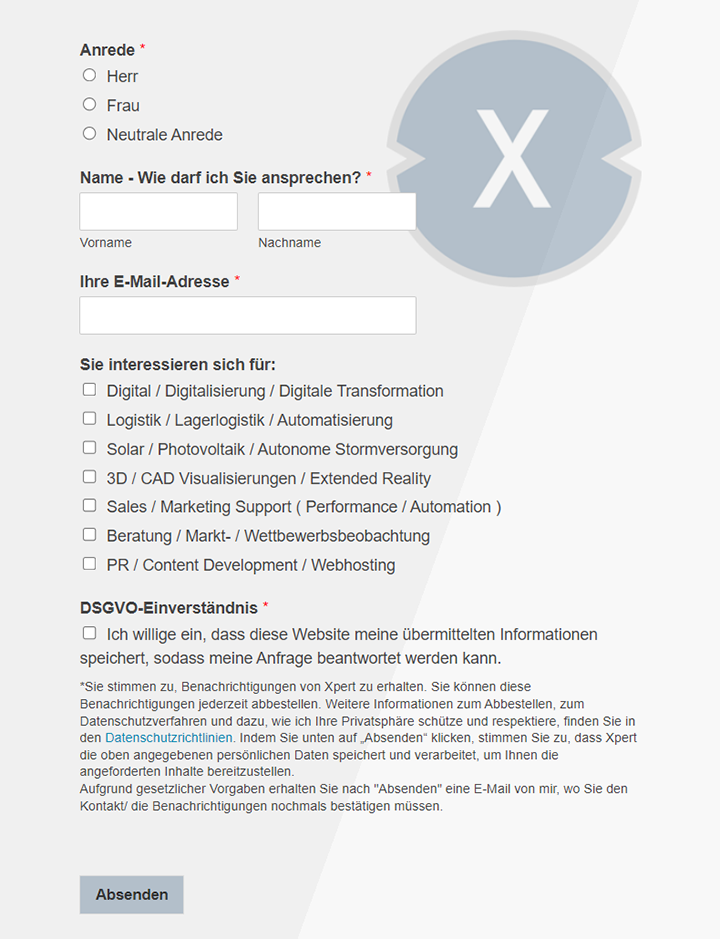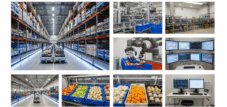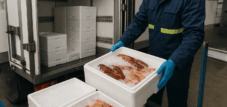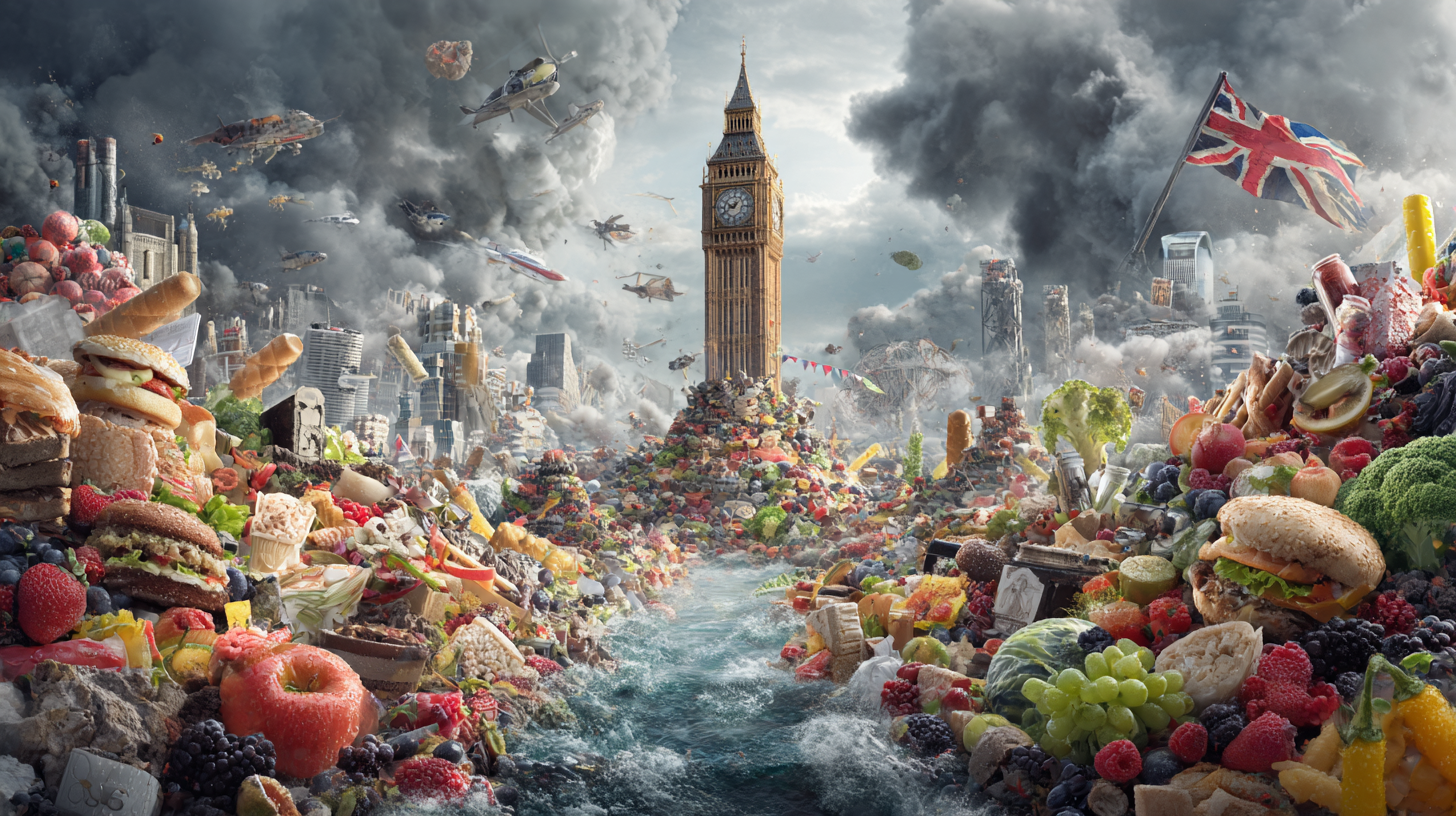
Almost half imported: These figures show how vulnerable the British food supply really is – Image: Xpert.Digital
Imports as a lifeline? The central role of cold chain logistics for the British food supply
Why is the United Kingdom dependent on imports?
The United Kingdom has become heavily dependent on imports in recent decades. The figures speak for themselves: the country imports approximately 48 percent of all the food it consumes. This dependence did not arise by chance, but is the result of various structural factors that have made the country one of the most import-dependent in Europe.
Britain's self-sufficiency rate has declined steadily. While it was over 75 percent in the 1980s, the country now produces only about 60 percent of the food it consumes. The situation is particularly dire for fresh fruit, where self-sufficiency is a mere 17 percent. For vegetables, it is 55 percent, although the country has to import 85 percent of all fresh fruit and 50 percent of its vegetables.
This development is not only the result of natural conditions, but also of deliberate economic decisions. The British climate is unsuitable for growing many products such as rice, bananas, tea, or cocoa, for which the country is entirely dependent on imports. But even for products that could theoretically be grown domestically, market conditions have evolved in such a way that imports are often more economical.
How has import dependency developed?
The trend toward increased import dependency has accelerated further in recent years. Experts are already warning of a drop in the self-sufficiency rate to a dangerous 50 percent. This development is driven by various factors that go far beyond climatic constraints.
Paradoxically, Brexit has not reduced import dependency but has created new challenges. Although leaving the EU was portrayed as an opportunity to strengthen domestic agriculture, EU countries remained the most important suppliers. In 2023, 24.2 percent of all British food imports came from the EU, with the Netherlands, Ireland, Germany, and France being the main suppliers.
While import sources have become more diversified, this does not compensate for the decline in domestic production. The ten largest exporting countries supply 69 percent of all British food imports, demonstrating some diversification but also highlighting the dependence on external factors.
What structural problems increase import dependency?
The increasing dependence on imports is not only the result of natural market developments, but is exacerbated by structural problems in British agriculture. Many farms have ceased production or switched to other uses because they can no longer operate profitably with the low prices offered by supermarkets.
Energy costs have become a critical factor. Many greenhouses producing cucumbers, tomatoes, and lettuce have halted their current growing cycle because production has become unprofitable. This increases dependence on imports from intensively farmed markets such as Spain and the Netherlands.
Another structural problem is the concentration of production. Roughly 20 percent of the largest producers generate 80 percent of total production. If these companies shift their activities to more profitable businesses such as development projects or energy production, this has a disproportionate impact on national self-sufficiency.
How do global crises affect supply chains?
The COVID-19 pandemic has drastically highlighted the fragility of import-dependent supplies. Empty supermarket shelves during lockdowns gave the public a taste of what can happen during supply shortages. This experience has reignited the debate about food security.
Climate change and extreme weather events pose an increasing threat. Three of the UK's largest suppliers of fresh fruit – Brazil, South Africa, and Colombia – are classified as having medium to low climate resilience. Their agricultural capacity is considered particularly vulnerable to climate-related disruptions.
The conflict in Ukraine has demonstrated how quickly global events can impact food supplies. Disruptions to the grain and oilseed markets led to significant price increases, including in the UK. Although the country has shown some resilience through its purchasing power and the ability to switch between different trading partners, the risks remain.
What does this mean for supermarket shelves?
The dependence on imports is directly noticeable on supermarket shelves. While some media reports speak of dramatic shortages, more recent analyses paint a more nuanced picture. Most basic foodstuffs are available, but prices and availability fluctuate much more than before.
Seasonal fluctuations have become particularly pronounced. In January, the United Kingdom imports 90 percent of its lettuce and 85 percent of its tomatoes from the EU, while in summer it produces a large proportion itself. This extreme seasonal dependence makes the supply vulnerable to disruptions in the countries of origin.
Specialized and high-quality food products are particularly affected. Brexit has increased the costs and bureaucratic burden of imports, causing many smaller EU suppliers to leave the British market. This is especially evident in the case of gourmet and specialty food products.
What unique challenges does the cold chain present?
The cold chain places special demands on logistics that go beyond normal operations. Over 50 percent of all food consumed in the UK must be refrigerated or frozen, making the cold chain critical infrastructure. This infrastructure comprises approximately 450 temperature-controlled warehouses and 100,000 temperature-controlled vehicles.
The complexity of temperature requirements is enormous. Different products require different temperature ranges: Frozen products must be stored at a minimum of -18°C, fresh fish and meat at 2°C, dairy products and sausages at 0-6°C, and fruits and vegetables in three different temperature ranges depending on product-specific requirements.
How critical are temperature fluctuations?
Temperature fluctuations can have catastrophic consequences. Studies show that up to 30 percent of refrigerated vehicles experience temperature fluctuations outside the recommended range during transport. A deviation of just 3°C can already allow the growth of dangerous bacteria such as Clostridium botulinum.
The effects of temperature fluctuations are far-reaching. Ice crystals can form in frozen foods, damaging the cell structure and impairing taste and nutritional value. In fresh produce, temperature fluctuations lead to accelerated spoilage and drastically reduce shelf life.
Studies have shown that companies implementing real-time temperature monitoring can achieve a 30 percent reduction in spoilage and a 20 percent increase in efficiency. These figures highlight the enormous potential of precise temperature control.
What role does speed play in the cold chain?
Time is a critical factor in the cold chain. The longer food has to be transported and stored, the greater the risk of quality loss and spoilage. Average delivery times have increased by 30 percent due to Brexit, which places additional strain on the cold chain.
The "first in, first out" principles are becoming even more important in the cold chain. Products must be handled quickly to prevent spoilage. Modern warehouses can transport up to 60 pallets per hour at a constant speed while maintaining temperature control from the production area to the delivery zone.
Automated systems can significantly increase speed. STVs, for example, can operate more than five times faster than conventional pallet conveyors and handle the capacity of an entire conveyor loop on their own. This speed is crucial for maintaining the integrity of the cold chain.
How complex is the coordination of different temperature ranges?
Coordinating different temperature ranges presents one of the most complex logistical challenges. Modern cold storage facilities must manage multiple separate temperature zones, from -25°C for frozen products to +15°C for climate-controlled areas. Each zone requires specialized equipment and separate monitoring systems.
Multi-temperature trailers allow for the transport of different product categories in a single vehicle, but the complexity of monitoring and control increases exponentially. Any temperature fluctuation in one area can affect other areas, making precise automation essential.
The challenge becomes even more complex when products have to move between different temperature ranges. The so-called "tempering" process – thawing frozen products to chilled temperatures – must be carefully controlled to ensure quality and safety.
What impact do expiration dates have on logistics?
Expiration dates add an extra dimension of complexity to cold chain logistics. Unlike durable goods, food products cannot be stored indefinitely, and their remaining shelf life directly impacts their value and marketability. This necessitates sophisticated warehouse management systems that not only coordinate the physical movement of goods but also track their shelf life.
The challenge is compounded by the varying shelf lives of different products. While frozen goods can last for months, fresh products often only last a few days or even hours. These differences necessitate sophisticated algorithms for inventory management and product turnover.
FIFO (First In, First Out) systems are becoming even more critical in food logistics than in other industries. Automated systems must be able to manage not only the latest deliveries but also ensure that older stock is used first. This requires precise tracking and intelligent route planning within warehouse facilities.
How are automated storage systems revolutionizing the cold chain?
Automated storage and retrieval systems (AS/RS) have established themselves as a key technology for modern cold chain logistics. These systems offer the precision and speed required to meet the complex demands of food logistics. They can achieve accuracy of up to 99.9 percent, which is crucial in an environment where errors can lead to spoilage and food waste.
The integration of AS/RS systems into cold storage facilities enables unprecedented optimization of storage space. By using high-bay racking, companies can maximize their storage capacity while simultaneously reducing energy costs per cubic meter. Modern systems can manage tens of thousands of pallet spaces, as demonstrated by the example of a Dutch logistics center with 32,000 pallet spaces across seven floors.
One particularly innovative approach is shuttle technology, in which lightweight vehicles are installed at each level. These systems consume 60 percent less energy per cycle than conventional crane systems while offering higher speeds and improved maintainability. In case of malfunctions, the vehicles can be replaced individually without bringing the entire system to a standstill.

Expert partner in warehouse planning and construction

Future-proof food supply thanks to automated cold chain technology
What are the advantages of sorting transfer vehicles?
Sorting Transfer Vehicles (STVs) represent a revolutionary addition to traditional AS/RS systems. These rail-guided vehicles can handle up to 800 transfers per hour, offering a significant performance increase compared to conventional conveyor systems. Their speed is particularly valuable in cold chain logistics, where time is directly correlated with product quality.
The flexibility of STVs is another crucial advantage. They can operate in straight lines or as closed loops, and multiple vehicles can work in a coordinated manner on the same track without colliding. This coordination is made possible by central control systems that track the exact position of each vehicle and assign tasks accordingly.
STV's freezer models are specifically designed for cold chain environments. These systems can withstand the extreme temperatures and special requirements of cold storage facilities while maintaining their high performance. They make it possible to bring automation even to the coldest parts of the cold chain, where the use of human labor is limited.
How do these technologies improve processing speed?
The combination of AS/RS and STV technologies can dramatically increase throughput speed. Simulations show that STV systems can move almost twice as many pallets as conveyor loops in the same amount of time. This speed increase is particularly important for time-critical deliveries, where rapid delivery of refrigerated pallets to picking or shipping stations is essential.
The high speed is made possible by intelligent control systems that optimize every inch of the warehouse facility. Modern shuttle systems can transport up to 60 pallets per hour at a constant speed while maintaining seamless temperature control from the production area to the delivery zone.
These speed improvements have a direct impact on product quality. Shorter dwell times in storage facilities mean longer shelf life for consumers and reduced losses due to spoilage. In an industry where even a one-hour delay can be critical for certain products, these efficiency gains can mean the difference between success and failure.
What role does precision play in automation?
Precision is not only desirable in automated cold chain logistics, but absolutely essential. The 99.9 percent accuracy that modern AS/RS systems can achieve means that only one out of every 1,000 transactions is faulty. In an environment where incorrect placement can lead to spoilage, contamination, or safety issues, this precision is invaluable.
This precision extends to all aspects of the operation. Modern systems can track not only the physical position of each pallet, but also its temperature history, arrival time, and expiration date. This information is updated in real time, enabling warehouse managers to make informed decisions about the flow and priority of goods.
The precision of automated systems also reduces the need for human intervention in extreme temperature ranges. In deep-freeze warehouses at -25°C or below, humans can only work for short periods. Automated systems can continuously manage these environments without any loss of performance, maintaining higher accuracy than human workers could achieve under such conditions.
How do these systems contribute to energy efficiency?
Energy efficiency is a critical factor in cold chain logistics, as refrigeration is one of the most energy-intensive processes in the food industry. Modern automated systems can significantly contribute to energy efficiency. Shuttle systems, for example, consume 60 percent less energy per cycle than conventional crane systems, resulting in substantial savings given the large number of daily cycles.
Energy efficiency is achieved through various factors. First, automated systems enable better space utilization, thus requiring less refrigerated area per stored unit. A well-maintained cold storage facility of 100,000 m³ should have a specific energy consumption (SEC) of 10 kWh/m³/year, while for a 500,000 m³ warehouse, the SEC can be below 5 kWh/m³/year.
Automated systems also reduce the frequency and duration of door openings, which are one of the main sources of energy loss in cold storage facilities. Through precise planning and coordinated movements, these systems can minimize the time refrigerated areas are exposed to outside air. This can lead to energy savings of up to 20-30 percent.
Why is investing in resilient supply chains strategically necessary?
The strategic need to invest in resilient, import-based supply chains is underscored by the increasing frequency and intensity of disruptions. Brexit, COVID-19, the Ukraine conflict, and extreme weather events have all demonstrated the vulnerability of existing systems. A resilient supply chain is not only insurance against future disruptions but also a competitive advantage in an increasingly volatile environment.
The costs of supply chain disruptions are enormous. Food waste due to inadequate refrigeration is estimated to cost the global food industry $750 billion annually. A 2024 study from the University of Michigan suggests that poor cold chain management could be responsible for approximately 620 million tons of global food losses each year.
Investing in modern, automated cold chain systems can significantly reduce these losses. Companies that have invested in advanced temperature control and automation report 30 percent less spoilage and 20 percent higher efficiency. These improvements often recoup the investment costs within three to five years.
How can investments strengthen national food security?
Investments in cold chain infrastructure have a direct impact on national food security. The Cold Chain Federation has rightly pointed out that the cold chain should be recognized as critical national infrastructure. This recognition would allow for the prioritization of strategic investments and strengthen the system's resilience.
The economic impact of a robust cold chain is considerable. The UK's cold chain contributes £14 billion to GDP and supports 184,000 jobs. These figures underscore the macroeconomic importance of a well-functioning cold chain logistics system, which extends far beyond the food industry.
Diversifying supply chains through modern technology can also reduce dependence on individual suppliers or regions. Automated systems make it possible to quickly switch between different suppliers and react to disruptions. This flexibility is crucial for maintaining supply during times of crisis.
What long-term benefits do these investments offer?
The long-term benefits of investing in automated cold chain technology extend far beyond immediate operational improvements. These systems lay the foundation for a more sustainable and resilient food supply, capable of meeting the challenges of the 21st century.
Sustainability is becoming an increasingly important factor. Modern automated systems can reduce energy consumption by up to 60 percent while drastically decreasing food waste. With 9.5 million tons of food wasted annually in the UK, causing 25 million tons of greenhouse gas emissions, a reduction of just 10 percent could have a significant environmental impact.
The technology also creates new opportunities for innovation and efficiency. Artificial intelligence and machine learning can be integrated into automated systems to improve forecasting, optimize maintenance, and minimize energy consumption. This continuous improvement ensures that investments will continue to create value in the future.
How does digitalization affect the cold chain?
Digitalization is revolutionizing the cold chain by providing unprecedented transparency and control. Internet of Things (IoT) sensors can monitor every pallet, container, and truck in real time, continuously transmitting data on temperature, humidity, location, and condition to central systems. This data enables managers to proactively address potential problems before they lead to costly losses.
Blockchain technology is beginning to gain traction in the cold chain to improve traceability and build trust between supply chain partners. Every step in the cold chain can be cryptographically documented, creating an immutable record of the temperature history and handling of each product.
Artificial intelligence can recognize patterns in data that are not obvious to humans. These insights can lead to predictive maintenance, optimized route planning, and improved inventory management. For example, algorithms can predict when a cooling system is likely to fail and initiate preventative measures.
The future of Britain's food supply
The UK's food supply is at a critical juncture. Increasing import dependency, exacerbated by Brexit and global uncertainties, makes robust and efficient cold chain logistics more important than ever. At the same time, new technologies such as automated storage systems and sorting transfer vehicles offer unprecedented opportunities to meet the challenges of modern food logistics.
Investing in these technologies is not just a business decision, but a strategic necessity for national food security. The ability to process imported food quickly, precisely, and energy-efficiently will determine how well the United Kingdom can meet future challenges.
The combination of AS/RS systems and STVs offers the speed, precision, and flexibility required to meet the complex demands of the modern cold chain. These systems can not only reduce operating costs and improve product quality, but also lay the foundation for a more sustainable and resilient future.
The time for half-measures is over. The United Kingdom must now invest in the infrastructure that will secure its food supply for decades to come. The technologies are available, the knowledge is there, and the economic benefits are clearly documented. What is still lacking is the political will and the strategic vision to recognize these investments for what they are: an investment in the nation's future.

Xpert.Plus Warehouse Optimization - High-bay warehouses and pallet warehouses: Consulting and planning
We are here for you - Consulting - Planning - Implementation - Project Management
☑️ SME support in strategy, consulting, planning and implementation
☑️ Creation or realignment of the digital strategy and digitization
☑️ Expansion and optimization of international sales processes
☑️ Global & Digital B2B trading platforms
☑️ Pioneer Business Development

Konrad Wolfenstein
I would be happy to serve as your personal advisor.
You can contact me by filling out the contact form below or simply call me on +49 7348 4088 965 .
I'm looking forward to our joint project.
Write to me


Xpert.Digital - Konrad Wolfenstein
Xpert.Digital is a hub for industry focusing on digitalization, mechanical engineering, logistics/intralogistics and photovoltaics.
With our 360° Business Development solution, we support renowned companies from new business to after-sales.
Market intelligence, smarketing, marketing automation, content development, PR, mail campaigns, personalized social media and lead nurturing are part of our digital tools.
You can find more information at: www.xpert.digital - www.xpert.solar - www.xpert.plus
Keep in touch