Solar parks profitable without subsidies – @shutterstock | Jenson
Many of the photovoltaic projects implemented in Germany to date are based on the fact that they were largely subsidized with taxpayer money. But a change is now underway, as advances in technology mean that it is now financially viable even without government subsidies.
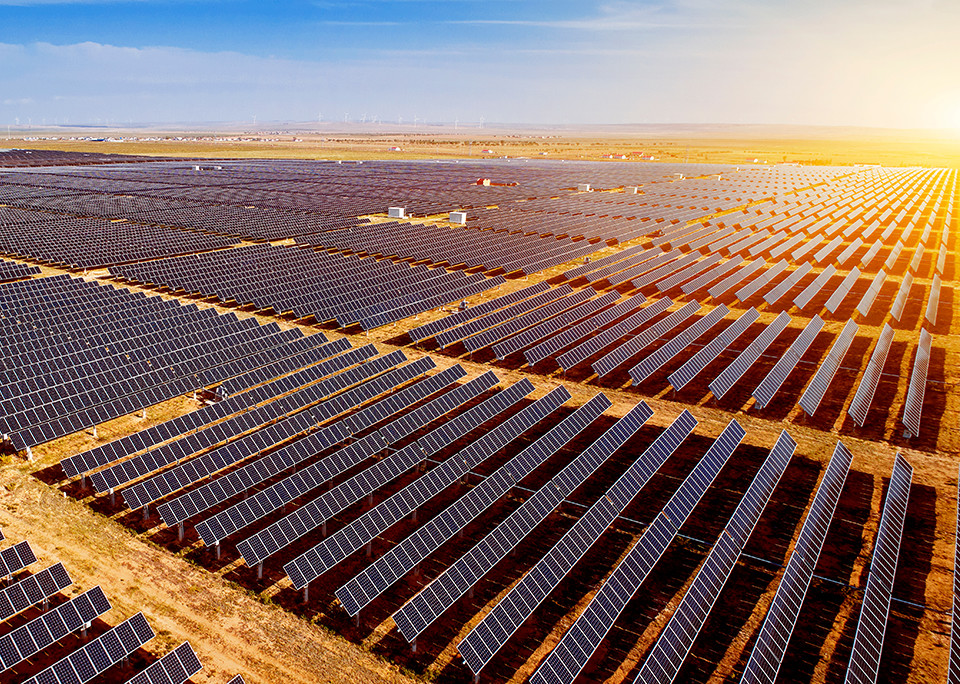
Several large solar parks in Bavaria are leading the way. These open-field installations now produce energy for around 5 cents per kilowatt hour, making them so inexpensive that they do not require subsidies to operate profitably.
Thanks to long-term supply contracts with electricity providers and significantly reduced production costs, they are able to forgo the guaranteed feed-in tariff from the Renewable Energy Sources Act.
Thomas Banning, CEO of the operator Naturstrom AG, has therefore already spoken of a "turning point for photovoltaics." Those in charge in Bavaria have recognized this, as they have approved an increase in the annual upper limit for new solar parks on agricultural land from 70 to 200.
Due to Bavaria's success in the EEG tenders, the state government increased the number of projects from an initial 30 to 70 in 2019. Since 2017, ground-mounted photovoltaic systems on arable and grassland in agriculturally disadvantaged areas have been able to participate in the Federal Network Agency's tenders under the Renewable Energy Sources Act (EEG).
One example is the green electricity project in Rottenbach, Upper Franconia. Here, Naturstrom AG has connected its largest solar park to date, with a capacity of 13 MWp, to the grid. The green energy provider supplies a portion of the generated electricity directly to its own customers; the company implemented this part of the plant without claiming feed-in tariffs. The project thus serves as a prime example of the progress of the energy transition.
Nearly 35,000 solar modules now generate climate-friendly green electricity with a total output of over 13 MWp. The open-field plant, built on both sides of the A73 motorway, is thus the largest solar project to date among the more than 300 renewable energy power plants. The 14.2 million kilowatt-hours of solar power generated annually correspond to the annual consumption of almost 4,500 average three-person households.
What makes this project particularly special is not only its scale, but also the multi-part marketing of the generated solar power: 3.2 MWp of solar capacity were installed here, which do not receive feed-in tariffs under the Renewable Energy Sources Act (EEG) and whose construction and operation are directly refinanced through the sale of the electricity produced to the company's own customers. The green energy provider integrates this solar power into its own procurement portfolio. "Photovoltaics in large parks has now become the cheapest form of electricity generation – not only around the equator, but also here in Germany. The initial investments of the energy transition have led to enormous cost reductions for solar and wind energy. Further climate-friendly transformation of the energy supply is therefore not only essential for sustainability reasons, but also the economically sound option." An additional 9 MWp of the solar park were built after winning an award in the EEG auctions in a corridor 110 meters from the highway; these receive market premium payments depending on the market price. As early as 2018, the green energy supplier had built 0.7 MWp in a first construction phase, which received a fixed feed-in tariff via the EEG.
The Rottenbach solar park is exemplary in its market-based distribution of solar power and delivery to its own customers.
According to Mr. Banning, the projects are now profitable even without feed-in tariffs. "This allows us to finally supply our customers directly with green electricity from our own plants, once again pioneering the energy transition. As early as 2007, we were pioneers in the direct supply of green electricity from wind turbines to end customers. Three years ago, we began supplying customers with electricity from rooftop photovoltaic systems, a practice known as tenant electricity. Now we are involved with large, newly constructed photovoltaic plants, and from 2021 onwards, we will be marketing electricity from wind turbines that no longer receive feed-in tariffs."
Related to this:
Keep in touch