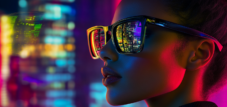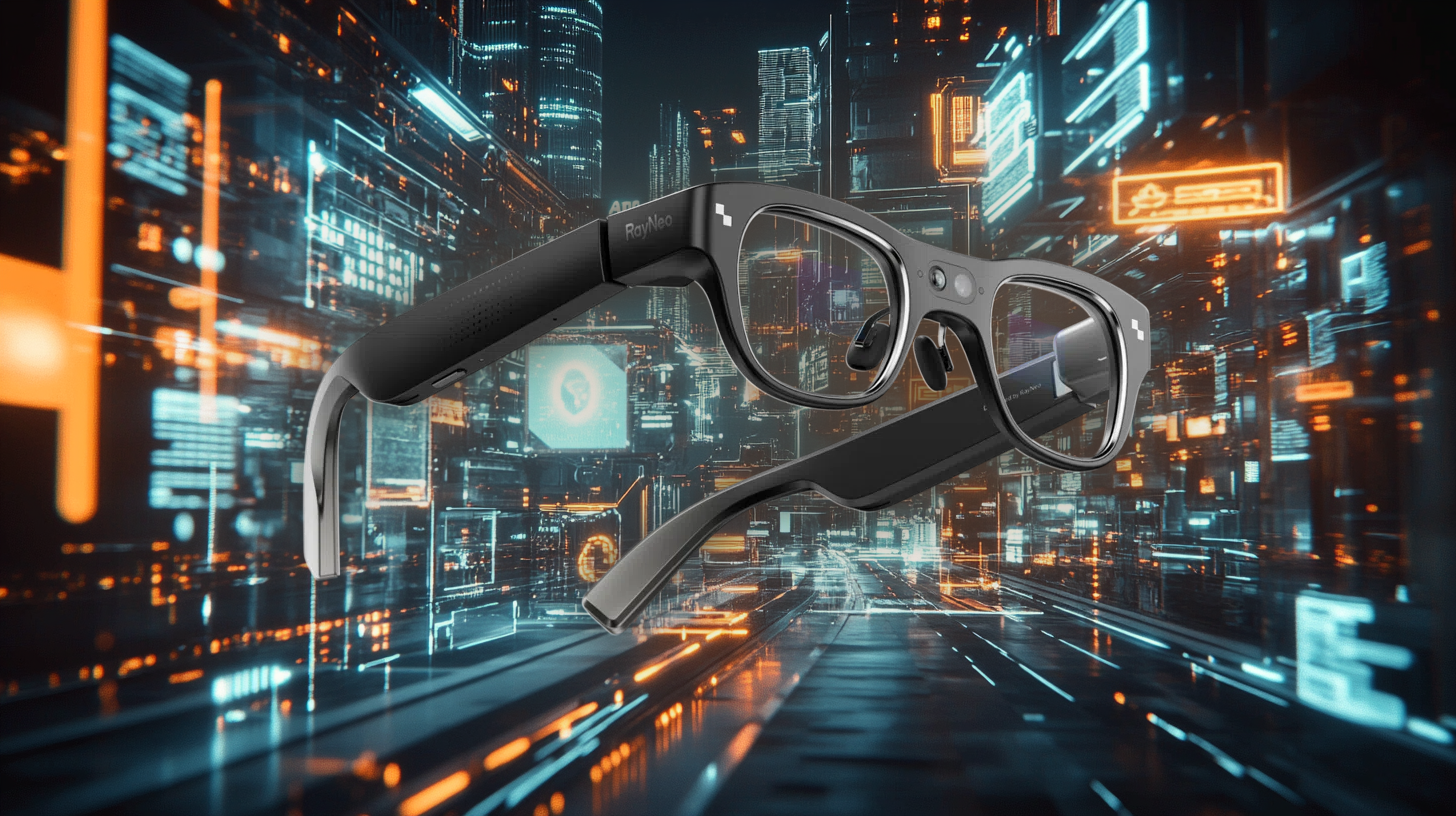
TCL RayNeo X3 Pro – Smart Glasses 2.0, Augmented Reality, AI Glasses and more than just data glasses – Design & display technology for the eye – Image: Xpert.Digital
Design & display technology at the eye: RayNeo X3 Pro sets new standards for AR glasses
Smart Glasses 2.0: TCL RayNeo X3 Pro redefines everyday usability
TCL's latest AR glasses, the RayNeo X3 Pro, were unveiled at Mobile World Congress (MWC) 2025 in Barcelona, marking a significant advancement in the fusion of augmented reality technology with artificial intelligence. These innovative glasses offer an impressive combination of cutting-edge display technology, advanced AI features, and a significantly improved design compared to previous models. The RayNeo X3 Pro thus positions itself as a serious competitor in the growing smart glasses market and could fundamentally change the way we interact with digital content.
Related to this:


Groundbreaking display technology and improved design
The RayNeo X3 Pro features impressive Micro-LED waveguide display technology, enabling a completely new visual experience. With an exceptional brightness of 2,500 nits, these displays offer vibrant color reproduction that remains clearly visible even in bright sunlight, overcoming one of the main problems of previous AR glasses. The displays utilize TCL's proprietary ultra-compact optical engine, allowing for a slim design despite the impressive performance. With a 25-degree field of view, the glasses cleverly place information within the user's field of vision without obstructing their view of their surroundings.
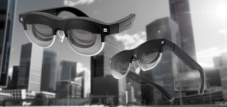
Compared to its predecessor, the X2 Pro, TCL has made significant design improvements with this new model. Weighing less than 85 grams, the X3 Pro is considerably lighter and more compact, making it much more suitable for everyday wear. The form factor has been greatly improved and now more closely resembles traditional Wayfarer glasses, making them more discreet and aesthetically pleasing. The padded nose pads and ergonomic temples ensure all-day comfort, making these glasses a practical everyday companion.
These design improvements represent a significant step away from the prototypical appearance of earlier AR glasses towards a product that can actually be used in everyday life. The RayNeo X3 Pro avoids the unflattering "oversized tech look" of previous models, instead offering a more discreet, everyday-wearable design without compromising on technical performance.
Powerful AI features and innovative user interface
The integration of advanced AI features is one of the standout features of the RayNeo X3 Pro. Powered by the Qualcomm Snapdragon AR1 Gen 1 chip, the glasses offer multimodal AI capabilities that go far beyond simple assistance functions. The real-time translation feature allows users to translate both spoken language and text within images, making the glasses particularly valuable for travelers and international business professionals. This feature was tested in demonstrations using Chinese and English and delivered impressive results, with the original text and translation displayed simultaneously on the screen.
In addition to its translation function, the X3 Pro also offers automatic audio summarization, object recognition, and a built-in AI assistant. AI-assisted navigation allows users to see directions directly in their field of vision without having to look at a smartphone. Qualcomm's Hexagon NPU (Neural Processing Unit) enables these AI functions to run directly on the glasses, improving responsiveness and reducing reliance on cloud connections.
The RayNeo X3 Pro's user interface has also been carefully designed. It can be controlled via a touchpad on the temple or through voice commands, allowing for intuitive and flexible operation. Testers found the basic interface easy to understand and it enables fundamental functions such as taking photos or videos, streaming music, and navigating with maps. This combination of visual display and AI functionality opens up new possibilities for use cases that would not be possible with purely audio-only glasses like the Meta Ray-Ban.
Technical specifications and performance characteristics
The RayNeo X3 Pro boasts an impressive array of hardware components that support its diverse functions. The glasses are equipped with a high-resolution camera, the exact specifications of which haven't been officially confirmed, but based on analysis of the image quality and lens size, it's assumed to be a 12MP sensor. This camera not only allows for taking photos and videos but also supports AI features such as text translation and object recognition.
In terms of audio, the X3 Pro features stereo speakers that deliver clear, powerful sound and are effectively directed towards the wearer's ears. This is complemented by a triple-microphone system for precise speech recognition and clear audio recordings. These audio components are crucial for the glasses' voice control functions and translation capabilities.
The Qualcomm Snapdragon AR1 Gen 1 chip is the heart of the X3 Pro, providing the necessary processing power for demanding AR and AI features. This processor was specifically designed for AR applications, optimizing performance while maintaining energy efficiency. The chip's responsiveness significantly contributes to the feeling that these glasses have the potential to be successful in the market.
One aspect that raised concerns during early testing was the X3 Pro's battery life. Demonstrations revealed that the headset deactivated its AI features and camera capabilities when the battery level dropped to 10%. It was also noted that the battery drained quickly when using the camera or the real-time translation function, suggesting that further optimization in this area may be necessary. Hopefully, TCL can address this issue before the official launch.
Market positioning and future prospects
The RayNeo X3 Pro is expected to launch in mid-2025, though the exact price has not yet been announced. However, it is anticipated to be under $2,000, positioning the glasses in the premium segment of the AR glasses market. The initial distribution strategy will focus on the United States and Canada, suggesting that TCL is planning a phased global rollout.
Alongside the X3 Pro, TCL also unveiled two other RayNeo products at MWC 2025: the RayNeo Air 3s and the RayNeo V3. The Air 3s is a lightweight XR headset with a 201-inch virtual reality display and will be available from April 2025 at a significantly lower price of $259. The RayNeo V3, on the other hand, focuses on camera functionality with a 12MP Sony IMX681 sensor and Quad Bayer HDR technology. This diversified product range demonstrates TCL's comprehensive commitment to augmented reality and addresses various customer segments and use cases.
The X3 Pro positions itself in direct competition with other smart glasses offerings like the Meta Ray-Ban glasses, but surpasses them through the integration of a color display and advanced visual AR capabilities. The combination of AI capabilities and display technology could give the X3 Pro a competitive edge and make it an attractive option for tech-savvy users who are looking for more than just basic smart glasses features.
User experiences and first impressions
Initial impressions of the RayNeo X3 Pro at MWC 2025 were overwhelmingly positive and have partially dispelled previous skepticism towards the smart glasses category. A PCMag reviewer, who had tried out various smart glasses models at trade shows over the past few years, noted that the X3 Pro changed his negative impressions of this product category and rekindled his hope that this emerging category could actually thrive.
The significantly improved shape and lighter weight compared to the previous model were particularly praised. Testers were impressed by the comfortable fit and the more discreet appearance of the glasses, which more closely resembles traditional eyewear designs. The display's position in the field of vision was also commended, as it is placed high enough to be easily seen without obstructing peripheral vision.
The user interface also received positive reviews. The tap and swipe controls on the right temple were described as intuitive, and testers reported quickly grasping the basic interface. The AI translation feature was tested in a demonstration where a TCL representative spoke in Chinese and impressed with its simultaneous display of the original Chinese text and the English translation after a short processing time.
Despite these positive experiences, as previously mentioned, concerns remained regarding battery life, particularly when using power-intensive features such as the camera or real-time translation. This highlights the challenges associated with integrating advanced technologies into a compact, portable device and remains an area where further improvements would be desirable.
Next-generation technology: Why the RayNeo X3 Pro is in focus
The RayNeo X3 Pro from TCL represents a significant advancement in the development of smart glasses, bringing us closer to the vision of seamlessly integrating digital content into our daily perception. With its combination of cutting-edge display technology, AI features, and a user-friendly design, it could mark a major milestone in the evolution of augmented reality devices.
The super-bright micro-LED displays with 2,500 nits of brightness, the multimodal AI capabilities, and the significantly improved, lighter design are clear strengths of this product. The intuitive user interface and the versatility of use cases, from translations to navigation, make the X3 Pro a potentially valuable tool for various user groups.
While concerns about battery life remain, initial impressions from MWC 2025 suggest that TCL is on the right track to overcoming some of the major obstacles that have limited the widespread adoption of smart glasses. With its expected launch in mid-2025, it will be interesting to see how the RayNeo X3 Pro is received by consumers and how it might influence further developments in this emerging technology sector.
The progress TCL has made with the RayNeo X3 Pro points to a promising future for augmented reality glasses, where the merging of the real and digital worlds becomes increasingly seamless and useful. While we await further details on pricing and availability, it's already clear that TCL has made a significant contribution to the evolution of the smart glasses category with the X3 Pro.
Related to this:
Your global marketing and business development partner
☑️ Our business language is English or German
☑️ NEW: Correspondence in your native language!

Konrad Wolfenstein
I and my team are happy to be available to you as your personal advisor.
You can contact me by filling out the contact form here wolfenstein@xpert.digital:or simply call me at +49 7348 4088 965. My email address is
I'm looking forward to our joint project.