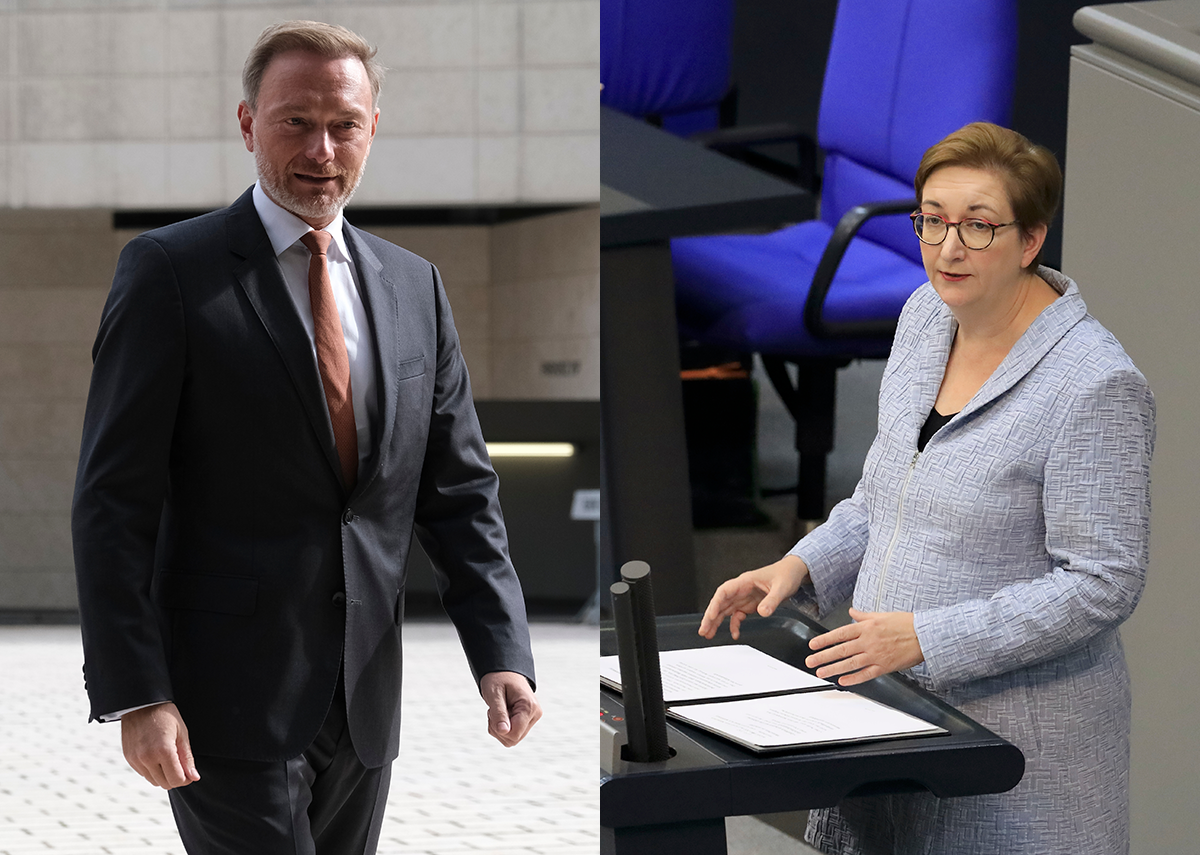
Christian Lindner | Klara Geywitz – Image: Alexandros Michailidis & Juergen Nowak | Shutterstock.com
A brief overview of the topic
📰 The headlines
- 🏢 Plan for affordable housing & tax reduction 🏠💰
- Lindner and Geywitz's proposal for tax cuts 💡📉
- The CDU's workers' wing's 7-point plan 📋🤝
🏢 Plan for affordable housing & tax reduction
- Lindner and Geywitz have made a proposal for affordable construction and tax cuts.
- The goal is to reduce housing costs and stimulate the economy.
📊 Lindner and Geywitz propose tax cuts
- Lindner and Geywitz have proposed measures to reduce the tax burden.
- The aim is to reduce the financial burden on citizens and to stimulate the economy.
📋 7-point plan of the CDU's labor wing
- The CDU's labor wing has presented a 7-point plan.
🏛️ Reduce housing costs 🏠 Reduce taxes
- The main goals are to reduce housing costs and taxes in order to provide financial relief for citizens.
- This should also strengthen the economy.
📈 Boost the economy 💰 Social justice
- The proposed measures are intended not only to stimulate the economy but also to promote social justice.
- Lower housing costs and taxes could offer broader benefits for the population.
🏗️ Building plans & tax reforms 🌱 Economic development
- The presented plan concerns both the construction sector and tax reforms and aims to promote the economy.
- A comprehensive strategy to strengthen various aspects of the economy.
Summary in one sentence: Lindner and Geywitz are proposing a plan to lower housing costs, reduce taxes, and thereby stimulate the economy, with a focus on social justice. The CDU's labor wing is countering with a supplementary 7-point plan.
#️⃣ Hashtags: #ReducingHousingCosts #TaxCut #EconomicDevelopment #SocialJustice #WorkingConditions
The traffic light coalition's plan to combat dramatic price increases: Affordable construction and housing are the goal
Klara Geywitz has developed an innovative strategy to revitalize the struggling housing sector. Her approach involves expanding tax depreciation allowances to stimulate construction activity. A key aspect of her plan is the introduction of "declining-balance depreciation" for new residential buildings between 2024 and 2030. This measure allows for higher initial depreciation rates that decrease over time. Specifically, this means depreciation of 7% for the first four years, 5% for the following four years, and 2% for the subsequent 26 years.
Synergies and growth opportunities
Geywitz's plan aligns with the expected measures from Finance Minister Christian Lindner under the Growth Opportunities Act. This law aims to relieve the economy of approximately €6.5 billion annually. The integration of the two initiatives thus promises synergistic effects that could boost economic growth. Nevertheless, the Finance Ministry remains cautious, emphasizing the need for intelligent supply-side strategies and incentives for private investment instead of permanent subsidies.
Klara Geywitz's proposal has been received positively in the housing industry. Many see it as having the potential to revitalize the stagnant construction sector. However, there are also critics, including the Green Party and the Left Party. They argue that the proposed tax incentives unduly favor profit-driven companies without ensuring sufficiently affordable rents or environmental standards.
Federal Finance Minister Christian Lindner (44, FDP, left) and Federal Construction Minister Klara Geywitz (47, SPD, right) are jointly advocating for a reduction in the tax burden on the purchase of owner-occupied residential property. Rising costs in the real estate sector are causing increasing concern among politicians. Cities and municipalities across Germany are responding with increased property tax rates, leading to a growing financial burden. Furthermore, high real estate transfer taxes prevent many families from taking the plunge into homeownership.
Details of the Lindner-Geywitz plan
Lindner intends to make real estate transfer tax more flexible by introducing a tax-free allowance. He plans to waive this allowance on the purchase of owner-occupied residential property. One challenge is that the federal states must approve this change in the Bundesrat (Federal Council). Fears of lost revenue have so far led to rejections. However, Lindner aims to allocate funds from the federal budget to compensate for these potential losses. Additional revenue is to be generated through the introduction of expanded taxation of so-called "share deals" in real estate purchases. These deals refer to the acquisition of shares in companies that own real estate, rather than direct ownership of the property itself. This approach is intended to make it more difficult for investors to evade real estate transfer tax.
The question of property tax
The responsibility for setting property tax rates lies with the municipalities, which is why the federal government can only intervene to a limited extent. Finance Minister Lindner explains: “The reform of the property tax was already implemented by the previous federal government. During this process, care was always taken to ensure that it did not lead to an actual increase in the tax burden. I appeal to the municipalities to keep this promise.” It remains to be seen whether this appeal will be heeded by the municipalities. Experts assume that the property tax will continue to rise in line with the trends of recent years.
Concrete proposals from the CDU's labor wing
The state chairmen of the CDU/CSU labor union in North Rhine-Westphalia and Bavaria, Dennis Radtke (44, CDU, North Rhine-Westphalia) and Volker Ullrich (47, CSU, Bavaria), have proposed tax relief measures in a joint paper, according to the Bild newspaper. Their demands include eliminating value-added tax (VAT) on construction costs for first-time homeowners. They also propose new rent-to-own models for state-owned housing, allowing low-income tenants to pay the purchase price in installments and gradually acquire ownership. In addition to abolishing real estate transfer tax, they propose a ten-year exemption from property tax for first-time homeowners, with the federal government covering the resulting revenue shortfall.
Kai Warnecke, president of the property owners' association "Haus & Grund," expressed a positive view of the proposed abolition of property tax, but emphasized the importance of a balanced tax burden. He warned that the relief for some must not result in a double burden for others. A careful assessment of the tax changes is essential to finding a balanced equilibrium.
Alternative perspectives and solutions
The debate surrounding Klara Geywitz's strategy for promoting the housing market illustrates the multifaceted challenges in this area. While tax incentives offer a promising way to stimulate construction activity, balancing economic growth with social responsibility remains a key issue. It will be crucial to consider the various perspectives and find sustainable solutions to ensure a thriving and balanced housing market in Germany.
Critics propose alternative measures to address the housing market. A key focus is on promoting social housing and simplifying renovations of existing buildings. Creating affordable rental housing for low-income individuals is particularly urgent.
If tax benefits are introduced, they should primarily benefit non-profit housing with long-term rent restrictions.
The current situation on the German housing market is complex and challenging. Construction Minister Klara Geywitz is relying on innovative measures to boost housing construction. However, her proposal to use tax incentives to promote real estate development has met with mixed reactions. Faced with rising interest rates and material costs, the sector is in crisis. The government's ambitious target of 400,000 new apartments per year has been significantly missed, a situation exacerbated by dwindling building permits.
Plan your solar system for the most common applications conveniently online with our solar system planner!
With our user-friendly solar system planner, you can design your individual solar system online. Whether you need a solar system for your home, your business, or for agricultural purposes, our planner allows you to consider your specific requirements and develop a customized solution.
The planning process is simple and intuitive. You simply enter the relevant information. Our planner takes this information into account and creates a customized solar system that meets your needs. You can try out different options and configurations to find the optimal solar system for your application.
Furthermore, you can save your plan to review it later or share it with others. Our customer service team is also available to answer any questions and provide support to ensure your solar system is optimally planned.
Use our solar system planner to design your individual solar system for the most common applications and accelerate the transition to clean energy. Get started now and take an important step towards sustainability and energy independence!

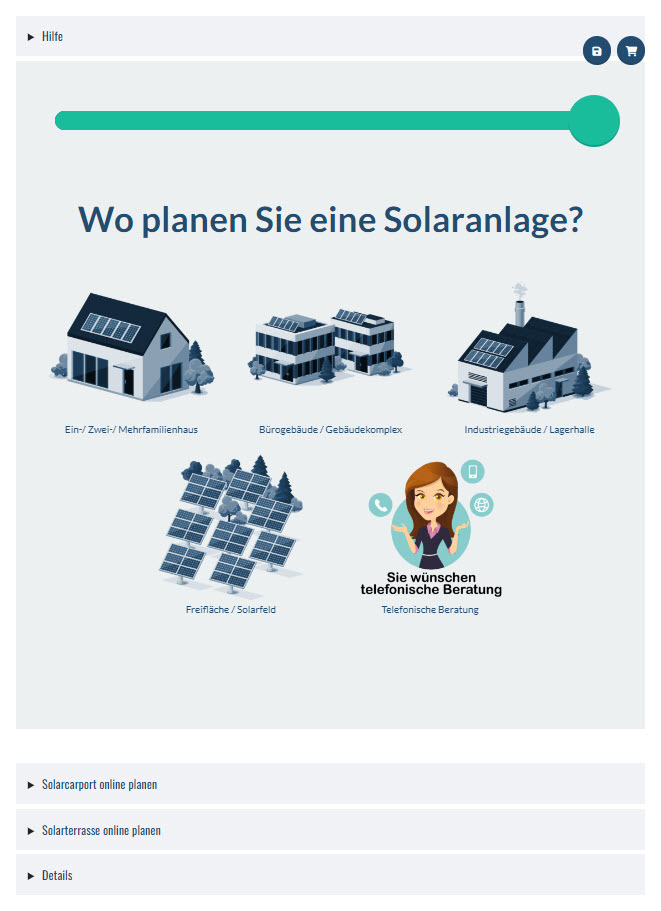
The solar system planner for the most common applications: Plan your solar system online here - Image: Xpert.Digital
More information here:
📣 Energy-efficient renovation and new construction, consulting, planning and implementation for industry, retail and municipalities
Our experienced team supports you in optimizing your buildings to reduce energy consumption and promote sustainable energy use with photovoltaics. We analyze your individual needs and develop customized concepts that are both economically and ecologically sound. Whether it's the energy-efficient renovation of existing buildings or the construction of new, energy-efficient structures, we are here to help. Industrial plants, retail buildings, and municipal facilities can reduce their energy costs, minimize their environmental impact, and simultaneously improve the comfort and efficiency of their buildings with our tailored solutions.
👨🏻 👩🏻 👴🏻 👵🏻 Energy-efficient renovation and new construction, consulting, planning and implementation for private households
We offer comprehensive support for private households in the energy-efficient renovation and new construction of buildings with photovoltaics. Our experienced team is at your side to assist you with consulting, planning, and implementing your sustainable energy solutions. We analyze your energy consumption, identify potential savings, and develop customized concepts to improve your energy efficiency. From improving building insulation and installing energy-efficient windows and doors to installing photovoltaic and solar thermal systems – we guide you step by step to make your home more energy-efficient and environmentally friendly. Trust in our expertise and benefit from the numerous advantages that energy-efficient renovation and the use of renewable energies offer. Together, we'll create a sustainable future for your home.
Understanding property tax and its importance for property owners
The role of property tax in financing local community projects
Property tax and real estate transfer tax are both types of taxes levied in many countries in connection with real estate. They serve to generate revenue for the government and tax various aspects of property ownership and transfers. Here is an explanation of both types of tax:
Property tax
Property tax is a tax paid by owners of land and real estate. It is usually based on the value of the land or property and local tax rates. The calculation can vary depending on the country, region, and municipality. Property tax revenue is often used to finance local community and infrastructure projects, such as road construction, garbage collection, educational facilities, and other public services.
Real estate transfer tax
Property transfer tax is levied when land or real estate is sold or transferred. It is paid by the buyer and is based on the purchase price or the property's assessed value. The amount of property transfer tax can vary depending on the country and region and is often calculated as a percentage of the purchase price. This tax is intended to allow the government to share in the financial gains generated by buying and selling real estate.
Details and modalities
Both types of taxes serve to generate government revenue and simultaneously regulate the real estate industry. However, the exact details and procedures can vary significantly from country to country. It is important to consult professionals such as tax advisors or lawyers with any questions regarding taxes and legal aspects of property ownership to obtain accurate and up-to-date information.
What can be done about exploding construction costs?
💡 Thorough research 📚: Get comprehensive information about current construction prices, material costs and trends to have realistic expectations.
🏦 Rethink your financial planning 💰: Adjust your financing to the increased costs and consider alternative financing options.
🏠 Reducing extras ✂️: Avoid expensive extras and focus on necessary elements to lower costs.
🔍 Get multiple quotes 📋: Compare different offers from construction companies to find the best value for money.
👷♂️ Self-contribution 🛠️: Do some of the work yourself to reduce labor costs, if possible.
🌱 Alternative materials 🏗️: Consider using more cost-effective, but high-quality materials to reduce overall costs.
📐 Optimized Design 🏡: Work with architects to develop an efficient and space-saving design that minimizes material waste.
👨🔧 Negotiation skills 💬: Negotiate with suppliers and construction companies to obtain better prices and conditions.
📆 Time flexibility ⏳: Plan the construction in phases to spread financial burdens and, if necessary, take advantage of more favorable construction times.
📈 Long-term perspective 🌆: Think long-term and invest in energy-efficient measures that can save costs in the long run.
#️⃣ Hashtags: #ConstructionCosts #FinancingTips #CostOptimization #ConstructionPlanning #SelfBuild
10 tips for aspiring home builders
The idea of building your own home is exciting and fulfilling. But what happens when construction costs suddenly spiral out of control? Don't worry, you're not alone! In this section, we'll give you 10 practical tips on how to deal with exploding construction costs and still realize your dream home.
Understanding the challenge of exploding construction costs
It is important to understand the reasons behind rising construction costs. Scarcity of building materials, increased demand, and economic factors can all cause costs to skyrocket.
Set a realistic budget
Before you even begin construction, it's crucial to establish a realistic budget. Consider not only the obvious costs like materials and labor, but also unforeseen expenses.
Obtain a detailed cost estimate
Obtain detailed cost estimates from several construction companies. This will help you get a better overview of potential expenses and choose the best offer.
Flexibility in the plans
Be prepared to make some adjustments to your building plans to reduce costs. Sometimes small changes can have a big financial impact.
Select materials intelligently
Work closely with your architect to identify cost-effective materials that still offer quality. Upcycling and reusable materials can also be an option.
Negotiate smartly with suppliers
Negotiation skills are key. Talk to different suppliers about discounts or special offers for bulk purchases. This way you can save a few euros.
Contribute your own labor
If you are good with your hands, you might consider doing some tasks yourself. Every bit of work you do yourself can reduce the overall costs.
Explore alternative financing options
Explore different financing options, such as grant programs or low-interest loans for home builders. These could help you reduce the financial burden.
Keep time management in mind
Delays can be costly. Efficient time management helps to avoid unnecessary additional costs.
Cost control during construction
Keep a close eye on costs throughout the construction process. Regular reviews can help identify potential cost overruns early on.
Plan for reserves in case of emergencies
Even with the best planning, unexpected costs can arise. Set aside a financial reserve to cushion such situations.
Your dream home despite exploding construction costs
Despite rising construction costs, it's possible to build your dream home without exceeding your budget. With realistic planning, smart material selection, and skillful cost management, you can overcome this challenge.
Frequently Asked Questions (FAQs)
The path to owning your own home may be challenging, but with these tips you can overcome the hurdles and realize your dream house despite skyrocketing construction costs. Remember that careful planning and flexibility are key to achieving your goal.
Why are construction costs exploding?
Rising demand, scarcity of materials and economic factors can lead to an increase in construction costs.
Which costs are easiest to reduce?
Material costs can often be most easily reduced by considering alternative materials.
Should I stick with the construction despite exploding costs?
With careful planning and cost control, it is possible to carry out the construction without exceeding the budget.
Which tasks can be performed by the owner themselves?
Doing things yourself, such as painting, interior finishing or minor installations, can reduce costs.
Are there any government support options available?
Yes, there are various funding programs and loan options that prospective home builders can use.
Construction industry 2023 – Construction sector collapses – Housing construction in free fall – Bankruptcies loom

Construction industry 2023 – Construction sector collapses – Housing construction in free fall – Image: yuttana Contributor Studio|Shutterstock.com
More information here:
Want two more shocking news stories? The German start-up bubble is bursting and the European economy is crashing

The German start-up bubble bursts and the European economy crashes – Image: Xpert.Digital
More information here:
Energy targets in jeopardy: German expansion of wind power and electromobility lags behind expectations
Robert Habeck, Deputy Chancellor and Federal Minister for Economic Affairs and Climate Protection of the Federal Republic of Germany – Source: penofoto|Shutterstock.com
More information here:
What impact will the CO2 tax have on companies in the coming years if they do not reduce their CO2 emissions?

Fatal impact of the CO2 tax without a reduction in CO2 emissions – Image: Xpert.Digital / BigBlueStudio|Shutterstock.com
More information here:
Sales slump and uncertainty: Heat pump manufacturers suffer after dispute over heating law and building energy law (GEG)
Sales slump and uncertainty: Heat pump manufacturers suffer after dispute over heating law – Image: Xpert.Digital
More information here:
Write to me


Keep in touch