


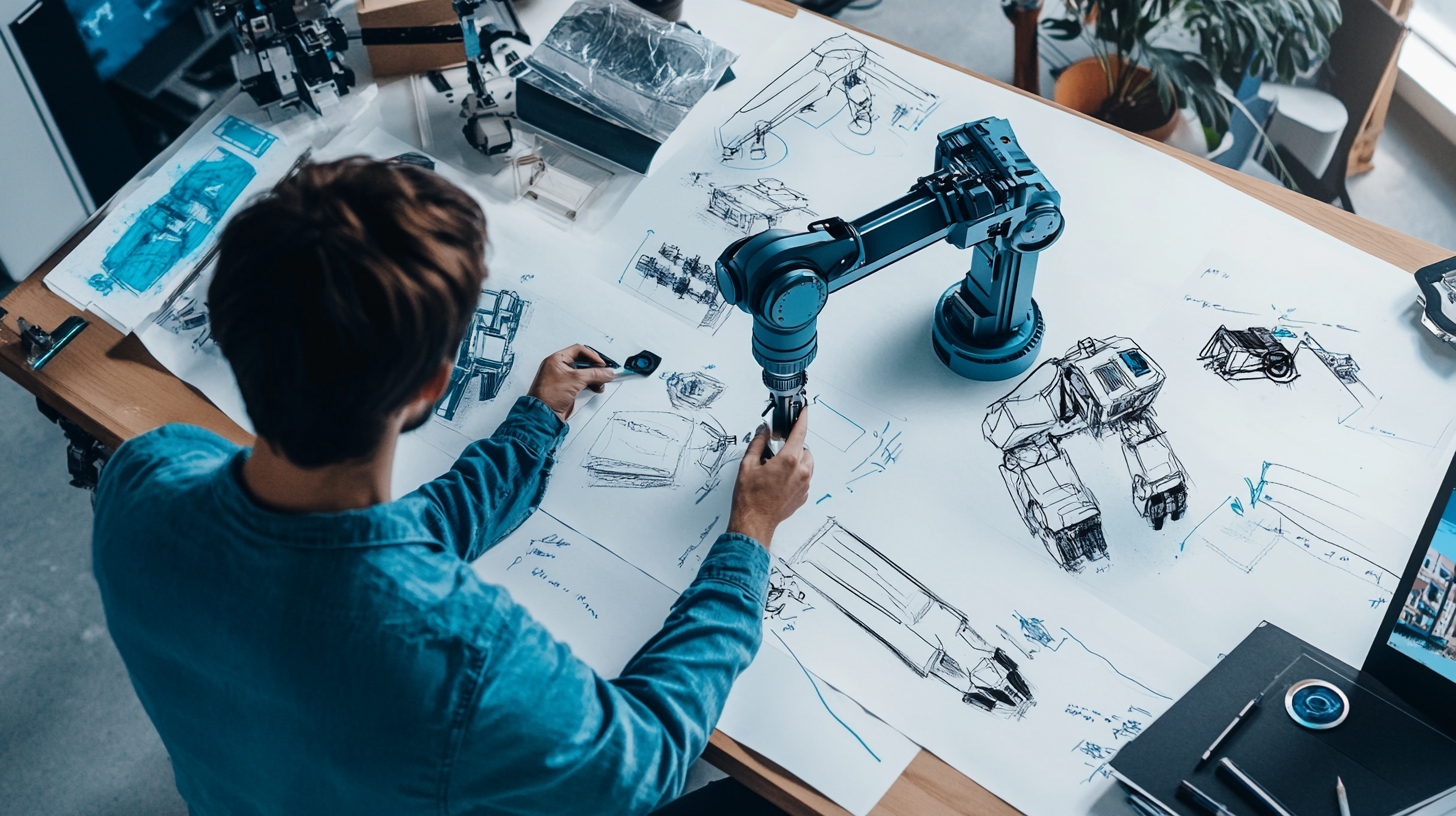
Apple product development: A tabletop robot with a robotic arm? Apple's smart home strategy, codenamed "J595" – stock image: Xpert.Digital
Pure innovation: Will Apple's first home robot arrive in 2026?
Apple's path into robotics: A revolution in the smart home sector?
Apple is known for its innovative strength and well-thought-out product developments that sustainably change the market. Now, the company could be entering the smart home sector with a new product category: intelligent home robots. Developed internally under the codename "J595," a dedicated robotics team is working on innovative devices that could potentially be launched as early as 2026.
Apple's robotics initiative: A look behind the scenes
Developments in Apple's robotics division suggest that the company aims to revolutionize the smart home market with intelligent, AI-powered hardware. Of particular note is a planned tabletop robot with a robotic arm, which will combine a motorized display with versatile functions. Another concept involves a mobile companion robot that can autonomously follow users through rooms.
Team structure and management
Apple has assembled a dedicated team of experts in artificial intelligence (AI), machine learning, robotics, and hardware development for this project. The team is led by Kevin Lynch, Vice President of Technology. Lynch previously played a key role in the development of the Apple Watch and led the now-discontinued Apple Car project.
Technological foundations and innovations
Apple uses cutting-edge technologies to make its robotics products unique and competitive. The core innovation lies in the combination of artificial intelligence, machine learning, and advanced sensor technology.
Apple Intelligence: The AI behind the robots
The new Apple robots are controlled by an advanced AI architecture that is integrated into the entire Apple ecosystem.
- Voice control and voice recognition: Thanks to Siri integration, users will be able to use interactive voice commands. For example, a simple command like "Look at me" could cause the table robot's display to automatically orient itself towards the user.
- Automated adaptation to usage contexts: The robot can independently detect changes in the room and react accordingly. For example, the device could dim the lights when a film starts.
- Facial recognition: One of the most advanced features is the ability to distinguish between different household members and guests.
Hardware and sensor innovations
- Robot arm with iPad display: The mechanical structure allows for 360° rotation and precise tilting, making the device optimally adaptable to various usage scenarios.
- High-resolution cameras with lidar sensors: This technology serves not only for spatial mapping, but also for person detection and security.
- Tactile feedback: The table robot could confirm certain commands through slight vibrations, offering an additional dimension of interaction.
- Modular batteries: Apple plans for a battery life of 48+ hours, with modularly interchangeable batteries.
Apple's planned robotics products
1. Tabletop robot with robot arm
The table robot represents a combination of a smart home assistant and an interactive communication device.
functions
Smart home control
- Connection with HomeKit-compatible devices (lighting, thermostats, security systems).
- Air quality monitoring and temperature measurement.
Communication and productivity
- 4K FaceTime camera with automatic framing, so that the camera focuses on the active speaker.
- Gesture recognition for controlling certain functions.
- Integration of Apple Calendar, Notes and Reminders.
Security features
- 360° surveillance with night vision.
- Intelligent facial recognition to distinguish between residents and strangers.
Mobile companion robot
In addition to the tabletop robot, Apple is working on a mobile companion robot that can move autonomously around homes.
Possible features
- User tracking: The robot follows its owner through different rooms and adapts to their movement patterns.
- Smart home interaction on the go: Control devices and notifications, even when you are not in a fixed location.
- Entertainment and assistance: Integration of Apple Music, podcasts and interactive voice dialogues.
Experimental project “ELEGNT”
Apple is also testing experimental products such as a robotic lamp that can simulate emotional reactions through movement. For example, it could "lower its head" when a task is canceled, or dance to music.
Comparison with the competition
Apple is planning to enter a market already dominated by established competitors like Amazon and Samsung. Amazon has taken its first steps into home robotics with its Astro robot, and Samsung with its Ballie concept. Apple's planned tabletop robot is expected to cost around $1,000, operate in a stationary position with a robotic arm, and be equipped with Apple Intelligence. It will be integrated into the Apple ecosystem, including HomeKit and iOS, and will feature security features such as a 360° camera and LiDAR. In contrast, Samsung's Ballie is an autonomously rolling robot whose price and security features are still unknown, and which is based on Samsung SmartThings. Amazon's Astro, also autonomously rolling and powered by Alexa, costs around $1,600 and offers basic facial recognition as well as compatibility with third-party ecosystems.
Apple distinguishes itself primarily through its deep integration into its own ecosystem. While Astro and Ballie primarily function as "rolling cameras," Apple relies on a stationary, but highly intelligent control system with extended smart home functionality.
Related to this:
Challenges and market opportunities
challenges
- High development costs: Robotics is expensive, and production costs could affect the target selling price.
- Mass market acceptance: Home robots are currently still niche products, and Apple needs to provide convincing use cases.
- Security and data protection issues: Especially in Europe, Apple will have to convince people that its cameras and AI do not raise privacy concerns.
Market opportunities
- The first truly premium solution: Apple has the opportunity to define the standard for home robots.
- Integration into the Apple universe: Owners of iPhones, iPads and Macs could use the robot as a natural extension.
- Innovation driver for AI in everyday life: With Apple Intelligence, the company could take AI in the smart home to a new level.
Apple's foray into robotics is ambitious, but promising. If the company can find the right balance between technology, user-friendliness, and pricing, it could fundamentally change the smart home market.
Related to this:
Your global marketing and business development partner
☑️ Our business language is English or German
☑️ NEW: Correspondence in your native language!

Konrad Wolfenstein
I and my team are happy to be available to you as your personal advisor.
You can contact me by filling out the contact form here wolfenstein@xpert.digital:or simply call me at +49 7348 4088 965. My email address is
I'm looking forward to our joint project.