
Published on: June 4, 2025 / update from: June 4, 2025 - Author: Konrad Wolfenstein
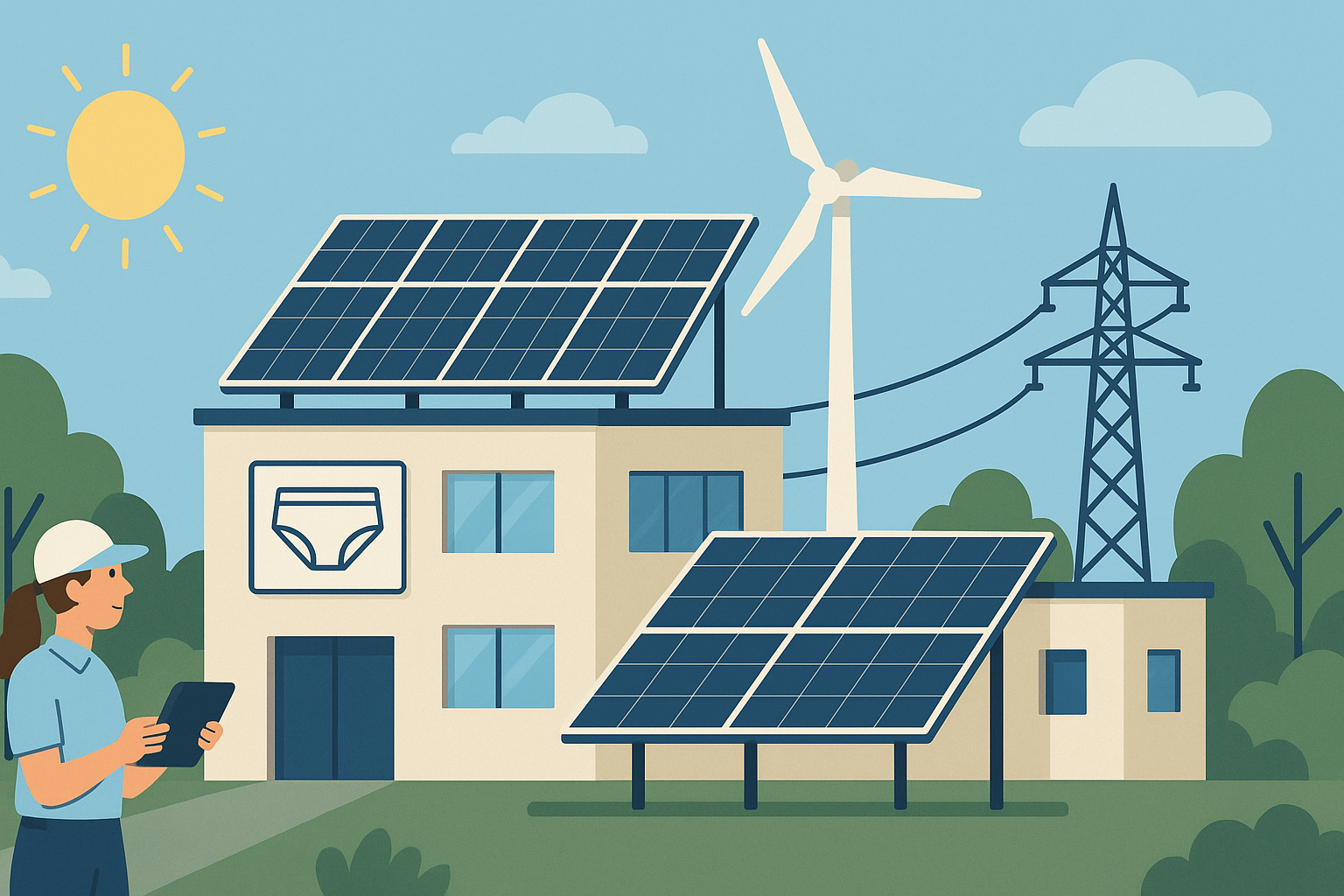
The solar strategy of underwear companies Schiesser: Sustainable energy generation in everyday company life-Image: Xpert.digital
Schiesser increases sustainability with solar energy and local heating
Traditional brand Schiesser is driving green innovations
The traditional underwear manufacturer Schiesser has consistently further developed its sustainability strategy and now operates three photovoltaic systems at the Radolfzell location. These systems together generate over 1,100 megawatt hours of electricity annually and thus cover a considerable part of the company needs. In addition, Schiesser chose the innovative local heating project “Zeller Heat at the sewage treatment plant”, which is due to go into operation by the end of 2026. These measures stand against the background of the new legal framework, in particular the Solarspitzen Act, which came into force in March 2025, which brings significant changes for photovoltaic system operators.
The photovoltaic offensive from Schiesser
Schiesser's decision to rely on solar energy is a more comprehensive sustainability strategy of the company. With three photovoltaic systems at one location, the company demonstrates how industrial roof areas can be optimally used for energy generation. This gradual expansion of solar capacities shows long -term and well thought -out planning in the area of renewable energies.
Andreas Lindemann, CEO of the Schiesser Group, emphasizes: "Sustainability has been part of the Schiesser-DNA since 1875. The various solar projects match our company values very well". This statement underlines that the current environmental protection measures are not only short -term reactions to regulatory requirements, but rather a consistent continuation of traditional corporate values in contemporary form.
Detailed analysis of the photovoltaic systems at Schiesser
First facility: sales building (March 2020)
The first photovoltaic system was installed on the roof of the sales building in March 2020 and marked the beginning of Schiesser's comprehensive solar strategy. With an area of over 600 square meters, this system takes up an important pioneering role because it demonstrated the technical feasibility and economic profitability of solar energy at the Radolfzell location. However, the annual CO₂ saving of around 40 tons may appear moderately compared to the subsequent systems, but formed the basis for scaling the solar activities.
Second system: shipping building (November 2021)
The second and so far largest photovoltaic system went into operation in November 2021 and significantly exceeds the first facility both in the area and in performance. With over 3,700 square meters, it takes up about two thirds of the available roof area of the shipping building and covers 45 percent of the electricity requirement of this building. The annual CO₂ saving of around 103 tons illustrates the considerable environmental protection potential of large-scale solar installations on industrial buildings.
This system demonstrates the scaling effects of modern photovoltaic technology, as it achieves a disproportionate increase in the energy yield and CO₂ savings with more than six times enlargement of the solar surface compared to the first system. The strategic use of the large, mostly unused roof areas of industrial buildings proves to be particularly efficient for decentralized energy generation.
Third complex: administration building (August 2023)
The latest and third photovoltaic system was installed on the roof of the new administrative building in August 2023 and, with its over 450 panels on around 900 square meters, is an impressive example of the optimal use of available roof surfaces. The high level of self-consumption of 60 percent of the administration building, which is the efficiency of modern building-integrated solar systems underlined.
The annual CO₂ saving of around 20 tons may appear lower at first glance than in the second system, but reflects the typically lower energy consumption of administrative buildings compared to production and shipping facilities. The high self -consumption rate indicates optimal dimensioning of the system in accordance with the actual energy requirement.
Total balance and environmental impacts
The three photovoltaic systems of Schiesser together reach a remarkable annual electricity production of around 1,103 megawatt hours and a CO₂ saving of around 163 tons. These figures illustrate the considerable potential of industrial companies to make substantial contributions to climate protection through consistent use of renewable energies. The total area of over 5,200 square meters corresponds to about three quarters of a soccer field and shows the considerable unused roof areas that are available in industry for solar energy.
The economic advantages of the solar systems go beyond the pure cost savings in power procurement. By feeding excess energy into the public network, Schiesser contributes to regional energy supply and may benefit from corresponding remuneration. This dual function as an energy consumer and producer positions the company strategically advantageously in a changing energy market.
New local heating project “Zeller Warmth on the sewage treatment plant”
Schiesser's solar activities are part of a more comprehensive sustainability strategy that is also manifested in other cooperations. Particularly noteworthy is the cooperation with the Stadtwerke Radolfzell as part of the “Zeller warmth at the sewage treatment plant” project. This innovative initiative uses the wastewater temperature of the neighboring sewage treatment plant for heat generation and is to be put into operation by the end of 2026.
The project works via a wastewater recovery system that uses three heat exchangers to withdraw heat from the water and to guide it into a large -scale heat pump. The heat pump is powered with regional green electricity, which further increases the environmental friendliness of the system. In phases with high heat query, a buffer memory ensures reliable supply.
Schiesser's decision to get involved in this local heating project underlines the company's endeavor, not only when generating electricity, but also in heat supply to climate -friendly alternatives. Andreas Lindemann emphasizes that this project is “another development step for us in the area of sustainability”.
Effects of the Solarspitzen Act 2025
The Solarspitzen Act, which came into force in March 2025, brings significant changes for operators of photovoltaic systems. The most important innovations are:
- No feed-in tariff for negative electricity prices: In the future, new PV systems will no longer receive a feed-in tariff if the electricity price on the stock exchange is negative. This regulation is intended to avoid overproduction and promote self -consumption and the flexible use of electricity storage.
- Mandatory to intelligent measuring systems: All new PV systems with a power from 7 kWP will have to be equipped with a smart meter and a tax box in the future. A maximum of 60% of their nominal output can only feed on the network without this technology.
- Adjustment of the remuneration rates: The feed -in tariff for newly installed photovoltaic systems was slightly reduced. For systems up to 10 kWp, the remuneration is 7.96 cents/kWh (partial feed) and 12.60 cents/kWh (full feed).
Schiesser does not affect these changes directly because the existing systems fall under existing protection. However, if the company is planning further photovoltaic systems, these new regulations would have to be taken into account. However, the focus is already on the focus of the new law, as practiced in the third system.
Further sustainability initiatives at Schiesser
In addition to investing in renewable energies, Schiesser also relies on sustainability in other areas:
Sustainable product development
With the “Schiesser Sustainable” label, the company characterizes products that consist of at least 70% of sustainable materials and were produced in certified companies that have committed to compliance with corporate social respons. Around two thirds of Schiesser products have already been awarded this label.
Circular economy
Since July 2024, Schiesser has been relating to recycling clothes bars, which are being built in cooperation with the Cologne partner company Willpütz. These clothes hangers consist of 60 percent ECO PS, which is obtained from the prepared material of old cooling devices. The remaining 40 percent also come from recycling materials, mainly from back hangers.
Sustainable collection
The Spring Summer Collection 2024 from Schiesser is optically and haptically based on nature. Many materials are sustainable and depend on the Schiesser Sustainable Label. In addition to organic cotton, viscose and linen are also used.
Meaning for the regional energy transition
The photovoltaic initiatives of Schiesser have important signal effect for the regional energy transition in the Lake Constance region beyond the company. The close cooperation with the Stadtwerke Radolfzell in both the solar systems and the local heating project demonstrates how local energy suppliers and industrial companies can contribute to decarbonization.
Joachim Kania, Sales Manager of Stadtwerke Radolfzell, emphasizes that the partnership with traditional companies such as Schiesser is “additional drive” for the energy transition in Radolfzell. This type of public-private cooperation could serve as a model for other regions in which similar challenges in transformation exist on sustainable energy systems.
Stadtwerke Radolfzell offer various models to promote photovoltaic systems, including investment systems, lease models, contracting models and tenant electricity models. This variety of options makes it easier for companies like Schiesser to find the right form of solar energy use for them.
Energy of the future: Schiesser shows how companies can act sustainably
The commissioning of the third photovoltaic system at Schiesser in August 2023 marks an important milestone in the sustainability strategy of the traditional company and impressively demonstrates the potential of industrial solar energy. With a total output of over 1,100 megawatt hours annually and a CO₂ saving of 163 tons per year, the company makes a substantial contribution to the regional energy transition.
The gradual expansion of solar capacities from 2020 to 2023 not only shows technical innovative ability, but also strategic foresight in energy planning. The combination of high self -consumption rates and mesh feeding positions optimally in the changing energy market and creates both ecological and economic added value.
With the commitment to the local heating project “Zeller Warmth on the sewage treatment plant”, Schiesser takes the next step towards holistic sustainability. In view of the new regulations by the Solarspitzen Act 2025, the company, with its strategy to maximize self -consumption, is already well positioned.
The successful implementation of this solar strategy, supplemented by further sustainability initiatives such as the local heating project and the use of sustainable materials, establishes Schiesser as a pioneer for sustainable industrial practices in the region and could inspire other companies to take similar paths. The close cooperation with local energy suppliers also shows how public-private partnerships can effectively advance the energy transition.
Suitable for:
Novel photovoltaic solution for reducing costs and saving time

Novel photovoltaic solution for reducing costs and saving time: Xpert.digital
More about it here:
Your partner for business development in the field of photovoltaics and construction
From industrial roof PV to solar parks to larger solar parking spaces
☑️ Our business language is English or German
☑️ NEW: Correspondence in your national language!

Konrad Wolfenstein
I would be happy to serve you and my team as a personal advisor.
You can contact me by filling out the contact form or simply call me on +49 7348 4088 965 (Munich) . My email address is: wolfenstein ∂ xpert.digital
I'm looking forward to our joint project.


