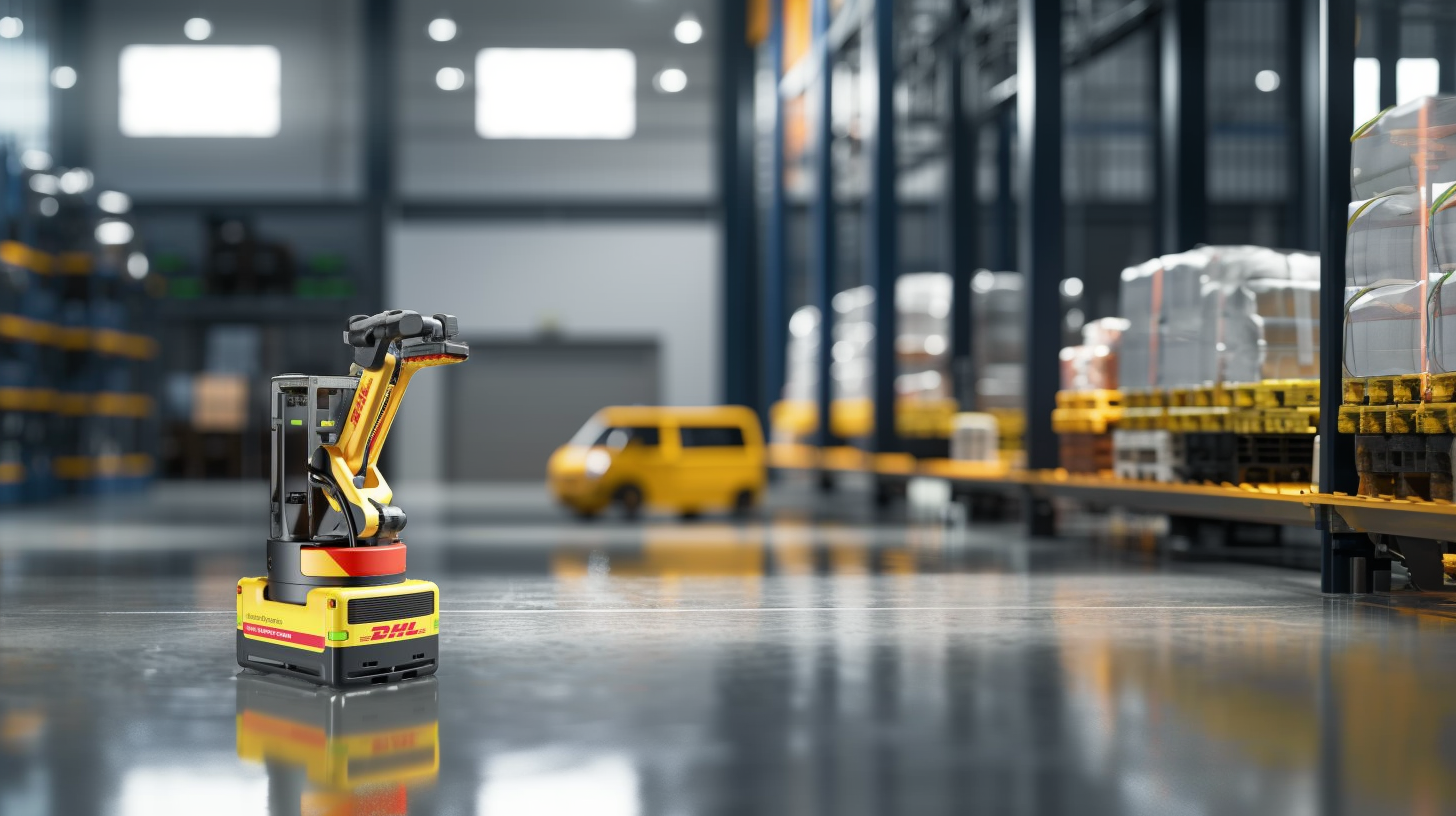
DHL invests in 1,000 stretch robots from Boston Dynamics for handling cardboard boxes – Template: DHL / Creative image: Xpert.Digital
DHL is pushing ahead with automation: 1000 new robots by 2030
DHL and Boston Dynamics expand their collaboration on a large scale
Global logistics giant DHL Group has signed a strategic Memorandum of Understanding (MoU) with robotics company Boston Dynamics for the acquisition of 1,000 additional stretch wrapping robots by 2030. This agreement marks a significant step in the company's automation strategy and builds on a successful collaboration that has been in place since 2018. DHL plans to expand the robots' applications beyond loading and unloading, including the picking of cartons.
Related to this:

Strategic partnership and automation strategy
The recently signed letter of intent between DHL and Boston Dynamics represents a significant milestone in the long-standing collaboration between the two companies. The logistics and robotics experts have been working together successfully since 2018. This partnership has particularly driven the joint product development of integrated, end-to-end automation solutions, including conveyor belts and palletizers, as demonstrated in the project in the United Kingdom.
DHL Supply Chain, the group's contract logistics division, initially launched the stretch robot commercially in North America in 2023 and recently expanded its use to the United Kingdom and Europe. The new contract now paves the way for the global rollout of more than 1,000 additional units. This investment is part of a broader strategy: Over the past three years, DHL has invested over one billion euros in automating its contract logistics business.
“With our agenda for faster digitalization, we are committed to maximizing the impact of robotics and automation across all our operations and business units,” explains Sally Miller, Global CIO of DHL Supply Chain. Through the expanded partnership with Boston Dynamics, DHL will take a more active role in shaping and driving robotics development, together with key partners.
Technology and capabilities of the stretch robot
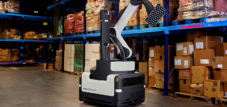
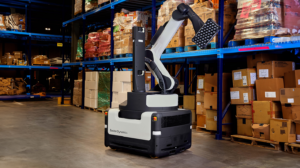
The stretch robot from Boston Dynamics was launched in 2022 and is specifically designed for handling cardboard boxes. At its core, it consists of a seven-degree-of-freedom robotic arm mounted on a mobile platform. Sensors and cameras are attached to a mast, allowing the robot to perceive its surroundings and objects. Equipped with a suction cup array, the robot can pick up packages and boxes, enabling automated loading and unloading of vehicles or warehouse operations.
This mobile robot can handle packages and boxes weighing up to 23 kg and stacks them independently and efficiently, taking their size into account. Its performance is impressive: Stretch can unload up to 700-800 boxes per hour. Thanks to its mobile platform, the robot can be flexibly deployed wherever it is needed, thus enabling relatively easy automation of logistics areas.
Stretch requires no specially adapted infrastructure for its intended use, which significantly reduces implementation costs for warehouse operators. The robot can also operate for up to eight hours without a charging break, which equates to continuous operation across two shifts.
Previous implementation and practical experience
DHL was one of the first companies to deploy the robot, initially in North America, starting in 2023. DHL spent $15 million on the first robots. Following successful trials, DHL also introduced the logistics robot in the United Kingdom and Europe.
Previous deployments of stretch wrapping have achieved unloading rates of up to 700 cartons per hour and have significantly contributed to increased employee satisfaction. A key advantage lies in the reduction of physically demanding work in truck trailers, which can be very hot in summer and extremely cold in winter. This not only improves working conditions but also optimizes operational processes in the logistics center.
Operators do not require any technical or engineering knowledge to operate the robot. Ideally, they are employees who understand the receiving process, and training takes only two days. Another advantage: A single operator can safely manage multiple stretch robots, drastically increasing receiving productivity.
Future applications and expected benefits
With the new agreement, DHL aims to expand the application range of its stretch robots. While they have primarily been used for the automated unloading of container cranes, DHL now plans to use them for other purposes as well. A particular focus is on picking cartons, which is the most labor-intensive activity within the DHL supply chain.
“Stretch, as the first multi-use robot, is also ideally suited for picking cartons and thus meets the various requirements,” DHL describes the advantages of the system. Its use is intended to be adapted to other business areas in the future, in order to achieve large-scale improvements in processes.
By expanding its range of applications, DHL aims to accelerate automation across all business units. Stretch's flexible deployment makes it particularly valuable for various logistical challenges. Its mobility and compact design allow it to maneuver in and out of trucks and into confined spaces within a warehouse.
Related to this:
Automation at DHL in a broader context
The investment in stretch robots is part of DHL's broader automation strategy. Globally, the group now uses more than 7,500 robots, over 200,000 intelligent handheld devices, and nearly 800,000 IoT sensors to optimize processes and improve working conditions. In addition to Boston Dynamics, DHL also uses robots from other companies such as AutoStore, Fox Robotics, Geek+, and Locus Robotics.
It is noteworthy that more than 90 percent of all DHL warehouses worldwide are now equipped with at least one automation or digitalization solution. This clearly demonstrates how far automation has already progressed in the logistics industry and its strategic importance for DHL.
As part of its Strategy 2030, DHL is strengthening its commitment to automation through strategic partnerships to further develop, test, and deploy robotics applications on an even larger scale together with leading providers. The collaboration with Boston Dynamics is a key component of this strategy.
Flexible automation: The transformation of logistics at DHL begins now
DHL's investment in 1,000 additional stretch wrapping robots from Boston Dynamics marks a significant step in the logistics company's automation strategy. The expanded partnership builds on an already successful collaboration and aims to broaden the robots' applications beyond loading and unloading.
The stretch robots offer DHL numerous advantages: They can handle up to 700-800 cartons per hour, improve employee satisfaction by taking over physically demanding tasks, and can be flexibly deployed in various logistics areas. The planned expansion to include carton picking demonstrates the potential of this technology for further applications.
In a broader context, this investment reflects DHL's comprehensive automation strategy, which already includes more than 7,500 robots worldwide and automation solutions for over 90 percent of its warehouses. With its Strategy 2030, DHL aims to further strengthen its position as a leading logistics company through continuous innovation and strategic partnerships, setting new standards for the logistics industry.
Related to this:
Your global marketing and business development partner
☑️ Our business language is English or German
☑️ NEW: Correspondence in your native language!

Konrad Wolfenstein
I and my team are happy to be available to you as your personal advisor.
You can contact me by filling out the contact form here wolfenstein@xpert.digital:or simply call me at +49 7348 4088 965. My email address is
I'm looking forward to our joint project.