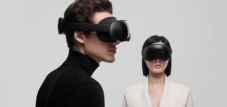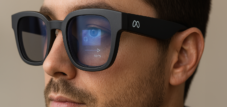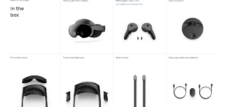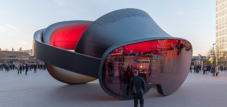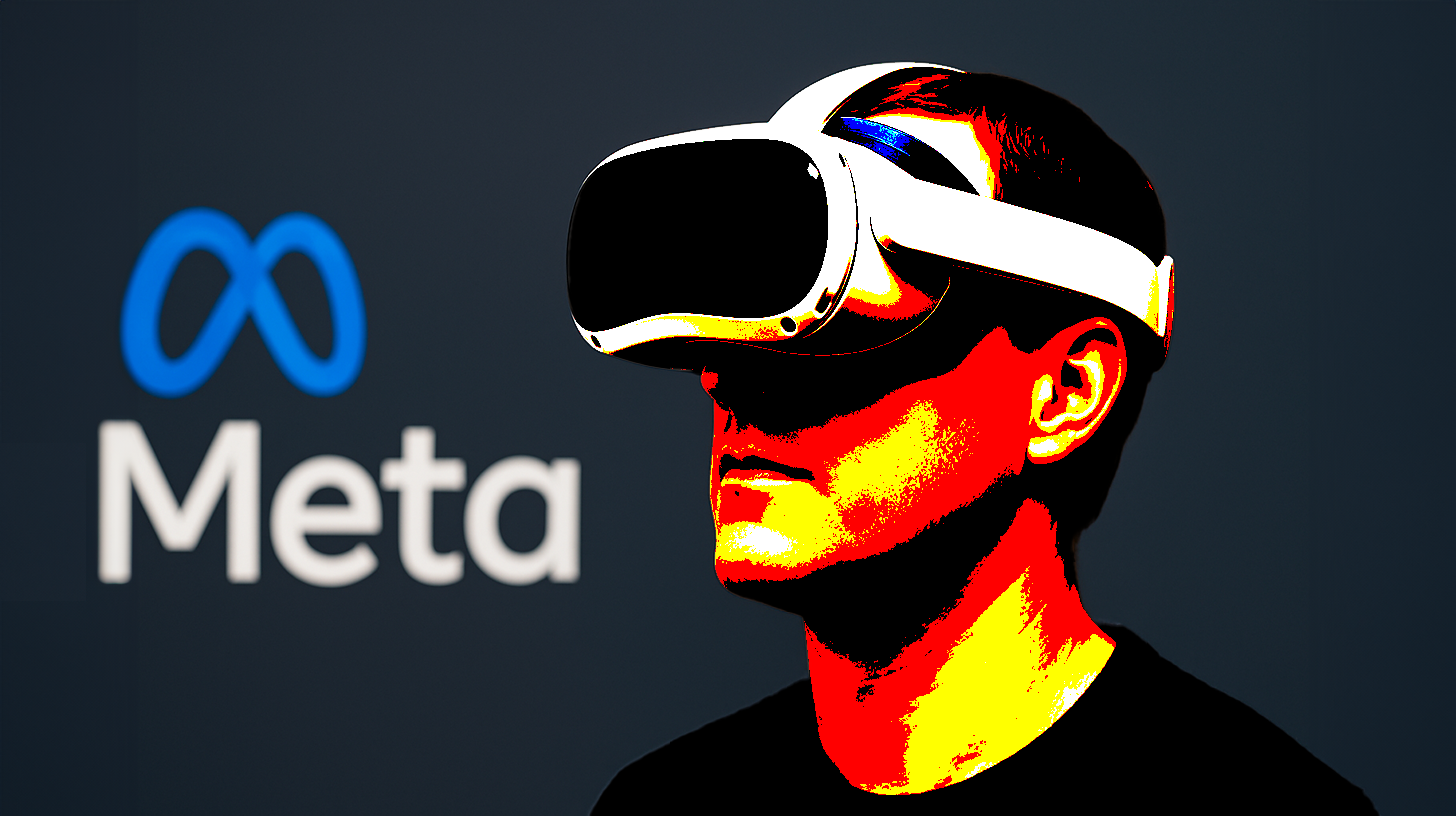
“Loma” headset – Meta’s strategic realignment: Development of a premium VR headset for immersive media consumption – Creative image: Xpert.Digital
Loma: Meta's vision of an ultra-lightweight premium VR headset for 2026
Meta and the future of entertainment: An exciting VR headset is coming
Meta Platforms is working intensively on the development of a novel, ultra-lightweight premium VR headset designed specifically for media consumption and immersive videos, with a planned launch in 2026. Codenamed "Loma," this device represents a fundamental shift in Meta's VR strategy and aims to capture the growing immersive entertainment market. The company is pursuing a two-pronged approach: technological innovation through a revolutionary form factor and strategic partnerships with Hollywood studios to secure exclusive premium content.
Related to this:

Technical innovation and design revolution
Revolutionary form factor and weight reduction
The "Loma" headset marks a decisive turning point in VR technology due to its radically altered form factor. While current VR headsets like the Meta Quest 3, weighing in at 515 grams, are still clearly recognizable as technical devices, Meta aims for a spectacle-like appearance with the Loma, distinctly different from the "bulky headsets like the Meta Quest and Apple Vision Pro." This design philosophy reflects Meta's realization that the current form factor represents the biggest obstacle to mass-market acceptance.
The company solves the weight problem by innovatively outsourcing the processing unit and battery to a wired external device that can be carried in a pocket. This solution is modeled on the Apple Vision Pro, which also uses an external battery, but takes miniaturization a step further. The strategy follows the successful approaches of Magic Leap and Apple, which have already implemented similar shared architectures.
Advanced display and control technology
Technically, the Loma headset relies on significantly improved display technology that is "more powerful than the current Meta Quest" and offers "better video quality." These improvements are essential for the intended focus on media consumption, as high-quality visuals are crucial for immersive video content. The device is expected to be equipped with modern pancake lenses and passthrough technology, similar to the Quest 3.
Another technological advancement lies in the control method. Like the Apple Vision Pro, the Loma headset is "primarily operated via eye and hand tracking rather than controllers." This touchless control underscores the focus on a natural, intuitive user experience, which is particularly well-suited for media consumption where traditional controllers might be perceived as intrusive.
Strategic market positioning and pricing
Target group-oriented pricing policy
Meta is pursuing a deliberately aggressive pricing strategy with the Loma headset, positioning the device between the two extremes of the VR market. With a target retail price of "under $1,000," it is significantly more expensive than the "$300 entry-level price for a Quest," but "considerably cheaper than an Apple Vision Pro" at $3,500. This positioning aims to open up a new market niche for premium VR experiences without reaching the price limits of the Apple Vision Pro.
The pricing strategy reflects Meta's understanding of market dynamics, which recognizes a significant need for a mid-range premium device. This positioning could allow Meta to appeal to both price-conscious customers who want more than the basic Quest and attract prospects who are put off by the Vision Pro.
Competitive challenge for Apple
The Loma project can be interpreted as a "direct attack on Apple," especially since "immersive media consumption has been identified as one of the most compelling use cases for the Apple Vision Pro." Meta's strategy aims to create a device that "could be significantly lighter and more compact than the Vision Pro," while also offering a substantial price advantage.
This positioning is particularly strategically important, as it allows Meta to directly address the weaknesses of the Apple Vision Pro – its weight, size, and high price. At the same time, Meta can leverage its established VR experience and developed ecosystem to gain a technological edge.
Content strategy and Hollywood partnerships
Strategic alliances with premium content producers
Meta is pursuing an aggressive content acquisition strategy to support the Loma headset with exclusive, high-quality content. The company "has approached Disney, the film studio A24, and smaller production companies to develop immersive content for the new VR headset." These partnerships aim to produce both episodic and standalone immersive video content based on "well-known brands.".
The financial dimension of this strategy is considerable: Meta is "offering millions for immersive video formats" and is simultaneously negotiating "the licensing of existing series and films." These investments demonstrate Meta's willingness to invest significant resources in content development to strengthen its hardware ecosystem and retain users long-term.
Related to this:
Established and future content collaborations
Meta has already secured a "prominent partner for immersive content": "At the end of 2024, the company announced a collaboration with James Cameron's production company, Lightstorm Vision." This partnership with one of the world's leading film producers for visual effects underscores Meta's ambition to establish premium content for VR platforms.
The content strategy encompasses both the development of entirely new VR-specific content and the adaptation of existing intellectual property rights for immersive formats. Meta plans to offer this content exclusively for VR devices for a limited time before making it available in conventional 2D versions on other streaming platforms.
Market dynamics and industrial challenges
Current market problems and strategic realignment
The timing of Meta's new VR strategy is particularly relevant given the current market dynamics. The company is struggling with "declining sales of the Meta Quest," with "fewer units sold in the first quarter of 2025" than in the same period last year, "even though the budget-friendly Meta Quest 3S model was only launched in time for the Christmas season.".
This weak sales performance, despite the introduction of a more affordable model, signaled to Meta that a fundamental change in strategy was necessary. The development of the Loma headset represents Meta's response to this challenge – instead of another "marginally improved iteration of the Meta Quest," the company developed a completely new product concept.
Internal data and usage patterns
Meta's strategic focus on media consumption is based on "internal data" showing that "a growing Quest user base understands VR headsets as an extension of their television and primarily uses them for media consumption." The company "expects this user group to play a major role in the Meta Quest ecosystem by 2027.".
This data analysis underscores the foresight of Meta's strategic realignment. Instead of continuing to focus primarily on gaming and general VR applications, the company recognizes the growing need for specialized media consumption devices and is positioning itself accordingly in the market.
Technological development landscape
Parallel development projects and product strategy
The Loma project is part of a broader product strategy encompassing several VR and AR devices being developed in parallel. Alongside Loma, Meta is working on the "Hypernova" AR glasses for 2026, which, however, are considered less suitable for the mass market due to their "thick frame" and 70-gram weight. Additionally, the ultra-compact "Puffin" project is planned for 2027, which is expected to "weigh less than 110 grams" and have the "form factor of bulky glasses.".
This diversified development strategy demonstrates Meta's understanding that different application areas require different technological approaches. While Loma is optimized for media consumption, Puffin addresses general wearability, and Hypernova targets AR applications.
Cost pressure and operational efficiency
The ambitious development plans come amidst significant financial strain on Meta's Reality Labs division. The company has "invested $55 billion in Reality Labs since 2019, but has earned little from facial computers." In response, "Zuckerberg is initiating cost-cutting measures," and the Reality Labs division "must reduce costs by 20 percent by 2026.".
These cost-cutting initiatives could impact the development speed and functionality of future devices. At the same time, they demonstrate Meta's commitment to improving operational efficiency while the company continues to invest significantly in VR/AR technologies.
Loma headset: Meta's game-changer in the premium VR sector?
Meta's development of the Loma headset represents a strategically significant turning point in the VR industry. By combining innovative hardware technology, aggressive pricing, and strategic content partnerships, Meta is positioning itself as a serious challenger to the Apple Vision Pro in the premium VR segment. The focus on media consumption as the primary use case reflects data-driven market analysis and could lay the foundation for a new product category situated between gaming-focused VR headsets and all-purpose AR glasses. The success of this project will depend significantly on Meta's ability to overcome the technical challenges of miniaturization while simultaneously building a compelling content ecosystem that motivates consumers to adopt this new device category.
Related to this:
Your global marketing and business development partner
☑️ Our business language is English or German
☑️ NEW: Correspondence in your native language!

Konrad Wolfenstein
I and my team are happy to be available to you as your personal advisor.
You can contact me by filling out the contact form here wolfenstein@xpert.digital:or simply call me at +49 7348 4088 965. My email address is
I'm looking forward to our joint project.