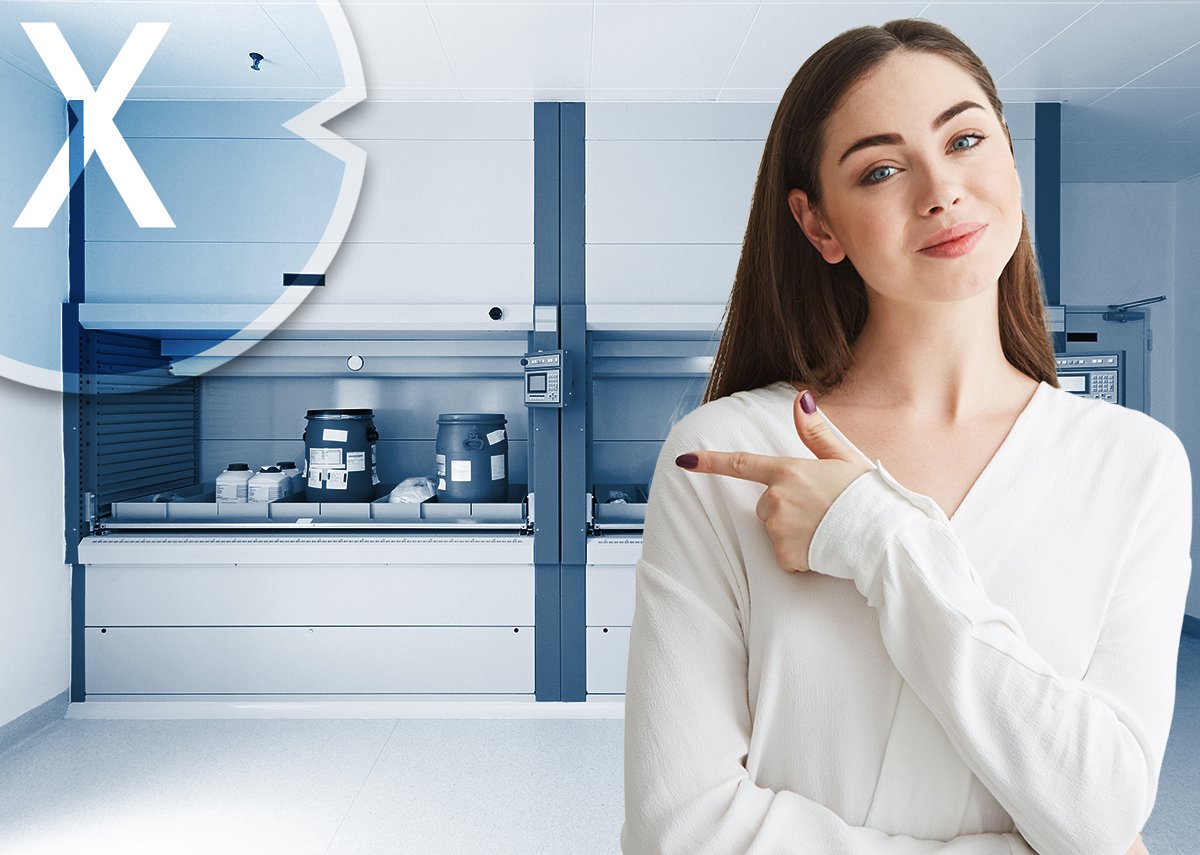
Vertical Lift Module: The storage lift or vertical shuttle storage system – Image: Xpert.Digital
Vertical Lift Module: The storage lift or vertical shuttle storage system
The Vertical Lift Module (VLM), also known as a vertical storage lift or vertical shuttle warehouse, is an advanced storage and order picking system used in materials management and logistics. It revolutionizes the way goods and products are stored and retrieved by optimizing vertical space utilization and enabling efficient warehouse management. Here are some important and interesting details you should know about the Vertical Lift Module:
How it works
The Vertical Lift Module consists of a tower with several horizontal shelves arranged vertically. Each shelf is equipped with a vertical conveyor that moves goods or products up and down. The system is controlled by a control system that allows access to each individual shelf.
Space saving
Thanks to the vertical arrangement of its shelves, the VLM utilizes available space more efficiently than conventional racking systems. It enables high storage density and significantly reduces space requirements. This is particularly advantageous in warehouses with limited floor space.
automation
The VLM is an automated system that optimizes the warehouse process. Using barcodes or RFID technology, products can be precisely identified and stored within the VLM. This enables automated storage and retrieval of goods as well as accurate inventory tracking.
Ergonomics and occupational safety
Using a VLM eliminates manual tasks such as climbing ladders or lifting heavy objects. Goods are automatically brought to an ergonomic picking height, improving working conditions and reducing the risk of injury.
Speed and efficiency
The VLM enables fast and precise product retrieval. Access to stored products is achieved within seconds, as the system transports the goods directly to the operator. This results in reduced picking times and increased overall warehouse efficiency.
flexibility
The VLM can be adapted to various storage requirements. The shelf compartments can be individually configured to accommodate different product sizes or weights. Furthermore, the VLM's modular design allows for easy system expansion to meet growing storage needs.
Integration with other systems
The VLM can be seamlessly integrated into other warehouse management systems. It can be connected to software solutions such as Warehouse Management Systems (WMS) to ensure a smooth flow of information and efficient inventory management.
Cost savings
Although the initial investment for a VLM (Virtual Warehouse Management) system may be higher than for conventional racking systems, it leads to significant cost savings in the long run. Improved space utilization, reduced labor requirements, and increased warehouse efficiency all contribute to lower operating costs.
Areas of application
The Vertical Lift Module is used in various industries, including e-commerce, retail, automotive, pharmaceutical, and food processing. It is suitable for storing small parts, cartons, containers, and many other products.
sustainability
The VLM also supports sustainable warehousing practices. Efficient space utilization reduces the required floor space, leading to lower energy consumption and CO2 emissions. Furthermore, automated inventory tracking helps minimize overstocking and enables precise demand planning.
➡️ The Vertical Lift Module (VLM) is a powerful and innovative storage and order picking system that helps companies optimize their warehouse processes. It offers numerous advantages, including space savings, automation, ergonomics, speed, and flexibility. With its efficient use of vertical space and integration into modern warehouse management systems, the VLM is a future-proof solution for modern logistics.
Top Ten Manufacturers and Companies/Suppliers for Vertical Lift Modules or Storage Lifts as Vertical Shuttle Storage Systems
Daifuku
Daifuku is a globally renowned manufacturer of warehouse technology and also offers Vertical Lift Modules (VLMs). Their VLM range comprises state-of-the-art warehouse automation solutions that enable efficient inventory management and order picking. Daifuku is characterized by innovative technology, high quality, and reliability, and operates in various industries worldwide.
Modula Inc.
Modula Inc. is an international manufacturer of vertical storage systems, including VLM. Their systems are characterized by high storage density, flexibility, and user-friendly operation. Modula also offers customized solutions for specific industry requirements.
Ferretto Group
The Ferretto Group is an Italian manufacturer of logistics and storage systems and also offers VLM systems. Their VLM systems are characterized by high load-bearing capacity, precision, and reliability, and are used in various industries.
Constructor Group
Constructor Group is a leading provider of warehouse solutions and also offers VLM systems. Their VLM systems are characterized by a robust design, flexible configuration options, and efficient inventory management.
AutoCrib
AutoCrib specializes in automated storage systems and also offers VLM systems. Their focus is on providing intelligent warehouse management solutions that enable optimized inventory management and efficient order picking.
Mecalux
Mecalux is an international company specializing in storage systems, offering a wide range of warehouse automation solutions, including VLM systems. Their VLM systems are designed for high performance and optimal space utilization.
Green Automated Solutions
Green Automated Solutions specializes in automated storage and order picking systems and also offers VLM systems. Their VLM systems are characterized by high speed, precision, and ergonomics.
Kardex Remstar
Kardex Remstar is a leading global manufacturer of VLM systems, offering a wide range of warehouse automation solutions. Their VLM range includes various models that differ in size, load capacity, and functionality.
Hänel Storage Systems
Hänel Storage Systems is a renowned manufacturer of VLM systems based in Germany. They offer customized solutions for warehousing and order picking tasks and are characterized by high quality, innovative technology, and ergonomic design.
SSI Schäfer
SSI SCHÄFER is a globally operating provider of logistics solutions and also manufactures VLM systems. They offer a wide range of storage technologies, including VLM systems that enable efficient and flexible product storage.
Where are Vertical Lift Modules used as storage lifts or vertical shuttle storage systems?
Vertical Lift Modules (VLMs) are used as storage lifts or vertical shuttle storage systems in a wide variety of industries and applications.
E-commerce
In the booming e-commerce sector, VLMs are frequently used to improve the efficiency of warehousing and order picking processes. They enable fast and precise order picking to meet the increasing demand for online orders.
retail
In retail, VLMs are used to manage inventory and ensure efficient replenishment logistics. They enable optimized storage density and facilitate the rapid restocking of shelves to meet customer needs.
automotive industry
In the automotive industry, VLMs are used to store small parts, components, and tools. These systems facilitate access to the required parts and improve workflows in vehicle manufacturing and maintenance.
pharmaceutical and medical industry
In the pharmaceutical and medical industries, VLMs are used to store pharmaceuticals, medical devices, and consumables efficiently and securely. Precise inventory tracking and rapid product retrieval are crucial to meeting the stringent regulations and delivery requirements of this sector.
Logistics and distribution centers
Large logistics and distribution centers use VLMs to optimize product storage and picking. They enable efficient space utilization and accelerate the order picking process to shorten delivery times.
electronics industry
In the electronics industry, VLMs are used to store components, semiconductors, printed circuit boards, and other electronic parts. This ensures proper organization and protects sensitive parts from damage.
Textile and clothing industry
VLMs are also used in the textile and apparel industry to efficiently store and retrieve garments, shoes, and accessories. This enables better inventory management and reduces picking times.
food industry
In the food industry, VLMs are used to store perishable food, beverages, and packaging materials. Accurate inventory tracking and rapid product availability ensure efficient food distribution.
Storage of documents and files
VLMs are also used in office environments to store documents, files, and other written materials. This allows for space-saving and secure storage of important documents.
Industrial and production facilities
VLMs are also used in various industrial and production facilities to store tools, materials, and fixtures. This improves workflows and ensures efficient use of available resources.
➡️ These are just a few examples, and the use of VLMs as storage lifts or vertical shuttle storage systems can vary depending on the specific requirements and needs of the industry and application.
How does a vertical lift module differ from a shuttle, and why do we sometimes still refer to a storage lift as a vertical shuttle storage system?
A Vertical Lift Module (VLM) and a shuttle are two different concepts for storing and transporting goods in a vertical direction.
How it works
A vertical lift module is a vertical racking system consisting of a tower with horizontal shelves. Each shelf is equipped with a vertical conveyor that moves goods up and down. Access to the stored products is achieved by raising or lowering the conveyor.
A shuttle, on the other hand, is a mobile racking system. It consists of horizontal shelves on which mobile shuttle units are placed. These shuttles can move independently of each other along the aisles, picking up or dropping off goods. Product access is achieved by moving the shuttle to the desired position.
Storage density
VLMs typically offer higher storage density compared to shuttle systems. Due to the vertical arrangement of the rack levels and the individual adjustability of the compartments, a VLM can utilize available space more efficiently and store more goods in a smaller footprint.
flexibility
Shuttle systems are generally more flexible than VLMs. The shuttles can move independently and reach different rack levels, increasing adaptability to varying storage requirements. While VLMs also offer flexibility in rack configuration, they are typically less flexible in terms of access to specific locations compared to shuttles.
➡️ Why is the term "vertical shuttle warehouse" sometimes used in connection with a vertical lift? These terms can be used interchangeably in some cases, as both VLMs and shuttle systems are vertical storage solutions. Sometimes, the specific design of a VLM may incorporate aspects of a shuttle system, such as the ability to access individual rack levels or offer greater flexibility in handling goods. In such cases, the term "vertical shuttle warehouse" can be used to emphasize the specific features or functions of the VLM. It is important to note that the use of these terms is not always consistent and can vary from manufacturer to manufacturer.
The advantages of Vertical Lift Modules (VLMs) or storage lifts compared to other storage solutions
Vertical Lift Modules (VLMs) or storage lifts offer a number of advantages over other storage solutions.
Space saving
VLMs make optimal use of available vertical space, as they are able to integrate multiple shelf levels into a compact tower. This significantly reduces the space required compared to conventional shelving and saves valuable floor space.
Efficient use of space
Thanks to the vertical arrangement of the shelf levels and the individual adjustability of the compartments, VLMs can utilize the available space efficiently. This allows for higher storage density and the storage of a greater number of products in a smaller footprint.
ergonomics
VLMs are designed to improve ergonomics and working conditions for warehouse employees. The automated vertical movement of the racking levels towards the operator minimizes bending, stretching, and heavy lifting. This reduces strain on personnel and contributes to improved workplace safety and productivity.
Quick access
With a VLM (Virtual Warehouse Management) system, access to stored products is quick and efficient. The automated movement of the rack levels towards the operator eliminates the need to walk long distances through the warehouse. This results in reduced search and picking times and increases the efficiency of warehouse processes.
Automation and integration
VLMs can be seamlessly integrated into modern warehouse management systems and automation technologies. This enables automatic inventory tracking, optimized inventory management, and efficient communication with other parts of the warehouse and supply chain management system.
Error minimization
Through automated inventory tracking and order picking, VLMs reduce human errors that can occur in manual processes. The precise positioning of stored products and electronic access control enable accurate and error-free order picking.
Scalability
VLMs are typically modular, meaning they can be adapted to the specific needs and growth of a company. Additional modules can be added as needed to increase capacity and ensure flexible scalability.
➡️ These advantages make VLMs an attractive storage solution for companies that want to optimize their storage processes, save space, improve working conditions and achieve efficient material flow control.
Future technology for sales & marketing of Vertical Lift Modules (VLM) as storage lifts or vertical shuttle warehouses with Metaverse and XR technologies
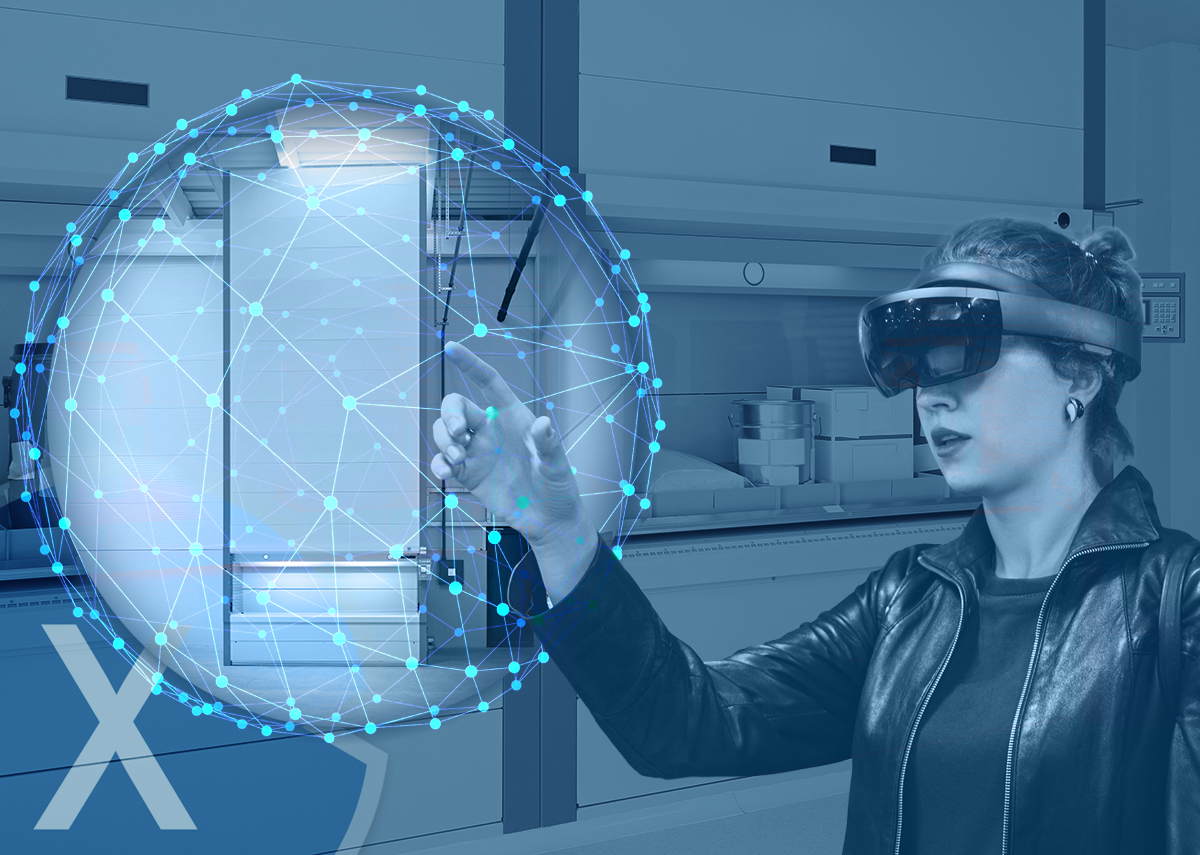
Automated storage racks from carousel racks to rotary storage systems – Image: Xpert.Digital
The integration of Metaverse and XR technologies into the sales and marketing of Vertical Lift Modules (VLMs) as storage lifts or vertical shuttle warehouses offers an exciting future perspective. Here are some potential application areas for these technologies:
Virtual product presentation
By using XR technologies such as virtual reality (VR) or augmented reality (AR), companies can virtually represent VLMs and vertical shuttle warehouses. This allows potential customers to immerse themselves in virtual environments and experience how the systems work. They can view the shelf levels, observe the movement of goods, and interactively explore the various functions of the VLMs.
Virtual training and demonstrations
Metaverse and XR technologies offer the opportunity to conduct virtual training and demonstrations for employees, dealers, or customers. Through immersive VR or AR experiences, they can learn how to operate VLMs, store or retrieve goods, and understand the benefits of these systems in a simulated environment.
3D modeling and visualization
Using 3D modeling techniques, VLMs and vertical shuttle warehouses can be created as highly detailed virtual models. These models can be integrated into metaverse platforms or websites to give potential customers or prospects a realistic impression of the systems. The ability to view and interact with the models from different perspectives allows them to better understand the efficiency, storage density, and functionality of the VLMs.
Virtual tours and showrooms
Companies can create virtual tours of their warehouses and logistics centers and embed them in a virtual metaverse environment. Customers or prospects can conveniently access these tours from anywhere via the internet and experience the benefits of VLMs and vertical shuttle warehouses. Interactive elements allow them to explore shelf levels, track goods movements, and learn more about the systems' applications.
Customer-specific customizations
XR technologies allow customers to visualize their individual requirements and customizations for VLMs. They can adjust various configurations, shelf heights, bay sizes, and other parameters in a virtual environment and immediately see the impact on storage capacity and efficiency. This enables better communication between customers and manufacturers and contributes to the development of tailored solutions.
➡️ The integration of metaverse and XR technologies opens up exciting possibilities for presenting VLMs as storage lifts or vertical shuttle warehouses in an interactive and immersive context. These innovative approaches enable companies to improve their sales and marketing efforts, strengthen customer loyalty, and foster a better understanding of the systems' benefits and features.

Xpert.Plus Warehouse Optimization - High-bay warehouses and pallet warehouses: Consulting and planning
Xpert.Plus – Logistics consulting and logistics optimization – industry expert, featuring its own 'Xpert.Digital Industry Hub' with over 1,000 specialist articles
Xpert.Plus is a project by Xpert.Digital. We have many years of experience in supporting and consulting on warehouse solutions and in warehouse optimization, which we combine under Xpert.Plus in a large network.

Konrad Wolfenstein
I would be happy to serve as your personal advisor.
You can contact me by filling out the contact form below or simply call me on +49 7348 4088 965 (Munich) .
I'm looking forward to our joint project.
Write to me


Xpert.Digital – Konrad Wolfenstein
Xpert.Digital is a hub for industry focusing on digitalization, mechanical engineering, logistics/intralogistics and photovoltaics.
With our 360° Business Development solution, we support renowned companies from new business to after-sales.
Market intelligence, smarketing, marketing automation, content development, PR, mail campaigns, personalized social media and lead nurturing are part of our digital tools.
You can find more information at: www.xpert.digital – www.xpert.solar – www.xpert.plus
Keep in touch