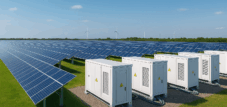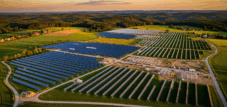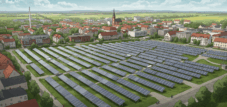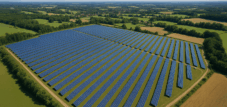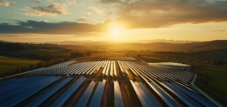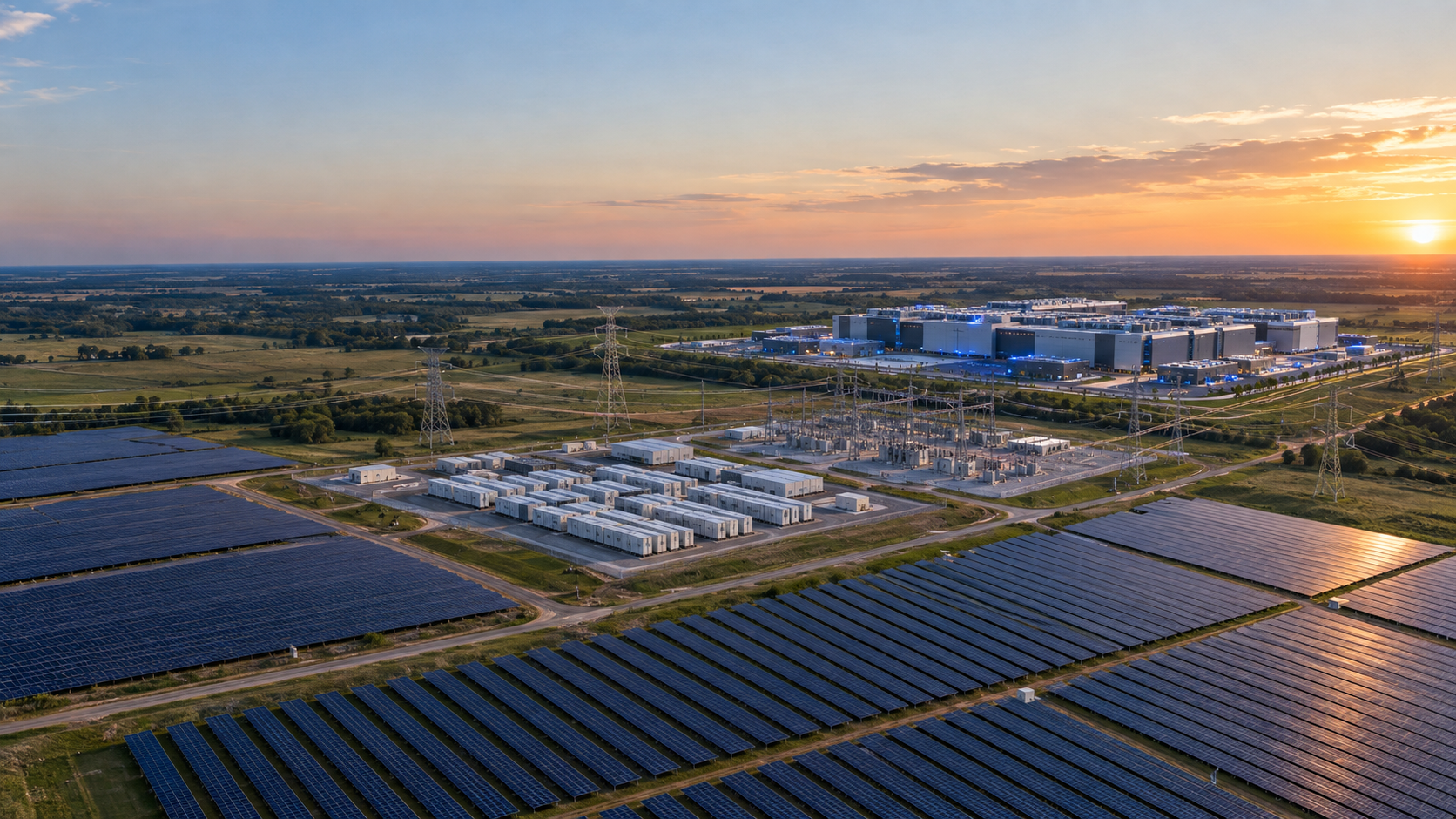
"Steel River" project: 2.5 gigawatt solar park for Arkansas – How Google is secretly becoming the new energy giant – Creative image on the topic, with AI: Xpert.Digital
AI's energy demands are now so great that tech companies are creating their own energy markets
Power struggle over the electricity grid: Why Google's new mega solar park is not what it looks like
Google's billion-dollar solar bet: Why the AI boom is changing our power grid forever
The rise of artificial intelligence has a massive, physical side effect: an unprecedented hunger for electricity. To operate the gigantic data centers of the future, it's no longer enough for tech giants like Google to simply buy green energy certificates. They must become architects of new energy markets themselves. The planned "Steel River Energy Center" in the US state of Arkansas—one of the largest solar and storage projects in the United States—marks the beginning of a new era. Google is acting as an anchor customer, credit amplifier, and multi-billion-dollar financier to build up to 2.5 gigawatts of solar power. But behind the impressive showcase facade of solar panels and gigantic battery storage lie complex economic realities. The mega-deal vividly demonstrates the opportunities of rapidly accelerating infrastructure investments, but at the same time reveals the considerable risks for local power grids, regional value creation, and the actual climate impact of the AI economy. An in-depth analysis of the new power center at the intersection of technology, capital markets, and industrial policy.
Google's solar gamble in Arkansas: How 2.45 gigawatts are changing the economics of AI, power grids, and location policy
Google's agreement with Cypress Creek Energy for the Steel River Energy Center in Arkansas is far more than an unusually large purchase of solar power. The project exemplifies a new phase of the digital economy, in which computing power, energy supply, capital markets, and regional industrial policy merge into a shared infrastructure system. The announced total size of approximately 2.45 to 2.5 gigawatts of solar capacity and 2.9 gigawatt-hours of battery storage makes Steel River one of the largest solar and storage projects in the United States. However, the technical dimension is not the only crucial factor. Of particular economic significance is the fact that a single technology company, through a long-term power purchase agreement, is securing the financing for an energy facility of a scale previously borne almost exclusively by utility companies, governments, or large industrial conglomerates.
The provocative, yet economically plausible, thesis is therefore this: The expansion of artificial intelligence is forcing technology companies to effectively assume responsibilities in energy and industrial policy. Google is not merely buying green energy certificates, but is acting as an anchor customer, investor, and driver of demand for new generation capacity. This is shifting the balance of power in the energy system. Expansion is no longer solely determined by the anticipated electricity demand of households and traditional industrial companies, but increasingly by the long-term infrastructure planning of a few global hyperscalers. This opens up opportunities for accelerated investment, but at the same time poses significant risks for grids, electricity prices, land use, and the distribution of economic benefits.
A mega-project with a crucial limitation
The commonly circulated summary that Google has contractually assumed full responsibility for the production of a 2.45-gigawatt project is too simplistic. According to the information now available, Google, as anchor investor and electricity purchaser, is supporting the first two construction phases of the Steel River Energy Center. These comprise approximately 1.6 and 1.63 gigawatts of direct current (DC) solar power and about 1.9 gigawatt-hours of battery storage, respectively. The third phase is intended to expand the overall project to approximately 2.45 or roughly 2.5 gigawatts of solar power and 2.9 gigawatt-hours of storage by 2029. Based on publicly available information, Google's purchase of this third phase has not been definitively confirmed.
This distinction is crucial for the economic evaluation. The overall size describes the long-term vision for the site, while the actual scope of the contract attributable to Google initially covers the first two phases. Nevertheless, the scale remains extraordinary. Even 1.6 gigawatts is equivalent to the output of several large conventional power plant units, although solar power, due to its weather- and time-of-day-dependent generation, cannot be equated with guaranteed power plant capacity. Rather, the comparison demonstrates the extent to which project development has scaled: A single corporate customer can enable the construction of an energy infrastructure whose nominal capacity represents a significant portion of a state's total solar power output to date.
The different figures of 2.45 and 2.5 gigawatts are not a fundamental contradiction. In large projects, technical DC capacities are often rounded, while financing documents use more precise values. It would be more problematic to conflate gigawatts of generation capacity and gigawatt-hours of storage capacity. The solar power system is measured in gigawatts because this unit describes maximum electrical output. Battery storage, on the other hand, is specified in gigawatt-hours because it refers to the amount of energy that can be stored. Without additional information about the maximum discharge power, it is not possible to determine from 2.9 gigawatt-hours alone how many hours the system can operate at full capacity.
Why Google doesn't buy direct solar power
A virtual power purchase agreement (vPPA) is not a traditional supply contract where a specific quantity of electrons flows directly from the solar park to the data center. The electricity from Steel River is fed into the regional grid. Google continues to obtain the physical electricity for its facilities from the local utility and the public grid. In parallel, Google and the project operator agree on a long-term reference price for the generated energy. If the market price is below the agreed-upon price, the purchaser typically pays the difference. If the market price is above the agreed-upon price, the difference generally flows in the opposite direction. Additionally, the purchaser usually receives the environmental attributes or certificates of origin associated with the generation.
The economic function of a vPPA therefore lies primarily in price and revenue hedging. For Cypress Creek, the contract transforms fluctuating future electricity market revenues into a more predictable cash flow. This predictability is crucial for banks and equity investors. A solar park with high initial investment costs but low ongoing fuel costs can be financed more cheaply the more reliable its future revenues are. Google, with its credit rating, thus acts as a credit amplifier for the project. The company does not have to build or operate the plant itself, but its long-term payment commitment reduces sales risk and therefore potentially lowers capital costs.
The structure also offers advantages for Google. The company can promote new renewable energy capacity without having to own each individual power plant. At the same time, it gains a long-term economic link to electricity prices and can use the environmental attributes of the generation for its carbon footprint. However, the contract does not provide complete protection against all price risks. Significant differences can arise between the point of connection of the solar park, the market price relevant to the contract, and the actual electricity price at the data center's location. This so-called basis risk increases when grid congestion, local overproduction, or differing price zones occur.
The financing is the real breakthrough
The scale of the capital raised underscores the importance of the offtake agreement. Cypress Creek secured approximately $3.5 billion for the first two phases to finance construction and long-term operation. Barclays, BNP Paribas, Santander, and Wells Fargo were named as lead banks; in addition, a tax-motivated equity financing arrangement was secured. This transforms Steel River not only into an energy project but also into a case study of how global capital markets are financing the physical infrastructure of the AI economy.
From the banks' perspective, the political appeal of solar energy is not the primary factor. Crucial are robust cash flows, technical risks, construction costs, grid connection, regulatory frameworks, tax advantages, and the creditworthiness of the buyer. A long-term contract with a financially strong technology company significantly improves the project's bankability. It reduces the risk that low wholesale prices during sunny hours will depress revenues to such an extent that debt servicing and returns are jeopardized. At the same time, the contract shifts some of the market price risk to Google, which, due to its size, global portfolio, and long-term growth in electricity demand, is better positioned to bear this risk than an individual project developer.
The financing also shows that large-scale renewable energy projects can still mobilize significant private capital despite political uncertainties, provided three conditions are met: a sufficiently large site, a secure grid connection, and a creditworthy buyer. The crucial bottleneck is therefore often not the fundamental availability of capital. Bottlenecks are more likely to arise with permits, transformers, high-voltage lines, connection capacities, supply chains, and the scheduling between the data center and the power plant.
However, the stated financing amount does not allow for a simple price per installed watt for the entire project. The 3.5 billion US dollars refer to the first two phases and may include not only solar modules but also battery storage, construction work, substations, grid connection, reserves, financing costs, and long-term operating components. Furthermore, the breakdown of what proportion is attributable to debt financing, tax-motivated equity, or other financing instruments is not publicly available. Any seemingly precise calculation of the pure solar costs would therefore be misleading.
Arkansas is transforming from an electricity state into an AI hub
Steel River is closely tied to Google's broader investment strategy in Arkansas. The company announced investments of around four billion US dollars through 2027, including its first data center in the state, located in West Memphis. The campus will cover more than 1,000 acres (over 400 hectares) and will house data center buildings, offices, a substation, and other infrastructure. This will create not just a single major energy consumer in the region, but a new industrial ecosystem encompassing digital infrastructure, power generation, storage, network technology, and construction services.
Arkansas offers several location advantages. Electricity prices are traditionally below the US average, land is more readily available at lower prices compared to established data center regions, and the state boasts an industrial base ranging from steel production to logistics. Proximity to the transportation hub of Memphis improves accessibility, while large, contiguous lots facilitate the simultaneous development of data centers and energy infrastructure. Furthermore, a political location strategy actively targets permitting, economic development, and energy supply toward large investors.
However, the establishment of such a facility will only sustainably alter the region's economic structure if it results in more than just a capital-intensive construction complex with limited permanent employment. Data centers create thousands of direct and indirect jobs during the construction phase, but require relatively few employees during operation compared to their investment volume. The long-term regional benefits therefore depend significantly on tax revenues, supply chains, training, energy infrastructure, and subsequent investments. If local companies handle maintenance, metal construction, electrical engineering, security services, logistics, and specialized services, regional value creation increases. If most components and skilled workers are sourced from outside the region, a larger portion of the economic impact remains temporary.
Solar energy meets a fossil fuel power system
The significance of Steel River can only be understood within the context of Arkansas' existing energy mix. In 2024, the state generated the majority of its electricity from natural gas, coal, and nuclear power. Natural gas accounted for approximately 38 percent, coal for about 26 percent, while renewable energy sources contributed only roughly 11 percent. Within renewable energy generation, hydropower and solar power played significant roles. A solar project of approximately 2.5 gigawatts can visibly alter this structure, but it will not automatically replace fossil fuel power plant capacity to the same extent.
Solar energy is primarily produced during the day and often reaches its peak values when other solar installations are also generating a lot of electricity. As solar power expansion increases, the additional market value of each extra kilowatt-hour decreases during sunny hours. In extreme situations, local wholesale prices can become very low or even negative if the generated electricity cannot be transported, stored, or used flexibly. Steel River addresses this problem with battery storage. This storage can capture some of the midday generation and shift it to later hours when demand is higher and solar power is lower.
The storage capacity of 2.9 gigawatt-hours is considerable, but it doesn't power a large data center for several cloudy days. Battery storage systems of this type are primarily suitable for shifting power within a single day, providing short-term grid services, and limiting peak feed-in. They increase the economic value of solar power plants by optimizing the timing of grid feed-in. However, for a consistently reliable power supply, the public grid, dispatchable power plants, interregional power flows, and potentially other low-carbon technologies remain essential.
This is precisely where a key difference lies between decarbonization in accounting and decarbonization in practice. A company can purchase as much renewable energy as it consumes over the course of a year, yet still rely primarily on gas or coal-fired power plants during certain nighttime hours or periods of low wind and solar output. Google, therefore, also aims to balance its consumption with CO₂-free generation on an hourly basis. Solar energy and battery storage improve this balance, but do not completely close the gaps in supply. A true 24/7 supply would require a broader mix of solar, wind, storage, nuclear, geothermal, or other reliable low-CO₂ sources, as well as stronger grids.
The battery is more than just an accessory
Public perception is often dominated by the gigantic solar power output. However, battery storage can be just as important economically. It transforms a purely weather-dependent system into a more manageable portfolio. The operator can store electricity when prices are low and sell it later when there is a shortage. Furthermore, modern battery systems can provide frequency regulation, voltage support, reserve power, and other system services. These additional revenue streams improve profitability and can increase grid stability.
The combination of solar and storage also reduces the risk of the grid connection having to be dimensioned solely for a short daily peak in generation. By storing a portion of the peak production, the same connection capacity can be used for more hours. This improves the utilization rate of the infrastructure. However, the effect depends on the specific design. Without information on maximum charging and discharging power, guaranteed cycles, degradation, and operating strategy, it remains unclear how effectively the storage system can actually smooth out solar peaks.
Batteries are also subject to economic wear and tear. With each charging cycle, their usable capacity gradually decreases. High temperatures, frequent deep discharges, and aggressive operating conditions can accelerate this process. A viable business model must therefore consider replacement investments, warranties, insurance, fire protection, and eventual recycling. The impressive initial capacity is only valuable in the long term if maintenance and upgrades are financially planned for over decades.
New: Patent from the USA – install solar parks up to 30% cheaper and 40% faster and easier – with explanatory videos!

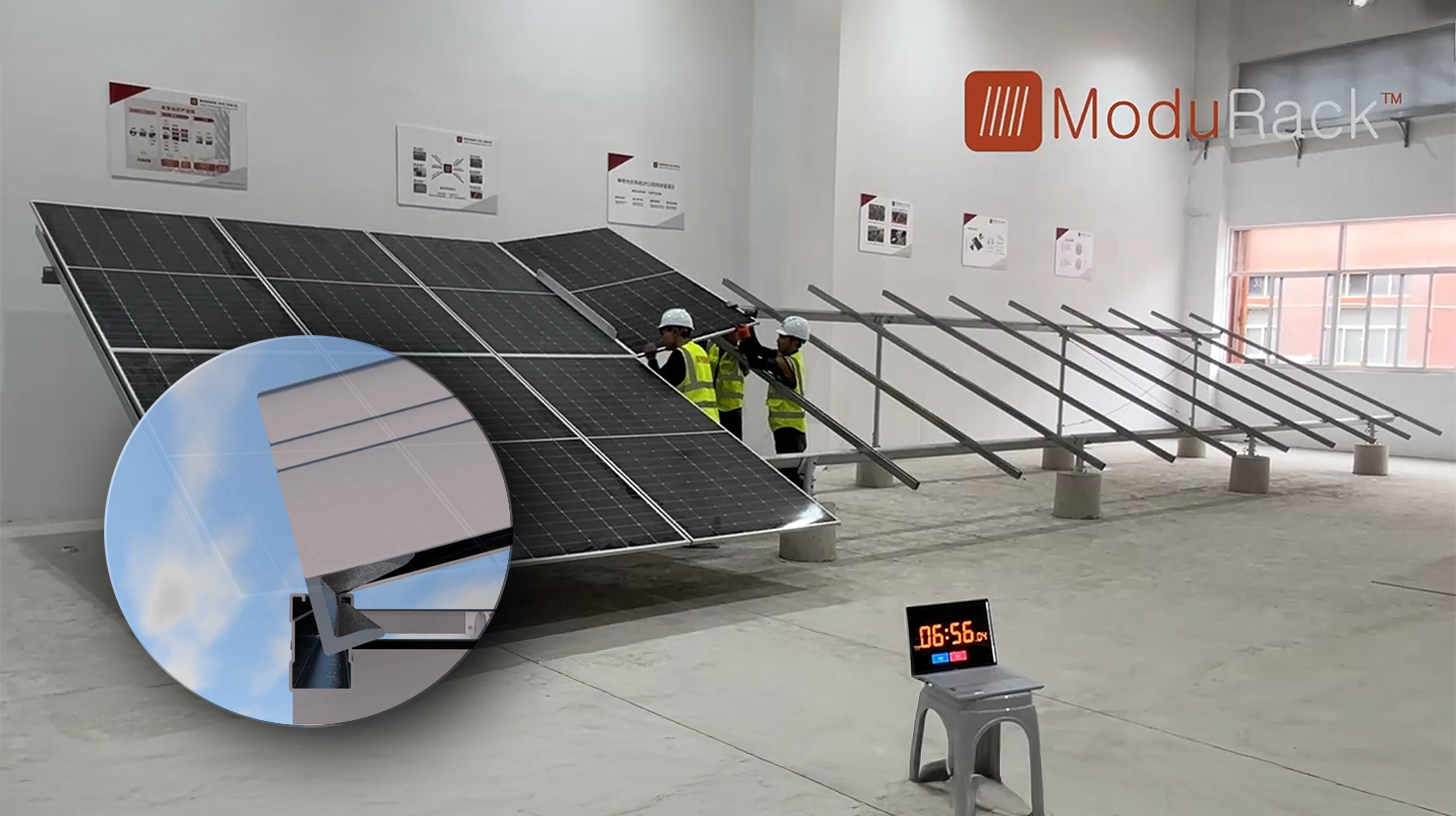
New: Patent from the USA – Install solar parks up to 30% cheaper and 40% faster and easier – with explanatory videos! - Image: Xpert.Digital
The core of this technological advancement is the deliberate departure from conventional clamp mounting, which has been the standard for decades. The new, more time- and cost-effective mounting system addresses this with a fundamentally different, more intelligent concept. Instead of clamping the modules at specific points, they are inserted into a continuous, specially shaped support rail and held securely in place. This design ensures that all forces – whether static loads from snow or dynamic loads from wind – are distributed evenly across the entire length of the module frame.
More information here:
Regional value creation and the importance of solar projects
The AI boom is shifting electricity demand
Global data center electricity consumption is rising sharply, with artificial intelligence being the most significant additional driver of this growth. Modern AI models require enormous computing power not only during training. As their use increases, so does the continuous electricity demand for query execution, data storage, network operation, and cooling. The International Energy Agency expects global data center electricity consumption to more than double by 2030, potentially reaching approximately 945 terawatt-hours. In the United States, the industry could account for nearly half of this additional electricity demand growth by the end of the decade.
Google itself recorded a 37 percent increase in its electricity consumption in 2025, following a 27 percent rise in 2024. At the same time, the company signed contracts for more than twelve gigawatts of new low-carbon energy in 2025. This parallel illustrates the fundamental problem: efficiency gains per computation are insufficient when the number and complexity of applications are growing even faster. The so-called rebound effect leads to cheaper and more efficient computing power being used more extensively overall, and thus to a further increase in absolute energy consumption.
Steel River is therefore not an isolated climate protection measure, but a procurement response to structural load growth. For Google, it's about security of supply, price stability, and speed. New data centers can only go online as planned if sufficient electrical power, grid connections, and transformers are available. Energy thus becomes a strategic production factor for the AI industry, comparable to semiconductors, skilled workers, and data. Regions with affordable, reliable, and politically acceptable electricity supply become more attractive locations; regions with lengthy connection processes or overloaded grids lose investment.
Network expansion is becoming a critical bottleneck
A project of this scale cannot simply be connected to an existing distribution grid. It requires high-capacity substations, high-voltage lines, protection technology, grid studies, and precise coordination with the regional grid operator. The crucial question is not only how much energy the plant generates annually, but whether the grid can handle that power at any given hour and deliver it to consumption centers. Grid connection delays have become one of the biggest risks for renewable energy projects and data centers in the United States.
The proximity between generation and consumption helps, but doesn't automatically eliminate all bottlenecks. Steel River is located in Mississippi County in northeastern Arkansas, while Google's new campus in West Memphis is being built further south, near the Tennessee border. The solar power isn't routed directly to the data center via a dedicated line. Instead, it flows into a regional grid where supply and demand are continuously balanced. Therefore, other consumers also benefit from the additional generation, while Google remains dependent on the utility's entire power plant and transmission network.
Economically, the new large consumer can accelerate grid expansion because its long-term payments justify investments. At the same time, there is a risk that infrastructure costs will be partially shifted to other customers. Google and Entergy state that the company is covering the full energy costs of its West Memphis site. The special supply contract is intended to generate significant net benefits for other customers over its term. However, such statements can only be definitively assessed based on the regulatory-approved tariff structure, actual load development, and potential cost overruns. The crucial question is who bears the risk if consumption is lower than expected, construction costs increase, or additional grid measures become necessary.
Lower prices are possible, but not guaranteed
A large new electricity customer can be advantageous for a utility company. Fixed costs for power plants and grids are spread across more kilowatt-hours sold, long-term minimum payments improve predictability, and new generation facilities can generate additional tax revenue. If Google actually assumes all attributable costs and makes contractually sufficient minimum payments, existing customers can benefit. Entergy estimates the expected net benefit from the contract with Google at more than $1.1 billion over the contract's term.
This positive effect, however, is not automatic. Data centers have a very high and largely continuous load. If additional gas-fired power plants, transmission lines, or reserves need to be kept on standby for a few peak hours, system costs increase. Solar energy alone cannot cover such a load because the data center continues to operate at night. Batteries can bridge short periods, but not longer seasonal deficits. Without flexible demand management, a hyperscaler can therefore simultaneously promote renewable energy capacity and increase the demand for secure fossil fuel power.
Google states that it relies on load flexibility, meaning the temporary reduction or shifting of certain computing processes during periods of high network load. This model has significant economic potential. Many digital workloads do not need to be executed in the same location every second. Training runs, data preparation, or certain background processes can be shifted in time or location. When data centers react to price signals and network congestion, they transform from rigid, large-scale consumers into active system resources. However, this requires clear measurement rules, financial incentives, and verifiable commitments.
Regional value creation beyond the construction site
Cypress Creek anticipates approximately 700 construction jobs per phase and roughly $300 million in additional local tax revenue over the project's lifetime. Google and Cypress Creek have also jointly pledged $8 million for local programs. While such sums are economically significant for Mississippi County, they should be considered in relation to the overall investment. For a multi-billion-dollar project, the decisive factor is not the one-time donation, but the long-term fiscal and industrial impact.
Of particular interest is the announced use of American-made solar panels and construction steel from Arkansas. This allows a larger portion of the investment to remain within the United States. It creates additional demand for local steel producers, while the region combines its industrial identity with the emerging energy and digital economy. This connection is strategically significant: data centers, solar farms, and battery storage facilities require large quantities of steel, cables, transformers, power electronics, and construction services. A single project can therefore spawn a broader supply chain.
At the same time, the local employment impact must not be overstated. Construction jobs are temporary, and highly automated solar parks require comparatively little personnel during operation. Crucial are training programs that qualify employees for permanently in-demand professions: high-voltage technology, grid operation, battery safety, data center technology, cybersecurity, cooling, and industrial maintenance. Without such expertise, a regional divide threatens, in which landowners, external construction companies, and the technology corporation profit, while a large part of the population receives only indirect benefits.
Land requirements and agriculture as a distribution conflict
A multi-gigawatt solar park requires a significant amount of land. The precise land use in Steel River depends on module technology, spacing, topography, buffer zones, and storage locations. Regardless of the specific value, a land-use conflict arises between energy production, agriculture, conservation, and regional development. In a predominantly agricultural county, leasing land can generate stable income for owners, but it can also alter lease prices and land markets.
Not every conversion of agricultural land is economically problematic. Solar projects can generate higher and more reliable incomes on less fertile soils than certain agricultural uses. Furthermore, they do not consume land irreversibly, provided decommissioning obligations, financial guarantees, and soil protection measures are observed. After the end of the operational period, the land can generally be used for other purposes. Problems arise when decommissioning costs are underestimated, drainage systems are damaged, or local communities are insufficiently involved in site selection.
For public acceptance, long-term contracts and transparent responsibilities are therefore more important than advertising messages. Municipalities need to know who is liable for dismantling and disposal in the event of the operator's insolvency, how fire departments are prepared for battery damage, and which roads will be burdened by heavy transport. Equally important is a fair distribution of tax revenue. If schools and municipalities receive new sources of income while infrastructure and safety costs are fully covered, the project can generate broad local benefits.
Climate benefits with accounting limits
The additional construction of large solar and storage plants is expected to reduce the average emission intensity of the regional electricity system. Solar power is particularly effective when it displaces natural gas or coal generation. However, the actual emission reduction depends hourly on which power plant reduces its output. If solar power is curtailed due to grid congestion or if it already displaces low-carbon generation, the additional benefit is less pronounced. Battery storage can improve the effect, but it incurs charging losses and generates its own emissions during manufacturing and construction.
A vPPA creates a more credible link to new capacity than simply purchasing cheaper certificates of origin from existing facilities. The principle of additionality is met if the contract makes a substantial contribution to the financing and construction of the project. In Steel River's case, the combination of long-term offtake, billions in financing, and the start of construction indicates a strong contribution to the real economy. However, this does not mean that Google's data center will operate with zero emissions at all times.
The distinction between annual energy balance and hourly supply remains crucial. A solar power plant can produce enough energy over a year to theoretically offset the annual consumption of a data center. However, at night, the physical electricity mix still comes from other sources. Battery storage reduces this gap, but only closes it for limited periods. An objective assessment should therefore neither downplay the climate benefits nor equate the annual balance with complete decarbonization.
Risks for Google and Cypress Creek
For Cypress Creek, the biggest risks lie in construction costs, supply chains, grid connection, technical performance, and regulatory changes. A project of this size requires enormous quantities of modules, inverters, transformers, steel, cables, and battery systems. Delays in just one critical component can disrupt the schedule and increase financing costs. Extreme weather, hail, flooding, and high temperatures also impact yield, insurance, and maintenance.
Google primarily bears market price, accounting, and reputational risks. If relevant wholesale prices fall below the agreed contract price in the long term, financial compensation payments could increase. If prices at the solar site and the point of consumption become decoupled, the contract loses some of its hedging effect. Furthermore, public perception could shift if local electricity prices rise, grid expansion stalls, or climate pledges are criticized as being purely accounting-driven.
Another risk is the speed of the AI market. Should the demand for computing power grow more slowly than expected, or should new chips drastically reduce energy consumption, Google could end up with more contracted energy than it needs in the long run. However, the opposite risk currently seems more likely: demand will grow faster than new power plants and grids can be built. In this case, the strategic value of securing energy contracts early increases.
A new power center between energy and technology
Steel River demonstrates the extent to which hyperscalers have become key players in energy policy. Their decisions influence which power plants are built, which technologies banks finance, and which regions receive new grids. This gives private corporations considerable power over infrastructure that is relevant to the entire economy. This development can accelerate government planning because companies provide capital and long-term demand. However, it can also raise democratic and regulatory questions if public grids are increasingly expanded to meet the needs of individual large consumers.
The right political response is not to prevent such investments. More sensible are clear cost-causation rules, transparent special tariffs, binding minimum payments, flexibility requirements, and fair participation by municipalities. Large consumers should bear the additional generation, grid, and reserve costs they generate. At the same time, they should be compensated for demonstrable system benefits, such as flexible load management, readily available battery storage, or investments that also benefit other customers.
A new location model is emerging for competition between US states. Low taxes and cheap land are no longer enough. Successful regions need fast permitting, robust grids, available generation capacity, skilled workers, and public acceptance. Arkansas is trying to combine these elements. Whether this results in a lasting technology cluster depends on whether the state builds local expertise and supply chains beyond individual large-scale projects.
What the project means for the solar market
For the photovoltaic industry, Steel River is a strong demand signal. Gigawatt-scale corporate power purchase agreements (PPAs) shorten the path from project idea to financing because developers are not dependent on small-scale electricity sales. At the same time, requirements are increasing. Hyperscalers expect large volumes, reliable schedules, transparent supply chains, high environmental standards, and increasingly, better timing alignment between generation and consumption. Pure solar projects without storage or flexibility concepts are becoming less economically attractive in certain markets.
The market is therefore shifting from procuring as many renewable megawatt-hours as possible to procuring a more systemically valuable energy profile. Battery storage, geographical diversification, and combinations of different generation methods are gaining in importance. Contracts are also becoming more complex. In addition to fixed prices, minimum quantities, price floors, storage schedules, curtailment rules, and requirements for local production can be agreed upon.
For developers, this is leading to a trend toward consolidation. Projects with multi-billion-dollar investment volumes require large balance sheets, experienced teams, and access to international banks. Smaller providers can benefit as local partners, service providers, or suppliers, but will hardly be able to manage comparable projects on their own. Competition is therefore shifting from simply acquiring land to the ability to organize energy, storage, grid connection, financing, and major customer contracts into an integrated package.
Why Steel River is not a new standard model for every location
Despite its symbolic significance, the project cannot be replicated at will. Arkansas has relatively inexpensive land, industrial infrastructure, and an electricity market where additional solar energy can have a high decarbonizing value. In regions with already very high solar power generation, midday prices might be so low that a comparable project would require significantly more storage or other revenue streams. In densely populated areas, land acquisition and permitting costs could complicate the model.
Not every company possesses Google's creditworthiness. The long-term contract is particularly valuable to banks because the customer is financially strong and globally diversified. A smaller electricity customer would have to provide additional collateral or accept higher financing costs. The project therefore demonstrates less a universal standard than the particular ability of a hyperscaler to mobilize capital markets for its infrastructure strategy.
Furthermore, a single megaproject creates concentration risks. Technical problems, grid delays, or political conflicts immediately affect a large capacity block. A broader distribution across multiple locations and technologies can be more robust. Google therefore pursues numerous energy contracts in different regions simultaneously. Steel River is a key component, but not a complete substitute for a diversified procurement portfolio.
Overall economic assessment
The Steel River Energy Center is primarily an industrial policy infrastructure project of the AI era. Its economic core is not simply Google's symbolic purchase of solar power. Crucially, a long-term corporate contract mobilizes billions in private capital, enables new generation and storage capacities, and secures the construction of a large data center. The deal thus connects four markets that have long been considered separately: digital services, power generation, project financing, and regional development.
The benefits are substantial. New solar and storage capacities can make the regional energy mix cleaner and more diverse. The financing generates construction contracts, tax revenue, and demand for American components. Google gains long-term access to new energy sources and improves the security of its rapidly growing electricity needs. Arkansas gains a major investment, new infrastructure, and the opportunity to establish itself as a location for AI and energy-intensive digital industries.
The limitations are equally real. A vPPA does not deliver direct, 24/7 green electricity to the data center. Solar power is not equivalent to guaranteed power plant capacity, and 2.9 gigawatt-hours of storage are insufficient for several days of full power supply. Grid expansion, reserve capacity, and conventional generation remain necessary. Furthermore, Google's confirmed purchase volume, as it currently stands, is concentrated in the first two phases and cannot be readily equated with the entire final expansion stage of 2.45 to 2.5 gigawatts.
Ultimately, the project is economically compelling if three conditions are met. First, Google and Cypress Creek must actually bear the attributable infrastructure and follow-up costs. Second, the grid connection must be expanded in such a way that additional solar production is not regularly curtailed and other consumers benefit from the investment. Third, tax revenue, training, and local procurement must generate sustainable regional value. If these conditions are met, Steel River can become a model for combining digital growth and new energy infrastructure.
The deeper message, however, extends beyond Arkansas. Artificial intelligence is not an intangible cloud, but a capital-, resource-, and energy-intensive industry. The more its data centers grow, the more technology companies themselves must assume responsibility for generation, grids, and system stability. Google's solar bet is therefore not just a climate project. It is an admission that the next phase of digitalization hinges on the availability of real energy.
Your partner for business development in the fields of photovoltaics and construction
From industrial rooftop PV to solar parks and larger solar parking lots
☑️ Our business language is English or German
☑️ NEW: Correspondence in your native language!

Konrad Wolfenstein
I and my team are happy to be available to you as your personal advisor.
You can contact me by filling out the contact form here wolfenstein@xpert.digital:or simply call me at +49 7348 4088 965. My email address is
I'm looking forward to our joint project.