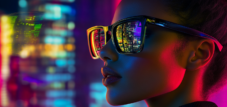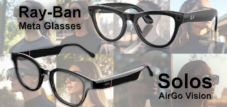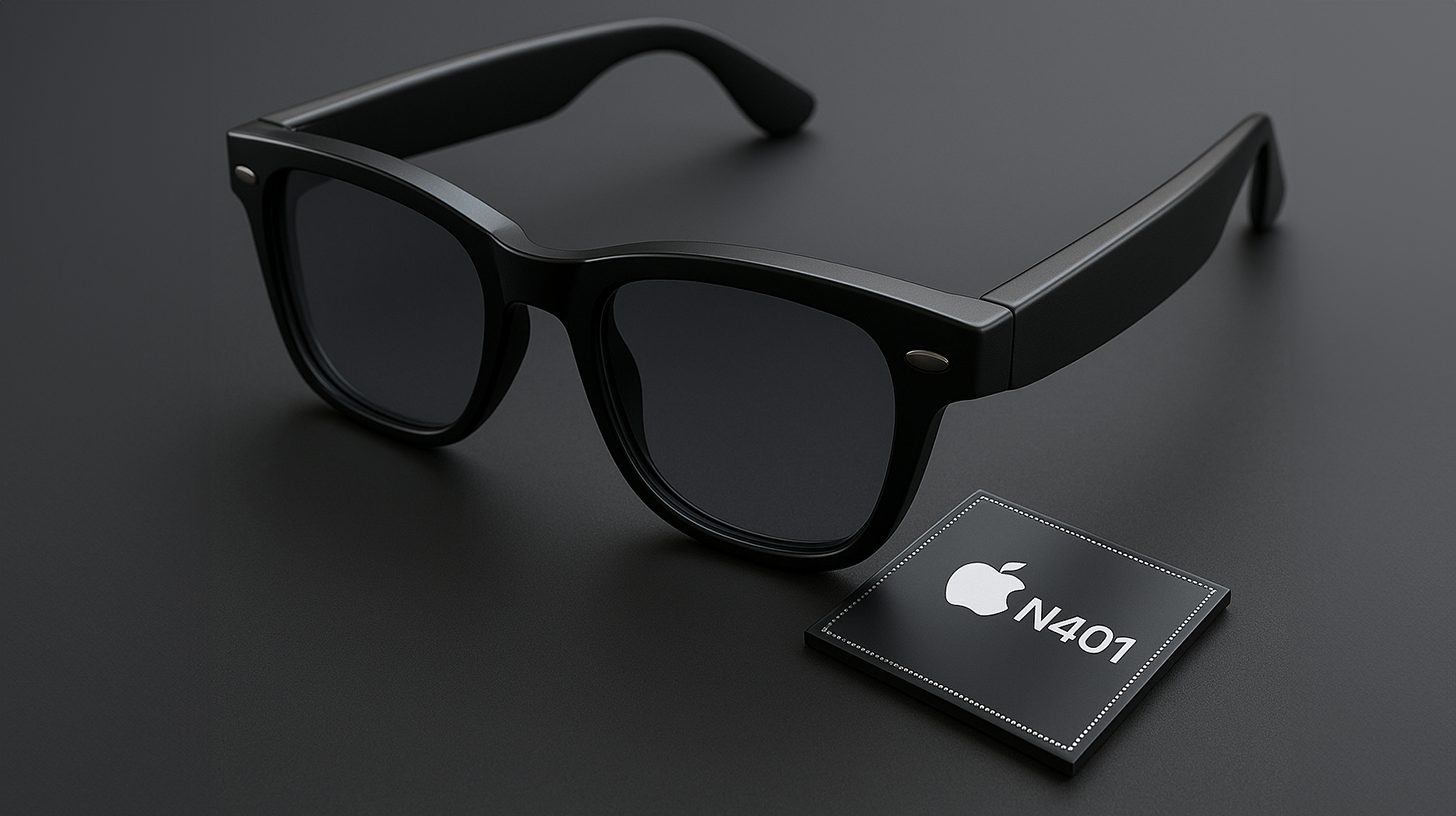
Apple is developing special chips for smart glasses to compete with Ray-Ban Meta – Is the N401 special chip smarter than Meta? – Creative image: Xpert.Digital
Competition for Ray-Ban: Apple's progress in smart glasses technology
Apple vs. Meta: New technologies in the smart glasses race
According to recent reports, Apple is working intensively on developing its own chips for smart glasses, which are intended to directly compete with the popular Ray-Ban Meta glasses. The Cupertino-based technology company is making significant progress in developing an energy-efficient processor specifically designed for use in smart glasses. A market launch could take place as early as 2026 or 2027.
Related to this:


The specialized N401 chip for smart glasses
Apple is focusing on a custom-designed chip, internally codenamed N401, for the development of its smart glasses. This processor is based on the proven architecture of the Apple Watch chips but has been specifically optimized for the requirements of smart glasses. The development team reportedly removed certain components and reconfigured the chip to achieve maximum energy efficiency.
A key feature of the N401 chip is its ability to control multiple cameras, which are intended to be integrated into the eyeglass frames. This suggests advanced visual functions that go beyond simple photography. Energy efficiency is a central focus of the development, as one of the biggest challenges for smart glasses is limited battery capacity.
Technical optimizations for everyday usability
The Apple chip is specifically designed to ensure extremely low power consumption, which is essential for all-day use of the glasses. Bloomberg reporter Mark Gurman reports that Apple has already made significant progress in developing this chip. Mass production could begin as early as the end of 2026 or in 2027, suggesting a market launch within the next two years.
The technical specifications are based on the energy efficiency of Apple Watch processors, but go a step further by being adapted for specific use in eyeglasses. This strategy aligns with Apple's usual practice of developing custom chips for different product categories.
Planned features of Apple Smart Glasses
The first Apple smart glasses are not expected to offer full augmented reality functionality, but will initially focus on practical everyday functions. Similar to the Ray-Ban Meta, the glasses will feature cameras, microphones, and integrated AI capabilities.
Practical AI functions for everyday use
Expected features include taking photos, recording videos, and translation services. Furthermore, the glasses could be equipped with a visual intelligence function that allows users to scan their surroundings, describe objects, retrieve product information, and provide directions.
Apple CEO Tim Cook is reportedly "determined to beat Meta in the smart glasses market." The company conducted user studies last year to identify optimal interaction methods and explore how AI and camera integration should function in wearable glasses.
Integration into the Apple ecosystem
Another strength of the planned Apple Glasses could be their seamless integration into the existing Apple ecosystem. The glasses could offload some processing tasks to a nearby iPhone and use AirPods for audio output, keeping the device lightweight and efficient. This strategy aligns with Apple's broader goal of integrating its products and providing a cohesive user experience.
Comparison with the Ray-Ban Meta Smart Glasses
To understand the significance of Apple's entry into the smart glasses market, it is worth taking a look at the current market leader: the Ray-Ban Meta Smart Glasses, which were launched in September 2023.
Technical differences and similarities
The latest Ray-Ban Meta smart glasses feature a Qualcomm Snapdragon AR1 Gen1 processor, 12 MP cameras, improved audio quality, and features such as live streaming to Facebook and Instagram. They include two cameras, open-ear speakers, a microphone, and a touchpad integrated into the frame.
In contrast, Apple's solution is expected to be based on a custom-designed chip specifically optimized for the requirements of smart glasses. This strategy aligns with Apple's usual practice of developing its own hardware and software solutions to maintain maximum control over the user experience.
AI integration as a key factor
For both Meta and Apple, AI integration appears to be a central aspect of their smart glasses strategy. Meta has already rolled out an update to Meta AI on its smart glasses, enabling multimodal input via computer vision. Apple is expected to offer similar features, possibly with Siri as the central element for voice commands and AI interactions.
These AI features could also play an important role in accessibility. Ray-Ban Meta glasses can already assist people with vision problems by describing their surroundings, reading text aloud, and providing directions. It is likely that Apple will implement similar features.
Apple's broader strategy for wearables and AI
The development of smart glasses is part of a broader strategy by Apple to expand its presence in the wearables market and improve its AI hardware capabilities.
From Vision Pro to everyday smart glasses
Apple originally envisioned its Vision Pro AR headset evolving into lightweight smart glasses with powerful augmented reality capabilities. However, since technological advancements have not met Apple's expectations, the company is now exploring alternative options.
In February 2025, Bloomberg reported that Apple had cancelled an earlier AR glasses project that was intended to work with Mac computers and resemble conventional glasses. The biggest challenges were meeting the performance requirements for the AR functionality and integrating the battery.
AI server hardware for “Apple Intelligence”
In parallel with the development of smart glasses, Apple is also working on specialized chips for AI servers. These chips, codenamed "Baltra," are intended to support the company's proprietary "Apple Intelligence" platform. These server chips could have up to eight times more processing and graphics cores than the current M3 Ultra chips, demonstrating Apple's ambition to make its AI services faster and more competitive.
The development of these specialized chips underscores Apple's strategy of combining advanced AI with wearables through custom-designed chips to optimize performance, energy efficiency, and security. By controlling both hardware and software, Apple aims to drive innovation in consumer electronics and deliver intelligent user experiences.
Related to this:
Timeline and market outlook for Apple's smart glasses
According to available information, Apple plans to begin mass production of its smart glasses in late 2026 or early 2027. This suggests a market launch in about two years.
Production planning and timeframe
The timeframe for the market launch reflects Apple's recognition that smart glasses could become a significant consumer hardware market. Apple's internal timelines indicate a certain urgency to bring these smart glasses to market.
The collaboration with TSMC, a long-standing partner of Apple known for its advanced semiconductor manufacturing, signals Apple's intention to directly compete with products like the Meta Ray-Ban Smart Glasses and offer a compelling alternative in the growing field of wearable technology.
Market strategy and positioning
Apple appears to be pursuing a similar strategy to that used in other product categories: observing the market, optimizing the technology, and then entering the smart glasses market with a higher-quality product integrated into the existing ecosystem. CEO Tim Cook is reportedly "determined to beat Meta in the smart glasses market," underscoring the strategic importance of this project for Apple.
Apple's entry could change the smart glasses market
The development of specialized chips for smart glasses marks an important step in Apple's strategy to enter the growing market for wearable technologies. With its focus on energy efficiency, AI integration, and seamless integration into its own ecosystem, Apple could pose a serious threat to Meta's Ray-Ban smart glasses.
The success of Apple's smart glasses could set new standards for wearable technology and drive innovation and competition in the sector. As Apple continues to develop and refine its smart glasses, it will be interesting to see how the market reacts and what new features and capabilities emerge from this exciting new product category.
The combination of Apple's proven hardware expertise, its strength in chip development, and its extensive ecosystem could give the company a decisive advantage over Meta and other competitors. The next two years will show whether Apple truly has the potential to revolutionize the smart glasses market, as it has already done with smartphones and smartwatches.
Related to this:
Your global marketing and business development partner
☑️ Our business language is English or German
☑️ NEW: Correspondence in your native language!

Konrad Wolfenstein
I and my team are happy to be available to you as your personal advisor.
You can contact me by filling out the contact form here wolfenstein@xpert.digital:or simply call me at +49 7348 4088 965. My email address is
I'm looking forward to our joint project.