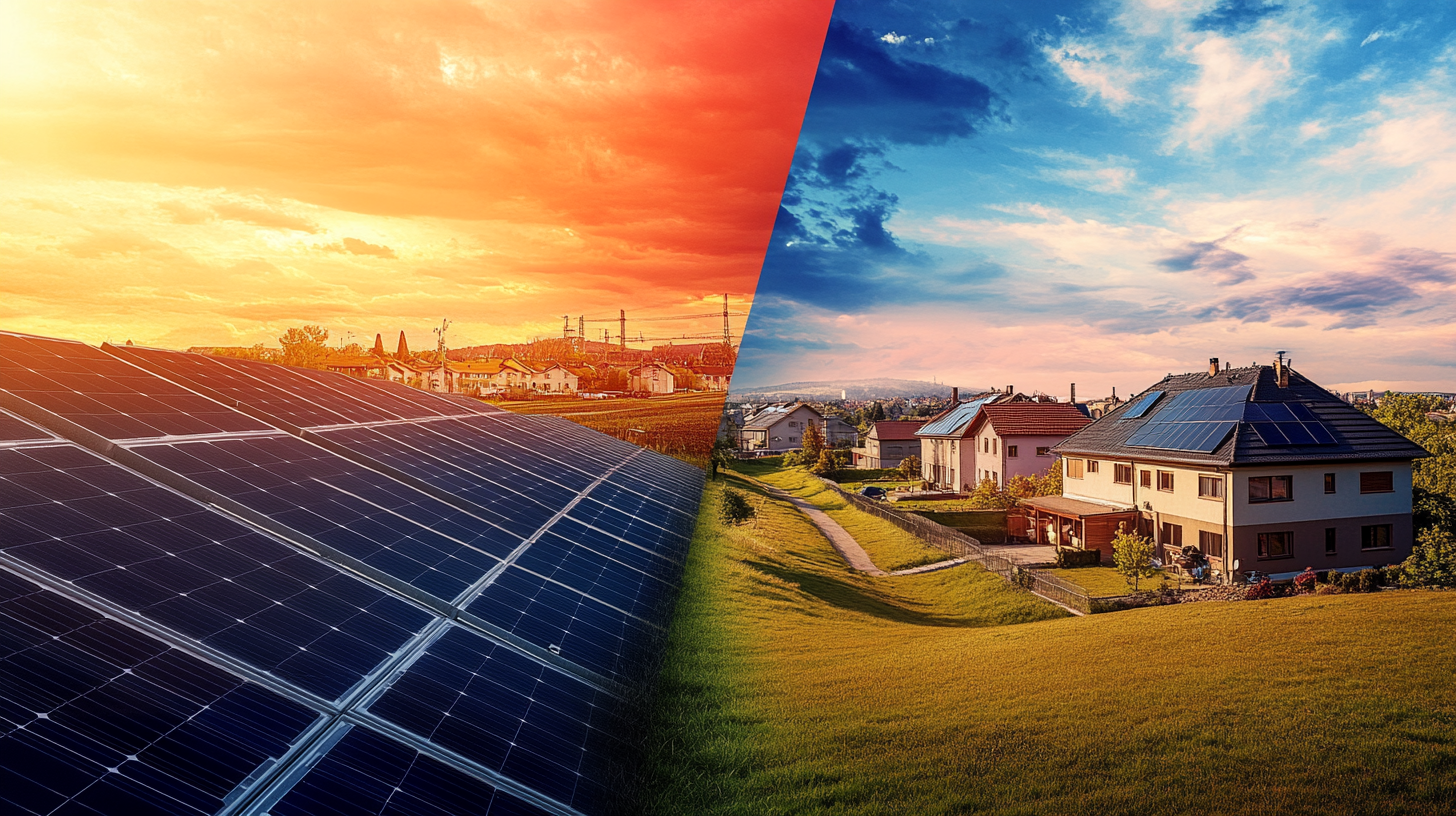
Current status of solar capacity in Hungary, including solar systems for private households and industrial solar power plants – Creative image: Xpert.Digital
Hungary's energy future: How 5,500 MW of solar capacity is paving the way
Hungary has made significant progress in recent years in expanding its solar energy capacity, both in the area of private solar installations and the construction of large industrial solar power plants. By the beginning of November 2024, the country had reached an impressive total solar capacity of over 5,500 megawatts (MW), underscoring the importance of solar energy for Hungary's energy future.
Hungary's installed solar capacity is divided into approximately 3,300 MW in industrial solar power plants and more than 2,200 MW in residential solar installations. These figures demonstrate the country's enormous potential to achieve greater independence from fossil fuels while simultaneously reducing its CO2 emissions. Hungary is pursuing not only environmental goals but also aims to advance the energy transition and strengthen its domestic economy.
Expansion and growth in 2024
A key feature of Hungary's solar industry is its impressive growth, which continued into 2024. In the first ten months of this year, the country installed an additional 1,500 MW of solar power capacity. This figure significantly exceeds the previous year's installations and confirms the market's dynamic development. This increase is particularly noteworthy, as it is driven by both rising demand for environmentally friendly energy solutions and government subsidies and attractive investment opportunities.
Hungary has become one of the region's leaders in renewable energy expansion in recent years. The solar sector has played a key role in this development, both for the private and industrial sectors. A significant increase in installed capacity is a direct result of these successful political and economic measures.
Looking back at previous years and comparing with other countries
Comparing the current figures with those from previous years makes the progress even more apparent. By the end of 2023, the installed capacity of photovoltaic systems in Hungary had already reached 5.6 GW, representing an increase of more than 100% within just a few years. New installations in 2023 totaled approximately 1.6 GW, a 45% increase compared to 2022. This rapid growth demonstrates that Hungary is on the right track to achieving the EU's ambitious climate targets and reducing its dependence on fossil fuels.
Compared to other European Union countries, Hungary is not yet at the top in terms of installed solar capacity, but it has shown considerable growth in recent years. Countries like Germany, Spain, and Italy have significantly larger capacities, but Hungary is catching up rapidly.
Future prospects: Ambitious goals by 2030
The Hungarian government has set ambitious targets for the expansion of solar energy in the coming years. By 2030, the country's total capacity is to increase to 12 GW, representing a doubling of the current capacity. This target is an important step towards achieving the country's climate goals while simultaneously diversifying the energy market.
In January 2024, the "Solar Energy Plus Program" was launched, an ambitious funding program with a budget of 75 billion forints (approximately 200 million euros). The aim of this program is to promote the installation of modern solar panels and the use of storage systems. This expansion of solar power is intended not only to increase the production of green energy but also to strengthen the flexibility of the energy system.
In addition, companies in Hungary will receive financial support to increase the flexibility of the electricity system. A separate funding program with a budget of 62 billion forints (approximately 164 million euros) aims to promote the use of innovative technologies such as battery storage and decentralized energy generation.
These programs and financial incentives could help to further stimulate the solar energy market and accelerate the transition to a more sustainable energy future.
Challenges in expanding solar energy
Despite its dynamic growth, Hungary faces several challenges that could hinder the further expansion of solar energy. One of the biggest obstacles is grid capacity. Grid bottlenecks and limited connection options mean that many planned large-scale projects cannot currently be connected. It is estimated that some of these projects will not be operational until 2028. These delays have a direct impact on the planned expansion capacity and represent one of the biggest challenges for the Hungarian solar industry.
Another challenge is the need to increase the flexibility of the electricity grid to efficiently integrate the growing amount of solar power. Due to the fluctuating availability of solar energy—it is only available when the sun shines—innovative solutions such as battery storage, smart grids, and decentralized energy storage solutions must be given greater consideration. These technologies are expensive to purchase and require substantial investments in research and development to achieve the necessary efficiency and economic viability.
Furthermore, legal and bureaucratic hurdles must be reduced to accelerate the expansion of solar power. The permitting process for large solar parks is often lengthy, leading to delays in project implementation. The government must therefore ensure that bureaucratic obstacles are reduced to enable faster realization of solar projects.
The Hungarian solar industry has made impressive progress in recent years, becoming a key component of the national energy supply. The expansion of solar installations in private homes and industrial facilities has put the country on track to meet its climate targets. The government's ambitious plans to reach a total capacity of 12 GW by 2030 demonstrate that Hungary is on the right course to become a leading player in the European solar energy sector.
However, challenges also remain, particularly regarding grid capacity and the need to develop innovative storage solutions. Overcoming these obstacles will be crucial for efficiently integrating solar power into the national grid and securing a sustainable energy future.
It will be interesting to see how the Hungarian solar market develops in the coming years. With the right political and economic incentives, the country has the potential to further expand its solar industry and assume a leading role in renewable energy supply.
Our recommendation: 🌍 Limitless reach 🔗 Connected 🌐 Multilingual 💪 Sales power: 💡 Authentic with strategy 🚀 Innovation meets 🧠 Intuition


From local to global: SMEs conquer the world market with a clever strategy - Image: Xpert.Digital
In an era where a company's digital presence determines its success, the challenge lies in creating an authentic, personalized, and far-reaching presence. Xpert.Digital offers an innovative solution that positions itself as the intersection of an industry hub, a blog, and a brand ambassador. It combines the advantages of communication and sales channels in a single platform and enables publication in 18 different languages. Cooperation with partner portals and the ability to publish articles on Google News and a press distribution list with approximately 8,000 journalists and readers maximize the reach and visibility of the content. This represents a crucial factor in external sales and marketing (SMarketing).
More information here:
Hungary's remarkable solar energy boom
The development of solar capacity in Hungary
Hungary has experienced a remarkable boom in solar energy in recent years. Both the private and industrial sectors have demonstrated the true potential of photovoltaics in the country. The rapid increase in installed capacity reflects not only a heightened environmental awareness but also targeted government support and sound economic considerations. The following provides a comprehensive overview of the current state of solar capacity in Hungary, taking into account past successes, future goals, and key challenges. It also explores why solar energy is one of Hungary's most promising energy sources for the future.
Current status of installed solar capacity
"The numbers speak for themselves": By the beginning of November 2024, Hungary had reached a total solar capacity of over 5,500 megawatts (MW), comprised of two main sectors. Approximately 3,300 MW comes from industrial solar power plants used for large-scale energy supply. The remaining 2,200 MW or more originates from smaller solar installations used by private households. This sector has developed particularly due to rising electricity prices and growing environmental awareness. Many citizens see this not only as an opportunity to contribute to climate protection but also to reduce their monthly electricity bills.
Solar power systems in everyday life and in business
The radiant power of the Hungarian sun can be seen on the roofs of single-family homes as well as on extensive solar parks throughout the country. Small and medium-sized enterprises have also recognized that their own solar installations can reduce operating costs and enhance their image. "Those who invest in solar energy today are investing in the future," is a common refrain among economic experts. Especially in times when dependence on fossil fuels must decrease, solar energy is considered a key technology for achieving the country's climate protection goals.
Dynamic growth and government support
A look at the expansion and growth figures shows how dynamically the solar market is developing in Hungary. In the first ten months of 2024, the installation of solar capacity amounted to approximately 1,500 MW. This figure alone significantly exceeds the growth of the previous year, demonstrating the increasing interest in photovoltaics in the country. This development is being driven by a combination of government subsidies, technological advancements, and falling production costs for solar modules. "The price drop in photovoltaic systems has significantly boosted the solar market," commented industry insiders. At the same time, more and more companies are succeeding in making their systems more efficient and powerful.
Comparison and growth forecasts
The steady expansion of solar capacity is also evident in comparisons with previous years. At the end of 2023, the installed PV capacity in Hungary stood at approximately 5.6 GW, following the addition of about 1.6 GW in 2023. Compared to 2022, this increase represented a rise of roughly 45%. Given these figures, it is no surprise that the Hungarian solar industry is optimistic about the future. "The enormous growth in recent years proves that Hungary is vigorously pursuing the trend towards renewable energies and will benefit from it," emphasizes a representative of the energy sector.
Ambitious goals by 2030
Despite this impressive momentum, the country is still at the beginning of a comprehensive transformation of its energy system. The Hungarian government has set ambitious goals to successfully advance the energy transition: a total capacity of 12 GW is targeted by 2030, which is almost double the currently installed capacity. To achieve this goal, the so-called "Solar Energy Plus Program" was launched at the beginning of 2024, with a budget of 75 billion forints (approximately 200 million euros). This funding program is primarily intended to promote the installation of modern solar panels and the expansion of storage systems. "We not only want to generate clean electricity, but also be able to store it as needed," said a representative of the Hungarian Ministry of Economy.
The importance of storage systems
This openness to innovative storage concepts is a logical consequence of the fact that solar energy is inherently subject to fluctuations determined by the intensity of sunlight. While surpluses are typically produced at midday, the yield is significantly lower in the early morning or under cloudy skies. However, high-performance battery storage systems could absorb peak loads and better balance electricity demand. Furthermore, it is argued that decentralized storage solutions could make entire regions less dependent on the main grid. This offers enormous potential, particularly in rural areas where the grid infrastructure is sometimes less resilient, to reduce future blackouts and grid overloads.
Promotion of flexible electricity systems
In addition to investments in private households and storage facilities, companies can apply for subsidies to improve the flexibility of the electricity system. The government is allocating a total of 62 billion forints (approximately 164 million euros) for this purpose. Particularly energy-intensive industrial companies are intended to benefit, enabling them to make their production processes more efficient and align their consumption with the generation of renewable energy. The motto is: "Every megawatt saved counts twice," as it not only reduces costs but also protects the environment.
Challenges and necessary adjustments
Although Hungary already boasts an impressive track record in solar energy, several challenges remain that could slow further expansion. Grid congestion and limited connection capacity mean that some larger projects are unlikely to be connected to the grid until 2028. This situation creates planning uncertainty for investors and hinders long-term development. In addition, lengthy permitting processes and significant bureaucratic hurdles often need to be overcome.
Political response and chance of success
To nevertheless promote the growth of the solar industry, it is essential that regulations and legislation respond promptly to rapid technological advancements. "The solar industry doesn't have time to wait for years," warns one industry expert. Those who hesitate too long risk losing investors to neighboring countries where support mechanisms might be more readily available. It is particularly important for Hungary to seize the moment to solidify its position as an emerging solar energy hub.
Economic advantages of solar energy
Focusing on photovoltaics is not only beneficial from a climate policy perspective. It also offers numerous economic advantages. The construction and operation of solar power plants create new jobs in planning, installation, and maintenance. For example, regional craft businesses specializing in solar panel installation benefit, as do suppliers of components and mounting structures. Furthermore, the demand for highly qualified personnel in electrical engineering, engineering, and IT can increase, potentially leading to a long-term modernization boost in the Hungarian workforce.
Social aspects and benefits for private households
Social aspects also play a significant role: Households with their own solar panels can considerably reduce their electricity bills and are less affected by price fluctuations in the energy market. In a time when energy costs are often rising rapidly, this creates a degree of independence and eases the burden on private budgets. Furthermore, the government not only subsidizes the purchase of these systems but often also facilitates access to loans or subsidized financing models. This creates a win-win situation for everyone involved: Citizens save money in the long term, while the national energy transition continues to progress.
Role of solar energy in climate protection goals
Looking ahead to 2030 and beyond, it is clear that Hungary can only achieve its climate protection goals if renewable energy sources play a leading role. Solar energy occupies a key position in this regard. While other forms of renewable energy generation, such as wind power and biomass, are also relevant, their expansion in Hungary faces various obstacles, including unfavorable wind conditions in some regions and intense competition for land for biomass production. The sun, on the other hand, shines relatively consistently across most of the country and, with appropriate technology and optimal orientation, achieves stable yields.
The need for intelligent energy systems
The expansion of local grids and intelligent control mechanisms that can manage loads and reduce bottlenecks will therefore become increasingly important in the future. In this context, the interplay between photovoltaics, battery storage, and so-called "smart grids" could develop into a truly successful model. "Proactive control and digitalization of the grids is the key to harnessing solar power and maximizing efficiency," is a common refrain in the industry.
Community facilities and solar parks
Furthermore, concepts such as community-owned solar power systems are gaining importance, where several households or businesses join forces and invest together in larger PV projects. This has the advantage of allowing the use of a larger area and potentially the purchase of a shared storage system. In this way, solar energy becomes accessible to broader segments of the population, and even tenants can benefit from cheaper electricity, even if they don't own their own roof space.
This trend could intensify, particularly in rural areas and smaller towns. These regions often have unused land that is ideally suited for the construction of solar parks. At the same time, municipalities benefit from additional tax revenue and can strengthen local businesses through affordable solar power. This development could boost the regional economy and increase the attractiveness of rural areas.
Combination of photovoltaics and electromobility
Another aspect that is being discussed more and more frequently is the combination of photovoltaic systems with electromobility. In many countries, the number of electric vehicles is growing rapidly, and with it, the demand for charging stations is also increasing. However, if this electricity is generated directly on-site using photovoltaics, not only can emissions be reduced, but costs can also be lowered. "Having your own solar charging station on company premises or at home is no longer a future scenario, but is becoming more and more of a reality," says a representative from the automotive sector.
Hungary's commitment to solar energy
The figures for solar capacity in Hungary impressively demonstrate the importance of solar energy for the country. More than 5,500 MW of total capacity, including 3,300 MW in industrial solar power plants and 2,200 MW in residential installations, proves that Hungary intends to meet the growing demands of climate protection and energy independence. With support programs and clear expansion targets, the government is sending important signals to investors, businesses, and individuals. At the same time, however, experts urge that existing grid bottlenecks and lengthy permitting processes be addressed promptly to prevent the energy transition from stalling.
“The addition of 1,500 MW in the first ten months of 2024 alone demonstrates how firmly solar energy has already taken root in Hungary,” is a common assessment. If expansion continues at this pace, Hungary is likely well on its way to reaching or even exceeding its target of 12 GW by 2030. This would not only allow the country to meet its climate protection goals but also further strengthen its position as a key player in the European energy sector. Ultimately, every kilowatt-hour of solar power represents a piece of the future, in which Hungary demonstrates that economic progress and environmental protection are not mutually exclusive but can, in fact, reinforce each other.
We are here for you - Consulting - Planning - Implementation - Project Management
☑️ SME support in strategy, consulting, planning and implementation
☑️ Creation or realignment of the digital strategy and digitization
☑️ Expansion and optimization of international sales processes
☑️ Global & Digital B2B trading platforms
☑️ Pioneer Business Development

Konrad Wolfenstein
I would be happy to serve as your personal advisor.
You can contact me by filling out the contact form below or simply call me on +49 7348 4088 965 .
I'm looking forward to our joint project.
Write to me


Xpert.Digital - Konrad Wolfenstein
Xpert.Digital is a hub for industry focusing on digitalization, mechanical engineering, logistics/intralogistics and photovoltaics.
With our 360° Business Development solution, we support renowned companies from new business to after-sales.
Market intelligence, smarketing, marketing automation, content development, PR, mail campaigns, personalized social media and lead nurturing are part of our digital tools.
You can find more information at: www.xpert.digital - www.xpert.solar - www.xpert.plus
Keep in touch