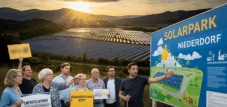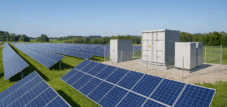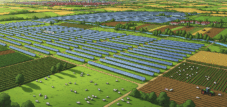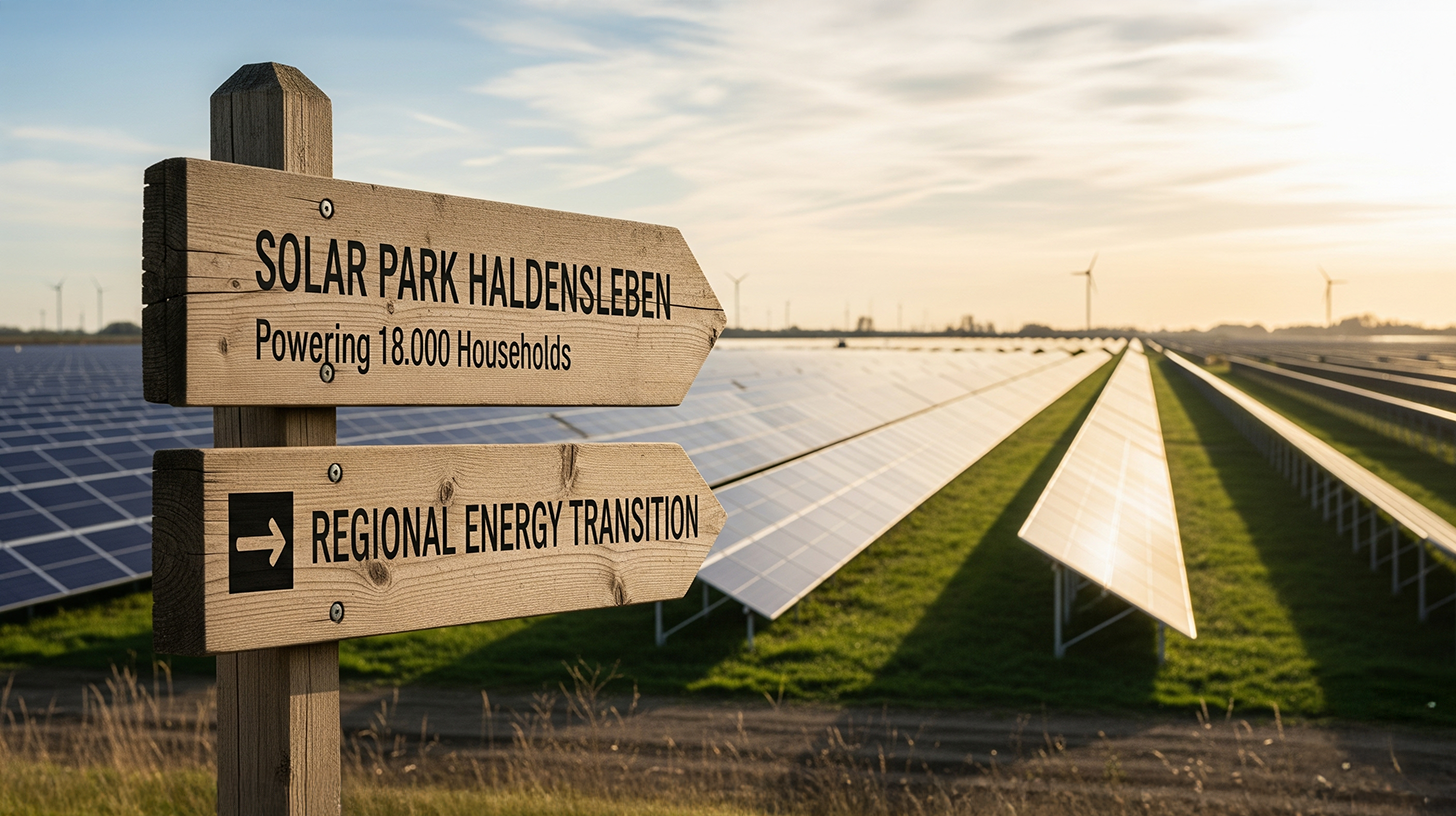
Large solar park project in Haldensleben for 18,000 households: A pioneering project for the regional energy transition – Creative image: Xpert.Digital
Mega solar park for Haldensleben: Now 3300 citizens decide – and can even profit from it
### Millions in revenue for the city coffers? This huge solar park could change everything ### Making money with the sun: How you can benefit from the new 50-million-euro project in Haldensleben ### Giant solar park divides opinions: Now it's up to the citizens of Haldensleben ### A project with a signal effect: How Haldensleben wants to become a role model for the energy transition ###
Green energy for 18,000 households: A new German solar park is being built on this huge area
The city of Haldensleben is facing a crucial decision that could have far-reaching consequences for its local energy supply and economy. The Bavarian company MaxSolar plans to build another solar park on an area of over 62 hectares near Bülstringer Straße in the northwest of the city. With an investment volume of between 40 and 50 million euros, this project represents a significant step towards a sustainable energy supply.
Project planning and its dimensions
The planned project includes the installation of photovoltaic systems and the construction of a substation on an area of approximately 62 hectares between the edge of town and the Bülstringer Bridge. The enormous investment costs of up to 50 million euros reflect the technical complexity and economic potential of the project. MaxSolar, an established company from Traunstein with many years of experience in the development and operation of ground-mounted solar parks, is contributing extensive expertise to the project.
The timeline anticipates that, should the city council make a positive decision at the end of September, construction could begin as early as 2026. This relatively short period between planning and implementation is characteristic of photovoltaic projects, which have significantly shorter realization times compared to other large-scale construction projects.
Citizen participation and democratic process
A special aspect of the Haldensleben solar park project is the comprehensive involvement of the local population in the decision-making process. In accordance with the city of Haldensleben's current solar energy guidelines, a public survey will be conducted, including all registered residents within a 1700-meter radius of the project. Approximately 3300 residents will thus have the opportunity to vote on the project.
The public participation process is transparent and well-structured. Following a public information event on August 12, 2025, at the Kulturfabrik, where the company presented the project and discussed it with residents, all affected residents will receive written documents with a ballot and return envelope starting August 4, 2025. The ballots must be received by the town hall by September 2, and the public count is scheduled for September 8, 2025.
Although the vote is not legally binding, the city council will take it into account. This form of citizen participation demonstrates how important public acceptance of the project is to the municipality. In the past, such citizen surveys have already influenced other solar park projects in Haldensleben, such as the reduction in the size of the planned photovoltaic systems near the Satuelle district due to concerns raised by local residents.
Economic impact on the municipality
The financial benefits for the city of Haldensleben are numerous and long-term. City spokesperson Lutz Zimmermann emphasized that significant sums will flow into the city coffers through trade tax and additional payments from the company based on the Renewable Energy Sources Act. These revenues can be used to finance municipal projects for which no budget funds were previously available.
Under the current Renewable Energy Sources Act, operators of solar parks have the option of sharing financial revenue with municipalities. Specifically, up to 0.2 cents per kilowatt-hour generated can be paid to the host community. With an average annual electricity yield of approximately 1,000,000 kilowatt-hours per hectare, this would result in substantial annual revenue for the city of a 62-hectare solar park.
Trade tax represents another important source of revenue. However, it's important to note that trade tax payments are only due once the company generates profits. Since new solar park projects initially have to repay substantial loans, it can take several years before profits are actually generated and trade tax becomes payable. However, due to an amendment to the Fund Location Act in 2021, host municipalities now receive 90 percent of the trade tax revenue, significantly strengthening their position.
Energy supply and technical integration
According to project manager Felix Kandsorra, the solar power generated in Haldensleben will be fed into the local grid, among other sources. However, the impact on local electricity prices has not yet been fully determined. MaxSolar is an experienced player in the solar industry and has already successfully completed several large projects, such as the 125-megawatt solar park in Bundorf, Bavaria, which is considered the largest solar park in Northern Bavaria.
A 62-hectare solar park can be expected to have an installed capacity of approximately 55 to 60 megawatts, based on the typical area efficiency of about 0.9 megawatts per hectare. This would theoretically be enough to supply approximately 15,000 to 18,000 four-person households with electricity.
The solar park will be technically integrated into the existing grid infrastructure via the planned substation. MaxSolar has extensive experience in connecting large-scale projects to the grid and works closely with local grid operators.
Opportunities for citizens and local stakeholders to participate
Project manager Felix Kandsorra has already proposed various participation models for citizens and the city. For example, the city could purchase parts of the solar park, or citizens could establish an energy cooperative to share in the annual revenues. This form of citizen participation follows successful models that MaxSolar has already implemented in other projects.
A prime example is the energy village of Bundorf, where 30 percent of the 125-megawatt solar park is reserved for citizen participation. The local energy cooperative, EGIS, allows citizens, municipalities, associations, and companies to purchase cooperative shares worth €150 plus a €5 surcharge. Purchases are limited to 4,300 shares per member, corresponding to a total of €645,000.
Such participation models offer several advantages: They increase local acceptance of the project, create direct financial participation for citizens in the energy transition, and strengthen regional economic development. For investors, they offer attractive returns of between five and eight percent, while simultaneously contributing to the financing of the energy transition.
New: Patent from the USA – install solar parks up to 30% cheaper and 40% faster and easier – with explanatory videos!

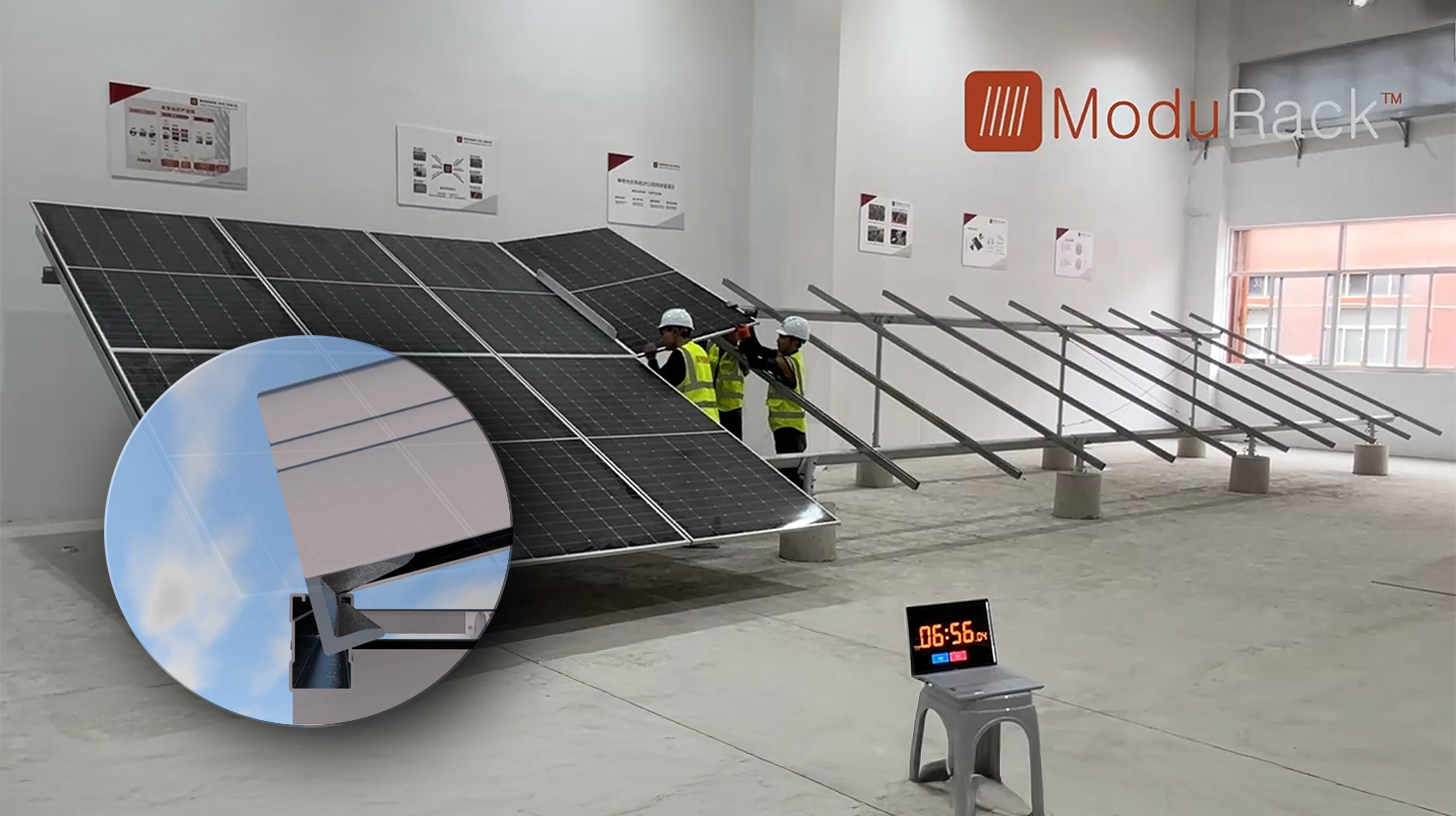
New: Patent from the USA – Install solar parks up to 30% cheaper and 40% faster and easier – with explanatory videos! - Image: Xpert.Digital
The core of this technological advancement is the deliberate departure from conventional clamp mounting, which has been the standard for decades. The new, more time- and cost-effective mounting system addresses this with a fundamentally different, more intelligent concept. Instead of clamping the modules at specific points, they are inserted into a continuous, specially shaped support rail and held securely in place. This design ensures that all forces – whether static loads from snow or dynamic loads from wind – are distributed evenly across the entire length of the module frame.
More information here:
Haldensleben plans 55 MW solar park: Climate protection meets landscape protection
Environmental and nature conservation aspects
The debate surrounding the planned solar park in Haldensleben also highlights the different perspectives on environmental and nature conservation issues. While some residents and conservationists have expressed concerns and fear that the landscape will be "paved over," proponents emphasize the necessity of renewable energies for the future.
Modern solar parks, if properly planned, can have a positive impact on biodiversity. Particularly on previously intensively farmed land, extensive maintenance can improve the ecological condition. MaxSolar prioritizes ecological sustainability in its projects, including measures to promote biodiversity and the avoidance of fertilizers and pesticides.
The city of Haldensleben has already established a framework with its solar energy policy that promotes the expansion of renewable energies while also taking environmental and nature conservation concerns into account. The policy defines suitable areas for solar energy and areas that must be kept free of ground-mounted solar installations.
Regional energy transition and climate protection
The solar park project is part of the city of Haldensleben's comprehensive efforts to protect the climate and ensure a sustainable energy supply. The city has had a climate protection concept in place since 2019 and received follow-up funding for the implementation of climate protection measures for the period 2022 to 2025. A municipal heat plan is currently being developed, which will outline how Haldensleben can become climate-neutral by 2045 at the latest.
The Haldensleben municipal utility company is already actively promoting renewable energies and electromobility. They have 17 charging stations and offer their own car-sharing service, making them pioneers in Saxony-Anhalt. Projects such as the tenant electricity project for 150 apartments on Köhlerstraße demonstrate their commitment to sustainable energy solutions.
Saxony-Anhalt is a leader in Germany in the expansion of renewable energies. In 2022, the share of renewable energies in electricity generation already reached 60.1 percent, significantly above the national average. With more than 105,000 installed photovoltaic systems and a total capacity of 4,728 megawatts, the state ranks sixth nationwide.
The Börde district, where Haldensleben is located, already has the most wind turbines in Saxony-Anhalt and is therefore a key player in the provision of renewable energy. The planned solar park project would further strengthen this position and make an important contribution to achieving the expansion targets.
Financing and economic framework
The financing of solar park projects has become significantly more professional in recent years. MaxSolar was able to arrange project financing of around €104 million for two other projects in Bavaria, underscoring the company's financing expertise. This financing was secured in cooperation with renowned partners such as DAL Deutsche Anlagen-Leasing and various savings banks.
A key component of modern solar park financing is long-term power purchase agreements (PPAs). These secure stable revenues over a defined period and enable low-risk electricity marketing. The specific marketing structures for the Haldensleben project are not yet known, but MaxSolar has extensive experience in this area.
The profitability of solar parks has steadily increased due to lower technology costs and simultaneously rising efficiency. Average annual returns of between five and eight percent are realistic; with optimal site selection and an efficient marketing strategy, returns of up to ten percent are even possible. One hectare of solar park can produce approximately 1,000,000 kilowatt-hours of electricity annually, generating a profit of around 60,000 euros.
Technological developments and innovations
MaxSolar relies on state-of-the-art technologies and innovative solutions. For example, the company is involved in the first grid-connected storage system for Bayernwerk, a 5-megawatt battery storage system with a capacity of 25 megawatt-hours. Such storage solutions could also be relevant for the Haldensleben project to optimize its integration into the local power grid.
Today, ground-mounted photovoltaic systems are installed using state-of-the-art mounting systems that allow for optimal alignment to maximize energy yield. Robust steel or aluminum frames are precisely anchored in the ground or mounted on concrete blocks, with the tilt angle of the modules adjusted for maximum energy production.
Social acceptance and communication
The public acceptance of solar parks depends significantly on transparent communication and fair participation. MaxSolar has created a dedicated information page for the Haldensleben project, which can be found at www.maxsolar.com/leistungen/projektentwicklung/solarpark-haldensleben. This transparent communication strategy is crucial for the project's success.
The public information event was organized as an information market with several themed tables, where information was provided on various aspects of the project. This interactive approach allows citizens to ask specific questions and obtain comprehensive information.
Experience from other projects shows that early and comprehensive public information is crucial for acceptance. This should clearly highlight not only the technical aspects but also the economic benefits for the community. The resulting business tax revenue and the participation opportunities under the Renewable Energy Sources Act (EEG) are key arguments in this regard.
Outlook and significance for the energy transition
The planned solar park project in Haldensleben exemplifies the decentralized energy transition in Germany. If realized, it will make a significant contribution to achieving national climate goals while simultaneously strengthening the local economy. With a planned capacity of approximately 55 to 60 megawatts, the park would contribute a substantial share to the regional electricity supply.
The combination of economic benefits for the municipality, opportunities for citizen participation, and the contribution to climate protection makes the project a model for other communities. The careful planning with comprehensive citizen involvement demonstrates how energy transition projects can be successfully implemented.
Saxony-Anhalt aims for a 100 percent share of renewable energies in its final energy consumption by 2050, with an interim target of 45 percent by 2030. The Haldensleben project would represent an important building block in achieving these ambitious goals.
The decision by the citizens of Haldensleben and the city council will show whether the municipality is ready to take this important step towards a sustainable energy future. Regardless of the outcome of the vote, the project has already sparked important discussions about the local energy transition and could serve as a model for other municipalities.
Look, this little detail saves up to 40% installation time and reduces costs by up to 30%. It comes from the USA and is patented.

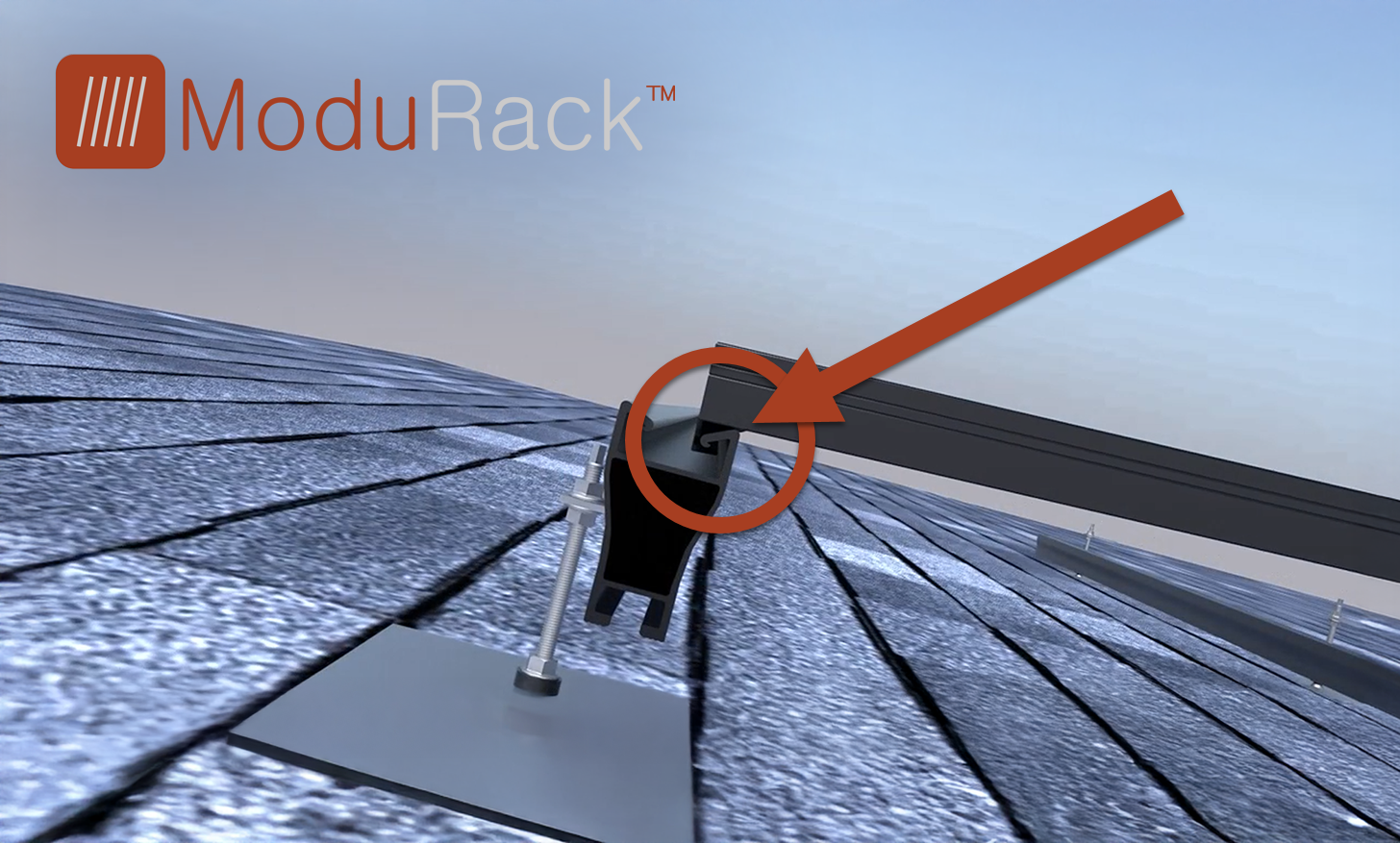
NEW: Ready-to-install solar systems! This patented innovation significantly accelerates your solar construction project
The core of ModuRack 's innovation lies in the departure from conventional clamp fastening. Instead of clamps, the modules are inserted and held in place by a continuous support rail.
More information here:
Your partner for business development in the fields of photovoltaics and construction
From industrial rooftop PV to solar parks and larger solar parking lots
☑️ Our business language is English or German
☑️ NEW: Correspondence in your native language!

Konrad Wolfenstein
I and my team are happy to be available to you as your personal advisor.
You can contact me by filling out the contact form here wolfenstein@xpert.digital:or simply call me at +49 7348 4088 965. My email address is
I'm looking forward to our joint project.