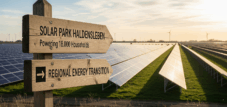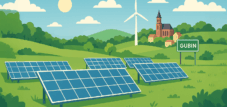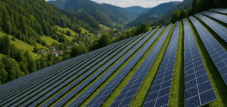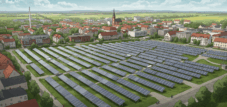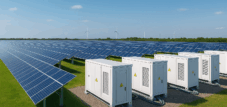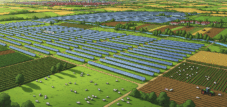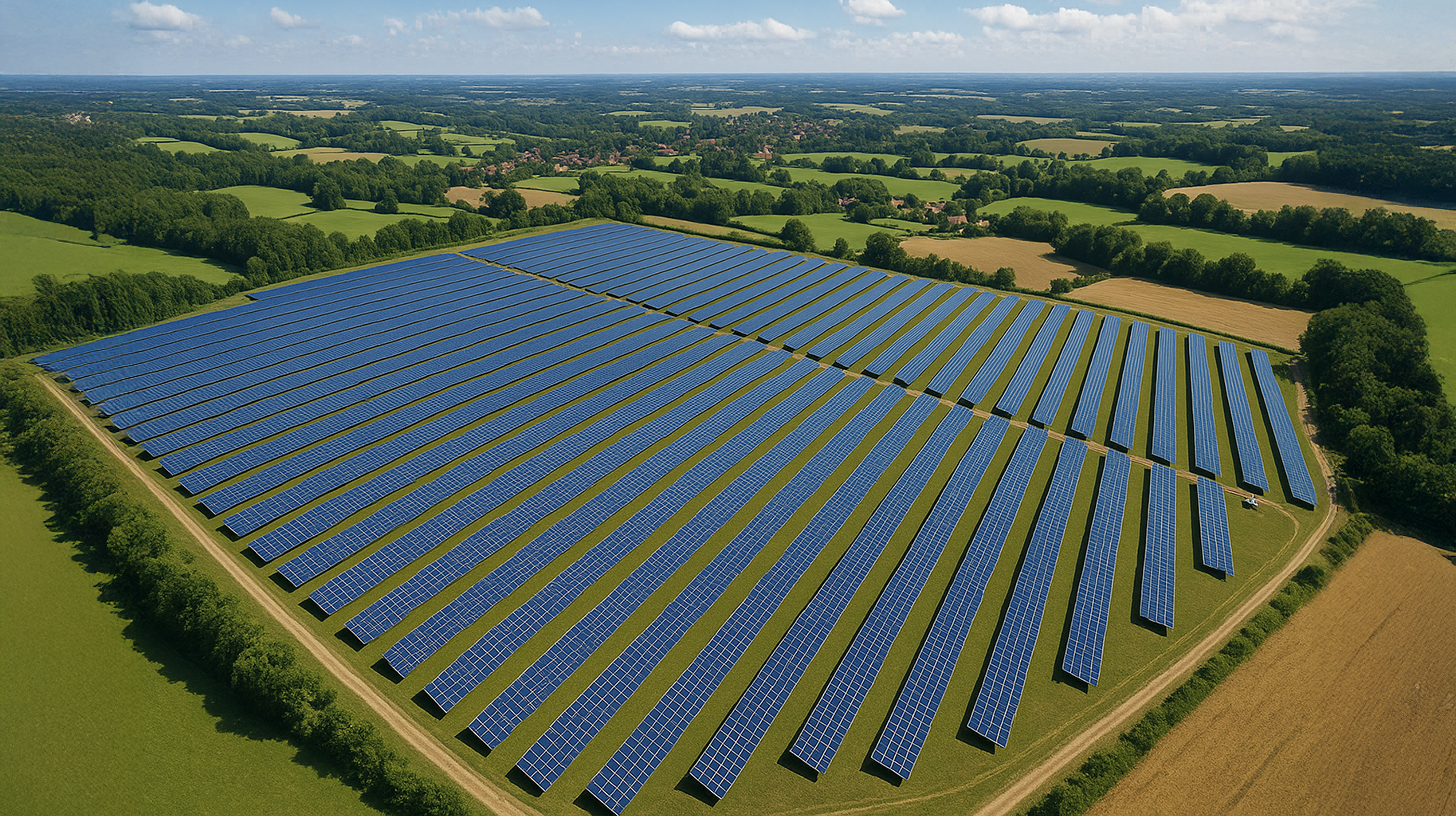
Centrale Parc Solaire | 16.5 MW solar park project in the French municipality of Éguzon-Chantôme in the Indre department – Creative image: Xpert.Digital
Éguzon-Chantôme – Solar park powered by citizens: This village is investing in its own energy future
Electricity for thousands: Huge solar park in France reaches crucial phase ### German company, French village: Working together for the energy transition ### Energy transition from the ground up: How a small community is becoming a model for all of France ### Solar power instead of wasteland: What's behind France's new flagship energy project ### France's solar ambitions: This project is a crucial building block for the 100 GW target ###
Major solar project in Éguzon-Chantôme reaches crucial phase
The ambitious project for a solar park with a total capacity of 16.5 megawatts peak in the French commune of Éguzon-Chantôme in the Indre department is entering a crucial phase. On July 28, 2025, the prefecture of the Indre department officially launched the public consultation on this significant energy project, which is planned for a 22-hectare site in Le Pechovet.
Project development with municipal support
The roots of the photovoltaic project date back to 2019, when the municipal council of Éguzon-Chantôme decided to utilize unused municipal land for energy generation. This strategic decision reflected the growing trend in France to develop local energy resources and contribute to the national energy transition. In January 2020, the German company BayWa r.e. was selected as the project developer, having been chosen due to its extensive experience in renewable energies and its proven expertise in the energy transition.
BayWa r.e. has already implemented several significant solar energy projects in France and established itself as a reliable partner for municipal energy projects. The company brings not only technical expertise but also a deep understanding of the specific requirements of the French energy market and the associated regulatory framework.
Innovative citizen participation as a success factor
A key feature of the Éguzon-Chantôme project is the early involvement of the local population through a participatory fundraising campaign. A crowdfunding initiative was launched in 2021 and proved exceptionally successful. In just over a month, €50,000 was raised, with 40 percent of the contributions coming from residents of Éguzon itself.
This form of citizen participation follows a model that is becoming increasingly successful in France and significantly increases the acceptance of renewable energy projects. Participatory financing allows local residents not only to be passive observers of the energy transition, but also to actively participate and benefit from the economic returns. The fundraising was strategically timed to take place immediately after the community's traditional chestnut festival, symbolizing the connection between local tradition and forward-looking technology.
Technical specifications and energy yield
The planned solar power plant will have an installed capacity of 16.5 MWc and is expected to generate 21 gigawatt-hours of electricity annually. This amount of energy corresponds to the electricity consumption of approximately 6,600 French households, excluding heating, and could theoretically supply more than 10,000 inhabitants with clean energy.
The scale of the project underscores its importance for the regional energy supply. The 22-hectare plant will be equipped with state-of-the-art photovoltaic technology, ensuring optimal use of solar radiation in this region of central France. The technical design takes into account both the climatic conditions and the specific characteristics of the site at Lieu-dit Le Pechovet.
Regulatory progress and approval processes
In December 2024, the project reached a significant milestone with a positive assessment by the Departmental Commission for the Protection of Natural, Agricultural and Forestry Areas (CDPENAF). This commission plays a central role in the French permitting process for solar parks and assesses, in particular, the impact on the landscape and the environment.
The CDPENAF assessment is a crucial component of the complex French permitting process for renewable energy projects. These commissions were established to ensure that photovoltaic projects respect environmental and landscape protection principles while supporting the goals of the national energy transition. The positive assessment for the Éguzon-Chantôme project demonstrates that the planners have successfully balanced energy production with environmental protection.
Public hearing as a democratic element
The public hearing, beginning on September 22, 2025, represents the next critical step in the approval process. This 32-day process, which will last until October 23, 2025, offers all interested citizens the opportunity to learn about the project details and express their opinions and concerns.
The investigator appointed by the prefecture, Roland Renard, will be available at the Éguzon-Chantôme town hall on four dates to speak directly with residents. These dates are strategically spaced throughout the consultation period to allow participation from various segments of the population. In addition, residents can view the complete project documentation, including the environmental impact assessment and the environmental authority's statement, during the town hall's regular opening hours.
France's ambitious solar energy goals
The Éguzon-Chantôme project fits seamlessly into France's ambitious energy goals. The French government has set itself the goal of installing over 100 gigawatts of photovoltaic capacity by 2050. This ambitious target requires an average annual installation of 3 to 6 gigawatts of new solar capacity, representing a significant acceleration compared to the previous rate of expansion.
The national energy strategy aims to increase the share of renewable energies in electricity generation to 40 percent by 2030. Between 35.1 and 44 gigawatts of photovoltaic capacity are to be installed by 2028, whereas at the end of 2023 only about 15.5 gigawatts were operational. These figures illustrate the enormous challenge and, at the same time, the great potential of the French solar market.
New: Patent from the USA – install solar parks up to 30% cheaper and 40% faster and easier – with explanatory videos!

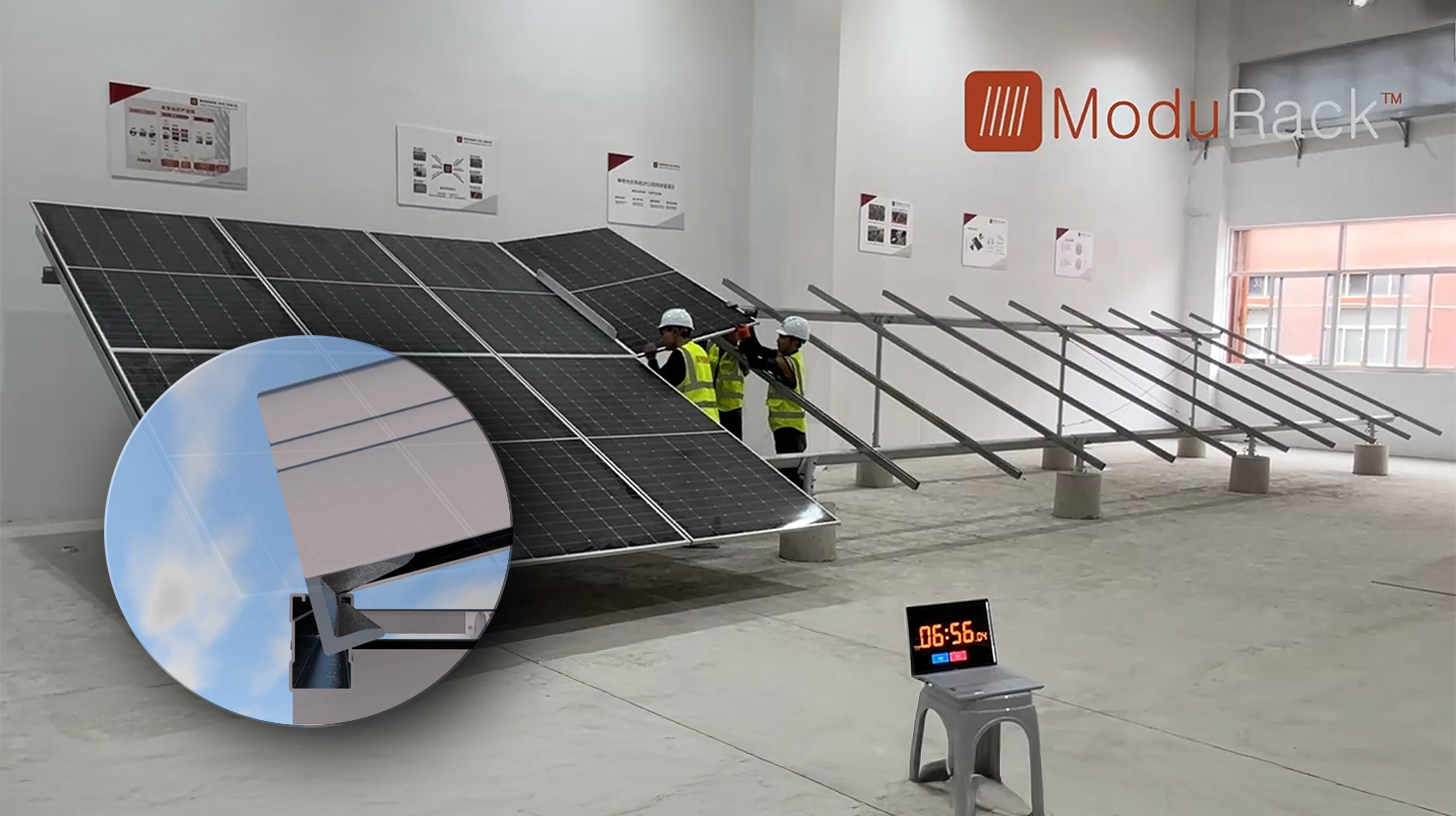
New: Patent from the USA – Install solar parks up to 30% cheaper and 40% faster and easier – with explanatory videos! - Image: Xpert.Digital
The core of this technological advancement is the deliberate departure from conventional clamp mounting, which has been the standard for decades. The new, more time- and cost-effective mounting system addresses this with a fundamentally different, more intelligent concept. Instead of clamping the modules at specific points, they are inserted into a continuous, specially shaped support rail and held securely in place. This design ensures that all forces – whether static loads from snow or dynamic loads from wind – are distributed evenly across the entire length of the module frame.
More information here:
Grid, permits, storage: The construction sites of the French solar offensive
Regional energy strategy in Central France
The Indre department and the entire Centre-Val de Loire region play a key role in France's solar energy strategy. The region has set itself the goal of meeting 100 percent of its energy needs with renewable sources by 2050, compared to 30 percent in 2019. This ambitious target makes projects like the one in Éguzon-Chantôme important building blocks of the regional energy transition.
The geographical location in central France offers favorable conditions for solar energy projects. The region has sufficient sunshine and large areas suitable for photovoltaic systems. At the same time, the grid infrastructure is well-developed, which facilitates the integration of new solar capacity.
Economic impact and local value creation
The solar project will have significant positive economic impacts on the municipality of Éguzon-Chantôme and the surrounding region. During the construction phase, temporary jobs will be created for local tradespeople and service providers. In the long term, the solar park will generate stable revenue for the municipality through business taxes and lease payments for the municipal land used.
Participatory financing also ensures that the economic benefits directly reach local investors. They receive an attractive return on their investments and thus participate directly in the project's success. This model has proven particularly successful in France, as it maximizes local value creation while simultaneously strengthening public acceptance of renewable energies.
Technological innovation and environmental aspects
The solar park was designed in accordance with the latest technological standards. The photovoltaic modules used are state-of-the-art and ensure optimal energy yield with minimal environmental impact. The plant design takes into account both landscape integration and the preservation of local biodiversity.
Particular emphasis is placed on the sustainable use of the land. The concept ensures that extensive agricultural use remains possible between and beneath the solar modules. This so-called agri-photovoltaics makes it possible to combine energy generation and agricultural production, resulting in optimal land use.
Challenges of the French solar market
Despite the positive developments, the French solar market faces several challenges. The energy system, traditionally heavily reliant on nuclear power, must be gradually diversified without jeopardizing security of supply. Integrating large quantities of volatile solar energy requires significant investments in grid infrastructure and storage technologies.
At the same time, permitting processes must be accelerated to achieve the ambitious expansion targets. The French government has already initiated reforms to simplify administrative processes and increase planning certainty for investors. The simplified permitting procedure, in effect since 2017, makes it possible to obtain all necessary environmental permits with a single application.
Financing mechanisms and investment climate
The French solar market benefits from various financing instruments and government support measures. The France 2030 investment program provides €34 billion for the energy transition, a significant portion of which is allocated to the expansion of renewable energies. These funds support both large commercial projects and innovative technological developments.
In parallel, participatory financing models have established themselves as an important complement. Platforms such as Lendosphere, Enerfip, and other specialized providers enable private individuals to invest directly in local energy projects. This development democratizes access to investment opportunities in renewable energies while simultaneously strengthening the local roots of the projects.
International cooperation and German participation
The involvement of German companies like BayWa r.e. in French solar energy projects illustrates the successful cross-border cooperation in the European energy transition. German companies contribute not only capital, but also technological know-how and experience from the German market.
This cooperation extends across various areas of the value chain, from project development and financing to the operation and maintenance of the plants. The exchange of technology and experience between the two countries contributes to increasing the efficiency of solar projects and reducing costs.
Outlook and future developments
Following the public hearing, the prefecture will decide on granting the building permit. If approved, construction of the solar park could begin in 2026, with commissioning planned for 2027. The project would then be among the first major solar projects implemented as part of France's accelerated energy transition.
The success of the Éguzon-Chantôme project could serve as a model for similar initiatives in other French municipalities. The combination of local initiative, professional project development, innovative citizen participation, and careful environmental planning demonstrates a way to implement ambitious national energy targets at the local level.
Significance for the European energy transition
The project in Éguzon-Chantôme exemplifies the profound changes taking place in the European energy system. France is evolving from a system primarily based on nuclear power to a diversified energy mix in which renewable energies play a central role. This transformation requires not only technological innovations but also new forms of public participation and local engagement.
The experience gained from such projects informs European energy policy and can serve as a guide for other member states. The French approach of participatory financing and close cooperation between municipalities and project developers could also find imitators in other European countries.
The solar project in Éguzon-Chantôme thus embodies far more than just the installation of photovoltaic modules on a 22-hectare site. It represents a fundamental shift in how energy projects are developed, financed, and integrated into society. The successful implementation of this project will not only contribute to the local and regional energy supply but also provide important insights for shaping the further development of the French and European energy transition.
Look, this little detail saves up to 40% installation time and reduces costs by up to 30%. It comes from the USA and is patented.

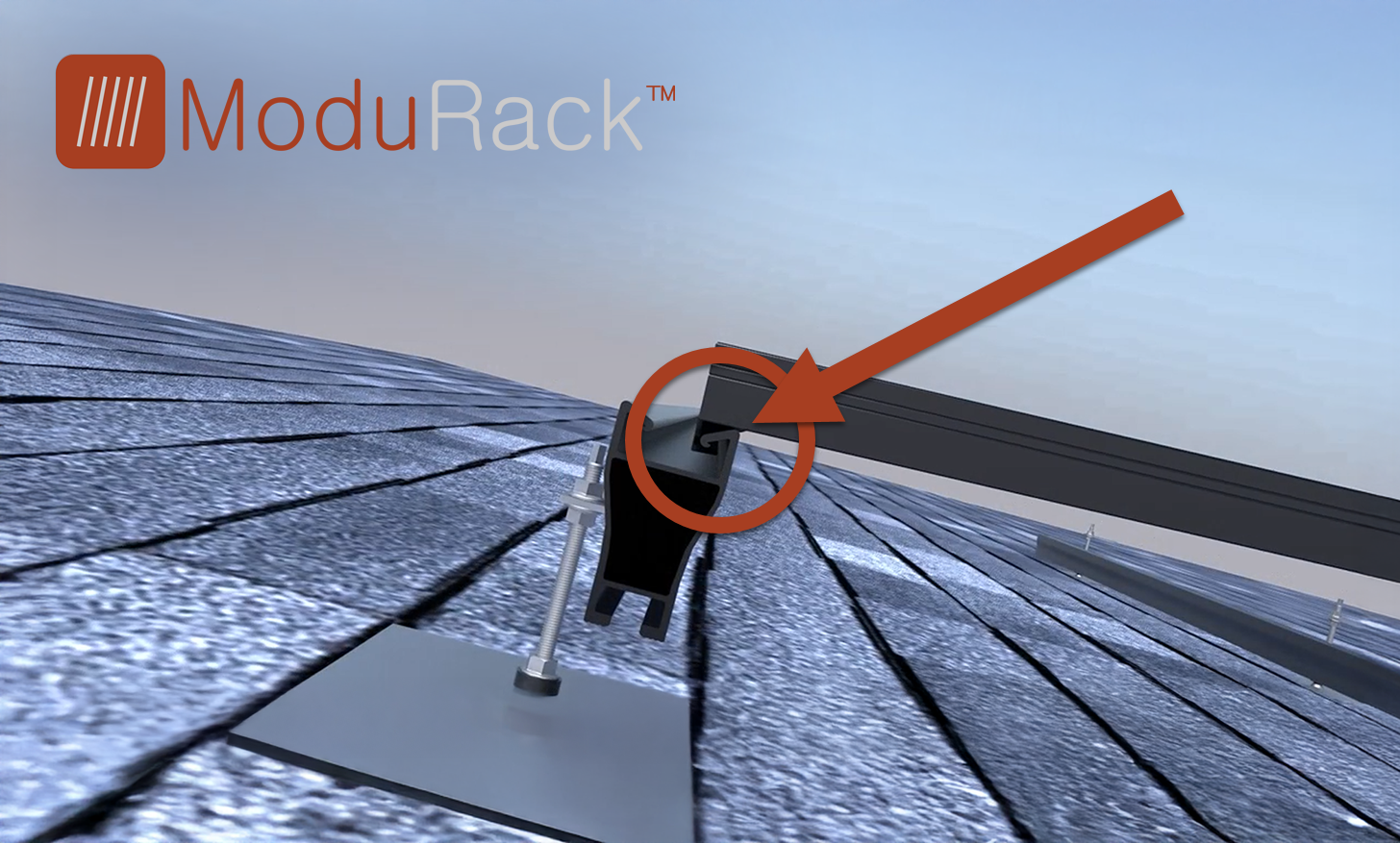
NEW: Ready-to-install solar systems! This patented innovation significantly accelerates your solar construction project
The core of ModuRack 's innovation lies in the departure from conventional clamp fastening. Instead of clamps, the modules are inserted and held in place by a continuous support rail.
More information here:
Your partner for business development in the fields of photovoltaics and construction
From industrial rooftop PV to solar parks and larger solar parking lots
☑️ Our business language is English or German
☑️ NEW: Correspondence in your native language!

Konrad Wolfenstein
I and my team are happy to be available to you as your personal advisor.
You can contact me by filling out the contact form here wolfenstein@xpert.digital:or simply call me at +49 7348 4088 965. My email address is
I'm looking forward to our joint project.