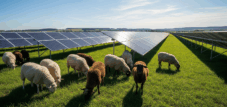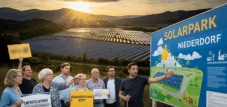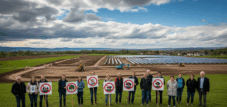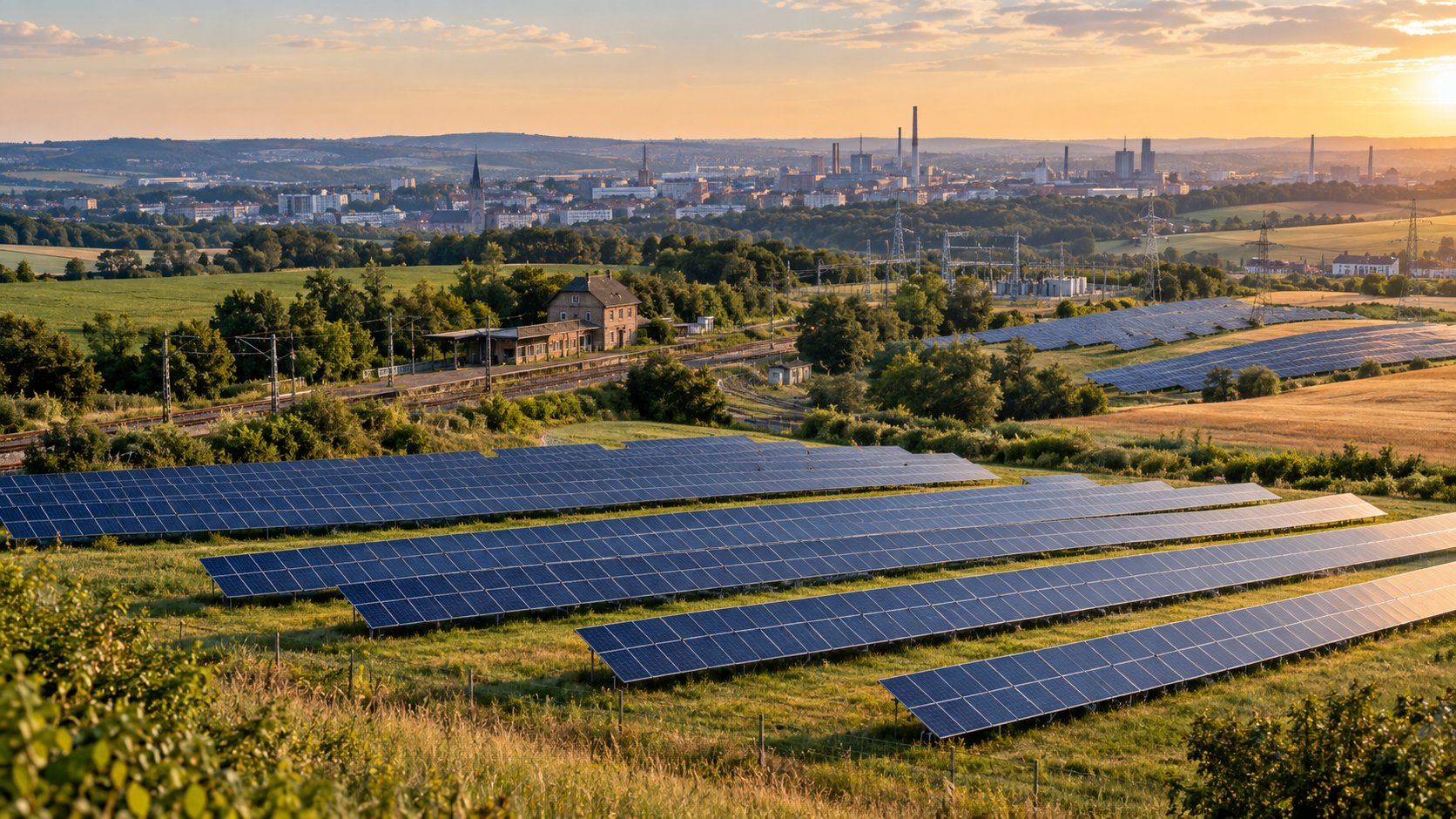
Solar park mega-project in Chemnitz: Why Wittgensdorf is becoming a test case for the energy transition – Creative image on the topic, with AI: Xpert.Digital
Solar cells instead of agriculture: This is what's behind the big energy plan for Chemnitz
Missing data, big promises: The challenging path to solar energy in Chemnitz
More than just electricity: How a new solar park is intended to secure industry in Chemnitz
The city of Chemnitz and the regional energy supplier "Eins Energie in Sachsen" are planning a groundbreaking project in the northern district of Wittgensdorf: a large-scale solar park is to be built on land currently used for agriculture by 2027. But this ambitious multi-million euro project is far more than just a local infrastructure measure. It exemplifies the complex challenges of the municipal energy transition in Germany. While ground-mounted photovoltaics have long been among the most cost-effective generation technologies, systemic hurdles are simultaneously increasing. These include competition for land, profitability in the face of fluctuating market prices, the threat of grid bottlenecks, and the demand for local value creation for citizens and industry. The planned solar park vividly demonstrates that simply building solar panels will not save an industrial city. The crucial factor will be whether the project is developed into an intelligent, future-oriented energy system for Chemnitz – or whether it remains an expensive energy policy illusion.
Chemnitz relies on solar power: Why Wittgensdorf is becoming a test case for the municipal energy transition
A solar park alone won't save an industrial city – but without it, energy policy becomes an expensive illusion
Chemnitz aims to take more visible control of its energy supply. In the northern district of Wittgensdorf, the regional utility Eins Energie in Saxony and the city of Chemnitz are planning a large, open-field photovoltaic plant on agricultural land on both sides of the former Upper Railway Station. According to current plans, the solar park is scheduled to go online in 2027. Dr. Aline Clausing is the project manager for the utility. Precise details regarding the planned capacity, area, investment volume, and expected annual yield are not yet publicly available. For this very reason, the project should neither be prematurely celebrated as an energy policy breakthrough nor dismissed as a mere intrusion on the landscape.
Economically, the project is more than the sum of its parts. It represents a structural transformation that is increasingly turning municipal energy suppliers from mere electricity procurers and grid operators into regional producers, flexibility providers, and infrastructure developers. At the same time, it touches upon a central conflict of objectives in the energy transition: Germany urgently needs more affordable renewable electricity, but the added value of a solar power plant increasingly depends on whether grid connection, storage, demand management, and local acceptance grow in tandem. The decisive factor, therefore, is not solely how many megawatts are installed in Wittgensdorf. What matters is whether it becomes an economically and systemically sound component for Chemnitz.
Wittgensdorf becomes a test case for energy policy
The planned location holds special symbolic significance. Wittgensdorf is already familiar with the large-scale use of solar energy: a photovoltaic system with a peak output of approximately 1.13 megawatts went into operation on the former landfill site in 2006. More than 5,300 modules were installed on roughly 20,000 square meters. That project was one of the first large-scale solar installations in Saxony and demonstrated how a previously contaminated site could be repurposed for energy generation. However, the new solar park would not simply be a repetition of this model. It is planned for agricultural land and therefore raises more complex issues concerning land competition, soil quality, landscape impact, and local economic benefits.
The transition from landfill to agricultural land also marks the maturity level of photovoltaics. As long as solar parks were primarily built on brownfield sites, landfills, or field margins, their expansion could be relatively easily justified as a sensible secondary use. With the rapidly increasing demand for land, regularly farmed areas are now coming more into focus. This is neither inherently wrong nor automatically right. An economically rational decision must jointly assess soil quality, agricultural yield, the ecological situation, proximity to the grid, potential development costs, and long-term dismantling possibilities.
The national solar market is changing the scale
Germany has significantly accelerated the expansion of photovoltaics in recent years. By the end of 2025, approximately 117 gigawatts of solar capacity were installed. According to preliminary figures, around 16.4 gigawatts were added in 2025 alone. The shift within the market is noteworthy: while rooftop installations previously dominated the expansion, ground-mounted systems accounted for roughly half of the newly installed capacity in 2025. The segment to which Wittgensdorf would belong has thus transformed from a supplementary sector to a key pillar of the expansion.
Despite this momentum, a significant gap remains to reach the political target. 215 gigawatts of photovoltaic capacity are planned for 2030. Starting from 117 gigawatts at the end of 2025, another 98 gigawatts would need to be added within five years, averaging almost 20 gigawatts per year. Since 2026, the political target has generally envisioned an annual expansion of approximately eleven gigawatts each on buildings and ground-mounted systems. A single solar park in Chemnitz will only marginally affect the national figures. However, the total number of locally based projects will ultimately determine whether the expansion targets are practically achievable.
For Chemnitz, this development means two things. First, the larger market fundamentally improves the availability of modules, inverters, planning services, and specialized operating models. Second, competition for grid connections, suitable sites, transformers, qualified project developers, and economically viable marketing models is increasing. While the construction of solar capacity is becoming more technically standardized, its integration into the energy system is becoming more complex.
Solar power is cheap, but not automatically valuable
Ground-mounted photovoltaic (PV) systems are now among the most cost-effective technologies for generating new electricity in Germany. For large-scale installations, depending on location and financing assumptions, levelized costs of electricity (LCOE) of approximately 4.1 to 6.9 cents per kilowatt-hour were determined for 2024. These calculations were based on investment costs in the range of roughly 700 to 900 euros per kilowatt. Even in less sunny regions, ground-mounted PV can therefore produce electricity at costs lower than those of many new conventional power plants.
These cost advantages are relevant for Wittgensdorf, but should not be confused with guaranteed economic success. Levelized cost of electricity (LCOE) describes the average costs over the lifetime of a system. It does not indicate the price the generated electricity fetches on the market at any given hour. Solar power plants produce a particularly high amount of electricity when many other solar power plants are also feeding into the grid. This causes the market value of solar power to drop, especially during sunny midday hours. This market phenomenon, known as cannibalization, intensifies with increasing installed capacity.
A solar park can therefore be technically inexpensive yet still face commercial pressure. The decisive factor is not solely the average electricity price, but the specific market value of the actual generation profile. Negative electricity prices and temporary curtailments are not an argument against photovoltaics, but rather an indication of the next stage of development: New plants increasingly require a well-thought-out combination of direct marketing, long-term supply contracts, storage, controllable consumers, and grid-supportive operation.
Missing project data limits the evaluation
As long as the output, area, grid connection point, investment amount, and revenue model are unknown, a reliable return on investment calculation for Wittgensdorf cannot be prepared. Any concrete statement regarding electricity yield, households supplied, or avoided emissions would be speculative without this information. General household comparisons are also of limited value because a solar park does not generate electricity around the clock on demand, but rather depending on the weather and time of day.
A reliable economic assessment would require at least the installed DC and AC power capacity, the expected specific annual yield, module degradation, availability assumptions, lease costs, grid connection costs, capital costs, operating and insurance costs, and the planned marketing strategy. Assumptions regarding curtailment, negative prices, and potential storage revenues would also be necessary. In modern projects, even the design of the ratio between module power and inverter power can influence the yield structure.
A lack of transparency is not unusual in the early planning stages. However, it should be reduced as quickly as possible. Acceptance is not achieved through general promises, but through comprehensible scale. For residents, farmers, local politicians, and the local economy, it is crucial to know the size of the facility, which areas will be affected, the intended operating period, the decommissioning obligations, and the specific benefits that will remain in the region.
The grid connection determines the real value
The most economically advantageous location for a solar power plant is not necessarily the one with the highest solar irradiance. Often, a slightly less fertile site with a short, readily available grid connection is more beneficial than a highly productive area that requires kilometers of power lines, new substation technology, or extensive grid reinforcements. Grid connection costs can significantly alter project economics and impact the timeline more than the actual construction of the solar park.
This issue is gaining importance throughout Germany. Almost all photovoltaic systems feed into distribution networks. With the rapid expansion of these networks, load flows and the number of bottlenecks are increasing. In the second quarter of 2025, curtailment of photovoltaic power accounted for approximately 72 percent of redispatch measures caused by renewable energy systems in the distribution network. This does not mean that 72 percent of the solar power was lost. However, it demonstrates that distribution networks are increasingly becoming a bottleneck in the energy transition.
For Eins Energie, this presents a strategic opportunity. A regionally based energy supplier can better coordinate generation, grid situation, municipal heat planning, charging infrastructure, and local consumption centers than a purely financially driven project developer. This requires a clear separation of regulated grid functions from competitive generation activities, along with coordinated infrastructure planning within the legally permissible framework. The advantage of local proximity only unfolds if the plant is developed not in isolation, but as part of a regional energy system.
Storage systems can turn midday electricity into a market product
A battery storage system is not mandatory for a solar park, but it can increase its economic value. It can store electricity during off-peak hours when prices are low and release it later during hours with higher prices. Furthermore, revenue can be generated from balancing power, intraday trading, grid services, or by mitigating peak feed-in. Whether a storage system is economically viable depends on its size, connected load, number of charge cycles, aging, marketability, and local grid conditions.
For Wittgensdorf, a jointly planned grid connection would be particularly advantageous. If the solar park and storage system share the same connection, the photovoltaic capacity can be increased without having to feed every theoretical peak in generation into the grid. Intelligent energy management limits the feed-in at the connection point and charges the storage system when there is a surplus. This allows for more efficient use of the existing grid connection.
However, a realistic perspective is also necessary here. Storage systems do not generate additional energy, but rather redistribute it and cause conversion losses. Their revenues can decrease if many market participants exploit the same price differences. Therefore, a storage system should not be evaluated as a prestigious add-on, but rather based on realistic price trends and multiple revenue streams. A concept would be particularly robust if it flexibly integrated local industry, charging infrastructure, or municipal consumers.
Chemnitz needs electricity for its industrial transformation
Chemnitz is not merely a residential and administrative city. Its economic structure is characterized by mechanical engineering, automotive supply, industrial services, research, and a growing technology sector. Electrification, heat pumps, electromobility, computing and communication technology, and, in the future, hydrogen production are increasing electricity demand or at least altering its temporal pattern. Regional solar power can therefore provide a competitive advantage if combined with reliable supply models and flexibility.
However, a solar park doesn't automatically lower the electricity bill for every company in Chemnitz. The end-customer price consists of procurement, grid fees, taxes, levies, distribution, and other components. Even locally generated electricity isn't transported free of charge when using the grid regularly. The economic benefits arise more from predictable long-term procurement, direct supply contracts, certificates of origin, regional marketing, and reduced dependence on volatile fossil fuel prices.
For energy-intensive or sustainably oriented companies, power purchase agreements (PPAs) with the solar park could be attractive. A PPA can fix a price or price formula for several years. The producer receives more predictable revenue, the buyer improves their cost certainty and can document the regional origin of the electricity. The remaining risk lies in the generation profile: A business may also need electricity at night and in winter, while photovoltaics primarily supply power during the day and in summer. Therefore, supplementary power procurement, storage, or a combination with wind energy are necessary.
Municipal generation strengthens strategic capacity
For Eins Energie, the solar park is not just a single investment. It can be part of a long-term shift in the business model. Traditional energy suppliers have profited for decades from procurement, distribution, grids, and conventional generation. With decentralized photovoltaics, dynamic tariffs, and self-consumption, these value chains are changing. Companies that build their own renewable energy generation, flexibility, and digital control systems can develop new products and retain a larger share of regional energy value creation.
However, generating your own power doesn't eliminate all risk. A regionally concentrated portfolio is exposed to the same weather conditions. If the sun shines brightly across Saxony, many plants produce energy simultaneously. A robust strategy therefore requires technological and geographic diversification, flexible demand, storage, and professional marketing. The solar park is one component, not a complete business model.
At the same time, municipal ownership offers political added value. Investment decisions can be more strongly aligned with regional goals, and economic surpluses are more likely to remain within municipal structures. However, even a municipal utility must be capable of operating in the capital market and must act with sound business management principles. An unprofitable project does not become worthwhile simply because it is publicly funded. Conversely, the return on investment should not be viewed too narrowly if network development, security of supply, climate goals, and regional location policies offer additional benefits.
New: Patent from the USA – install solar parks up to 30% cheaper and 40% faster and easier – with explanatory videos!

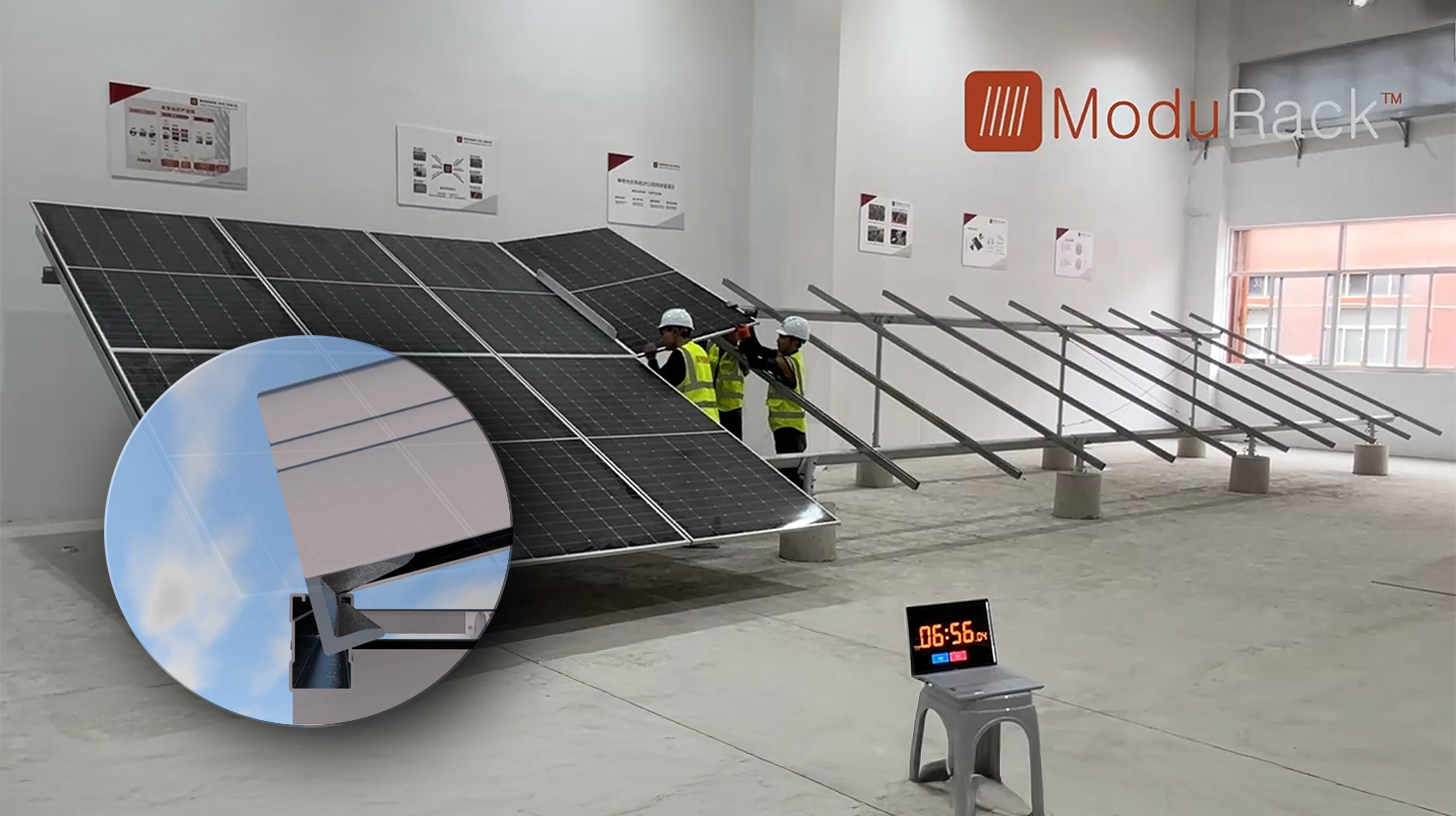
New: Patent from the USA – Install solar parks up to 30% cheaper and 40% faster and easier – with explanatory videos! - Image: Xpert.Digital
The core of this technological advancement is the deliberate departure from conventional clamp mounting, which has been the standard for decades. The new, more time- and cost-effective mounting system addresses this with a fundamentally different, more intelligent concept. Instead of clamping the modules at specific points, they are inserted into a continuous, specially shaped support rail and held securely in place. This design ensures that all forces – whether static loads from snow or dynamic loads from wind – are distributed evenly across the entire length of the module frame.
More information here:
Public participation as the key to acceptance of the solar project
Land is both a factor of production and a conflict zone
Ground-mounted photovoltaics require significantly less land today than they did twenty years ago. While around four hectares per megawatt were typical in 2006, the requirement was less than one hectare per megawatt by 2025. Technological advancements, more efficient modules, and optimized installation methods increase land-use efficiency. Nevertheless, every solar park remains a long-term spatial planning decision.
On agricultural land, the opportunity cost must be assessed. Crucially, it's not just about how many hectares are taken out of use, but also about the impact on yields, soil quality, and operational functions. A low-yielding, difficult-to-cultivate, or fragmented area can be more economically viable for photovoltaics than high-quality arable land. Furthermore, lease income can provide stability for agricultural operations, particularly in years with poor harvests or volatile agricultural prices.
On the other hand, high solar leases can alter the local land market. They are often significantly higher than traditional agricultural leases and can favor landowners, while active farmers without land ownership lose land. The distributional impact within agriculture therefore deserves more attention than the simplistic comparison between solar parks and food production. A project can be attractive for a landowner and burdensome for a tenant farmer.
Agri-photovoltaics is an option, but not a universal solution
Agrivoltaics combines electricity generation and agricultural use on the same land. Higher-mounted or wider-spaced modules allow for arable farming, specialty crops, or livestock farming between and beneath the module rows. This can reduce land-use conflicts and protect certain crops from heat, hail, or evaporation. However, it often requires more land per installed megawatt and incurs higher investment and operating costs than a conventional solar park.
Whether agri-PV would be worthwhile in Wittgensdorf depends on the farms involved, the crops, the soil, and the access roads. Simply labeling the land as dual-use is insufficient. Agricultural machinery requires adequate clearance and turning radii; foundations and cables must not disproportionately impede farming operations. Furthermore, agricultural use must actually continue and remain economically viable.
A differentiated project could incorporate different zones. Areas with lower soil quality could be developed using traditional, space-efficient methods, while suitable sub-areas could be used for dual purposes. Wide corridors, extensive grazing, or wildflower meadows can also improve the overall impact. The optimal solution is rarely the maximum number of modules, but rather a site-specific compromise between energy yield, agriculture, nature, and landscape.
Environmental compatibility is an economic factor
Solar parks can negatively impact habitats if they are poorly located or built too close together. Fencing can disrupt animal migration routes, construction work can damage the soil, and continuous arrays of modules can drastically alter the landscape. Therefore, particularly sensitive or protected areas, high-quality grassland, and soils with high natural fertility should not be used lightly.
At the same time, intensively farmed arable land can be ecologically enhanced through appropriate design. Permanent vegetation cover, site-adapted seed mixtures, wildflower strips, sufficient row spacing, the avoidance of pesticides, extensive mowing, and permeable wildlife corridors create habitats that may have previously been lacking. The German Federal Environment Agency recommends, among other things, limiting modules and ancillary structures to a maximum of 60 percent of the land area and reserving at least ten percent of the area for site-adapted biotope elements.
Such measures are not merely ecological concessions. They reduce permitting and acceptance risks, can influence maintenance costs, and increase long-term social sustainability. A project optimized for minimal construction costs can ultimately become more expensive due to resistance, delays, or additional requirements. Therefore, environmental compatibility belongs in the economic risk assessment and not as a secondary consideration for image.
Citizen dialogue must precede decisions
Providing residents with early information is particularly important for Wittgensdorf. The town has invited residents and other interested parties to a public event where representatives from various departments and Eins Energie will provide information on the project's status and next steps. Such a format is beneficial as long as it doesn't merely explain finalized plans, but also offers real opportunities for residents to influence the process.
People are more likely to accept infrastructure when processes are perceived as fair, transparent, and open-ended. This isn't just about whether someone supports photovoltaics in principle. Locally, factors such as sightlines, distances to residential areas, glare, construction traffic, drainage, fencing, potential noise from inverters and transformers, and the alteration of familiar landscapes are all important considerations. These concerns are not automatically expressions of irrational resistance, but rather legitimate local costs associated with a societal expansion that is desired overall.
Credibility demands clear answers to uncomfortable questions. These include the specific area covered, the choice of location, alternatives on rooftops or previously contaminated sites, the contract duration, decommissioning guarantees, and the local financial benefits. The more transparently benefits and burdens are distributed, the lower the risk of a technically sound project being politically blocked.
Participation can transform acceptance into added value
Financial participation is one of the most effective instruments for transforming those affected into active participants. Possible options include citizen loans, cooperative shares, savings products, municipal investments, or discounted regional electricity tariffs. Legally permissible payments to local communities can also increase the tangible benefits. Crucially, these measures must be designed in an understandable way, without exaggerated promises of returns.
The former Wittgensdorf landfill already offered a citizen participation model. This historical example shows that local participation in the region is not an entirely new idea. For a larger project today, digital subscriptions, transparent reporting, and low minimum contributions could broaden access. However, participation that is only open to wealthy households could raise new questions about distribution.
Equally important is the use of municipal revenues. When a portion is visibly invested in schools, clubs, roads, climate adaptation, or local infrastructure, the connection between investment and the common good becomes tangible. Conversely, the positive effect of acceptance dissipates if revenues simply disappear into the general budget. Local value creation must be concrete, transparent, and sustainable.
The regional supply chain remains limited
During the construction phase of a solar park, orders are generated for planning, civil engineering, cable laying, surveying, safety technology, landscaping, and logistics. Some of these services can be provided by companies from Chemnitz and Saxony. While the need for personnel decreases significantly during operation, maintenance, groundskeeping, inspections, cleaning, insurance, and technical operations management remain as recurring services.
The modules and some of the power electronics are not expected to be manufactured in the region. The largest share of the material value added in a photovoltaic system often occurs in international supply chains. This does not diminish the energy policy benefits, but it does set realistic limits to job creation promises. A solar park is not a large-scale industrial operation with hundreds of permanent jobs.
The greater regional impact lies in the infrastructure benefits. Predictable green electricity prices can safeguard existing industries, support new investments, and strengthen Chemnitz's profile as a technology and production hub. This indirect benefit is more difficult to measure than the number of construction jobs, but could prove more significant in the long run.
Security of supply requires more than hours of sunshine
Photovoltaics increases domestic electricity production and reduces the need for imported fuels, thus contributing to strategic resilience. However, a solar park is no substitute for guaranteed power during dark winter hours. Electricity production fluctuates with the time of day, cloud cover, and season. Even a very large system will not generate electricity at night.
A robust regional energy supply is therefore achieved through the interplay of various technologies. Wind energy often has a complementary generation profile, storage systems shift energy over several hours, flexible consumers respond to supply and demand, and dispatchable power plants or supra-regional grids ensure coverage during extended periods of low wind and darkness. For Chemnitz, the integration with heat supply, electromobility, and industrial processes is an additional factor.
The solar park should therefore not be burdened with the promise of complete energy self-sufficiency. A more realistic goal is strengthening regional self-sufficiency, not decoupling from the grid. The European electricity market and efficient grids, in particular, compensate for regional fluctuations. Local generation and supra-regional networking are not opposites, but rather complementary.
Chemnitz still possesses considerable solar potential
In 2021, the city had a total of 81.9 megawatts of installed renewable energy capacity within its city limits. Approximately 55.4 megawatts of this capacity was allocated to photovoltaics in 2020. Previous analyses estimated the economically viable photovoltaic potential on rooftops at roughly 465 gigawatt-hours of annual yield, or, in a later analysis, at approximately 480 megawatts of installable capacity. While such potential figures do not represent short-term construction projects, they do illustrate the scale of the untapped potential.
This does not imply an either-or choice between rooftop and ground-mounted systems. Rooftop systems avoid additional land use and generate electricity close to the point of consumption. However, they are more fragmented, have more complex ownership structures, and are often more expensive per kilowatt. Ground-mounted systems can be built more quickly in large units and produce electricity more cheaply, but they require more land and high-capacity grid connections.
A credible solar strategy for Chemnitz should accelerate both segments in parallel. Public buildings, commercial rooftops, parking lots, garage complexes, industrial sites, landfills, and suitable agricultural land serve different functions. The solar park in Wittgensdorf would be problematic if it served as a substitute for more challenging rooftop programs. It makes sense if it is part of a broad portfolio that prioritizes sites based on cost, speed, grid compatibility, and environmental impact.
The timetable until 2027 is ambitious
Commissioning in 2027 requires a tightly scheduled sequence of planning, municipal decisions, environmental impact assessment, land acquisition, grid connection clarification, financing, procurement, construction, and technical acceptance. Photovoltaic modules can be installed relatively quickly, but the lead time often lies outside the construction site. Grid components, transformers, and permitting processes, in particular, can impact the timeline.
The political desire for speed must not overshadow the quality of planning. A poorly prepared project risks later changes, legal disputes, or costly revisions. Conversely, early coordination between the city administration, utility companies, agriculture, nature conservation, network planning, and local residents can save considerable time. Public participation then becomes not a delaying tactic, but an integral part of professional risk management.
For the 2027 target date, it should also be clearly defined what is meant by commissioning. Possible options include full grid connection, phased completion, or initial partial operation. Transparent milestones prevent a politically set date from being artificially maintained later when key components are still missing.
The greatest risks lie outside the modules
Technically, ground-mounted photovoltaics is a mature and comparatively low-risk technology. The main project risks today often lie in financing, grid connection, permitting, supply contracts, and marketing. Rising interest rates increase capital costs, falling market values reduce revenues, and grid congestion can lead to curtailment. Changes in subsidy regulations or requirements during periods of negative electricity prices also affect the business model.
In addition, there are site-specific risks. Unsuitable soils may require complex foundations, contaminated sites or archaeological finds can alter construction processes, and heavy rainfall may necessitate new drainage concepts. Glare assessments, species protection surveys, and compensatory measures can increase costs, but are manageable with good advance planning. Insurers are increasingly paying attention to hail, storm, flood, and fire protection.
A professional project should not mask these risks with optimistic averages. Scenarios for low electricity prices, delayed grid connection, higher financing costs, and additional environmental regulations are essential. The crucial question is whether the solar park remains viable even under conservative assumptions. Only then will it be a reliable infrastructure component rather than a gamble on permanently favorable conditions.
The economic benefits must become measurable
The project's success should be evaluated after commissioning using clear key performance indicators. These include annual yield, technical availability, curtailment rate, specific operating and maintenance costs, actual electricity price achieved, and regional contract shares. Equally important are ecological and social factors such as land management, biodiversity development, municipal revenues, citizen participation, and complaints from the neighborhood.
Annual publication of such data would build trust and improve subsequent projects. It could show whether projected yields are achieved, grid bottlenecks are managed, and ecological measures are effective. A municipally driven project, in particular, should meet higher transparency standards than a purely private undertaking, because it is justified by public climate goals and regional public services.
Transparency also protects against unrealistic expectations. If yields fluctuate due to weather conditions or market prices are lower, deviations can be objectively explained. Without measurable targets, however, any political assessment remains arbitrary. A data-driven energy transition requires not only facilities but also transparent performance monitoring.
A solar park must become an energy system
The most strategically advantageous option for Wittgensdorf would not be an isolated solar park, but rather a modular energy system. This includes a layout designed for energy storage from the outset, adequately sized power lines, digital controllability, and the option to integrate local consumers or charging infrastructure. Future expansion should also be considered in the planning, without unnecessarily blocking off land in advance.
A regional combination of different generation profiles would also be interesting. Solar power during the day, wind power in other weather conditions, storage for short-term shifts, and flexible consumers could better utilize the shared grid connection. Municipal heat supply and large-scale heat pumps offer additional possibilities for utilizing surplus electricity, provided that temperature demand and infrastructure are compatible.
Eins Energie's real competitive advantage lies in this systems expertise. Almost any financially strong project developer can build modules. The real challenge lies in the long-term coordination of generation, grids, municipal buildings, industry, heating, and mobility. If Wittgensdorf serves as a learning and demonstration project for this, its value can extend far beyond the kilowatt-hours it generates.
A sensible step under challenging conditions
The planned solar park is fundamentally economically sound. Ground-mounted photovoltaics generate electricity at low cost, Germany needs a high annual increase in capacity, and Chemnitz has a growing demand for climate-friendly energy. The collaboration between the city and the regional energy supplier offers excellent opportunities to combine local goals, grid infrastructure, and economic benefits.
The project is not a sure thing, however. Using agricultural land requires a well-founded site selection. Grid connection must be guaranteed, marketing must be robust against falling solar power prices, and the possibility of storage must be seriously examined. Public dialogue, ecological design, and financial participation must not be added only after the key decisions have already been made.
The clear perspective, therefore, is this: Wittgensdorf should be built if the project offers more than simply installing as many modules as possible. It must be grid-friendly, environmentally sound, economically viable, and locally beneficial. If this is achieved, the solar park will become a real investment in securing the future of industry and the community. If this integration fails, it risks becoming a technically functional but strategically mediocre electricity producer.
Chemnitz is thus facing a decision that is exemplary for many German cities. The expansion of renewable energies can no longer be advocated in the abstract and spatially suppressed. It is becoming visible, demanding land and changing business models. Precisely for this reason, it needs better planning, not less speed. The solar park in Wittgensdorf can demonstrate that a regional energy transition need not be a romanticized vision of self-sufficiency or a centrally mandated infrastructure program, but rather an economically disciplined combination of generation, grids, industry, nature, and participation.
Your partner for business development in the fields of photovoltaics and construction
From industrial rooftop PV to solar parks and larger solar parking lots
☑️ Our business language is English or German
☑️ NEW: Correspondence in your native language!

Konrad Wolfenstein
I and my team are happy to be available to you as your personal advisor.
You can contact me by filling out the contact form here wolfenstein@xpert.digital:or simply call me at +49 7348 4088 965. My email address is
I'm looking forward to our joint project.