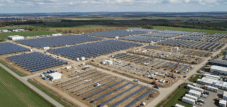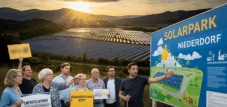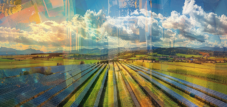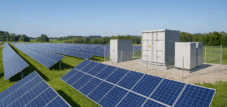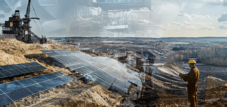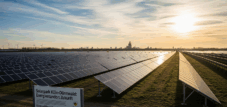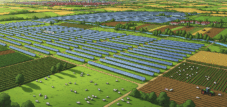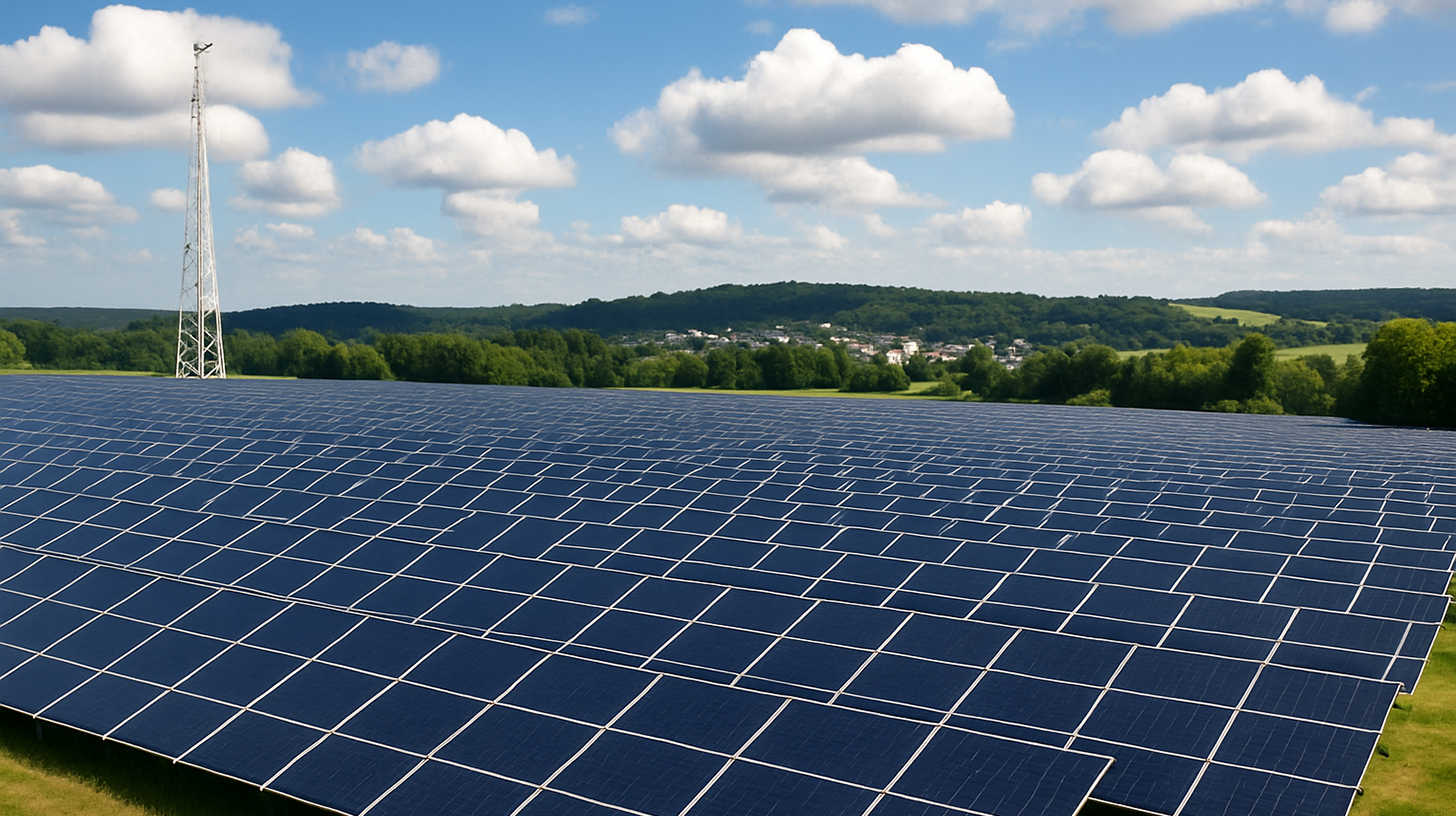
The planned solar park in Wallerfangen-Ittersdorf: Larger than 50 football fields – A milestone for Saarland's energy transition – Creative image: Xpert.Digital
Larger than 50 football fields: Where radio waves once reached Europe, green energy will soon be generated
### Electricity for 10,000 homes: New solar giant aims to accelerate Saarland's energy transition ### €300,000 per year: This solar park will be a goldmine for a Saarland municipality ### No more transmission masts: What's happening now on the huge Europe 1 site in Saarland ### Saarland's new frontrunner: Why investors are lining up for this solar park ###
A location with historical significance: From the most powerful radio station to a mega solar park: Saarland plans its future on historic ground
The municipality of Wallerfangen-Ittersdorf is planning to build one of the largest solar parks in Saarland. What makes this project special is its location on the former site of the Europe 1 transmission towers, a place with an exceptional technical and cultural history. The former Felsberg-Berus longwave transmitter broadcast the program of the French radio station Europe 1 from 1955 to 2019 and, with a transmission power of two megawatts, was one of the most powerful radio transmitters on German territory.
The history of this broadcasting facility between Berus and Ittersdorf began in the 1950s, when Saarland had a special political status. Due to the prevailing legal situation at the time, a private radio station was able to be established here, broadcasting primarily to France. The striking broadcasting hall, built in 1955 with its distinctive shape resembling an open scallop shell, was the world's first large-scale building with a concrete roof suspended on prestressed cables. Following the cessation of broadcasting operations at the end of 2019 and the demolition of the last transmission masts in October 2020, the site is now being repurposed.
Technical dimensions and performance data
The planned solar park will cover an area of approximately 40 hectares, making it one of the largest photovoltaic projects in Saarland. For comparison, Saarland's current largest solar park, located in Weierweiler, has a capacity of 20 megawatts on a significantly smaller area. With its 40 hectares, the Wallerfangen project is of a size that ranks among the most significant installations in Germany. A similarly sized solar park, also covering 40 hectares, was built by Deutsche Bahn in Schleswig-Holstein and generates around 38 gigawatt-hours of energy annually.
The planned plant's electricity production is intended to be sufficient to supply 10,000 homes with electricity. This supply capacity corresponds to an annual electricity demand of approximately 30 to 40 million kilowatt-hours, based on an average household consumption of 3,000 to 4,000 kilowatt-hours per year. With optimal orientation and given the climatic conditions of Saarland, a photovoltaic system can generate approximately 900 to 1,000 megawatt-hours of electricity annually per megawatt peak of installed capacity. Therefore, it can be deduced that the planned plant will have an installed capacity of approximately 35 to 40 megawatt peak.
Economic impact on the community
The financial benefits for the municipality of Wallerfangen are considerable. Leasing the 40-hectare site is expected to generate up to €300,000 annually for the municipal coffers. This corresponds to a lease income of approximately €7,500 per hectare per year, which is significantly higher than the usual rates for solar park leases, typically between €3,000 and €4,000 per hectare. The higher lease income can likely be attributed to the particularly favorable site conditions, the existing infrastructure, and the proximity to grid connection points.
In addition to direct lease payments, the municipality benefits from further economic effects. Under the Renewable Energy Sources Act, municipalities have been entitled to a financial contribution of 0.2 cents per kilowatt-hour fed into the grid since 2023. With an annual electricity production of approximately 35 million kilowatt-hours, this would mean additional revenue of around €70,000 per year. Furthermore, business tax revenue may be generated if the operator of the solar park is based in the municipality.
Selection process and investors
Several investors have expressed interest in the project, and the municipal council will make the final decision. This selection process is typical for municipal land leases, where, in addition to the offered lease price, other criteria such as the investor's experience, the technical concept, accompanying environmental measures, and local economic benefits play a role. The decision is expected in the fall, which is a typical timeline for such projects.
The high attractiveness of the site to investors can be explained by several factors. The former broadcasting site already has good grid connections, as the necessary infrastructure for operating the transmitter was already in place. Furthermore, it is a contiguous, flat area without major topographical obstacles, which simplifies the installation and operation of the solar panels and makes them more cost-effective.
Significance for the Saarland energy transition
The planned solar park fits into Saarland's ambitious expansion targets for renewable energies. With its 2030 energy roadmap, the Saarland state government has set itself the goal of doubling the share of renewable energies in electricity consumption from the current level of approximately 20 percent to 40 percent. By 2030, the plan aims to achieve an expansion of 750 megawatts of photovoltaic capacity and 500 megawatts of wind energy capacity.
Due to its high population density of 386 inhabitants per square kilometer and its significant industrial sector, Saarland faces particular challenges in the energy transition. Despite its limited land area, the state has already made considerable progress. With 346.5 kilowatts of installed photovoltaic capacity per square kilometer, Saarland ranks first in Germany in terms of land-use efficiency. The planned solar park in Wallerfangen-Ittersdorf would make a significant contribution to the expansion targets and cover approximately five percent of the targeted photovoltaic expansion by 2030.
Legal framework and approval procedures
The realization of the solar park requires a multi-stage planning and approval process. Since ground-mounted photovoltaic systems are not among the privileged projects in rural areas, the municipality must first draw up a development plan and amend the land-use plan accordingly. This process takes an average of six to twelve months and includes various assessments regarding nature and landscape conservation, soil conditions, and grid connection.
A similar process is already underway for the Ihn solar park in the same municipality of Wallerfangen, where another photovoltaic system is planned on 19 hectares. The experience gained from this project can be applied to the larger project in Ittersdorf. With its ordinance on the construction of photovoltaic systems on agricultural land, Saarland has designated areas suitable for ground-mounted installations, which facilitates such projects.
New: Patent from the USA – install solar parks up to 30% cheaper and 40% faster and easier – with explanatory videos!
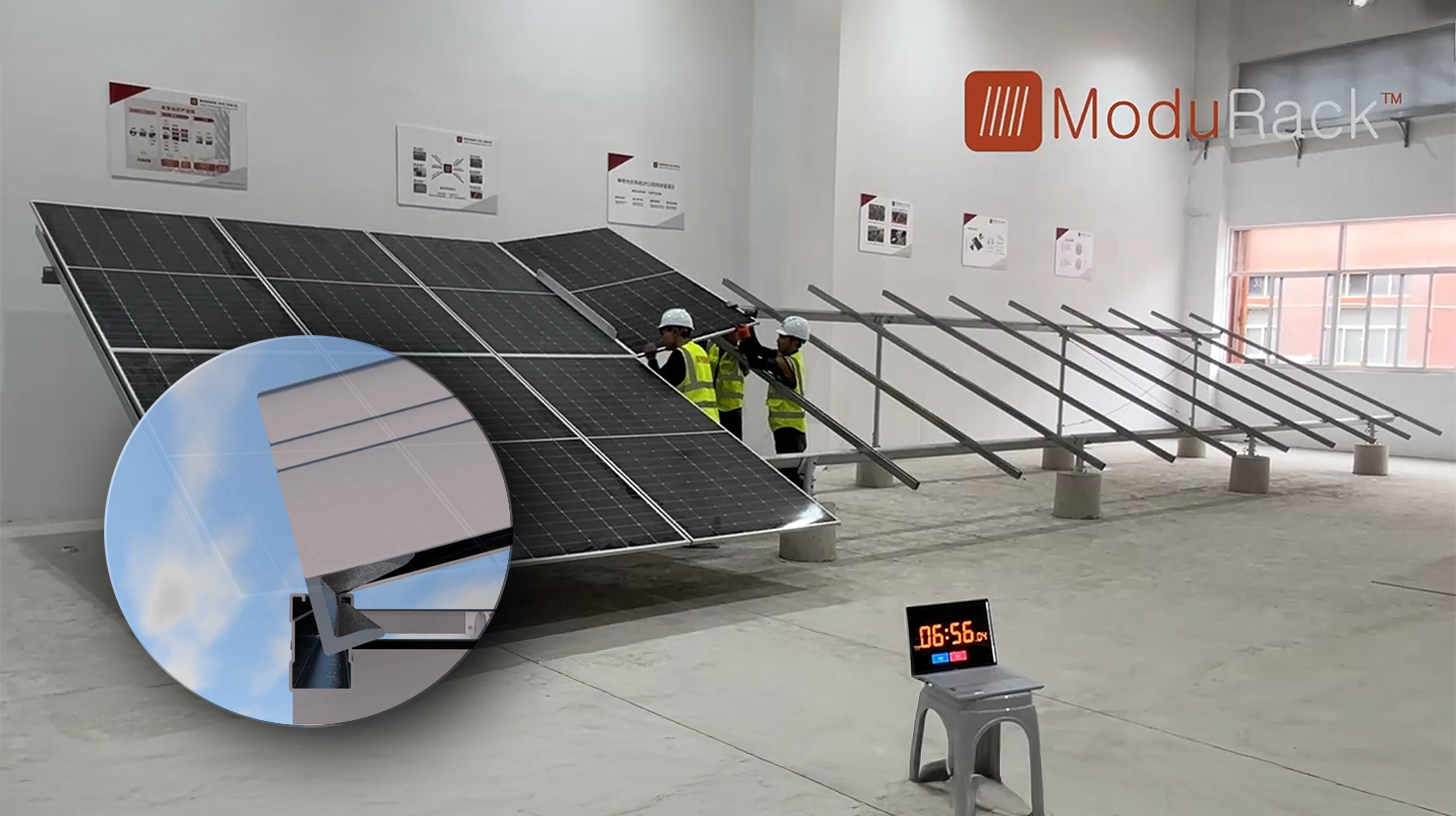
New: Patent from the USA – Install solar parks up to 30% cheaper and 40% faster and easier – with explanatory videos! - Image: Xpert.Digital
The core of this technological advancement is the deliberate departure from conventional clamp mounting, which has been the standard for decades. The new, more time- and cost-effective mounting system addresses this with a fundamentally different, more intelligent concept. Instead of clamping the modules at specific points, they are inserted into a continuous, specially shaped support rail and held securely in place. This design ensures that all forces – whether static loads from snow or dynamic loads from wind – are distributed evenly across the entire length of the module frame.
More information here:
70,000 modules, 40 MW: This is how a modern solar park is created – How the Wallerfangen-Ittersdorf solar park saves 14,000 tons of CO2 annually
Technical implementation and module selection
Modern solar parks typically use monocrystalline or bifacial solar modules with peak power outputs exceeding 500 watts per module. For a planned system size of approximately 35 to 40 megawatts, roughly 70,000 to 80,000 solar modules would be required. The modules are mounted on metal frames, typically reaching a height of two to three meters. The spacing between the module rows is chosen to minimize shading and allow for continued extensive land use.
Several transformer stations are required for grid connection. These convert the generated direct current into grid-compliant alternating current and transform it to the appropriate voltage level. The power is expected to be fed into the medium-voltage grid of the regional grid operator, from where it will be distributed to the supra-regional distribution network.
Environmental impacts and accompanying measures
Ground-mounted photovoltaic systems offer the opportunity to achieve ecological improvements. Extensive use of the areas between and beneath the modules allows for the creation of wildflower meadows, providing habitat for insects and other small animals. The reduced intensive agricultural use often leads to soil regeneration and an increase in biodiversity.
The planned project in Ittersdorf must take into account that the site is already technically developed, having been used for decades as a transmission facility. Therefore, its conversion into a solar park can be considered a sensible repurposing that preserves the site's character as a location for technical infrastructure while making a direct contribution to climate protection.
Climate protection impact and CO2 savings
The annual electricity production of approximately 35 million kilowatt-hours enables a significant reduction in carbon dioxide emissions. Compared to the German electricity mix, which emits around 400 grams of CO2 per kilowatt-hour, the solar park can prevent approximately 14,000 tons of CO2 annually. Over the planned operating period of 25 to 30 years, the savings will amount to over 350,000 tons of CO2.
This climate protection effect is roughly equivalent to the annual CO2 emissions of 7,000 average cars or the heating energy consumption of 3,500 single-family homes. The project thus makes a measurable contribution to the climate protection goals of Saarland, which aims to become climate-neutral by 2045.
Comparison with other solar park projects
In a regional comparison, the Wallerfangen-Ittersdorf solar park would occupy a leading position. The Saarland's current largest solar park, located in Weierweiler, has a capacity of 20 megawatts and supplies approximately 6,000 households with electricity. The planned Limbach-Dorf solar park in the municipality of Schmelz is intended to be even larger, with a capacity of up to 80 megawatts and an area of 80 hectares, but is still in the planning phase.
Nationwide, a 40-hectare plant is considered one of the larger projects. The Witznitz Energy Park in Saxony, with 650 megawatts on 500 hectares, is currently Germany's largest solar park. However, projects of the scale of the planned Wallerfangen solar park can be found in many federal states and demonstrate the growing importance of large-scale photovoltaic systems for the energy transition.
Economic framework and financing
Today, solar parks are primarily financed through long-term power purchase agreements or by selling their electricity on the market in combination with feed-in tariffs under the Renewable Energy Sources Act. Large photovoltaic plants can now achieve levelized costs of electricity (LCOE) of less than six cents per kilowatt-hour, making them competitive with conventional power plants.
The investment costs for solar parks range from €650,000 to €800,000 per megawatt of installed capacity, depending on size and location. For the planned solar park in Wallerfangen-Ittersdorf, this would mean total investments of approximately €25 to €30 million. This sum demonstrates the significant economic importance of the project for the region and the associated opportunities for local companies involved in the construction and maintenance of the plant.
Citizen participation and social acceptance
Modern solar park projects increasingly rely on citizen participation to increase public acceptance and enable local economic development. Possible forms of participation range from information events and subordinated loans to the establishment of energy cooperatives. Municipal participation in the projects is also becoming more common, with the municipality itself acting as an investor or acquiring shares in the solar park.
Public acceptance of photovoltaic projects is generally high, as they are perceived as environmentally friendly and noise-free. Unlike wind turbines, solar parks rarely face protests or significant opposition. Utilizing an already industrialized area, such as the former broadcasting site, is likely to further increase acceptance, as it avoids altering an untouched landscape.
Impact on the local economy
The construction and operation of the solar park offers opportunities for the local economy. During the construction phase, numerous jobs will be needed in earthworks, electrical installation, logistics, and project management. Regional companies can benefit from contracts for planning services, safety technology, maintenance, and landscaping.
Throughout the plant's operational lifespan, permanent jobs will be created for maintenance, monitoring, and administration. While these jobs are limited, they contribute to regional economic development. The municipality's annual lease income can be invested in local infrastructure projects, educational institutions, or other municipal services, thus benefiting the entire population.
Technological innovations and future prospects
Modern solar parks are increasingly integrating innovative technologies to optimize power generation and grid integration. These include intelligent inverters that can contribute to grid stability, as well as monitoring systems that continuously control the operation of the plant and react automatically in the event of malfunctions.
Further technological developments are expected in the future that will increase the efficiency of solar parks. These include improved module efficiencies, bifacial modules that also utilize their backsides for power generation, and the integration of battery storage systems for intermediate storage of the generated energy. These developments could also become relevant for the solar park in Wallerfangen-Ittersdorf if corresponding options are considered during the planning phase.
The planned solar park in Wallerfangen-Ittersdorf thus exemplifies the transformation of energy supply in Saarland. On a site with a technological history, a modern power plant for the future is being built, contributing to security of supply, climate protection, and the economic development of the region. The municipal council's decision this fall will determine which investor will be entrusted with realizing this significant project and thus writing a new chapter in the site's energy history.
Look, this little detail saves up to 40% installation time and reduces costs by up to 30%. It comes from the USA and is patented.

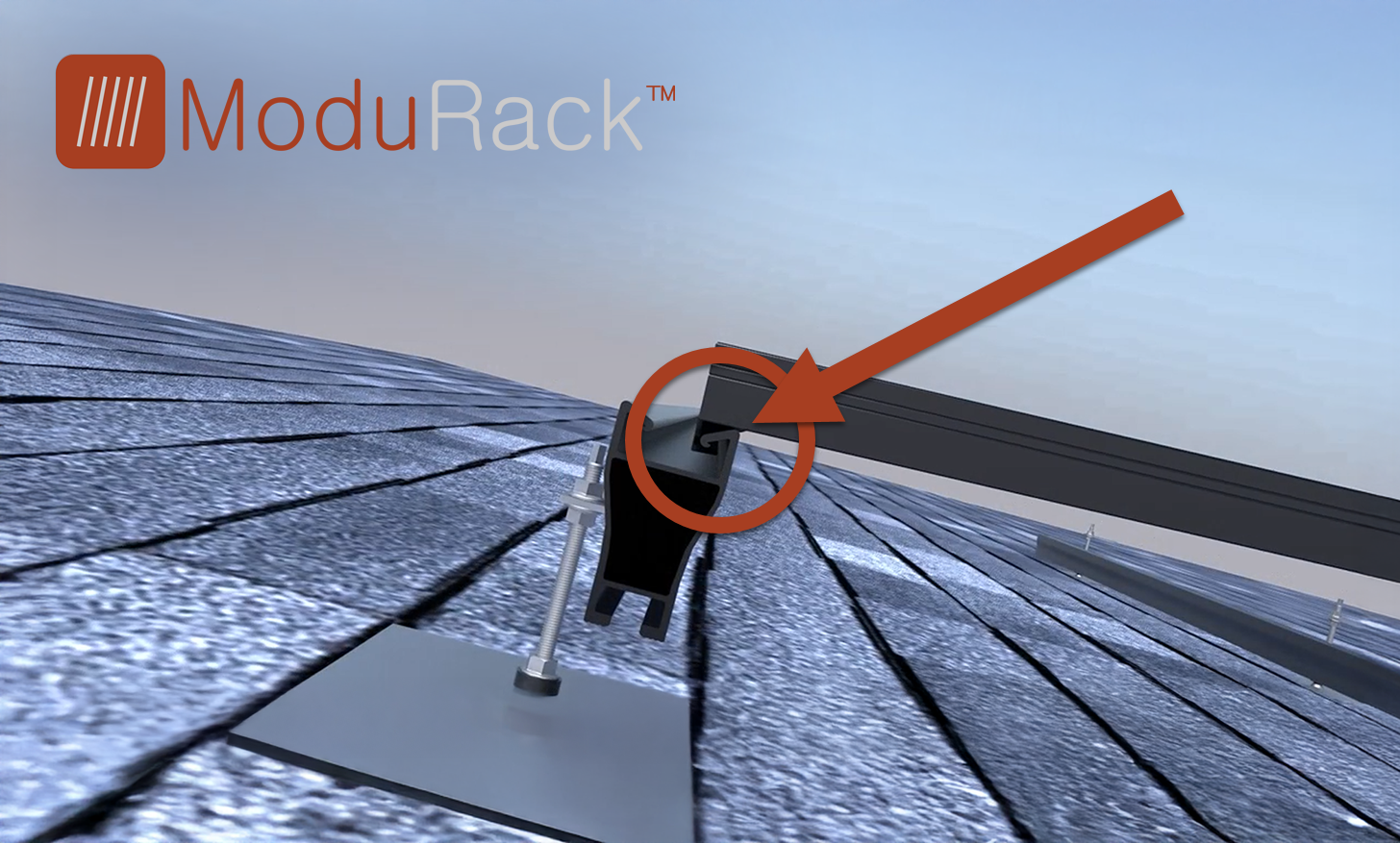
NEW: Ready-to-install solar systems! This patented innovation significantly accelerates your solar construction project
The core of ModuRack 's innovation lies in the departure from conventional clamp fastening. Instead of clamps, the modules are inserted and held in place by a continuous support rail.
More information here:
Your partner for business development in the fields of photovoltaics and construction
From industrial rooftop PV to solar parks and larger solar parking lots
☑️ Our business language is English or German
☑️ NEW: Correspondence in your native language!

Konrad Wolfenstein
I and my team are happy to be available to you as your personal advisor.
You can contact me by filling out the contact form here wolfenstein@xpert.digital:or simply call me at +49 7348 4088 965. My email address is
I'm looking forward to our joint project.