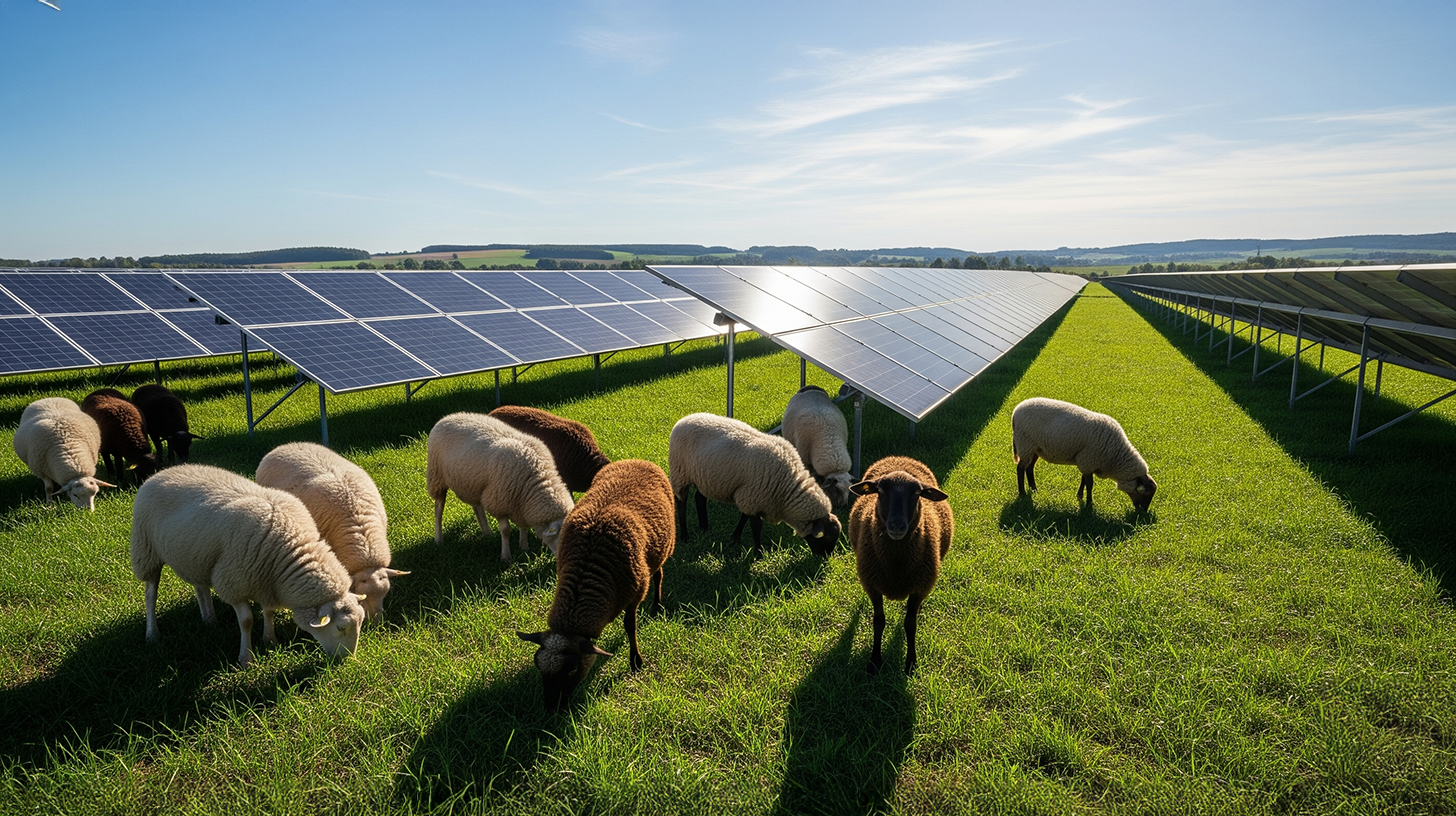
Renewable energies in Radevormwald: Heide solar park – Why 350 sheep are now working for the energy transition in North Rhine-Westphalia – Creative image: Xpert.Digital
Small town becomes a solar giant: This project supplies 1,500 households with electricity
### Why 350 sheep are now working for the energy transition in North Rhine-Westphalia ### 8-million-euro project: How this German company is decoupling itself from the electricity market ### More than just electricity: How this huge solar park protects biodiversity ### A role model for Germany? Family business invests millions in its own energy transition ### Record project in the Bergisches Land region: How one of the largest solar parks in North Rhine-Westphalia was built in just 8 months ###
The center of the solar energy revolution
Radevormwald has become a beacon of the energy transition in North Rhine-Westphalia. The town in the Oberbergischer Kreis district, known for its long-standing industrial tradition and its Bergisches Land charm, is currently writing a new chapter in its history: a consistent shift towards renewable energies. The focus is on the Gira Solarpark Heide, which is not only considered a technical masterpiece but also a symbol of the transformation of an entire region.
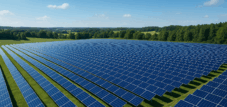
The project, built on an area of 70,000 square meters, represents a paradigm shift in local energy supply. With an installed capacity of 8.96 megawatts peak, the plant is one of the largest photovoltaic power plants in North Rhine-Westphalia and impressively demonstrates how industrial companies can take responsibility for climate protection.
The origin story of a pioneering project
The story of the Gira solar park begins with a strategic decision by the family-owned company Gira, which has been based in Radevormwald since 1905 and is one of the leading manufacturers of electrical installation technology and building systems technology. As a company that works with intelligent building solutions on a daily basis, Gira recognized early on the need to become a role model for sustainable energy supply.
Construction of the solar park officially began on October 28, 2024, in the presence of Mayor Johannes Mans and numerous representatives of participating companies. The project was realized in close cooperation with Apricus Solar AG from Dortmund, a specialist in commercial and industrial solar power plants.
The planning and implementation of the project demonstrated impressive efficiency. After just eight months of construction, the solar park was successfully commissioned on June 30, 2025. The official inauguration finally took place on July 31, 2025, coinciding with the 120th anniversary of the family-owned company Gira.
Related to this:

Technical innovation at the highest level
The technical specifications of the Gira solar park are impressive in their dimensions and efficiency. At the heart of the system are 13,794 photovoltaic modules, each with a power output of 650 watts. These modules are installed on 345 so-called PV tables, each 30 meters long and almost three meters deep. Each of these PV tables supports 40 modules and rests on 6,940 posts driven into the ground.
The original plan called for more than 20,000 smaller modules with 450 watts. However, by using the more efficient 650-watt modules, it was not only possible to reduce the number of modules, but also to increase the annual energy yield by 15 percent to 9.8 million kilowatt hours.
The substructure consists of hot-dip galvanized steel profiles with an impressive total length of 67 kilometers, as well as nearly 10,000 longitudinal and modular beams, which together reach over 45 kilometers. This massive construction ensures the stability of the plant for decades to come.
Sustainable construction and environmental protection
A special feature of the Gira solar park is its environmentally friendly construction. The chosen design prevents the complete sealing of the ground, thus allowing the areas to remain usable for flora and fauna. Energy manager Giancarlo Paasch emphasizes that this type of roofing can even be beneficial for biodiversity.
The green spaces are maintained in an innovative and sustainable way. A flock of 350 sheep belonging to the nomadic shepherd Nico Stark from Wermelskirchen grazes the areas between and around the photovoltaic modules. This natural landscape management method completely eliminates the use of pesticides and fertilizers and contributes to preserving the biodiversity of the extensively managed grassland.
In addition to grazing, mechanical mowing is planned twice a year to maintain the ecological value of the area in the long term. This combination of technological innovation and ecological responsibility makes the Gira solar park a model project for sustainable energy production.
Economic dimensions and investment
The total investment volume for the Gira solar park amounts to approximately eight million euros, although various sources cite different figures between six and eight million euros. For the family-owned company, this investment represents not only a sound business decision but also a clear commitment to the Radevormwald location and to sustainable business practices.
The economic advantages of the system are multifaceted. Besides the direct cost savings through self-sufficiency in electricity generation, Gira becomes largely independent of the volatile developments in the energy markets. Managing Director Dominik Marte explains that the company can operate completely autonomously during the day, thus achieving both economic and environmental goals.
The system is expected to pay for itself within six years. Furthermore, surplus solar power will be fed into the public grid, supplying approximately 1,500 private households with sustainable energy.
Infrastructure and network connectivity
The solar park is connected to the two Gira plants on Dahlienstrasse and Röntgenstrasse via a specially laid power line. A total of approximately 240 kilometers of cable was laid to connect both the solar park site and the company locations.
Particular technical challenges included crossing a watercourse and the B483 federal highway, which were successfully overcome. Connection to the medium-voltage grid is achieved via two transformer stations that convert the high voltage of the power plant's electricity into the ten kilovolts required for the distribution network.
Climate protection impact and CO2 savings
The climate protection impact of the Gira solar park is impressive. In the first four weeks of operation alone, the company was able to save almost 400 tons of climate-damaging CO2 emissions. For comparison, this saving is equivalent to the climate protection performance of 540 trees.
Over the course of the year, the system will reduce Gira's electricity-related CO2 emissions by more than 50 percent. This corresponds to an annual saving of 3,500 tons of CO2. The overall reduction is expected to be even greater in the future, as Gira plans to gradually replace technologies currently powered by natural gas with alternatives that can be operated with solar power.
Integration into the corporate philosophy
The solar park is an integral part of Gira's climate strategy and the company's sustainability strategy. Gira is committed to the 1.5-degree target of the Paris Climate Agreement and sees the commissioning of the solar park as an important milestone on the path to climate neutrality.
Gira's energy transition includes further planned measures. For example, large heat pumps will replace combined heat and power plants for heating buildings, and compressors will be used instead of absorption chillers for cooling. This systematic transformation makes Gira a pioneer in the industrial energy transition.
New: Patent from the USA – install solar parks up to 30% cheaper and 40% faster and easier – with explanatory videos!

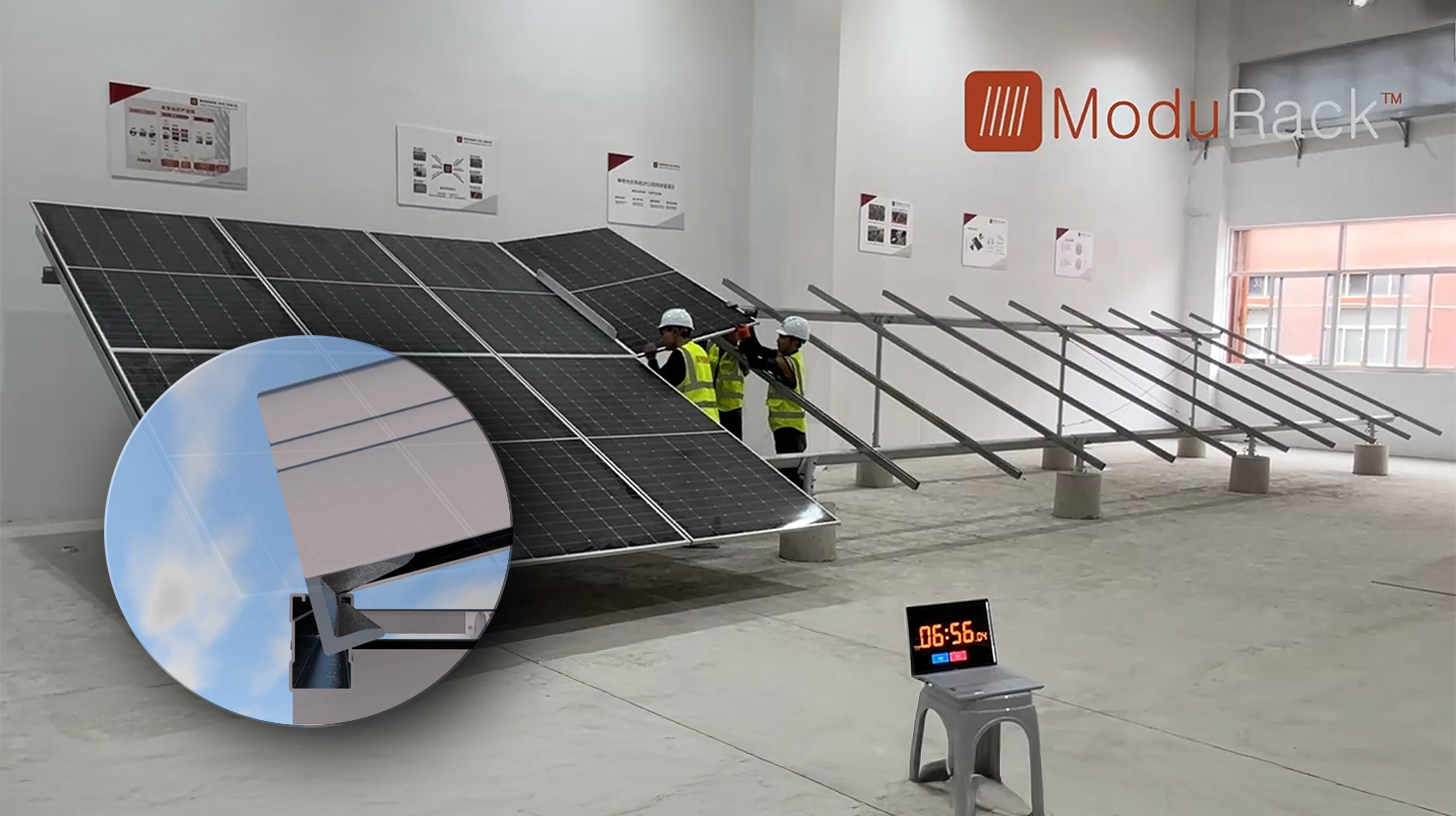
New: Patent from the USA – Install solar parks up to 30% cheaper and 40% faster and easier – with explanatory videos! - Image: Xpert.Digital
The core of this technological advancement is the deliberate departure from conventional clamp mounting, which has been the standard for decades. The new, more time- and cost-effective mounting system addresses this with a fundamentally different, more intelligent concept. Instead of clamping the modules at specific points, they are inserted into a continuous, specially shaped support rail and held securely in place. This design ensures that all forces – whether static loads from snow or dynamic loads from wind – are distributed evenly across the entire length of the module frame.
More information here:
Economic sense meets ecological responsibility: The success story of the Gira solar park
Regional significance and location factor
The Gira solar park is significant for the entire region, extending beyond the company's boundaries. The Radevormwald city administration views the investment as an important commitment to the location and a sign of the region's future viability. The city council unanimously approved the necessary development plan, thus paving the way for the project.
Radevormwald benefits as a business location from this flagship project. The town, characterized by small and medium-sized enterprises primarily in the service sector and manufacturing, demonstrates its innovative strength and commitment to sustainable development with the solar park.
As the northernmost town in the Oberbergischer Kreis district and one of the oldest towns in the Bergisches Land region, Radevormwald has a long tradition in the textile and metalworking industries. Today, small and medium-sized enterprises dominate the landscape, with Gira being the largest employer at the location, employing 1,700 people.
Related to this:

Intermunicipal cooperation and other projects
The success story of the Gira solar park is not an isolated event, but rather part of a broader regional strategy for expanding renewable energies. In September 2023, the municipalities of Halver and Radevormwald, together with the energy supplier Mark-E, signed a declaration of intent for inter-municipal cooperation in the expansion of renewable energy facilities.
This cooperation makes the energy transition a joint project between the neighboring municipalities. The Radevormwald municipal utility company acts as the operational contact point in this collaboration, as it possesses the necessary expertise in energy-related matters.
A first concrete project resulting from this collaboration is the planned construction of a wind turbine on the site of the former munitions depot in Halver, directly on the border with Radevormwald. Further joint projects are being examined in both municipalities and are intended to promote the regional expansion of renewable energies.
Technological innovations and monitoring
The Gira solar park is monitored using state-of-the-art methods. As with comparable large solar parks, the inverters are continuously monitored to ensure optimal energy yield. This monitoring includes recording the direct and alternating current as well as the direct and alternating voltage of all inverters.
Additionally, parameters such as solar irradiance, module and ambient temperatures are recorded. This data makes it possible to assess at any time whether the system is functioning optimally under the given environmental conditions or whether there are any malfunctions.
The security of the facility is ensured by comprehensive video surveillance and lighting of the entire area. This security infrastructure was already installed and powered during the construction phase, before the solar park itself went into operation.
Role model for other companies
The Gira solar park serves as an inspiration and blueprint for other medium-sized companies in the region and beyond. The combination of sound economic principles, environmental responsibility, and technological innovation demonstrates how companies can successfully contribute to the energy transition.
Particularly noteworthy is the fact that the project remained both within budget and on schedule. Project manager Dietmar Daszkiewicz reports some challenges, such as supply bottlenecks for transformers, but these were successfully overcome through flexible project management and alternative suppliers.
Transparent communication about the project and its results makes the Gira solar park a model for other companies planning similar projects. The initial operating results confirm the forecasts from the project planning and demonstrate the reliability of modern solar technology.
State-level political context
The project fits perfectly into the solar policy of the state of North Rhine-Westphalia. The state government has set ambitious targets for the expansion of photovoltaics and aims to more than double the installed capacity by 2030 to at least 21 gigawatts and up to 27 gigawatts.
Minister for Economic Affairs and Climate Protection Mona Neubaur regularly emphasizes the importance of solar energy as an economically viable and ecologically necessary technology. In 2023 and 2024, more than a third of the total installed PV capacity in North Rhine-Westphalia was added.
The state supports the expansion through various funding programs, including progres.nrw – Climate Protection Technology, which also promotes ground-mounted PV systems as well as innovative technologies such as floating and agri-PV. This political support creates the necessary framework for projects like the Gira solar park.
Potentials and future prospects
The potential for further solar energy projects in North Rhine-Westphalia is immense. According to the State Agency for Nature, Environment and Consumer Protection, rooftop photovoltaics alone could generate around 68 terawatt hours of electricity annually – more than half of the total electricity consumption in North Rhine-Westphalia.
Utilizing the full technical potential of all suitable areas, including open spaces, it would be possible to achieve 72 terawatt-hours annually, thus covering over 50 percent of the total electricity consumption in North Rhine-Westphalia. This would result in CO2 savings of approximately 41 million tons.
The statewide solar cadastre in North Rhine-Westphalia supports the identification of suitable areas and offers comprehensive planning assistance for citizens, businesses, and municipalities. This tool makes the enormous potential visible and facilitates the planning of new projects.
Challenges and solutions
Despite the success story of the Gira solar park, challenges remain for the widespread expansion of solar energy. These include regulatory hurdles, grid integration for larger installations, and the availability of suitable land in densely populated regions.
The state government is continuously working to improve the framework conditions. With the second amendment to the state development plan, the area available for the expansion of ground-mounted photovoltaics has already been significantly expanded. At the same time, innovative approaches such as floating photovoltaics on gravel pit lakes and agrivoltaics on agricultural land are being promoted.
Climate protection with entrepreneurial spirit: The Gira solar park as a role model
The Gira solar park in Heide represents more than just a technical facility – it stands for a paradigm shift in energy supply and for the responsibility of businesses in climate protection. The project impressively demonstrates how medium-sized companies can make a significant contribution to the energy transition through innovation and a willingness to invest.
The success story of Radevormwald demonstrates that the transformation to a sustainable energy supply can succeed not only in metropolitan areas, but also, and especially, in smaller towns and rural regions. The combination of entrepreneurial initiative, municipal support, and state policy frameworks creates the conditions for further successful projects.
With an annual production of 9.8 million kilowatt hours of clean energy and a saving of 3,500 tons of CO2 per year, the Gira solar park makes a measurable contribution to climate protection. At the same time, it secures the company's energy supply and makes it less dependent on volatile energy markets.
The impact of this project extends far beyond the city limits of Radevormwald and can inspire other companies and municipalities to follow similar paths. At a time when the fight against climate change is becoming increasingly urgent, the Gira solar park demonstrates that economic success and environmental responsibility are not only compatible, but can also reinforce each other.
The future of energy supply will be significantly shaped by such pioneering projects. With the Gira Solar Park Heide, Radevormwald has laid an important foundation for a sustainable and climate-friendly energy future and is showing the way to a successful energy transition at the local level.
Look, this little detail saves up to 40% installation time and reduces costs by up to 30%. It comes from the USA and is patented.

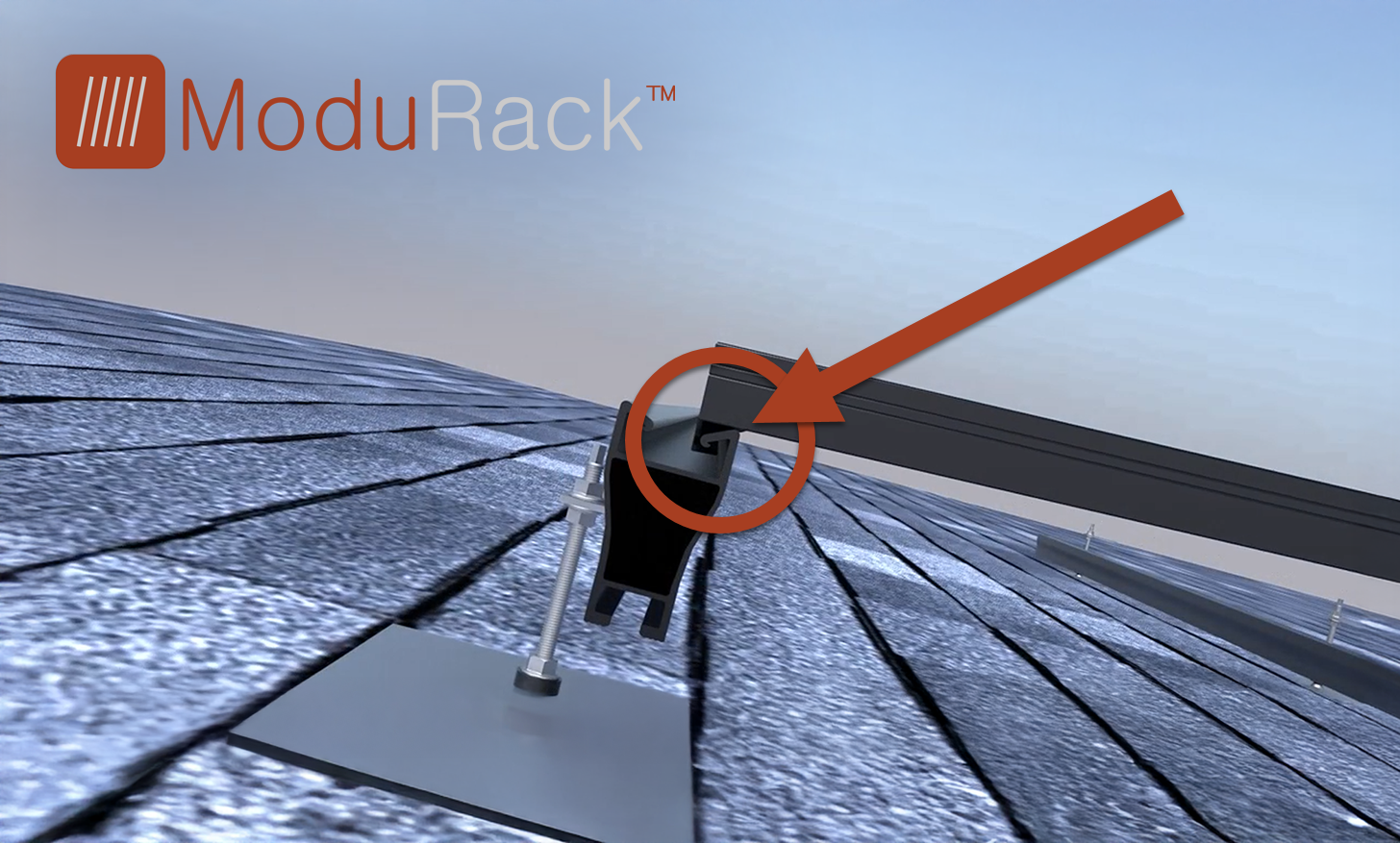
NEW: Ready-to-install solar systems! This patented innovation significantly accelerates your solar construction project
The core of ModuRack 's innovation lies in the departure from conventional clamp fastening. Instead of clamps, the modules are inserted and held in place by a continuous support rail.
More information here:
Your partner for business development in the fields of photovoltaics and construction
From industrial rooftop PV to solar parks and larger solar parking lots
☑️ Our business language is English or German
☑️ NEW: Correspondence in your native language!

Konrad Wolfenstein
I and my team are happy to be available to you as your personal advisor.
You can contact me by filling out the contact form here wolfenstein@xpert.digital:or simply call me at +49 7348 4088 965. My email address is
I'm looking forward to our joint project.