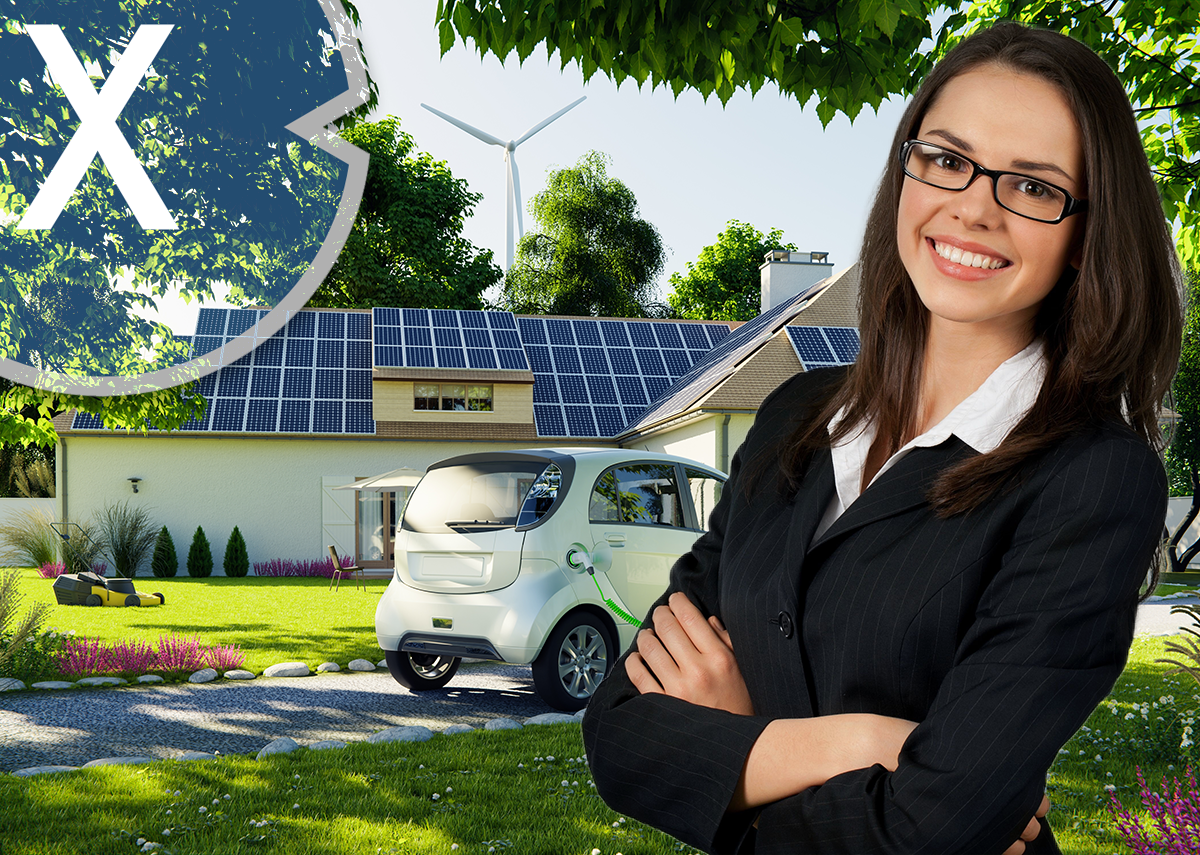
Solar Package I: Balcony solar systems, commercial properties, open-field systems, solar parks and agri-photovoltaics – Image: Xpert.Digital
The German Federal Cabinet approves Solar Package I for more solar power and less bureaucracy 🌞🔋
In a significant step, the German Federal Government has adopted the first solar package, which includes a series of measures to reduce bureaucracy and accelerate the construction and operation of photovoltaic systems. The legislation aims to facilitate the expansion of photovoltaic systems and improve access to solar energy for citizens and businesses.
Simplified construction of PV systems on balconies
One notable change concerns the installation of photovoltaic systems on balconies. The Solar Package I makes this process faster and simpler for citizens, thereby strengthening access to decentralized energy generation.
Photovoltaics made easier for citizens and businesses
The first solar package aims to simplify and streamline the installation of photovoltaics (PV) on roofs and open spaces. This step is of great importance for the success of the energy transition in Germany.
Climate neutrality and renewable energies
Germany aims to achieve climate neutrality by 2045. Reducing greenhouse gas emissions in the electricity sector by 2035 is a significant step towards this goal. The increased use of renewable energies, particularly solar power, plays a key role in this.
Promotion of the expansion of renewable energies
The increasing demand for electricity, driven in part by electric vehicles and green heating, necessitates a greater expansion of renewable energies. The first solar package supports this expansion by accelerating the installation of photovoltaic systems on rooftops and ground-mounted systems.
Optimization of the overall energy supply system
The legislative package and the first solar package aim not only to expand photovoltaic systems but also to optimize the entire energy supply system. The goal is to make energy production more sustainable and efficient.
Strengthening solar energy in the energy transition
Solar energy plays a key role in implementing the energy transition. The first solar package contributes to promoting the use of solar energy and supporting Germany on its path to climate neutrality.
📣 Similar topics
- Solar Package I: The German government is focusing on more solar power and less bureaucracy
- Renewable energies in focus: Solar package I accelerates the expansion of photovoltaics
- Advancing the energy transition: Solar package I simplifies photovoltaic installation
- Sustainable energy: Solar package I paves the way for a climate-neutral future
- Decentralized energy generation: Solar package I promotes photovoltaic projects
✨ Summary
- 📦 Federal government adopts Solar Package I for photovoltaic expansion
- 🏠 Simplified PV systems on balconies
- 🌞 Debureaucratization and acceleration of photovoltaics
- 🌍 Contribution to the energy transition and climate neutrality by 2045
- 🔌 Solar package I promotes renewable energies and expansion
- 💡 Optimization of the energy supply system through draft legislation
- 🚀 Solar energy as the key to sustainable energy production
#️⃣ Hashtags: #SolarPackageI #Photovoltaics #EnergyTransition #RenewableEnergies #ClimateNeutrality
🌞 Maximizing solar energy: A look at the German government's solar package 🌞
In today's world, where climate change is a constant challenge, the German Federal Government has taken measures to promote the expansion of renewable energies. The recently introduced Solar Package I is at the heart of these efforts. In this section, we will examine the various aspects of this solar package in detail and explore how it paves the way for a more sustainable energy future.
Promotion of solar energy
The German government's solar package includes financial incentives for the installation of solar power systems. These subsidies are designed to lower the barriers for private households and businesses that want to switch to renewable energy sources. Here are some key aspects:
- 🌞 Photovoltaic systems for private homes: The solar package makes it easier for homeowners to access solar energy. Subsidies and tax breaks make installing photovoltaic systems more attractive.
- 🏢 Business applications: Companies are encouraged to switch to solar energy to improve their carbon footprint. The solar package offers financial incentives and consulting services for companies that want to install solar panels on their buildings.
Modernization of energy networks
The integration of renewable energies also requires a modernization of the energy networks to ensure the efficiency and stability of the electricity grid:
- ⚡ Smart grids: The solar package promotes the development of smart grid infrastructures to facilitate the integration of solar and other renewable energies. This ensures smooth energy distribution.
- 💡 Storage technologies: Energy storage is crucial for storing excess solar energy for times without sunlight. The solar package supports research and development of energy storage technologies.
Education and awareness
To raise awareness of the benefits of solar energy on a broad scale, the German Federal Government is focusing on education and raising awareness:
- 📚 Education programs: The solar package includes educational initiatives designed to educate students about renewable energies and their importance for the environment.
- 🌐 Information campaigns: The general public is informed about the advantages of solar energy through targeted information campaigns.
Research and Innovation
To advance progress in solar technology, the German Federal Government is investing in research and innovation:
- 🔬 Research funding: The solar package offers financial support for research projects in the field of solar technology. This promotes new developments and innovations.
- 🌱 Start-up support: Young companies and start-ups in the field of renewable energies receive targeted support to bring innovative ideas to market maturity.
📣 Similar topics
The German Federal Government's Solar Package I marks a significant step towards a sustainable energy future. The diverse measures, ranging from financial support to the modernization of energy grids, demonstrate the government's commitment to renewable energies. By supporting and further developing this initiative, we can bring about positive change for our environment and future generations.
- The German government's solar package: Renewable energies for a sustainable future
- Solar energy in Germany: How the solar package is driving the transformation
- Solar power into the future: The German government's comprehensive solar package
- Promoting solar energy: A look at the groundbreaking solar package
- Sustainable energy: The solar package and its impact on Germany's energy transition
Plan your solar system for the most common applications conveniently online with our solar system planner!
With our user-friendly solar system planner, you can design your individual solar system online. Whether you need a solar system for your home, your business, or for agricultural purposes, our planner allows you to consider your specific requirements and develop a customized solution.
The planning process is simple and intuitive. You simply enter the relevant information. Our planner takes this information into account and creates a customized solar system that meets your needs. You can try out different options and configurations to find the optimal solar system for your application.
Furthermore, you can save your plan to review it later or share it with others. Our customer service team is also available to answer any questions and provide support to ensure your solar system is optimally planned.
Use our solar system planner to design your individual solar system for the most common applications and accelerate the transition to clean energy. Get started now and take an important step towards sustainability and energy independence!

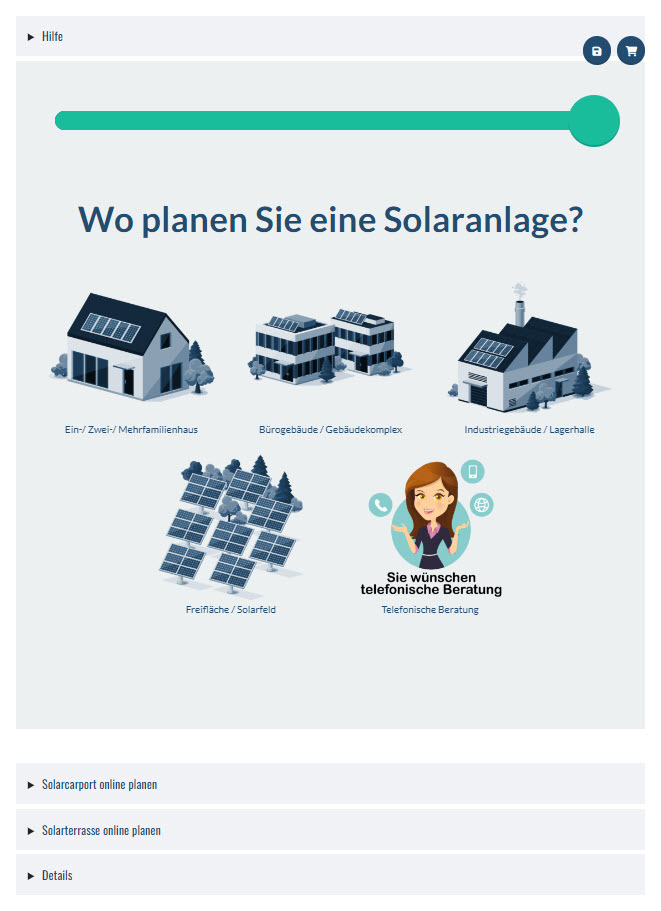
The solar system planner for the most common applications: Plan your solar system online here - Image: Xpert.Digital
More information here:
📣 Energy-efficient renovation and new construction, consulting, planning and implementation for industry, retail and municipalities
Our experienced team supports you in optimizing your buildings to reduce energy consumption and promote sustainable energy use with photovoltaics. We analyze your individual needs and develop customized concepts that are both economically and ecologically sound. Whether it's the energy-efficient renovation of existing buildings or the construction of new, energy-efficient structures, we are here to help. Industrial plants, retail buildings, and municipal facilities can reduce their energy costs, minimize their environmental impact, and simultaneously improve the comfort and efficiency of their buildings with our tailored solutions.
👨🏻 👩🏻 👴🏻 👵🏻 Energy-efficient renovation and new construction, consulting, planning and implementation for private households
We offer comprehensive support for private households in the energy-efficient renovation and new construction of buildings with photovoltaics. Our experienced team is at your side to assist you with consulting, planning, and implementing your sustainable energy solutions. We analyze your energy consumption, identify potential savings, and develop customized concepts to improve your energy efficiency. From improving building insulation and installing energy-efficient windows and doors to installing photovoltaic and solar thermal systems – we guide you step by step to make your home more energy-efficient and environmentally friendly. Trust in our expertise and benefit from the numerous advantages that energy-efficient renovation and the use of renewable energies offer. Together, we'll create a sustainable future for your home.
🌞 The Solar Package I: Advancing Photovoltaics in Germany 🌞
With the "Solar Package I," the German Federal Government has launched an initiative to simplify and accelerate the installation of photovoltaic (PV) systems. This measure aims to optimize the process for citizens and businesses and to reduce bureaucratic hurdles. This aligns Germany with its ambitious goal of achieving climate neutrality by 2045, which requires a significant reduction in greenhouse gas emissions from the energy sector by 2035. To achieve these goals, the government is increasingly focusing on expanding renewable energy sources, with solar energy playing a crucial role in meeting the growing demand for electricity, particularly for heating and electric vehicles.
Accelerated PV installation and optimization of the energy supply system
A key focus of the legislation, including the "Solar Package I," is on accelerating the installation of photovoltaic (PV) systems on rooftops and ground-mounted installations, as well as optimizing the entire energy supply system. This package marks the first phase of the photovoltaic strategy, which was developed in cooperation with industry, federal states, and parliamentary groups and presented in May 2023. The increase in PV capacity in Germany is clearly visible: In the first half of 2023, almost 6,000 megawatts were added, surpassing previous records set between 2010 and 2012. This capacity could supply 3.5 million households with electricity annually. Forecasts indicate a more than threefold expansion by 2026, reaching 22 gigawatts, evenly distributed between ground-mounted and rooftop installations, in accordance with the new Renewable Energy Sources Act (EEG).
Simplified installation of balcony PV systems
The "Solar Package I" aims to simplify the installation of PV systems on balconies by eliminating the previous registration requirements with the grid operator and optimizing the market master data register. Balcony PV systems are exempt from the obligation for bidirectional metering, and higher-capacity systems benefit from simplified registration. This regulation covers systems with a total output of up to 2 kilowatts and an inverter with a capacity of 800 volt-amperes. Standardization efforts are underway to use conventional Schuko plugs.
Communal catering in apartment buildings
Multi-family buildings can adopt the "shared building supply" approach, where solar power is distributed directly to tenants without involving the public grid. Guidelines for billing and timely notifications of outages ensure tenants have access to supplementary tariffs for additional electricity needs. Improvements in consumer protection are planned in cooperation with industry. The scope of tenant electricity also extends to commercial buildings and adjacent structures such as garages, with simplified rules allowing for the aggregation of installations.
Commercial PV systems and surplus feed-in
Commercial enterprises with PV systems exceeding 100 kilowatts can now feed surplus electricity into the grid free of charge and without marketing costs. This promotes self-consumption and better utilization of roof space. Furthermore, a new certification requirement applies to systems with a capacity exceeding 270 kilowatts or 500 kilowatts. Comprehensive regulations also address sustainable ground-mounted solar projects, emphasizing dual-use approaches such as the integration of agricultural land use and PV modules (agri-PV). Protected areas under the Federal Nature Conservation Act remain exempt. Subsidies for PV systems on sealed surfaces such as parking lots are being introduced, with dedicated auction segments and individual upper limits.
The "Solar Package I" is a crucial step in advancing the expansion of photovoltaics in Germany. The measures to simplify installation, promote self-consumption, and utilize various surfaces will contribute to making the energy supply more sustainable and climate-friendly. Germany is thus sending a strong signal in the fight against climate change and laying the foundation for a future-proof energy infrastructure.
📣 Photovoltaic open-field systems and solar parks for industry, retail and municipalities
Everything from a single source, specifically designed for solar solutions for large parking areas. Refinance or offset your future costs with your own electricity generation.
🎯 For investors
Consultation and planning including a non-binding cost estimate. We connect you with strong partners in photovoltaics.
More and more photovoltaic systems are being installed on roofs and open spaces
Photovoltaic systems in Germany: A growth trend with great energy!
The energy sector in Germany is currently undergoing a remarkable revolution – a continuous increase in the installation of photovoltaic systems on rooftops and open land. In the first half of 2023, an impressive capacity of almost 6,000 megawatts was added, surpassing even the record-breaking years of 2010 to 2012. This represents an enormous amount of energy generated from renewable sources, making a significant contribution to reducing CO2 emissions. It is more than just a change in energy supply; it is a sign of the transition to a more sustainable future.
🌞 Sunny prospects for the energy sector
The current trend offers just a glimpse of what the future holds. From 2026 onward, the installation of photovoltaic systems is expected to multiply, more than tripling its current capacity to an impressive 22 gigawatts. This expansion will be roughly split between ground-mounted and rooftop installations. This underscores the versatility and ingenuity of the German energy sector, which is utilizing various options to increase the share of renewable energy.
💡 Energy for millions of households
The impact of this growth trend is undeniable. Thanks to these advanced photovoltaic systems, up to 3.5 million households could be supplied with clean solar power annually. This not only reduces dependence on fossil fuels but also leads to greater decentralization of energy production. Households can increasingly take control of their energy supply and actively contribute to the energy transition.
🌍 Sustainability in focus
The increasing investment in photovoltaic systems on roofs and open spaces underscores the growing awareness of environmental protection and sustainability. Germany is once again positioning itself as a pioneer in the field of renewable energies and setting an inspiring example for other countries. This development is not only a step towards climate neutrality, but also a step towards a better and more sustainable future for generations to come.
🚀 Future potential and opportunities
The expansion of photovoltaic systems not only offers environmentally friendly benefits but also opens up new business opportunities and jobs. Companies in the renewable energy sector can profit from this growing market and develop innovative solutions to further improve the efficiency and performance of the systems. At the same time, new jobs are being created in the planning, installation, and maintenance of photovoltaic systems, which stimulates the economy and enriches the job market.
🔮 A glimpse into the future of energy
The future development of photovoltaic systems in Germany promises exciting changes. Increased use of solar energy will not only lower energy costs for consumers but also reduce dependence on imported fossil fuels. This is a significant step towards energy self-sufficiency and a sustainable, low-carbon energy supply.
📣 Similar topics
- 🌞 Energy sector in transition: Photovoltaics on the rise
- 🏡 Roofs and open spaces as energy sources: Photovoltaic boom in Germany
- 💡 Solar power for millions: The rise of photovoltaic systems
- 🌍 Sustainable future: Photovoltaic systems set an example
- 🔮 The future of energy: Photovoltaics as the key to the energy transition
- 🚀 Innovative and environmentally friendly: Germany's path to renewable energy
- 📈 Growth without limits: Photovoltaic systems conquer the market
- 🌱 Green energy, within reach: Photovoltaic systems for sustainable households
- 🏆 Breaking records, shaping the future: Germany's photovoltaic trend
- ⚡ Bright prospects: The triumph of photovoltaics in Germany
#️⃣ Hashtags: #RenewableEnergy #Photovoltaics #Sustainability #EnergyTransition #FutureEnergy
🌞 The future of balcony PV systems: Simpler and more efficient 🌞
In a welcome development, the installation of photovoltaic systems on balconies is being significantly simplified for citizens. This not only has positive effects on the environment but also on their wallets. The legislative package that made this progress possible is the result of close collaboration with industry experts during a practical review of photovoltaics. The aim was to reduce obstacles and bureaucracy, thereby accelerating and simplifying the installation of balcony PV systems.
⚡️ Key new features at a glance ⚡️
- Straightforward commissioning: One of the most significant changes is the elimination of the prior registration with the grid operator for balcony PV systems. This considerably speeds up the process and makes it less complex. In the future, registration in the market master data register with just a few, easily understandable pieces of information will suffice.
- No need to worry about digital electricity meters: The requirement to install a bidirectional meter is being lifted. Existing Ferraris meters can continue to be used for the time being. These meters simply reverse when electricity is fed into the grid, which reduces costs for consumers.
- Increased performance: The next positive change concerns the performance of balcony PV systems. Systems with a total output of up to 2 kilowatts and an inverter output of up to 800 volt-amperes can now be registered more easily.
- Simplified installation: The future use of a standard Schuko plug for balcony PV systems is being pursued. This would significantly simplify installation and is a key objective of the legislative package. However, it is important to note that a standard still needs to be developed in cooperation with relevant associations.
🏡 The benefits for consumers 🏡
These advances offer a range of benefits for citizens interested in installing balcony solar panels. Beyond the obvious environmental advantages of using renewable energy sources, there are also financial incentives. The simplified registration process and the option to continue using existing meters lead to cost savings during installation. This, in turn, reduces electricity bills, which is a significant benefit for consumers.
🌐 Outlook and concluding remarks 🌐
The future of energy generation on balconies looks promising. Thanks to easier commissioning, higher efficiency, and simplified installation, more people will have the opportunity to switch to renewable energy. This is a significant step towards sustainability and cost-effectiveness.
📣 Similar topics
- 🌞 Easy installation: New possibilities for balcony PV systems
- ⚡️ No worries about electricity meters: The regulations for meter use
- 🏡 Consumer benefits: Cost savings and environmental protection through balcony PV
- 🌐 Future prospects: How the innovations are influencing the energy transition
- 💡 Installation made easy: Schuko plugs and their meaning
#️⃣ Hashtags: #BalconyPV #RenewableEnergy #Sustainability #EnergyEfficiency #EnvironmentalProtection
🗒️ The future of solar power in apartment buildings: Shared building energy supply
The introduction of "community building supply" paves the way for the direct use of rooftop solar power in apartment buildings. This means that the generated solar power no longer necessarily has to be fed into the public grid, but can be made available directly to the tenants. This innovation brings numerous advantages, ranging from more efficient use of renewable energy to savings on energy costs.
Departure from the conventional model
The traditional practice of feeding excess solar power into the public grid and later buying it back when needed is a thing of the past. Thanks to "community-based building power generation," the electricity produced is consumed directly in the building, resulting in a higher self-consumption rate and a reduced ecological footprint.
Transparent billing and security of supply
The introduction of this new regulation brings not only ecological but also economic advantages. Billing for the solar power consumed is transparent and fair. Furthermore, clear regulations have been established for handling supply interruptions to protect tenants from inconvenience.
Supplementary tariffs for a sustainable energy future
Although the communal building supply can cover the majority of electricity needs, there may be additional demand. In this case, tenants can individually negotiate a favorable supplementary tariff with an electricity supplier. This promotes flexibility and allows residents to choose a tailored approach to their energy supply.
Consumer protection in focus
The German Federal Government is actively committed to protecting consumers in the context of "community building services". Together with industry, measures are being discussed to ensure that residents' interests are protected and that they enjoy fair conditions.
📣 Similar topics
The introduction of "community-based building energy supply" marks a significant step towards a sustainable energy future. It not only promotes the use of renewable energy sources but also strengthens the residents' personal responsibility regarding their energy supply.
- 🏢 Solar power revolution in apartment buildings: The “Community Building Supply”
- ☀️ Using your own solar power: The future of energy supply in apartment buildings
- 🌱 Sustainable living comfort: Direct solar power supply for tenants
- 💡 The future of living: Solar energy reimagined for apartment buildings
- 🏠 Greener together: How apartment buildings can benefit from "shared building supply"
- ⚡ Sharing solar power, saving costs: New perspectives for apartment building residents
- 🌍 More than just electricity: The ecological advantages of "shared building supply"
- 💰 Smart savings with solar power: Apartment buildings take the next step
- 📈 Energy transition in residential construction: How "community building supply" makes the difference
- 🏡 Future trend in energy supply: Multi-family homes as pioneers for green solar power
#️⃣ Hashtags: #SolarEnergy #CommunityBuildingEnergy #Sustainability #EnergyFuture #ConsumerProtection
Improvements to tenant electricity
Tenant electricity has undergone significant changes in recent years to promote the expansion of renewable energies while simultaneously providing consumers with a cost-effective energy source. These latest developments aim to extend tenant electricity to commercial buildings and ancillary facilities such as garages, as long as the electricity consumption takes place within the building and no grid connection is required. The updated regulations facilitate the aggregation of multiple installations and eliminate technical obstacles that previously often posed a challenge in residential areas.
Advantages of the expansion to include commercial buildings and ancillary facilities
Extending tenant electricity to commercial buildings and ancillary facilities brings several advantages:
- Promoting renewable energy: Supporting tenant electricity in commercial buildings contributes to the increased use of renewable energy. Solar energy, wind power, and other renewable sources can now also be used in commercial areas to generate sustainable electricity for on-site consumption.
- Cost savings: Commercial tenants can benefit from the low electricity costs of tenant electricity. This helps small businesses reduce their energy expenses and become more competitive.
- Simplified consolidation of installations: The new regulations make it possible to combine several installations into a single tenant electricity project. This simplifies the management and scaling of energy generation facilities, which is particularly advantageous in residential areas.
- Avoiding technical hurdles: Previously, technical requirements often posed an obstacle to tenant electricity projects, particularly in residential areas. The new regulations address this by minimizing disproportionate technical requirements and thus promoting the expansion of tenant electricity projects.
Potential impacts on neighborhoods and communities
This extension of tenant electricity to commercial buildings and ancillary facilities could have far-reaching effects on neighborhoods and communities:
- Strengthening the local economy: Commercial tenants can benefit from cost savings on electricity consumption. This could lead to increased economic activity and make the area more attractive to businesses.
- Energy independence: Neighborhoods could become more energy independent through tenant electricity projects. Local generation of electricity from renewable sources contributes to security of supply and reduces dependence on external energy providers.
- Environmental friendliness: The use of renewable energies in commercial buildings contributes to reducing CO2 emissions. This can position the district as an environmentally friendly location and make a positive contribution to climate protection.
- Infrastructure improvement: Pooling facilities and promoting tenant electricity projects could stimulate investment in local energy infrastructure. In the long term, this could lead to modernization and improvement of the energy supply in neighborhoods.
📣 Similar topics
Extending tenant electricity to commercial buildings opens up diverse opportunities for sustainable energy supply and local economic development. By lowering the barriers to using renewable energies, neighborhoods and communities can take a more active role in energy production.
- 🌱 Sustainable energy for businesses: The future of tenant electricity
- 🏢 Commercial tenants as energy producers: New horizons for neighborhoods
- 🔌 Tenant electricity goes business: Renewable energy for companies
- 🏭 Green electricity from the neighborhood: Potential of tenant electricity projects
- 🌍 Neighborhoods in transition: Local energy generation through tenant electricity
- 🌞 Solar power for businesses: Tenant electricity as an engine of the energy transition
- 💼 Energy self-sufficiency in businesses: Tenant electricity as the key to success
- 🔋 Stronger together: Commercial tenants pool their energy
- 💰 Reduce costs, protect the environment: Tenant electricity for commercial properties
- ⚡ Neighborhood development through tenant electricity: Setting sustainable impulses
#️⃣ #TenantElectricity #SustainableEnergy #CommercialBuildings #EnergySelf-Sufficiency #NeighborhoodDevelopment
These recent improvements in the area of tenant electricity mark a significant step towards sustainable energy generation and local economic development. By including commercial buildings and ancillary facilities in the program, exciting opportunities open up for an efficient, environmentally friendly, and independent energy supply. At the same time, the path is paved for greater participation of neighborhoods in the energy transition.
🗒️ Commercial real estate: Optimizing self-consumption for maximum profitability
A promising change has emerged in the world of commercial real estate and renewable energy, particularly relevant for operators of larger plants. Previously, plants with an installed capacity exceeding 100 kilowatts were required to directly market their generated electricity. This regulation has now changed, opening up new opportunities for operators seeking to optimize their plants' self-consumption. This latest development allows plant operators to supply their surplus electricity to the grid operator without receiving separate compensation. Simultaneously, the costs associated with direct marketing are eliminated. This change is especially attractive for plants with high self-consumption rates, as it provides them with a significant economic advantage.
The effects of this new regulation are manifold. Operators of large-scale installations are incentivized to utilize their roof space even more efficiently and install additional capacity. The ability to sell surplus electricity without financial loss places a greater emphasis on increasing self-consumption. This is not only economically advantageous but also contributes to sustainable energy generation and use.
📈 Increased profitability through intelligent use
The changes in regulations demonstrate the growing importance of optimizing self-consumption for commercial property operators. Facilities with high self-consumption benefit from the ability to easily share their surplus energy. This creates a win-win situation: operators maximize their profitability while simultaneously increasing the share of renewable energy in the overall grid. This is a significant step towards a more environmentally friendly and sustainable energy supply.
🌐 Changes to the investment certificates
Another aspect of the recent development concerns plant certificates. Previously, such a certificate was required for a feed-in capacity of 270 kilowatts or an installed capacity exceeding 500 kilowatts. This regulation has changed: Now, simple proof via unit certificates is sufficient if the plants fall below these thresholds. This reduces the administrative burden and makes it easier for small and medium-sized plant operators to comply with the regulations.
🌞 The future of commercial real estate energy
Recent changes to regulations governing commercial properties and renewable energy demonstrate a clear trend toward increased self-consumption optimization. Operators of large-scale installations now have the option of selling their surplus energy without financial loss while simultaneously benefiting from a higher self-consumption rate. This development will not only increase the profitability of commercial properties but also contribute to more sustainable energy production.
📣 Similar topics
- Energy transition in the commercial real estate sector: How the innovations affect the use of renewable energies. 🌱
- Optimizing self-consumption as the key to success**: Why focusing on self-consumption offers economic advantages. 💰
- Changed requirements for plant certificates**: An overview of the new regulations and their impact. 🔍
- Sustainability and profitability combined: How commercial real estate operators can benefit from the changes. 🏢
- The future of energy generation: A look at the changing landscape of renewable energies in commercial real estate. 🔮
#️⃣ Hashtags: #EnergyOptimization #SustainableCommercialRealEstate #SelfConsumptionOptimization #RenewableEnergies #FutureofEnergy
Strengthen the expansion of sustainable open-field installations, including agri-photovoltaics
The first solar package contains comprehensive provisions to promote the sustainable expansion of open-field solar installations. The main objective of these measures is to provide additional land for solar parks without increasing overall land use. Particular support is given to the shared use of land for both agricultural purposes and photovoltaic modules, a practice known as agri-PV. This innovative approach enables multiple land uses while simultaneously ensuring the protection of agricultural interests. It goes without saying that strictly protected areas, as defined by the Federal Nature Conservation Act, remain exempt from these regulations.
🗒️ Promoting a harmonious combination of agriculture and photovoltaics
One of the key provisions in the first solar package is the promotion of the combined use of land for both agriculture and photovoltaic modules, a practice known as agri-photovoltaics or agri-PV. This innovative approach allows for the multiple uses of open spaces while simultaneously protecting agricultural interests. The installation of PV modules over agricultural land can be carried out sustainably without impacting its primary use for food production.
Use of sealed surfaces for photovoltaics, such as solar parking lots
In addition to promoting agrivoltaics, the first solar package aims to utilize sealed surfaces for photovoltaic systems. This includes, for example, parking lots, which can simultaneously serve as surfaces for solar modules. This measure contributes to the sensible use of already sealed surfaces and thus reduces overall land consumption.
🗒️ Tender segments for different land uses
To promote the implementation of these sustainable approaches, the Solar Package I will introduce tender segments. This means that different types of land use, including agrivoltaics and sealed surfaces, will have separate maximum values and requirements. This will help to guide the development of ground-mounted installations and ensure that the various uses are implemented optimally.
🗒️ Nature conservation and protected areas
It is important to note that strictly protected areas, as defined by the Federal Nature Conservation Act, remain exempt from these regulations. This ensures that ecologically important areas continue to be protected and that nature conservation is preserved.
The introduction of the first solar package marks an important step towards more sustainable energy production in Germany. By promoting agrivoltaics and the use of sealed surfaces for solar energy, not only is clean energy generation promoted, but also the conservation of land resources and the protection of agricultural interests are achieved.
📣 Similar topics
- Agri-photovoltaics: A sustainable synergy of energy and agriculture** 🌱🌞
- Efficient use of sealed surfaces: Solar parks on parking lots and the like.** 🅿️🔆
- Tender segments for customized open-space systems** 📄💡
- Nature conservation in focus: Preservation of protected areas and ecological diversity** 🌿🛡️
- Solar Package I: Driving force for a sustainable energy future** ⚡🔍
#️⃣ Hashtag: #SustainableEnergy #AgriPV #SolarEnergy #GroundFieldPowerPlants #EnvironmentalProtection
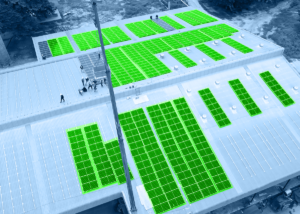
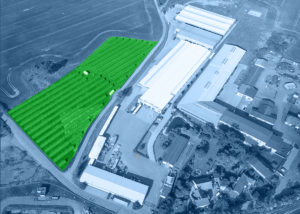


- Planning photovoltaics on warehouses, commercial buildings and industrial buildings
- Industrial plant: Planning a photovoltaic open-field system or open-area system
- Planning solar power systems with photovoltaic solutions for freight forwarding companies and contract logistics
- B2B Solar Systems and Photovoltaic Solutions & Consulting
☑️ Construction and consulting for photovoltaic open-field systems
☑️ Solar park planning ☑️ Agri-photovoltaic implementations
☑️ Solar ground-mounted systems with dual-use solutions
Xpert.Solar is your ideal partner for the planning, consulting, and construction of ground-mounted photovoltaic systems and agri-photovoltaic projects, thanks to our many years of experience and expertise in the solar energy sector. Xpert.Solar has an experienced team of professionals who offer farmers and investors tailored solutions. From site analysis and financial and legal advice to technical implementation and monitoring, Xpert.Solar provides its clients with professional and reliable support to ensure successful and sustainable project implementation.

Konrad Wolfenstein
I would be happy to serve as your personal advisor.
You can contact me by filling out the contact form below or simply call me on +49 7348 4088 965 .
I'm looking forward to our joint project.
Write to me


Xpert.Digital – Konrad Wolfenstein
Xpert.Digital is a hub for industry focusing on digitalization, mechanical engineering, logistics/intralogistics and photovoltaics.
With our 360° Business Development solution, we support renowned companies from new business to after-sales.
Market intelligence, smarketing, marketing automation, content development, PR, mail campaigns, personalized social media and lead nurturing are part of our digital tools.
You can find more information at: www.xpert.digital – www.xpert.solar – www.xpert.plus
Keep in touch