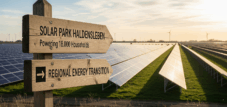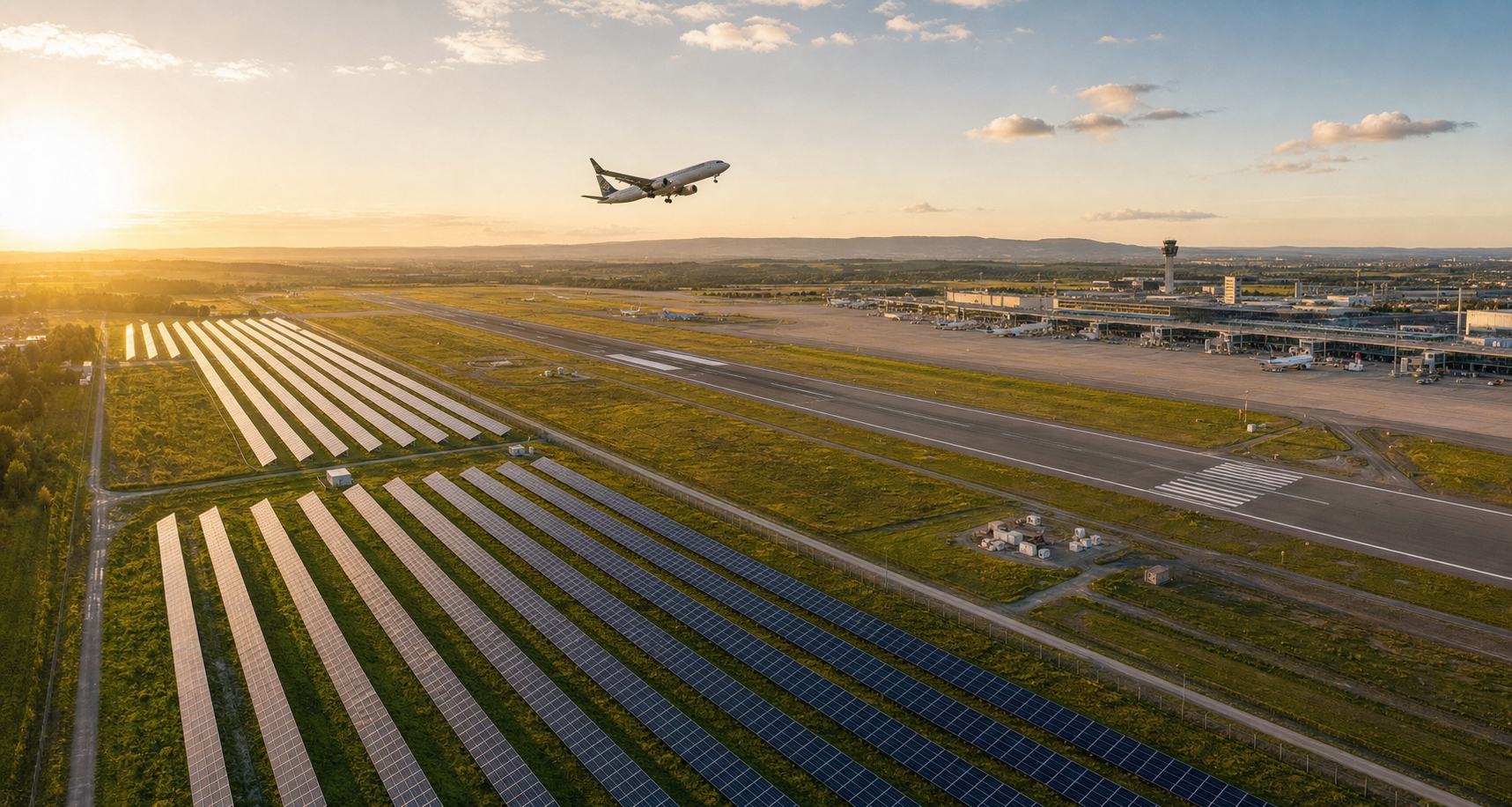
Gigantic solar park: Why Stuttgart Airport is now relying on solar power – Solar offensive on the runway – Creative image on the topic, with AI: Xpert.Digital
18 football fields full of solar panels: Stuttgart Airport's multi-billion euro climate plan
Gigantic solar park next to the runway: This ingenious trick from Frankfurt could help in Stuttgart
Stuttgart Airport is accelerating its energy transition and planning a massive expansion of its photovoltaic systems in close proximity to the runway. By mid-century, solar power is to be generated on an area equivalent to approximately 18 football fields to satisfy the rapidly increasing energy demands of the growing electrified ground fleet. However, the project is a technical balancing act: strict safety regulations, the risk of glare for pilots, and the need for enormous battery storage systems are posing significant challenges for the planners. At the same time, the multi-million-euro project highlights the central dilemma of the aviation industry: while ground operations are being optimized for climate neutrality at enormous expense, the far greater emissions from actual air traffic remain unaffected. This analysis examines the interplay between technical necessity, strategic considerations, and the question of the true contribution to climate protection.
Solar offensive on the runway: This is how gigantic the new mega power plant at Stuttgart Airport will be
Stuttgart Airport is advancing its energy transition on the ground with a major new project, systematically equipping green spaces along the runway with photovoltaics. A ground-mounted system with a nominal electrical output of approximately three megawatts is being built on an area of around 31,000 square meters in the western section of the runway, supplemented by an integrated energy storage system to increase self-consumption. In purely theoretical terms, this new system could cover the electricity needs of around 1,000 single-family homes, illustrating the scale of the project for a single infrastructure site. Construction is scheduled to begin in the fall, with commissioning planned for spring 2027.
Two construction phases, one goal: doubling the solar power output at the site
In a second construction phase, planned for 2027, another ground-mounted solar array with its own storage unit will be added on the eastern side of the runway system. Upon completion of both expansion phases, Stuttgart Airport GmbH will double the installed solar capacity at the site from the existing systems to approximately six megawatts. This reflects the airport's response to a structural trend resulting from the increasing electrification of vehicles, equipment, and workflows on the apron, which is continuously driving up operational electricity demand. Currently, the airport generates about one-third of its electricity needs itself, while two-thirds are still purchased externally, making the expansion of in-house generation a key element of its energy strategy.
The big picture: 130,000 square meters of solar surface area by the middle of the century
The current construction projects are not isolated undertakings, but rather part of a long-term energy and climate master plan that envisions equipping all suitable roofs and open spaces on the airport grounds with solar panels; even sections of the southern airport fence could be used for this purpose. By mid-century, solar power is to be generated on a total area of approximately 130,000 square meters. This corresponds to about 18 football fields and represents a significant increase compared to the current area of just under 19,600 square meters. Electricity generation from the airport's own facilities is projected to increase from the current 2.7 gigawatt-hours to around 39 gigawatt-hours by 2040, with the planned installed capacity exceeding the projected peak demand by a factor of 1.7. This oversizing is not a planning error, but a deliberate safeguard against peak loads and the anticipated future increase in electricity demand due to ongoing electrification.
Technical hurdles in high-security areas: When glare protection and radar reflection determine the design
The placement of photovoltaic modules in the immediate vicinity of runways is considered technically challenging by energy experts, as flight safety takes absolute priority over maximizing energy yield. Modules must be oriented and coated in such a way that they do not endanger pilots through glare and do not generate radar reflections that could interfere with air traffic control. In addition, special structural and operational regulations apply on airport grounds to ensure that construction work and the subsequent operation of the system do not disrupt ongoing air traffic at any time. The extent to which these requirements influence the system design is evident at Frankfurt Airport: There, the operator Fraport, together with the company Next2Sun, relies on a special vertical module construction, in which approximately 37,000 vertically mounted panels have been installed over a length of 2.8 kilometers along the western runway and now deliver a peak output of 17.4 megawatts of electricity.
Why vertical modules at the railway edge make more sense than classic inclined mounting
The vertical design used in Frankfurt offers several advantages over traditional inclined modules, particularly for the specific location along runways. Double-sided glazed, vertically oriented modules capture sunlight from both east and west, thus generating higher yields in the morning and evening hours, whereas conventional inclined modules reach their peak output primarily at midday. This temporal shift aligns well with the load profiles of an airport, where operations begin early in the morning and continue until late in the evening. Furthermore, the vertical fence systems require significantly less space than conventional mounting structures and leave the vegetation of the often ecologically valuable green spaces between the runways largely untouched, thus facilitating consideration of nature conservation concerns such as ground-nesting bird species. Whether Stuttgart will opt for a similar vertical technology or prefer a traditional mounting system for its new installations is not definitively clear from the announcements made so far, but given the tight space and safety regulations, it is likely to be a point of discussion.
New: Patent from the USA – install solar parks up to 30% cheaper and 40% faster and easier – with explanatory videos!

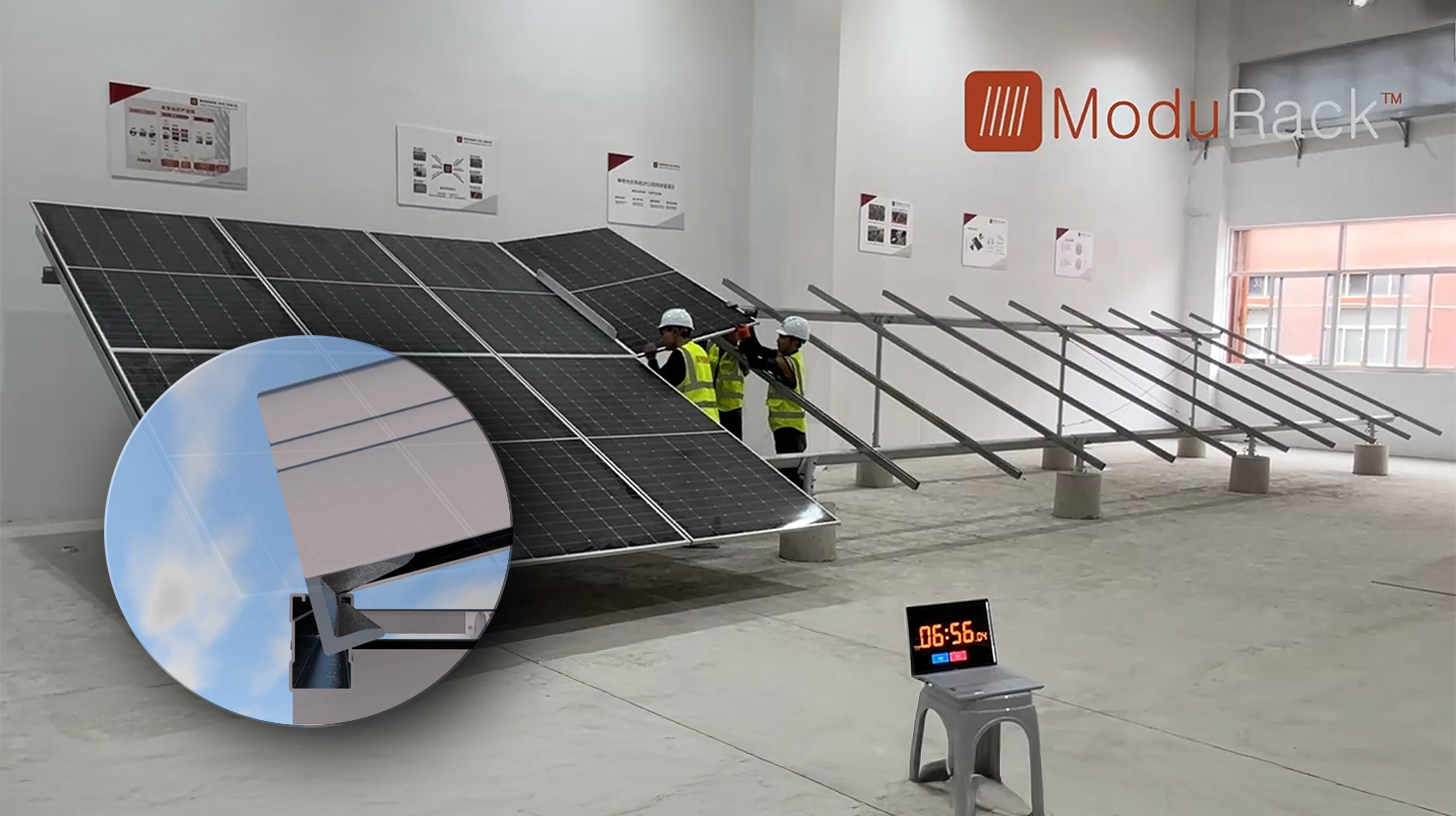
New: Patent from the USA – Install solar parks up to 30% cheaper and 40% faster and easier – with explanatory videos! - Image: Xpert.Digital
The core of this technological advancement is the deliberate departure from conventional clamp mounting, which has been the standard for decades. The new, more time- and cost-effective mounting system addresses this with a fundamentally different, more intelligent concept. Instead of clamping the modules at specific points, they are inserted into a continuous, specially shaped support rail and held securely in place. This design ensures that all forces – whether static loads from snow or dynamic loads from wind – are distributed evenly across the entire length of the module frame.
More information here:
Photovoltaics as a competitive factor: Why airports need to catch up in generating their own electricity
Storage technology as the actual bottleneck of the project
The economic and environmental benefits of the new facilities depend significantly on the performance of the integrated storage systems. Solar power is naturally generated when the sun shines – not necessarily when the airport needs it most. Airport operations, with their highly fluctuating load profiles, from nighttime base load to peak traffic in the morning and early evening, place particular demands on the capacity and response speed of the storage systems. Without adequately sized battery systems, a considerable portion of the generated solar power would remain unused and would have to be fed into the public grid, thus only partially achieving the actual purpose of the measure – increasing self-consumption and thereby reducing the need to purchase electricity from external sources. The specific technical design of the storage units for both construction phases in Stuttgart has not yet been publicly quantified in detail, which, from an economic perspective, leaves a certain degree of uncertainty in assessing the actual benefits.
STRzero: The ambitious climate roadmap behind the solar panels
The expansion of photovoltaics is integrated into Stuttgart Airport GmbH's STRzero climate strategy. This strategy aims to make ground-based airport operations net greenhouse gas neutral by 2040, thereby joining the Net Zero initiative of the European airport association ACI Europe. To achieve this, emissions in Scope 1 and Scope 2 categories are to be reduced by 85 percent by 2030 compared to the base year of 1990, in accordance with the internationally recognized Greenhouse Gas Protocol. The airport's ground handling fleet is to be operated in a climate-neutral manner from 2030 onwards, with CO₂ emissions from ground handling already reduced by 83 percent between 2009 and 2022 through the use of electric vehicles and the switch to stationary ground power. In 2023 alone, the increasing use of electric vehicles saved approximately 300,000 liters of diesel. This shows that the electrification of the apron is already having a measurable effect – and simultaneously explains the increasing electricity demand that the new solar power plants are intended to help cover in the future. According to previous estimates by the airport management, the entire climate neutrality strategy is projected to cost around €2.4 billion by 2040, which illustrates the financial scale of the project, extending far beyond the individual solar projects.
The blind spot of the climate strategy: What happens on the ground does not affect what happens in the air
Critics rightly point out that all of these measures relate exclusively to ground-based operations, while actual air traffic, with its far larger share of the airport's total emissions, remains unaffected by the climate targets. From a regulatory and accounting perspective, this distinction is understandable for an airport, as the direct emissions of the aircraft are the responsibility of the airlines, not the airport operator. Nevertheless, the public perception of a solar-powered or climate-neutral airport remains somewhat at odds with the reality that short- and long-haul flights continue to burn fossil fuels and account for the vast majority of an airport's climate impact. This differentiation between ground-based and flight-related emissions is economically relevant because it demonstrates that while investments like the new solar panels achieve meaningful and economically measurable effects on the airport operator's costs, they represent only a comparatively small component of the overall climate footprint of air traffic.
An industry trend with Frankfurt as the pioneer and Stuttgart as a smaller-scale laggard
The use of open spaces along runways for solar power generation has become an industry-wide trend among German and European airport operators. Frankfurt Airport operates by far the largest and most technologically advanced facility of its kind with its vertical photovoltaic systems on the West Runway. With a peak output of 17.4 megawatts, Frankfurt is on a completely different scale than Stuttgart, which on the one hand reflects the simple difference in size between the two airports, but on the other hand also shows that larger airports, with correspondingly higher energy demands and more available space, are naturally able to implement more ambitious solar projects. Fraport aims to achieve net-zero status with its system by 2045 at the latest, thus positioning itself as a technological pacesetter for the entire industry. For Stuttgart Airport, this means that its own solar initiative is less of a unique selling point and more of a necessary adaptation to a changing industry environment in which investors, municipalities, and increasingly, passengers, expect a visible climate strategy.
Economic logic behind self-generation of electricity: More than just a green fig leaf
From a purely business perspective, the appeal of on-site power generation lies in hedging against volatile and generally rising electricity prices on the European energy market, which represent a significant cost risk for energy-intensive infrastructure operators such as airports. Every kilowatt-hour generated and consumed on-site reduces dependence on external electricity suppliers and the associated price fluctuations. This is particularly important given the projected tripling of electricity demand due to the electrification of apron vehicles and ground infrastructure. The investment decision for ground-mounted solar power plants with storage solutions can therefore be interpreted not only as a climate protection measure but also as a strategic risk mitigation strategy against energy price risks, which can lead to more stable operating costs and improved planning certainty for the airport operator in the long term. At the same time, a visible climate strategy improves the airport's position with regard to public funding, sustainability ratings, and potential institutional investors, for whom ESG criteria are now a relevant decision-making factor.
A location strategy balancing technical necessity and symbolic impact
From an economic perspective, the expansion of photovoltaics at Stuttgart Airport is a logical response to increasing demand for in-house electricity, volatile energy markets, and growing competitive pressure within the European airport industry. However, its impact on the climate remains limited to ground-based operations, leaving the far more significant emissions from actual air traffic untouched. Those who view the project solely as a green prestige project overlook its sound economic logic. Conversely, those who misunderstand it as a comprehensive solution to the climate impact of air traffic significantly overestimate its true scope.
📈🚀 From visibility to trust 👀🤝 Your scalable path with Xpert.Digital


From visibility to trust: Your scalable path with Xpert.Digital - Image: Xpert.Digital
In industrial B2B, sustainable business relationships rarely emerge overnight. They develop step by step – through visibility, professional relevance, recurring touchpoints, and growing trust. Xpert.Digital's 4-stage model addresses precisely this: It offers a structured path that begins with a manageable entry point and can evolve into deeper collaboration in business development if needed.
Instead of relying on loud marketing promises, this model puts the relationship at the forefront. Companies start with clearly defined, easily calculable measures and then decide, based on their own experience, how far they want to expand the collaboration. A key factor for this undisturbed trust-building process: The platform completely avoids annoying advertising ads, so the editorial focus remains solely on the companies' expertise.
More information here:
Your partner for business development in the fields of photovoltaics and construction
From industrial rooftop PV to solar parks and larger solar parking lots
☑️ Our business language is English or German
☑️ NEW: Correspondence in your native language!

Konrad Wolfenstein
I and my team are happy to be available to you as your personal advisor.
You can contact me by filling out the contact form here wolfenstein@xpert.digital:or simply call me at +49 7348 4088 965. My email address is
I'm looking forward to our joint project.