The draft Renewable Energy Sources Act (EEG) overshadows solar roofs. The solar industry is appealing to members of the Bundestag and state governments to prevent a solar rollback and to transform the current cabinet draft into a solar acceleration law.
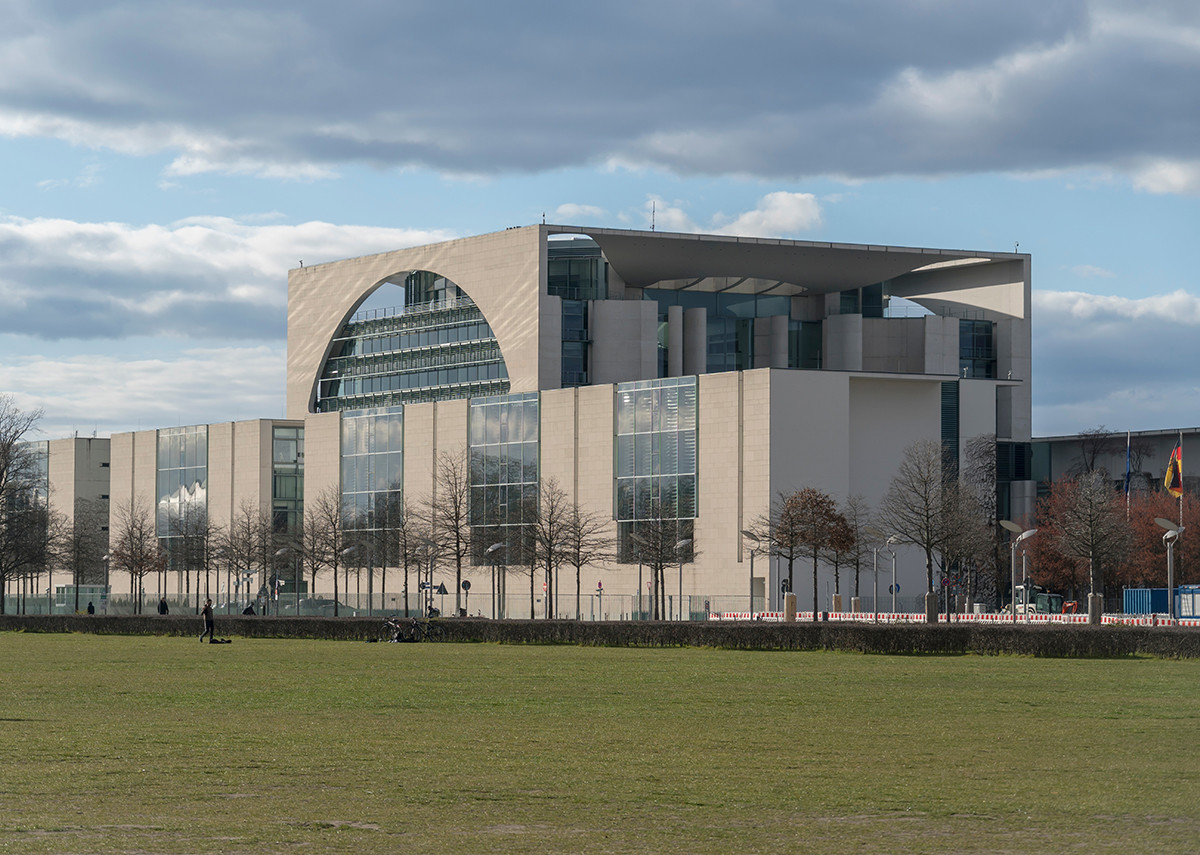
The Federal Chancellery of the Federal Republic of Germany – Image: Cineberg|Shutterstock.com
The draft Renewable Energy Sources Act (EEG), adopted today by the Federal Cabinet, will, according to the German Solar Association (BSW), lead to a significant decline in the installation of photovoltaic systems on buildings. At the same time, the continued operation of thousands of older solar power systems will not be guaranteed, self-generating solar power will be systematically discriminated against, and a huge opportunity for the urgently needed expansion of energy storage will remain untapped.
The Federal Cabinet usually meets every Wednesday at 9:30 a.m. in the Federal Chancellery. According to Article 62 of the Basic Law for the Federal Republic of Germany, it consists of the Federal Chancellor and the Federal Ministers.
The Federal Ministry for Economic Affairs and Energy (BMWi) unfortunately made hardly any concessions during the inter-ministerial consultation process. "Now it is up to the members of the Bundestag to prevent a solar rollback and to turn the current cabinet draft into a solar acceleration law," declared Carsten Körnig, Managing Director of the German Solar Association (BSW), in an initial reaction to the cabinet decision that had just been made.
According to the solar and battery storage industry represented by the BSW, urgent improvements to the draft EEG (Renewable Energy Sources Act) are needed primarily in three areas:
- Participation in auctions and foregoing self-generation of electricity should not become prerequisites for receiving market premiums for new photovoltaic (PV) rooftop systems. The Federal Ministry for the Environment had demanded that the Federal Ministry for Economic Affairs and Energy (BMWi) abandon the system change in subsidies sought by the BMWi, but was only able to soften Altmaier's plans. Instead of a gradual reduction of the de minimis threshold for auction participation to 100 kilowatt peak (kWp), today's cabinet decision calls for lowering it from the current 750 kWp to 500 kWp. Around 30 percent of the existing rooftop solar market still faces the threat of mandatory participation in tenders. The simultaneous agreement to increase the auction volumes for PV rooftops is worthless, as the additional auction volumes will be deducted from the eligible solar power output of smaller rooftop systems. Furthermore, it is questionable whether the tendered capacities for PV rooftops will even be achieved. In France, solar roof auctions have regularly resulted in underwritings and high risk premiums in recent years.
- The German Solar Association (BSW) also sees a significant need for improvement in the draft legislation regarding solar power systems that lose their EEG subsidies after 20 years of operation (over 20 years). The draft fails to remove the biggest obstacle to the continued operation of several hundred thousand over-20 solar power systems. Specifically, solar power used by operators themselves – for example, for charging an electric car or operating a heat pump – will be subject to 40 percent of the EEG surcharge (approximately 3 cents per kilowatt-hour). This will generally make retrofitting solar power storage systems unprofitable.
- The solar industry is also issuing a strong warning against the introduction of further metering and regulation requirements, such as those proposed unchanged in the draft legislation even for the smallest amounts of solar power. The German Solar Association (BSW) anticipates negative impacts on photovoltaic demand if solar power systems with a capacity of 1 kilowatt peak or more are required to install smart meters. "It is incomprehensible why even a handful of solar modules on private homes should be equipped with expensive metering systems in the future. This increases neither grid stability nor system efficiency and is completely disproportionate," says Körnig. The BSW calls on the German government to instead use standard load profiles for prosumers and to continue relying on the proven option of active power reduction for larger solar power systems. This effectively avoids generation peaks and makes solar power production sufficiently predictable for grid operators and energy suppliers. A prosumer is a consumer who is also a producer.
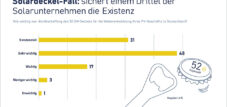
A recent BSW industry survey also gives the amendment to the Renewable Energy Sources Act (EEG) poor marks. 97 percent of the more than 1,000 participating companies expect a market decline for rooftop photovoltaic systems. The draft legislation from the Federal Ministry for Economic Affairs and Energy is seen as hindering rather than promoting the sector and urgently needs improvement.
Related to this:
- 97 percent of solar entrepreneurs warn of a decline in demand for solar roofs
- Solar tax: The solar industry demands its abolition and a solar acceleration law
Keep in touch