

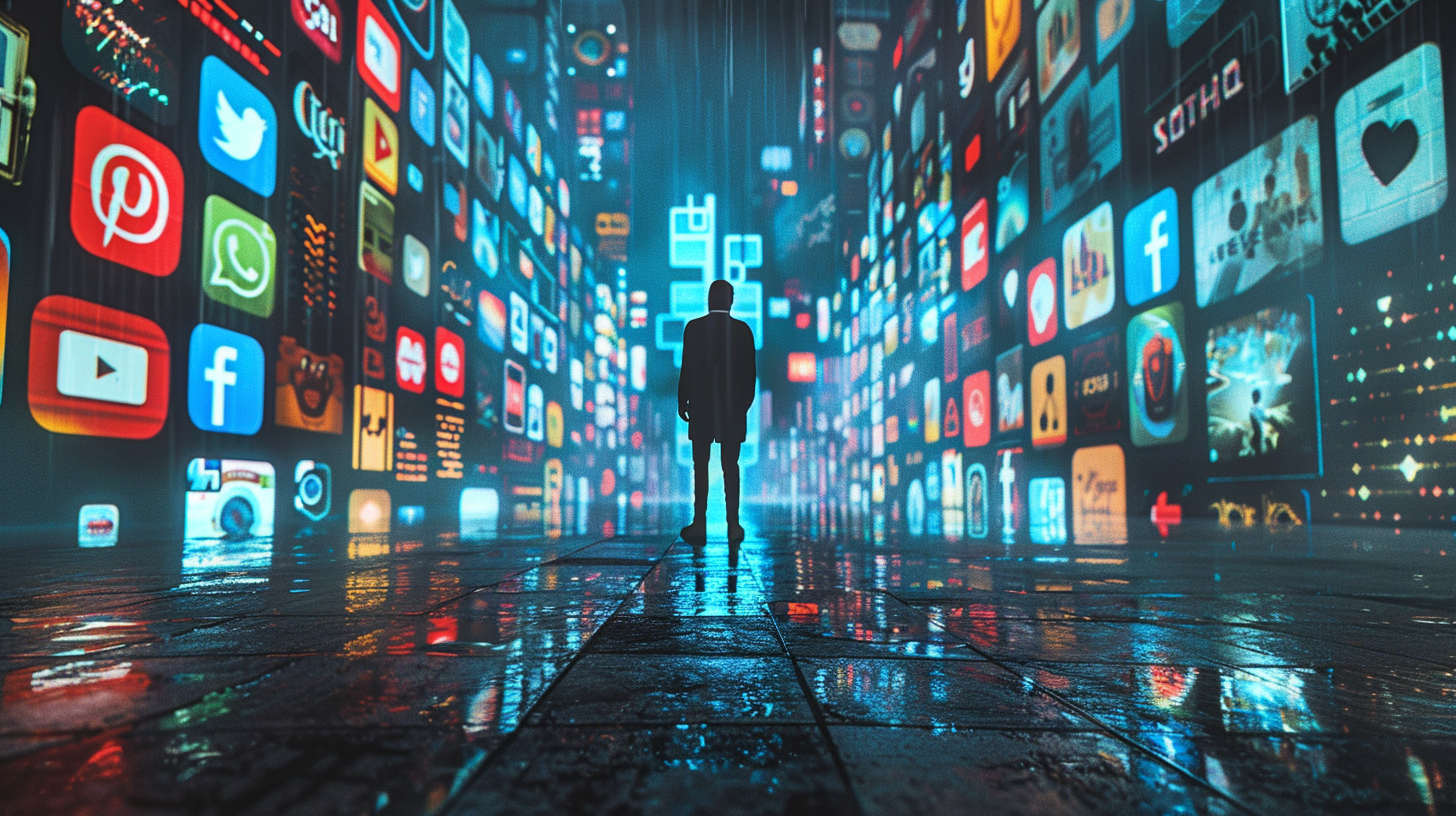
The sociological experiment "social networks" has failed. The social network has long since become an advertising network – Image: Xpert.Digital
The failed vision of social networks
The sociological experiment of "social networks" has failed in many respects.
What was once conceived as platforms to foster friendships, exchange, and community has since evolved into an overwhelming advertising network. These networks, which once had the potential to strengthen social bonds between people worldwide, are now dominated by advertising and manipulative algorithms.
The beginnings: friendship and community
When Facebook was founded in the early 2000s, the central idea was to connect people. Users could network with friends, share pictures, and post thoughts. It was a harmless place where personal interactions took center stage. These platforms symbolized hope and the possibility that technology could bring people closer together, regardless of geographical or social barriers.
However, as social networks grew, so did the economic interests of their operators. The original goal of networking was gradually replaced by the pursuit of profit. The introduction of algorithms, designed not only to sort content but also to strategically capture users' attention, fundamentally altered this dynamic.
The rise of the manipulative algorithm
Today, it's undeniable that algorithms have taken over the power of social networks. Everything a user does—be it a "like," a comment, or even just the time spent on a post—influences which content appears in their feed. On the surface, this might seem like a personalized experience, but in reality, it serves a different purpose: to keep users on the platform as long as possible so that more advertising can be displayed.
These algorithms also reinforce filter bubbles. Users are increasingly confronted with content that confirms their existing opinions. Dissenting opinions or controversial perspectives appear less and less frequently. This development is dangerous because it not only restricts discourse but can also deepen societal divisions. A seemingly harmless "show less of this" or "like" is enough to influence the algorithm and become even more trapped in a bubble.
The dominance of advertising
Another critical point is the ubiquitous advertising. While social networks were ad-free or at least largely ad-free in their early days, they are now overflowing with commercial content. Advertising is no longer just an add-on, but a central component of the user experience. The platforms track every click to deliver personalized ads designed to further strengthen user engagement.
This development, however, comes at a price. The feed, once a place for personal stories and authentic moments, is now overloaded with sponsored posts, often disguised as regular content. It's becoming increasingly difficult for users to distinguish between advertising and genuine content. This blurring of lines not only undermines trust but also leads to a growing disillusionment with the platform.
The loss of authenticity
The increasing commercialization of social networks has another negative effect: the loss of authenticity. Where genuine interactions and honest posts once dominated, content is now often created with algorithms and reach in mind. Influencers and brands rely on optimized posts designed to achieve maximum engagement rates. Authentic communication is being replaced by strategic marketing.
This shift also affects the users themselves. Many people feel pressured to present a perfect version of their lives in order to receive more "likes" and positive feedback. Social comparison intensifies, often leading to feelings of inadequacy and social isolation.
Social networks as data collection points
One often underestimated aspect is the immense amount of data collected behind the scenes of social networks. Every like, every click, and every interaction provides valuable information about users' preferences and behaviors. This data is not only used to personalize content and advertising but is also frequently sold to third parties. The user becomes the product, and their data the commodity.
The risks of this practice are manifold. From data breaches to manipulative election campaigns like those of Cambridge Analytica, the impact on society is profound. Social networks have demonstrated how easily they can be used to influence opinions and manipulate democratic processes.
The psychological effects
Changes in social media use also have psychological consequences. Studies show that the constant presence of advertising and the manipulative design of the platforms can lead to overstimulation. Users increasingly feel stressed and burned out. The pressure to be constantly online and not miss out ("Fear of Missing Out") also contributes to a feeling of dissatisfaction.
Furthermore, algorithms foster a culture of instant validation. Likes and comments become a measure of social recognition. These mechanisms can be addictive and have a negative impact on the self-esteem of many users, especially younger people.
Is there a way back?
The question of whether social networks can return to their original purpose is difficult to answer. Some platforms are experimenting with new approaches, such as limiting advertising or introducing chronological feeds. However, economic pressure remains high. As long as the business model is based on advertising, it will be difficult to implement fundamental changes.
A promising approach could lie in promoting alternative social networks characterized by transparency, data protection, and ad-free models. Stronger regulation could also help to mitigate the negative effects. Initiatives such as the General Data Protection Regulation (GDPR) in Europe are first steps in this direction, but much remains to be done.
From social to commercial network
The original goal of social networks – to connect people – has faded into the background. What remains is a system primarily aimed at maximizing profits. Advertising and manipulative algorithms have fundamentally changed the platforms, turning them into a reflection of consumer society.
Nevertheless, there is hope. The growing criticism of social media practices shows that many users are demanding a change of approach. It remains to be seen whether platforms will heed these demands or whether new alternatives will emerge that revive the original vision. One thing is certain: the way we use social networks will continue to be a crucial factor in their development and their impact on society.
Related to this: