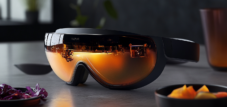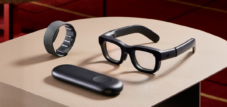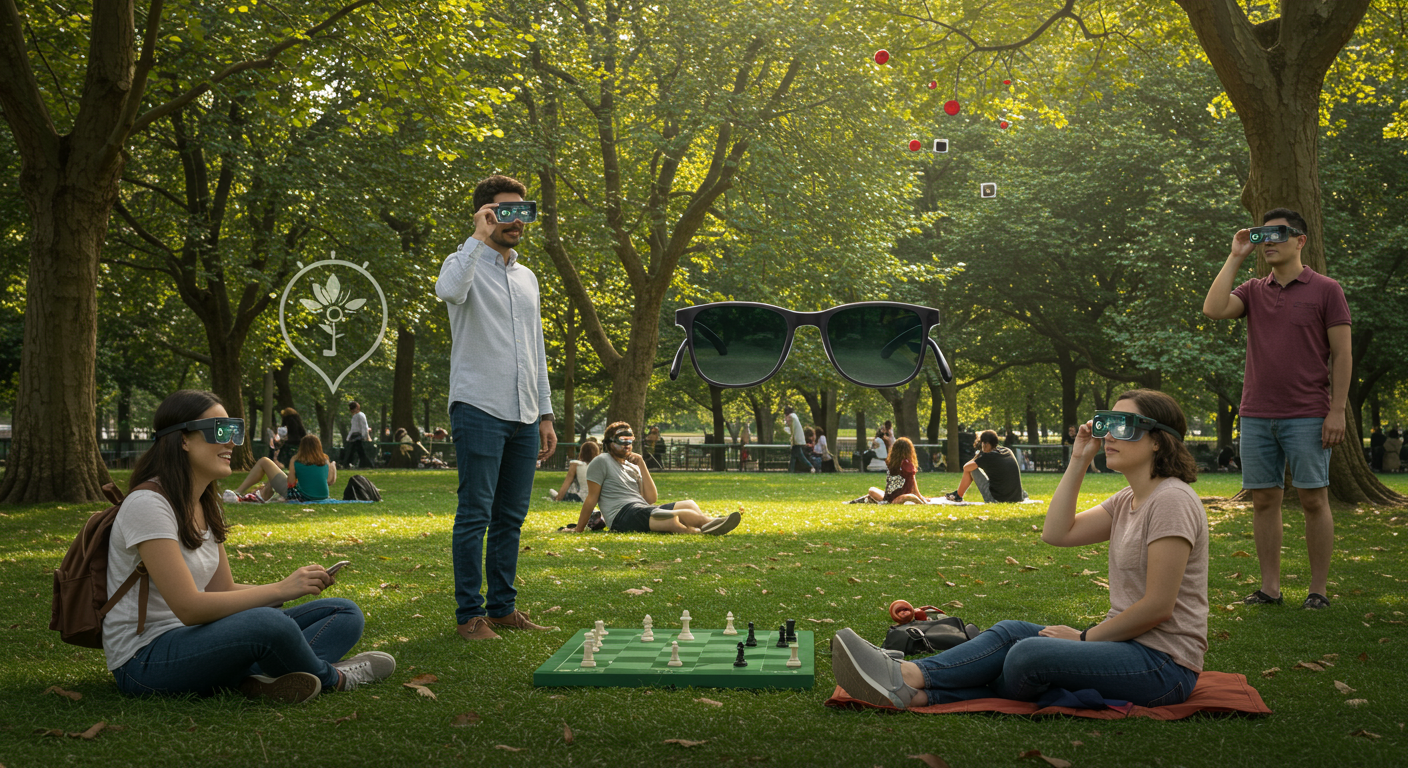
The 'Spotify moment' of the AR industry? Snap Specs – on the way to everyday AR glasses? – Image: Xpert.Digital
Snap will showcase the future of AR glasses in 2026: They are expected to be lighter than Apple Vision Pro and smarter than Ray-Ban
Snap announces “Specs” – the first AR glasses for consumers
Augmented Reality (AR) is on the verge of moving from the experimental domain of developers into everyday life for the masses. While Apple is exploring the premium market with its Vision Pro and Meta is constantly expanding its Ray-Ban strategy, Snap is taking a middle path: lighter than a head-mounted display, more functional than dedicated camera glasses, and priced significantly below Apple's $3,499 mark. The specifications, expected to be released in 2026, are intended to demonstrate that full-fledged AR is possible within an unobtrusive eyeglass frame.
Related to this:


From Spectacles to Specs – a decade of learning curve
Snap has been experimenting with smart glasses since 2016. The first generation of Spectacles was essentially sunglasses with a camera – a playful gadget for Snapchat Stories. With each subsequent iteration, however, the company moved closer to a true AR headset. In 2021, the fourth generation introduced transparent waveguide displays and 6-DOF tracking for select creatives. A year later, Spectacles 5 followed, offering gesture control, hand tracking, and a 46-degree field of view thanks to its dual Snapdragon architecture. But it remained a developer kit: bulky, weighing 226 grams, and with a 45-minute battery life – insufficient for the mass market.
The consumer version, now called "Specs," awaits its launch. The name change signals that this time it's not meant to be a tech demo, but a product for everyone. Snap says it invested more than three billion dollars and eleven years of development time to overcome this hurdle.
Hardware in detail
At the heart of the specs are newly developed waveguide displays that project holographic images directly into the field of view. Projection is achieved via micro-projectors based on liquid crystal on silicon; each waveguide contains billions of nanostructures that precisely refract the light – resulting in a clear, vibrant image even in bright sunlight. According to early prototypes, the field of view significantly exceeds the previous 46 degrees; internally, figures of around 55 to 60 degrees are circulating – enough to anchor virtual objects stably in space without any tunnel vision effect.
A dual Snapdragon-based SoC handles processing and sensor fusion. One chip is located on each side of the headband, preventing heat hotspots and distributing weight more evenly. The processors access multiple cameras for scene recognition, depth mapping, and hand tracking. Six microphones deliver spatial audio, and open speakers create an acoustic "sweet spot" that minimizes disturbance to others.
Snap's proprietary vapor chambers cool the SoCs, while optimized battery components, according to sources close to the company, should provide at least 45 minutes of continuous use – internally, the target is "half a workday." A magnetic power bridge in the case could recharge on the go, similar to Meta's Ray-Ban case. This brings all-day use within reach, but remains the most critical point on the roadmap.
Operating concept – hands instead of controllers
Specs rely entirely on natural inputs:
- Hand gestures: The glasses recognize finger movements in the near field with high precision. A "tap" on the thumb and forefinger opens the main menu, a swipe in the air scrolls through maps, and a gentle pinch confirms.
- Eye tracking: Eye tracking measures where the user looks, and Snap OS dynamically highlights buttons there.
- Speech: The microphone array forwards commands to Snap AI, optionally offline-locally or in the cloud.
According to the developer documentation, an additional, haptic finger ring is optional – for situations where gestures are socially inappropriate or difficult due to lighting conditions.
Snap OS – the foundation of the experience
Snap OS, first showcased with Spectacles 5, is an operating system specifically designed for spatial interaction. Its home screen appears as a semi-transparent, 3D carousel bar across the palm of the hand. Snap traditionally calls its apps "Lenses." Over four million of these already exist in the smartphone ecosystem and are now, in principle, portable to Spectacles.
Three new APIs have been added:
- Depth Module API – facilitates spatial anchoring and occlusion, allowing virtual objects to disappear behind real surfaces.
- Snap3D API – generates 3D assets via text prompt, optimized for rapid prototyping.
- Automated Speech Recognition API – transcribes over 40 languages locally in real time.
Thanks to strategic partnerships, OpenAI GPT-40 and Google Gemini are also deeply integrated. This allows for the development of multimodal assistants that can recognize text, label objects, display translations, or suggest recipes when the kitchen shelf comes into view.
Competitive landscape in comparison
A comparison of the competitive landscape reveals significant differences between the four main players in the AR glasses market. Snap's 2026 specifications describe a lightweight AR headset with waveguide displays, offering a field of view of over 55 degrees. It is expected to be powered by dual Snapdragon XR derivatives, providing 4 to 6 hours of battery life with the charging case. Primary input methods include hands, gaze, and voice, while the AI focus is on ChatGPT, Gemini, and Snap AI. The anticipated price is under $3,499.
The Apple Vision Pro, released in 2024, is a mixed-reality headset with an external battery and a camera-based field of view of approximately 100 degrees. It's powered by Apple M2 and R1 processors, offering two hours of battery life with the internal battery, but can be used indefinitely via cable. Hands, eyes, and voice are supported as input methods, while the visionOS SDK and Core ML provide the AI focus. Pricing starts at $3,499.
The Ray-Ban Meta from 2023 is fundamentally different, being a camera and audio glasses without a display. It utilizes the Snapdragon AR1 Gen 1 processor and offers an impressive 36 hours of battery life, including the case. Voice, touch, and camera serve as input methods, while Meta AI Vision and Chat provide the AI features. With a starting price of $299, it's the most affordable option.
The Meta Orion Proto, released in 2024, is a prototype see-through AR headset with a field of view of approximately 70 degrees, according to the demo. Custom Meta Silicon powers the lab-developed device, though no battery life specifications are available. Input is possible via hand, voice, and an EMG wristband, while Meta AI and generative 3D provide the AI capabilities. As it is a prototype, no price has been announced.
Unlike Apple, Snap is focusing on a practical, everyday glasses design without a forehead pad or external battery pack. Meta, on the other hand, currently sells affordable camera glasses – AV functions are available, but true AR won't arrive until the next generation, starting in 2025. Orion remains a research project without a market launch date, but it shows where the technology is headed.
Killer Use Cases – Where the Journey Could Lead
1. Spontaneous translation
Business trips benefit from subtitle overlays: street signs, menus or conversations appear live in the traveler's own language.
2. 3D coaching in everyday life
A tennis lens projects ideal hitting angles directly onto the racket; a drum app overlays sheet music onto the snare drum, while a virtual teacher corrects tempo and posture.
3. Navigation without a mobile phone
Arrows float at the next intersection, the glasses vibrate gently when turning. Pedestrians and cyclists no longer need to stare at their smartphones.
4. Social AR
Snap thrives on shared moments. Multiplayer lenses like "Wisp World" transform the park into a shared adventure where friends can see and catch the same digital creatures.
5. Productivity
Virtual monitors float above the desk, emails open in view, and a chat window remains docked in the upper left corner. However, focused work requires excellent text rendering and subtle gesture control – a hurdle that often caused previous approaches to fail.
Related to this:

Challenges on the road to mass adoption
- Battery life – Without at least six hours of realistic use, Specs risks the same criticism as Spectacles 5: cool tech demo, but impractical in everyday life.
- Weight & Design – Under 100 grams is considered a psychological threshold to prevent the glasses from being perceived as a gadget. If they don't elegantly replace one's own prescription lenses, the device remains a niche product.
- App quality – Four million smartphone lenses are no guarantee of meaningful AR experiences. Developers need to create real added value, not just upgrade filters from 2D to 3D.
- Data privacy – A front-facing camera in discreet glasses evokes memories of Google Glass. LED indicators and clear data privacy guidelines are essential to ensure acceptance.
- Price – Snap aims to be “significantly cheaper” than Apple, but positioned above Meta. Observers expect a price of $1,000–$1,500. If the price exceeds $2,000, consumers might opt for the Vision Pro, which, while heavier, is uncompromising in terms of display and performance.
Market potential and scenarios until 2030
1. Optimistic scenario
Snap delivers specs on time, achieves 5-6 hours of mixed usage, launches with an attractive portfolio of games, travel apps, and AI tools – and sells five million units in the first two years. The ecosystem attracts investment, and Snap establishes itself as the "Spotify moment" of the AR industry. For the first time, smartphones lose usage time to VR headsets.
2. Base Scenario
Specs appear in 2027 after delays, cost $1,799, and offer four hours of battery life. Early adopters buy, the mainstream hesitates. Meta counters with Ray-Ban 3 including a micro-display and undercuts the price. Apple releases the lighter Vision "SE" in 2028. AR glasses remain niche devices, but indispensable for certain professionals and creatives.
3. Pessimistic scenario
Battery issues and manufacturing costs are pushing specs above $2,000. Developers can't overcome the hurdles for complex 3D apps. The market is comparing the specs to powerful mixed-reality headsets and judging: too small a display, too short a battery life. Snap is scaling back the project, refocusing on software.
Significance for the AR industry as a whole
Specs are more than just another wearable. They test whether a social media company can build enough hardware expertise to deliver the "next-gen computer." If they succeed, the separation between camera app and AR device becomes obsolete: The camera is now literally in front of your eyes, AI organizes, translates, and shapes the field of view, while the cloud brings friends into the same digital layer of reality.
If Snap fails, the focus will shift even more strongly to tech giants with deep hardware roots. Apple could follow up with a slimmer Vision glasses product, Meta could be ready with Orion, and Google is also planning a Gemini-powered smart glass ecosystem.
Snap's AR glasses specs: Can they replace the smartphone as the main device?
Snap is attempting a balancing act with the specs: The glasses must be as light as Ray-Bans, but powerful enough to do more than just take photos; they must be cheaper than a Vision Pro, but high-quality enough to offer added value; they must last all day without burdening the wearer.
If battery life, price, and app ecosystem align, Snap could indeed create the first mass-market AR experience – and thus provoke the question of whether the smartphone will one day become a secondary interface. Until then, there are two years in which developers, designers, and hardware engineers must prove that the promise of augmented reality is more than a fleeting lens effect.
Related to this:
Your global marketing and business development partner
☑️ Our business language is English or German
☑️ NEW: Correspondence in your native language!

Konrad Wolfenstein
I and my team are happy to be available to you as your personal advisor.
You can contact me by filling out the contact form here wolfenstein@xpert.digital:or simply call me at +49 7348 4088 965. My email address is
I'm looking forward to our joint project.