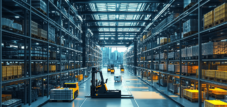
Smart warehouses with warehouse automation and AI: Why warehouse automation is becoming the heart of the supply chain – Image: Xpert.Digital
Efficiency, safety, scalability: Modern warehouse logistics put to the test
Responding in real time: Why automation is becoming the heart of the supply chain
Warehouse automation has gained enormous importance in recent years. Companies across all sectors face the challenge of making their logistics processes ever faster, more precise, and more cost-effective in order to meet growing market demands. Warehouse logistics plays a central role in this, as it often determines how efficiently and reliably a company can actually operate. Traditionally, many tasks in warehouses were performed by humans – from receiving goods and storing them to order picking and packing. However, automated systems, robots, and digital technologies have now found their way into warehousing, opening up new potential that goes far beyond what was achievable with purely manual processes.
The following section explains the main reasons for warehouse automation, discusses challenges and risks, and provides an outlook on future developments. Furthermore, it examines how these trends differ internationally, their impact on the labor market, and the role of legal frameworks. The text illustrates that warehouse automation is not only a technological development, but also a strategic, economic, and social one.
Related to this:
Reasons for warehouse automation
Automating warehouse processes offers numerous advantages. Many companies face increasingly complex and fast-paced demand and therefore need to design their warehouse processes to remain flexible and resilient. At the same time, they aim to reduce costs, increase efficiency, and satisfy customers. "Warehouse automation is no longer a luxury, but rather a crucial competitive factor," as some industries put it. The most important reasons for implementing automated warehouse systems can be summarized as follows:
1. Increased efficiency
A key goal of warehouse automation is to accelerate processes. Automated systems are able to identify, transport, store, and retrieve goods from the warehouse as needed, all without human intervention. This not only saves working time but also prevents downtime. Autonomous mobile robots (AMRs) or driverless transport systems are already handling goods transport in many warehouses. This reduces throughput times and allows picking orders to be processed more quickly.
2. Cost reduction
In an automated warehouse, personnel costs decrease, especially for tasks that previously involved significant physical exertion and repetitive manual work. Robotics and automated racking systems also allow companies to make better use of existing warehouse space. High-bay warehouses or shuttle systems enable more efficient storage density, which in turn reduces the required floor space and helps to lower operating costs.
3. Improved accuracy
Human error can never be completely avoided, even with experienced personnel. Automated systems, on the other hand, operate with high precision and standardization. This is particularly evident in the picking of small parts, where robots or automated systems can identify goods and provide the correct quantity. "High accuracy in order picking is considered one of the most essential factors for a successful supply chain," is a common refrain in logistics departments. Fewer shortages and incorrect deliveries mean satisfied customers and fewer returns.
4. Faster order picking and shipping processing
Automated order picking and transport systems enable faster order processing. This is particularly relevant for companies that want to stand out from the competition through short delivery times or even offer same-day delivery. The importance of short delivery times has increased dramatically, especially in the e-commerce sector.
5. Increased security
Automated systems reduce the risk of workplace accidents because heavy and potentially dangerous tasks no longer need to be performed by humans. Robots take over lifting heavy loads, driverless transport systems reduce the risk of collisions, and intelligent monitoring systems can detect and prevent dangerous situations in advance. This leads to a generally higher level of safety in the warehouse.
6. Optimal space utilization
Automated high-bay warehouses often utilize the full height of a building. This allows for the storage of large volumes of goods even in smaller warehouse spaces. Additionally, compact storage systems minimize unused space. A well-planned warehouse layout ensures minimal walking distances and optimal utilization of every storage location.
7. Flexibility and scalability
Many modern warehouse systems are modular and can be easily expanded as business volume grows. A company can therefore start small and later purchase additional modules or robots as demand increases. "The ability to react quickly to market changes is indispensable for modern logistics," is a common refrain in the industry. Flexibility is therefore not just a buzzword, but a crucial criterion in the planning of automated warehouse solutions.
8. Coping with increasing demands
More and more customers are demanding personalized, customized orders and extremely short delivery times. This increases the pressure on warehousing, where simply shipping large batches of identical products is no longer sufficient. Individual order processing often requires picking many different items in a very short time. Automated systems with intelligent software can enable this efficiently by, for example, automatically combining goods from different departments.
Future trends in warehouse automation
Warehouse automation is constantly evolving and continuously influenced by new technological developments. Companies that invest in these technologies early gain significant competitive advantages. At the same time, customer expectations are rising regarding delivery times, flexibility, and transparency. "Only those who continuously adapt to market needs remain successful in the long term" is a common insight across many industries. Key trends include:
1. Advanced Robotics
Robots are becoming increasingly versatile and adaptable. New sensor technologies and artificial intelligence enable them to automatically recognize and handle objects of different sizes and shapes. This allows a single robot to perform various tasks such as order picking, packaging, or palletizing. Cobotics – the close collaboration between humans and robots – is also playing an increasingly important role in making automation flexible and human-centered.
2. Artificial Intelligence (AI) and Machine Learning
AI systems analyze large amounts of data to generate forecasts and make autonomous decisions. In a warehouse context, this means, for example, that a system can identify in real time which items will soon be out of stock and should therefore be prioritized for restocking. AI can also help optimize routes by calculating the most efficient schedule for autonomous transport systems. This allows for more accurate forecasts of seasonal peaks or short-term changes in demand.
3. Internet of Things (IoT)
Sensors and networked devices in "smart warehouses" enable real-time monitoring of all warehouse activities. During goods receipt inspection, the system immediately registers when a new pallet arrives, records its location, and compares the information with order data. IoT solutions also record temperatures, humidity, and other environmental factors, which is particularly important in industries like the food industry to ensure compliance with the cold chain. "Transparency is a key success factor in the supply chain," say experts, and the IoT provides the technological foundation for this.
4. Autonomous Mobile Robots (AMR)
AMRs differ from conventional automated guided vehicles (AGVs) in their ability to dynamically plan their routes and avoid obstacles. This makes them particularly flexible, for example in warehouses with changing layouts or areas where humans and robots work together. AMRs can transport goods from one place to another around the clock, set up intermediate storage areas, or deliver goods directly to order pickers' workstations. This reduces travel times and increases overall warehouse efficiency.
5. Goods-to-Person Order Picking
Instead of employees walking through the warehouse searching for items, the items come to them automatically. Highly automated warehouse systems ensure that a robot or automated storage and retrieval system retrieves the required goods from their storage location and transports them to the picking station. This method not only saves time but also relieves the strain on staff, as long walking distances and heavy lifting are eliminated. This approach is particularly attractive for companies with high picking frequencies who want to increase warehouse throughput.
6. Smaller camps, higher activity
A trend that is gaining increasing importance in the wake of urbanization and e-commerce is the establishment of small, decentralized warehouses closer to the end customer. Since space in metropolitan areas is expensive, the focus is on highly automated concepts that enable maximum space utilization. Micro-fulfillment centers, which are densely integrated into urban areas, also rely on automated systems to deliver orders within a few hours. "Proximity to the customer is becoming increasingly important in modern logistics," is a common assessment.
Global developments and differences
Warehouse automation is a phenomenon spreading worldwide, though not at the same rate in all regions. Economic and cultural factors influence how quickly and in what form automation takes place
USA
Although the United States is known as a high-tech nation, many warehouses still rely on a relatively high degree of manual labor. At the same time, leading technology companies are developing highly innovative solutions. One reason for the somewhat hesitant adoption of automated warehouse solutions has been that labor costs in some regions have traditionally remained comparatively low. However, with rising wages and tighter labor markets, this is beginning to change.
China
China is investing heavily in robotics and artificial intelligence. The country is considered a pioneer in the use of advanced robotic systems in vast warehouses. The high dynamism of the Chinese market and the highly competitive e-commerce sector have led many companies to automate rapidly in order to achieve short delivery times and low costs. Government incentive programs are also accelerating this process.
South Korea
South Korea is known for its strong affinity for technology and its pioneering role in innovation. Warehouse automation is already highly advanced in many companies, supported by an excellent infrastructure in the areas of digitalization and robotics. The focus here is often on high-end solutions that are highly sophisticated and reliable.
Germany
Germany is traditionally an industrial nation with strong mechanical engineering and automotive industries. While there are numerous manufacturers of conveyor technology and robotic systems, the potential of warehouse automation is not always fully exploited in all sectors. Reasons for this include the sometimes high initial investments and the complexity of integrating automated systems into existing production and logistics chains. Nevertheless, more and more companies are relying on automation to remain competitive in the long term.
Related to this:
- Warehouse automation worldwide: A comparison between Germany, Japan, France, Spain, Italy, Poland and the Czech Republic
- Global warehouse automation: A comparison between the USA, China and South Korea – in the USA, 80% of warehouses are still manual!
Examples of successful implementation
Warehouse automation is taking place in many industries. A few examples illustrate the wide range of applications:
E-commerce
Time is a crucial factor here. To ship orders as quickly as possible, large online shops use highly automated sorting and picking systems that operate around the clock. Numerous robots navigate the warehouse, retrieve goods from shelves, and transport them to centrally located packing stations. This allows enormous order volumes to be handled in a very short time.
automotive industry
Just-in-time deliveries are essential in automotive manufacturing. Automated warehouses ensure that parts and components are available precisely when needed for assembly. Errors or delays can otherwise lead to high costs. High-bay warehouses, directly networked with production facilities and controlling the flow of materials, are typically used.
food industry
The use of automated cold storage facilities and high-bay racking systems makes it easier to maintain the cold chain. This keeps products fresh for longer and prevents spoilage, while simultaneously allowing for efficient management of the enormous volume of frozen or perishable goods. Specialized robots can also handle palletizing, thus improving compliance with hygiene and safety standards.
Palletizing
In many industries, whether e-commerce, retail, or food, palletizing plays a central role. Automated palletizing systems stack goods layer by layer, thus optimizing the use of transport and storage space. This minimizes damage during transport and handling, as the systems operate with consistent precision. "Efficient palletizing is the key to loading more goods in less time," is a common refrain.
LTW Intralogistics Solutions
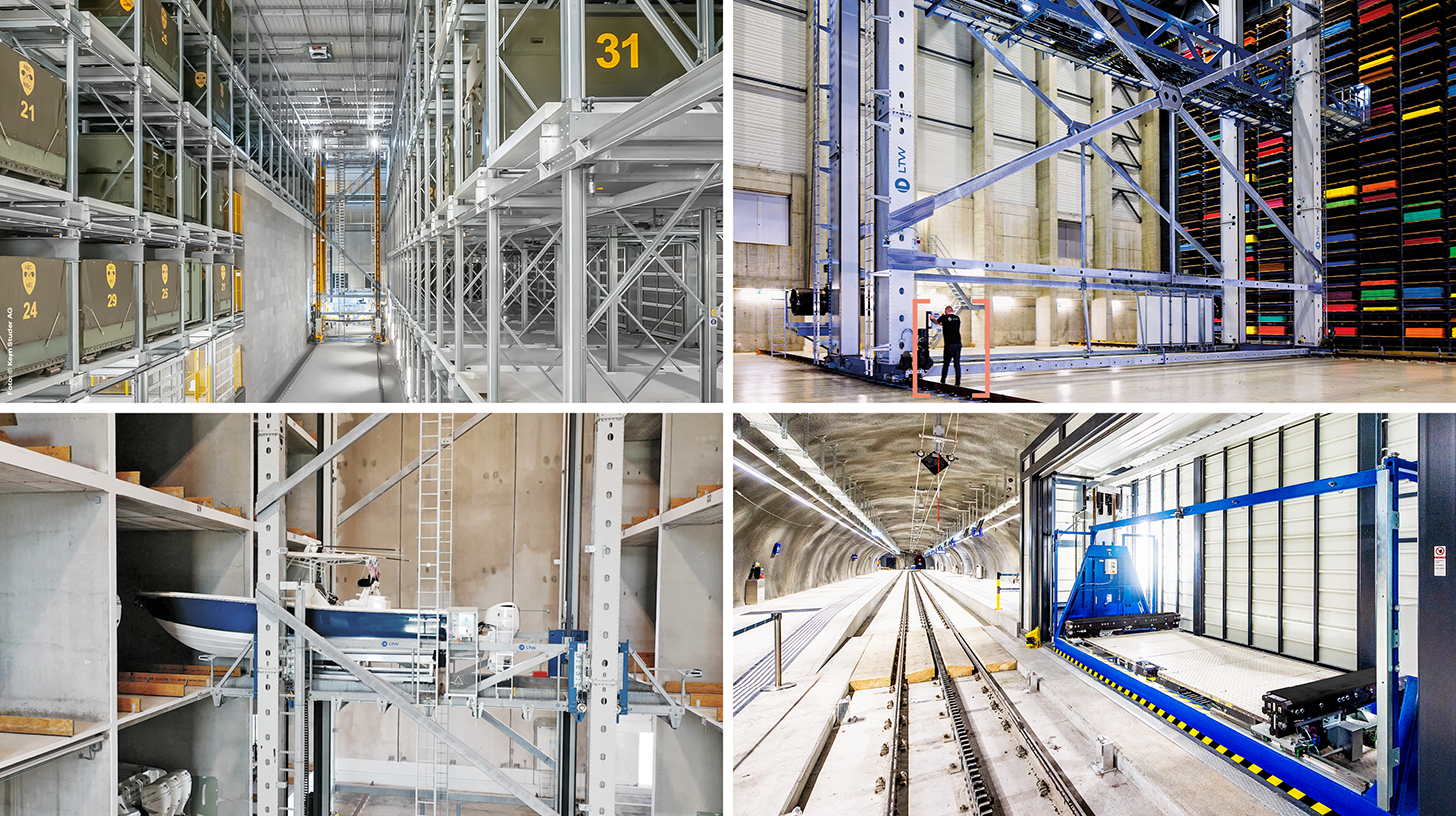
LTW Intralogistics – Engineers of Flow - Image: LTW Intralogistics GmbH
LTW offers its customers not individual components, but integrated complete solutions. Consulting, planning, mechanical and electrotechnical components, control and automation technology, as well as software and service – everything is networked and precisely coordinated.
In-house production of key components is particularly advantageous. This allows for optimal control of quality, supply chains, and interfaces.
LTW stands for reliability, transparency, and collaborative partnership. Loyalty and honesty are firmly anchored in the company's philosophy – a handshake still means something here.
Related to this:
Smart warehouses and similar technologies: Are automated warehouses the future of logistics?
Challenges and risks of warehouse automation
While warehouse automation can be advantageous, it also presents various challenges and risks. Companies should be aware of these factors before opting for comprehensive automation:
1. High investment costs
The acquisition and integration of automated systems involves considerable costs. In addition to the actual equipment, planning, software implementation, staff training, and subsequent maintenance should not be underestimated. The return on investment (ROI) often only materializes after several years. This represents a significant financial burden, particularly for small and medium-sized enterprises (SMEs), and requires careful calculation.
2. Complexity of the systems
An automated warehouse only functions smoothly if all components – from the robots and racking systems to the warehouse management software – are optimally coordinated. Even the smallest malfunctions can paralyze operations. "A high degree of networking requires careful planning and reliable maintenance management," as many technical articles state. Faulty interfaces or inadequate emergency plans quickly lead to production and delivery delays.
3. Dependence on technology
When an automated system fails, it can have serious repercussions for the entire supply chain. Whether due to a robot malfunction, a software error, or a power outage, in highly automated environments a single defect can delay or completely halt all processes. Therefore, a redundant concept is essential, one that provides alternative processes or systems to compensate for failures.
4. Data security and cyberattacks
With increasing connectivity comes a greater risk of falling victim to cyberattacks or data leaks. Criminals could attempt to manipulate control software or steal valuable data on inventory levels and delivery schedules. A comprehensive security concept that protects both physical and digital access points is essential. This includes regular software updates, firewalls, encryption, and employee training in IT security.
5. Reduction of storage capacity with increasing activity
Many companies rely on compact high-bay warehouses or automated shuttle systems, but these also have their limitations. Especially when activity and the product range increase significantly, a warehouse must be adequately sized to handle the flow of goods. Space-saving solutions like micro-fulfillment centers are highly automated, but quickly reach their capacity limits with rapid growth and need to be expanded.
6. Dangers in the camp
Hazards from falling objects or carelessness, such as when people move in the same spaces as transport robots, still exist. While automated systems minimize many risks, they also require a rethink in safety management. Employees must be trained in the use of robots to prevent anyone from accidentally entering the machines' operating area or causing collisions.
Impact on the world of work
Warehouse automation significantly changes working conditions and requirements. On the one hand, some jobs are eliminated, especially those involving repetitive manual tasks. On the other hand, new fields of employment are emerging, particularly in software, data analysis, plant design, and maintenance. "Where robots operate, people must program, monitor, and optimize," is a common argument.
This transformation presents many companies with the challenge of providing their workforce with the necessary training. Simply introducing the technology is not enough. Employees need training to operate, monitor, and maintain the systems. Furthermore, the demands on analytical skills are increasing, as data plays an ever-greater role – from inventory management to process optimization. This requires specialists who are proficient in using big data and artificial intelligence systems.
An ethical question also arises as to how automation should be designed so that it not only reduces staffing needs for cost reasons, but also creates humane working conditions. "Automation must not devalue human work, but rather complement it," is a common refrain. Companies and society must ensure that the benefits of automation accrue to everyone and that social aspects are adequately considered.
Warehouse automation in the German context – an international comparison
Germany boasts a mature industrial sector and extensive expertise in mechanical engineering. Despite this advantageous starting point, many warehouses are still manually operated. For numerous companies, it has long been sufficient to operate tried-and-tested manual or semi-automated solutions, especially given the high investment costs for fully automated systems. However, the realization has recently taken hold that, in the long run, companies could face disadvantages in global competition without automation.
Other countries, such as China and South Korea, demonstrate how the path to highly automated warehouses can be accelerated when the economic structure is geared towards rapid innovation cycles and digital transformation. There, both large corporations and medium-sized businesses are relying more consistently on extensive automation and robotics than in Germany. The picture in the USA is mixed, as it includes both extremely automated logistics centers of large corporations and still largely manual warehouses in traditional industries.
In Germany, the obstacles are not only financial but also organizational. However, a strong engineering culture ensures that new technologies are carefully examined and thoughtfully implemented. As soon as the advantages are clear and the ROI is demonstrated, companies usually adopt them quickly and comprehensively. Furthermore, the close collaboration between research institutions, mechanical engineering firms, and technology startups fosters new developments.
Costs and profitability of automated storage systems
The specific investment costs for warehouse automation depend on many factors – from warehouse size and the degree of automation to the technologies used. Simple automation with automated guided vehicles (AGVs) is less expensive than a fully automated high-bay warehouse with robots and complex control solutions. Furthermore, every new technology incurs follow-up costs for maintenance, software updates, and spare parts.
Automation is usually economically worthwhile when the warehouse has a certain minimum size and complexity, or when there are extremely high demands on delivery times and accuracy. Companies typically calculate the ROI based on expected savings in personnel costs, reduced error rates and returns, and better utilization of warehouse space. Soft factors such as improved workplace safety and increased customer satisfaction can also be considered. Depending on the industry and the degree of automation, it can take between one and seven years for the investment to pay for itself.
Related to this:
Legal and regulatory framework
Anyone operating an automated warehouse must comply with various legal requirements. These include:
Safety regulations
Machinery directives and occupational safety regulations define what constitutes safe operation. Automated systems, for example, must be secured by safety fences, light barriers, or sensors so that people can be safely in their vicinity.
Data protection
Since automated warehouses often process personal data, for example to track orders, data protection laws apply that companies must comply with. Systems should be designed so that only authorized personnel have access to sensitive information.
Product liability
If damage occurs due to a faulty automated system, the question arises as to who is liable. Operators, manufacturers, and software developers can be held responsible under certain circumstances. A clear contractual agreement is essential in this regard.
Employment law
Warehouse automation can reduce or change staffing needs. However, companies are obligated to comply with applicable labor laws when reducing or changing staffing levels and – if applicable – to involve works councils in a timely manner.
While many governments promote digitalization and automation as drivers of innovation, the protection of employees and customers remains paramount. Therefore, companies must examine early on which laws and standards are relevant to their specific automation process.
Warehouse automation will continue to grow in importance in the coming years
“Innovative technologies in warehouses are far more than just a trend; they are the key to high competitiveness,” emphasize industry experts. The rapid developments in e-commerce and the desire for the shortest possible delivery times alone make automation indispensable for numerous companies. At the same time, expectations for flexibility and customer-specific order processing are increasing, which can hardly be managed without the intelligent interaction of robotics, AI, and IoT.
A key element of the future vision of automated warehouses are so-called "smart warehouses." These network all systems, making all information available in real time. AI-based algorithms plan and optimize warehouse processes, while robotics and driverless transport systems handle the physical operations. This allows the individual systems to continuously adapt to changes—such as fluctuating order volumes, short-term peak periods, or supply bottlenecks.
Companies opting for automation should not focus solely on the technological aspects. Equally important is involving employees, expanding their skills, and training them in the use of the new technologies. Only then can automated warehouse systems reach their full potential and lead to a genuine improvement in competitiveness. Ethical and social considerations must also be addressed to ensure that the benefits of automation accrue to all stakeholders.
Automation is therefore not a purely technical matter, but a strategic one that permeates all areas of a company. Careful planning, a realistic cost-benefit analysis, compliance with legal requirements, and staff training are key prerequisites for success. With the right approach, however, the advantages of automated warehouses can be enormous: increased efficiency, lower error rates, improved safety, higher customer satisfaction, and significant cost reductions. In a world where supply chains are becoming increasingly interconnected and customer demands ever more specific, warehouse automation is an essential building block for a modern and future-proof business strategy.
"Those who don't invest in automated warehouse technology today will struggle to compete tomorrow," is a conclusion shared by many experts. At the same time, it's clear that this isn't a given. The technologies must be selected to match the business model and specific requirements, and continuously developed further. Adaptability, a willingness to innovate, and a holistic understanding of operational processes will determine whether warehouse automation delivers the desired added value in the long term.
Last but not least, it's crucial to keep a close eye on rapid developments. Technologies such as autonomous drones for inventory tasks, the use of augmented reality for order picking, and new, highly flexible robotic arms that operate with even greater precision are already on the horizon. Advances in battery capacity and energy management could make driverless transport systems even more efficient. And machine learning algorithms are becoming increasingly adept at analyzing data for anomalies and optimization potential. It is therefore to be expected that the pace of change in logistics will accelerate even further.
Those who invest in these developments early gain a competitive edge. It's worthwhile to develop a clear concept and understand automation as a continuous process, proceeding in stages and relying on modular solutions. This ensures the warehouse remains adaptable and can be quickly restructured as needed.
Overall, it's clear that warehouse automation is not a short-lived phenomenon, but a strong, global trend. It's changing business models, jobs, and the understanding of how logistics should function in the 21st century. Well-planned and responsibly implemented automation projects can help companies survive in increasingly intense competition while simultaneously meeting rising expectations for quality, speed, and reliability.

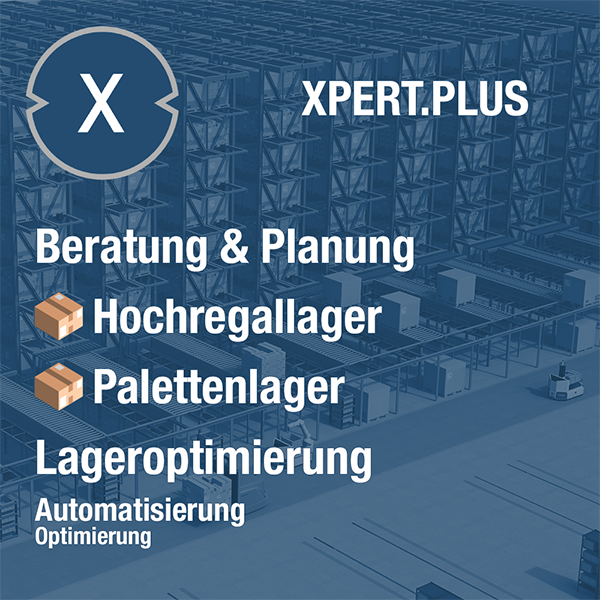
Xpert.Plus Warehouse Optimization - High-bay warehouses and pallet warehouses: Consulting and planning
We are here for you - Consulting - Planning - Implementation - Project Management
☑️ Our business language is English or German
☑️ NEW: Correspondence in your native language!

Konrad Wolfenstein
I and my team are happy to be available to you as your personal advisor.
You can contact me by filling out the contact form here wolfenstein@xpert.digital:or simply call me at +49 7348 4088 965. My email address is
I'm looking forward to our joint project.