Smart Shopping Business Models: 30 innovative ideas and variations that have emerged in recent years around the new way of shopping – Image: Xpert.Digital
🍔✨ The future of retail: Innovative business models, technology and convenience
🛒💡 In recent years, numerous innovative business models have emerged in the retail sector, revolutionizing the shopping experience through the use of technology and new concepts. Here are some of the most noteworthy developments:
Innovative business models in retail
🛍️ Autonomous and cashierless stores
Just Walk Out technology
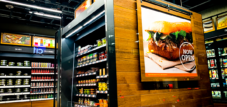
Pioneers like Amazon and Alibaba have introduced stores where customers can simply take products from the shelves and leave without having to pay at a checkout. Payment is processed automatically via an app or account.
Unmanned Smart Stores
These stores are completely autonomous and require no staff. They are often found in busy areas or near public transport and allow customers to select products, pay, and enter or leave the store without human interaction.
🛒 Smart shopping carts
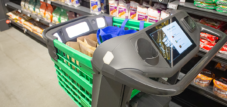
Technologically advanced shopping carts
These shopping carts are equipped with touchscreens, cameras, and sensors that automatically recognize products and add them to the digital shopping cart. They also offer navigation assistance within the store.
🌐 Phygital Trade
Combination of physical and digital experiences
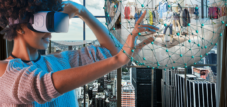
Phygital commerce integrates online and offline shopping experiences to offer an interactive and personalized customer journey. This includes smart fitting rooms and the use of augmented reality (AR) to provide additional product information.
⏰ Convenience stores based on the Japanese model
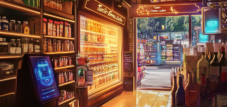
Conbini concept
Japanese convenience stores (conbini) offer a wide range of products around the clock and are increasingly integrating new technologies such as cashless payment systems and automated services to further increase convenience.
Related to this:
🌱 Sustainability and technology in the supermarket
Energy-efficient technologies
Supermarkets are using LED lighting, energy-efficient refrigeration units, and photovoltaic systems to reduce their carbon footprint. Digital price tags and inventory management systems help them use resources more efficiently.
📱✨ The digital retail of tomorrow: More convenience for customers
These innovative approaches demonstrate how the use of technology is making retail not only more efficient but also more customer-friendly. The combination of convenience, personalization, and sustainability is at the heart of these developments, which aim to shape the shopping experience of the future.
🛍️🤖 Smart Shopping Business Models: A Comprehensive Analysis
🏪✨ Retail has evolved rapidly, driven by technological innovations and changing consumer needs. The concept of "smart shopping" is at the heart of this development and encompasses a variety of business models aimed at revolutionizing the shopping experience. These models leverage advanced technologies to maximize convenience, efficiency, and customer satisfaction. A look at these 30 innovative ideas and variations reveals just how diverse and dynamic modern retail has become.
🏪 Influence of Japanese convenience stores
A remarkable model for many of these new business models are the so-called "conbinis" in Japan. These 24-hour shops have proven extremely successful by offering a wide range of products and services around the clock. They combine the convenience of a mini-market with the efficiency of a discount store and have served as inspiration for the further development of convenience stores worldwide.
Related to this:
- Conbini shopping in Japan: Did you know? The 24-hour shops, known as konbinis, are an adaptation from the USA
- Smart Shops 24/7 & Stores 365: Closing supply gaps with Grab & Go technology, vending machines (regional vending machines) and self-checkout systems
🚀 Technological innovations in retail
1. Grab & Go
These stores allow customers to take items directly from the shelves and leave without having to pay at a checkout. Payment is processed automatically via sensors and cameras that record the purchase.
2. Autonomous Retail System (ARS)
Fully automated systems use artificial intelligence (AI) and sensors for purchasing, invoicing, and inventory management. This technology reduces staffing needs and increases efficiency.
Related to this:
3. (Smart &) Walk-In Stores
These stores offer a seamless, cashier-free shopping experience through the use of IoT (Internet of Things) technologies and advanced sensors.
4. Just-Walk-Out Shops
Similar to Grab & Go, these formats allow customers to take products with them while the payment process is carried out automatically in the background.
5. Pick & Go Shops
Customers select products and leave the store, while the payment is processed digitally – another variation of the automated shopping experience.
6. Self-Checkout Stores
Here, customers scan their items themselves at special checkouts and pay independently, which reduces waiting times.
7. Scan & Go
Using handheld scanners or smartphone apps, customers scan products while shopping and pay directly via the device.
8. Mobile Checkout
This method allows customers to pay via mobile devices without having to queue at the checkout.
9. Cashierless Stores
Cashierless stores use sensors and AI to automatically record and process purchases.
10. Autonomous Stores
Fully automated stores often operate without staff and use robots and AI for operations and inventory management.
11. Smart Stores
Stores equipped with IoT technology offer personalized shopping experiences through individual offers based on customer preferences.
12. Unmanned retail outlets
Modern vending machines or kiosks operate without staff and yet offer a wide range of products.
13. Drive-Thru Retail
Customers can pick up goods via a drive-through road without leaving their car – ideal for quick shopping trips.
14. Curbside Pickup
Goods ordered online can be picked up directly at the curbside of the store – a convenient solution for those in a hurry.
15. Click & Collect
Customers shop online and pick up their order in store – a combination of online and offline shopping.
16. Pop-up Stores
Temporary retail spaces are often created for a limited time or special occasions to present new products or brands.
17. Dark Stores
These stores are not accessible to customers and serve as logistics centers for online orders, enabling fast deliveries.
18. Virtual Stores (VCommerce)
Shopping environments in virtual reality or on online platforms simulate a store layout for an immersive experience.
19. Augmented Reality Shopping
AR technology is used to visualize products in the real environment – helpful in decision-making.
20. Mobile Pop-up Stores
Mobile sales units such as sales trucks change location regularly – flexibly and adaptably to different markets.
21. Personal Shopping Services
Personal shopping advice is offered either in-store or online to better meet individual needs.
22. Shop-in-shop concepts
Retail spaces within larger stores or department stores offer brands the opportunity to directly present their products.
23. Subscription-based purchasing
Regular delivery of products on a subscription basis offers convenience; showrooms can be used for product presentation.
24. Social Commerce
Direct shopping via social media combines shopping with social interaction – especially popular with younger target groups.
25. Automated Retail Outlets (Vending Machine Stores)
Expanded vending machines offer a wide range of products around the clock at accessible locations.
26. Micro-Fulfillment Center
Small, automated warehouses near cities enable fast delivery or pickup of online orders.
Related to this:
27. Blockchain-based retail
The use of blockchain technology ensures secure transactions and transparency in the supply chain – a growing trend in trade.
Related to this:
28. Express Stores: Small branches focus on quick shopping with a limited range of frequently requested items.
Experience-oriented retail
Stores offer more than just products; they integrate workshops or interactive displays to enhance the customer experience.
30. Peer-to-peer retail platforms
Physical locations enable transactions between private individuals – a concept that brings sharing economy principles to retail.
🔮 The Future of Smart Shopping
The future of smart shopping promises even more innovations with the potential to further transform the retail sector. Technologies such as artificial intelligence, machine learning, and augmented reality will continue to open up new possibilities for personalizing and streamlining the shopping experience. Furthermore, sustainability trends could lead more companies to adopt environmentally friendly practices to minimize their ecological footprint.
These developments clearly demonstrate that the retail sector relies not only on technological advancements but also on a deep understanding of evolving consumer needs and preferences. Companies must remain flexible and prepared to adapt quickly to succeed in this dynamic environment. Smart shopping, therefore, cannot be considered merely a trend but an integral component of a future-oriented retail strategy.
Related to this:
Our recommendation: 🌍 Limitless reach 🔗 Connected 🌐 Multilingual 💪 Sales power: 💡 Authentic with strategy 🚀 Innovation meets 🧠 Intuition

From local to global: SMEs conquer the world market with a clever strategy - Image: Xpert.Digital
In an era where a company's digital presence determines its success, the challenge lies in creating an authentic, personalized, and far-reaching presence. Xpert.Digital offers an innovative solution that positions itself as the intersection of an industry hub, a blog, and a brand ambassador. It combines the advantages of communication and sales channels in a single platform and enables publication in 18 different languages. Cooperation with partner portals and the ability to publish articles on Google News and a press distribution list with approximately 8,000 journalists and readers maximize the reach and visibility of the content. This represents a crucial factor in external sales and marketing (SMarketing).
More information here:
We are here for you - Consulting - Planning - Implementation - Project Management
☑️ SME support in strategy, consulting, planning and implementation
☑️ Creation or realignment of the digital strategy and digitization
☑️ Expansion and optimization of international sales processes
☑️ Global & Digital B2B trading platforms
☑️ Pioneer Business Development

Konrad Wolfenstein
I would be happy to serve as your personal advisor.
You can contact me by filling out the contact form below or simply call me on +49 7348 4088 965 .
I'm looking forward to our joint project.
Write to me



Xpert.Digital - Konrad Wolfenstein
Xpert.Digital is a hub for industry focusing on digitalization, mechanical engineering, logistics/intralogistics and photovoltaics.
With our 360° Business Development solution, we support renowned companies from new business to after-sales.
Market intelligence, smarketing, marketing automation, content development, PR, mail campaigns, personalized social media and lead nurturing are part of our digital tools.
You can find more information at: www.xpert.digital - www.xpert.solar - www.xpert.plus
Keep in touch