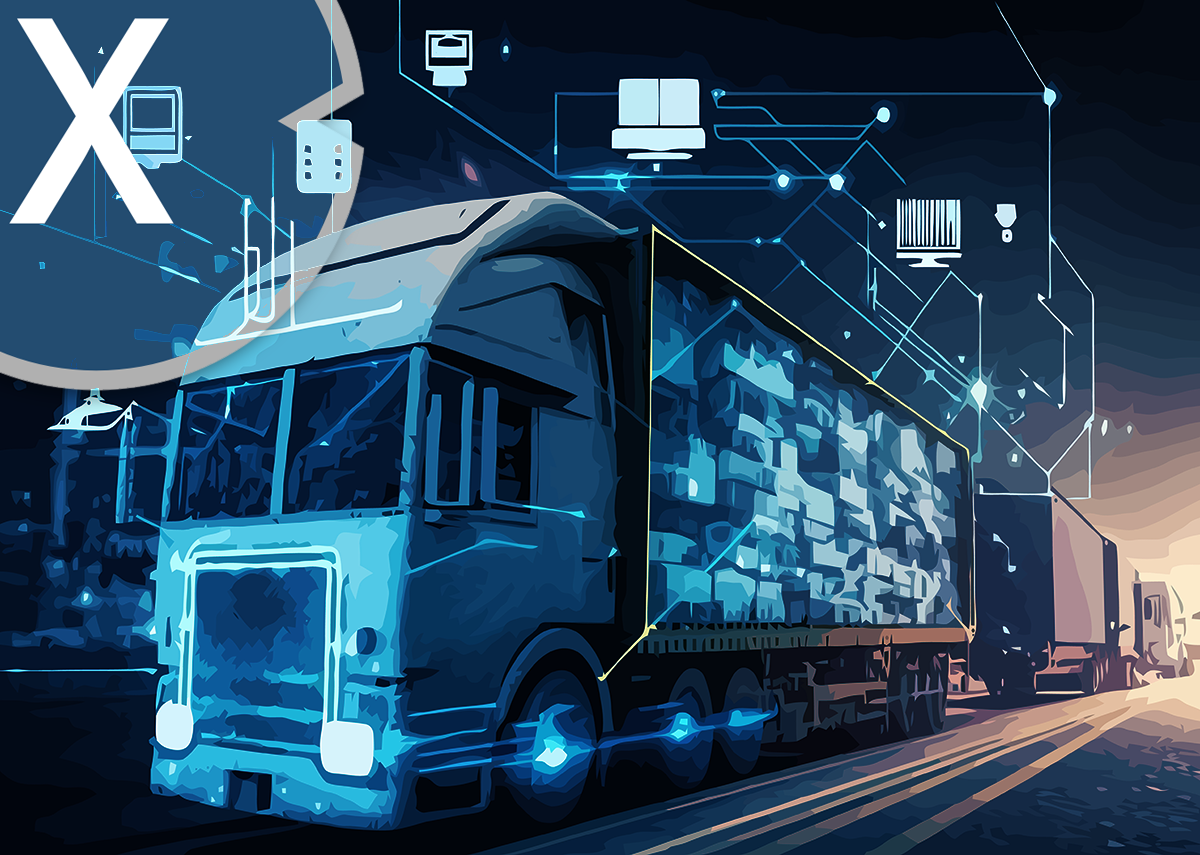
The future of logistics: Industry 4.0 logistics equipment for efficient, networked and intelligent solutions – Image: Xpert.Digital / GogOfVector|Shutterstock.com
Modern logistics equipment for Industry 4.0: The integration of digital logistics systems and intelligent solutions
Industry 4.0 logistics equipment with digitized logistics systems and intelligent or smart logistics solutions is on the rise and revolutionizing the way logistics processes are carried out in companies. This equipment and these solutions utilize state-of-the-art technologies and concepts to improve efficiency, productivity, and traceability in logistics.
Digitized logistics systems
Through the integration of sensors, data analysis, and networked communication, digitized logistics systems enable real-time monitoring and control of logistical processes. They offer comprehensive transparency across the entire supply chain and allow for precise planning, tracking, and optimization of goods flows.
Automation and robotics
Industry 4.0 logistics equipment increasingly relies on automated and robot-controlled solutions. This includes, for example, automatic order picking systems, robotic systems for loading and unloading goods, and automated guided vehicles (AGVs). Automating repetitive tasks increases efficiency and minimizes human error.
Internet of Things (IoT)
IoT technologies enable the networking and communication of devices, machines, and systems in logistics. Sensors and smart devices can collect and exchange information about the condition of goods, inventory levels, transport conditions, and more. This allows real-time data to be used for decision-making, identifying bottlenecks, and optimizing efficiency.
Artificial intelligence (AI) and machine learning
By using AI and machine learning, Industry 4.0 logistics equipment can recognize patterns and correlations in the collected data and derive insights from them. This enables more precise forecasting of demand, inventory management, and route optimization.
Smart warehouse management systems
Intelligent warehouse management systems use advanced algorithms and data analysis to efficiently manage inventory, optimize picking processes, and prevent bottlenecks. They enable accurate inventory counts, optimized warehouse space utilization, and improved product traceability.
sustainability
Industry 4.0 logistics equipment also supports sustainable logistics practices. Optimized route planning and better utilization of transport resources can reduce emissions and improve resource efficiency. Furthermore, digital systems enable better monitoring of energy consumption and environmental impact.
Improved customer service
By integrating digital solutions into logistics, companies can offer better customer service. Real-time tracking and notifications allow customers to monitor the status of their orders and receive accurate delivery information.
Predictive Maintenance
Predictive maintenance: Industry 4.0 logistics equipment utilizes predictive maintenance to monitor the condition of machines and devices. Continuous data collection and analysis allow for the early detection of potential problems. This enables predictive maintenance, where maintenance work is scheduled before breakdowns occur. This minimizes unplanned downtime and optimizes uptime.
Efficient resource utilization
By using intelligent logistics equipment, companies can utilize their resources more efficiently. This includes optimizing warehouse space and layout, avoiding overstocking, reducing empty runs during transport, and efficiently utilizing vehicles and machinery. This leads to cost savings and sustainable resource management.
Flexibility and scalability
Industry 4.0 logistics equipment offers companies the flexibility and scalability to adapt to changing market demands. Digital networking and automation enable efficient process adjustments and responses to new requirements. Companies can quickly expand or adapt their logistics infrastructure to respond to increased order volumes or altered production conditions.
Supply chain optimization
Industry 4.0 logistics equipment contributes to the optimization of the entire supply chain. By integrating data from various sources such as suppliers, production facilities, and logistics systems, it enables improved planning, coordination, and monitoring along the entire value chain. This leads to shorter lead times, optimized inventory levels, and greater agility in the supply chain.
Improved data transparency and analysis
Industry 4.0 logistics equipment offers companies improved data transparency and analysis. By capturing and analyzing large volumes of data, companies can gain insights to further optimize their processes. Real-time dashboards and reports provide crucial information on key performance indicators (KPIs) such as inventory levels, delivery times, order status, and costs. This enables informed decision-making and continuous improvement of logistics processes.
Industry 4.0 logistics equipment offers numerous advantages for companies, including increased efficiency, cost savings, improved traceability, and optimized customer service. By using digitized logistics systems and intelligent solutions, companies can increase their competitiveness and maintain their position in the dynamic market environment.

Xpert.Plus Warehouse Optimization - High-bay warehouses and pallet warehouses: Consulting and planning
What exactly is the industry focused on with intelligent logistics equipment?
The intelligent logistics equipment industry focuses on the development and provision of technologies, devices, and systems that make logistics and supply chain processes more efficient and automated. The goal is to optimize the entire logistics process, minimize errors, reduce costs, and increase productivity.
Automated material and goods flow systems
These are systems that automate the transport of goods and materials within a warehouse or production facility. This can be achieved through the use of conveyor belts, storage and retrieval machines, robots, or autonomous vehicles.
Warehouse management systems (WMS)
Warehouse management systems (WMS) are software solutions that control and monitor the entire warehouse operation. They optimize storage space utilization, manage inventory, control incoming and outgoing goods, and enable precise inventory control.
Tracking and identification systems
By using RFID tags, barcodes, or other identification methods, products and goods can be tracked and located throughout the entire logistics process. This enables improved transparency and traceability.
Artificial intelligence and data analysis
Intelligent logistics equipment uses advanced algorithms and data analysis techniques to process large amounts of logistics data and gain valuable insights. This allows bottlenecks to be identified, processes to be optimized, and preventive maintenance to be carried out.
Internet of Things (IoT)
The networking of devices and sensors enables seamless communication and data exchange. This allows for real-time monitoring, remote maintenance, and the integration of logistics systems.
➡️ Intelligent logistics equipment aims to make the entire logistics process more efficient, faster, and more precise. It contributes to reducing storage costs, improving delivery times, optimizing inventory management, and increasing customer satisfaction. By using state-of-the-art technologies and automation solutions, companies in the intelligent logistics equipment industry can enhance their competitiveness and meet the challenges of a globalized and demanding logistics landscape.
Intelligent logistics solutions
Intelligent logistics solutions with intelligent logistics equipment refer to the use of technology, data analysis, and automation to improve efficiency, transparency, and control in logistics. These solutions utilize advanced technologies such as the Internet of Things (IoT), artificial intelligence (AI), and machine learning to optimize the entire logistics process.
Real-time tracking and monitoring
By integrating sensors and IoT devices into logistics equipment such as vehicles, containers, or pallets, companies can track and monitor the location and condition of goods in real time. This enables precise shipment tracking, improved route planning and optimization, and effective responses to unforeseen events.
Automated warehouse management systems
Intelligent logistics equipment also includes automated warehouse management systems such as automated storage and retrieval systems, sorting systems, and picking robots. These systems optimize inventory management, minimize manual intervention, and accelerate the picking process, resulting in improved efficiency and accuracy.
Data analysis and prediction
Intelligent logistics solutions utilize advanced data analytics techniques to extract valuable insights from collected data. By analyzing data on delivery times, inventory levels, demand, and other relevant factors, companies can create accurate forecasts, avoid bottlenecks, optimize inventory planning, and improve supply chain efficiency.
Collaborative platforms
Intelligent logistics solutions promote collaboration and the exchange of information between different stakeholders in the supply chain. Collaborative platforms enable companies to communicate in real time with suppliers, carriers, and customers to coordinate deliveries, manage bottlenecks, and improve customer service.
Optimization of transport routes
Intelligent logistics equipment uses data and algorithms to calculate the most efficient transport routes. By taking into account factors such as traffic conditions, weather, and delivery priorities, companies can reduce costs, shorten delivery times, and minimize their environmental impact.
Automated documentation and compliance
Intelligent logistics solutions simplify documentation and compliance. By automating records, customs documents, and other required documents, efficiency is increased and errors are reduced.
➡️ Intelligent logistics solutions aim to optimize the entire logistics process, from warehousing and transportation to delivery. They enable better planning, increased efficiency, cost reduction, and improved customer service by making data- and technology-based decisions.
Intelligent logistics equipment
Digitized logistics systems with intelligent logistics equipment refer to the conversion of traditional, paper-based processes to digital technologies for controlling and optimizing logistics activities. These systems utilize modern technologies such as the Internet of Things (IoT), cloud computing, artificial intelligence (AI), and data analytics to make the entire logistics process more efficient, transparent, and scalable.
Real-time data acquisition
The use of sensors, IoT devices, and intelligent logistics equipment allows for the collection of real-time data on various aspects of logistics, such as location, temperature, condition of goods, inventory levels, and vehicle performance. This data enables precise and immediate monitoring of the logistics process.
Connectivity and Integration
Digital logistics systems enable the seamless integration of data and information across various stations and partners along the supply chain. This facilitates communication, collaboration, and information exchange between stakeholders and contributes to increased efficiency.
Automation and optimization
The use of automation technologies such as robots and automation systems optimizes logistical tasks and processes. This includes automated warehouse management systems, order picking systems, transport planning and optimization, as well as automated data collection and analysis. Automation reduces manual intervention, minimizes errors, and improves efficiency.
Data analysis and forecasting
Digital logistics systems utilize advanced data analytics techniques to extract valuable insights from collected data. By analyzing historical data and real-time information, companies can identify trends, make predictions, pinpoint bottlenecks, and make informed decisions to optimize logistics performance.
Transparency and traceability
Digitalized logistics systems offer high transparency and traceability along the supply chain. Companies can track the status of shipments, inventory, and transport in real time and provide customers and other stakeholders with accurate information. This improves customer satisfaction, increases trust, and enables effective troubleshooting.
Optimizing resource utilization
Digital monitoring and analysis of data enable companies to optimize resource utilization, such as inventory levels, vehicle utilization, and route planning. This leads to more efficient resource use, cost reduction, and a reduced environmental impact.
➡️ Digital logistics systems play a crucial role in improving efficiency, transparency, and sustainability in the supply chain. They enable companies to react quickly to changes, improve customer service, and remain competitive.
Intelligent or smart Industry 4.0 logistics solutions
Intelligent or smart Industry 4.0 logistics solutions refer to the use of advanced technologies and digital innovations in logistics to increase efficiency, productivity, and transparency. These solutions utilize the concept of networked systems and intelligent machines to optimize the entire logistics process and enable seamless communication and collaboration between the various stakeholders in the supply chain.
Automation and robotics
Intelligent logistics solutions utilize robotics and automation technologies to automate repetitive and time-consuming tasks. This includes automated warehouse management systems, self-driving vehicles, and robot-assisted order picking, which increase efficiency and reduce error rates.
Internet of Things (IoT)
Integrating IoT devices and sensors into logistics equipment and infrastructure enables the collection and monitoring of real-time data on the condition of goods, inventory levels, delivery locations, and much more. This facilitates improved inventory management, accurate shipment tracking, and effective real-time responses to changes.
Data analysis and artificial intelligence (AI)
Intelligent logistics solutions utilize advanced data analytics techniques and AI algorithms to extract valuable insights from collected data. By analyzing this data, bottlenecks can be identified, predictions made, and decisions optimized to improve logistics processes and prevent bottlenecks.
Networked systems and real-time communication
Intelligent logistics solutions enable seamless communication and collaboration between different stakeholders in the supply chain. Networked systems allow for the real-time exchange of information, leading to improved coordination, planning, and response to changes.
Efficient route planning and optimization
Intelligent logistics solutions use algorithms and real-time data to calculate the most efficient routes for transporting goods. This helps to reduce costs, shorten delivery times, and minimize environmental impact.
Transparency and traceability
Intelligent logistics solutions offer high transparency and traceability along the supply chain. Customers and companies can track the status of their shipments in real time and receive accurate information about their whereabouts and delivery.
➡️ By using intelligent or smart Industry 4.0 logistics solutions, companies can optimize their logistics processes, reduce costs, increase productivity and gain a competitive advantage
Digitized / Digital logistics systems and smart logistics equipment
Digitized logistics systems and smart logistics equipment refer to the use of digital technologies and intelligent devices to improve efficiency, accuracy, and transparency in logistics. These systems and equipment utilize modern technologies such as the Internet of Things (IoT), artificial intelligence (AI), data analytics, and automation to optimize the entire logistics process.
Digital logistics systems encompass the integration of IT systems, software, and platforms to improve information flow and enable seamless communication between the various stakeholders along the supply chain. They automate and digitize logistics processes, including order fulfillment, warehouse management, inventory management, and transport planning and tracking. Through the centralized management and monitoring of data, companies can leverage real-time information to make informed decisions, identify bottlenecks, and minimize supply chain risks.
Smart logistics equipment comprises intelligent devices, machines, and robots equipped with sensors, connectivity, and data analytics capabilities. They can operate autonomously or semi-autonomously, performing tasks such as storage, order picking, loading, and transportation. This equipment utilizes advanced technologies to increase productivity, reduce errors, and improve safety. Examples include automated storage and retrieval systems (AS/RS), driverless transport systems (AGVs), smart shelving, and robotic order pickers.
The advantages of digitized logistics systems and smart logistics equipment are manifold:
- Increased efficiency: By automating and digitizing processes, companies can reduce time and effort, increase productivity and minimize bottlenecks.
- Accuracy and error reduction: Intelligent technologies enable precise data processing and analysis, leading to a reduction in errors and improved data accuracy.
- Real-time monitoring and control: Digitized systems provide real-time information about the status of goods, stocks and deliveries, leading to better control and faster response to changes.
- Transparency and traceability: By integrating track-and-trace technologies, companies and customers can track the location and status of shipments, leading to greater transparency and trust.
- Optimizing warehouse management: Digital systems enable better inventory management, optimized warehouse space utilization and efficient order picking, leading to cost savings and faster order processing.
- Improved safety: Intelligent logistics equipment can be equipped with safety features such as automatic emergency stop systems and collaborative robots to prevent accidents and injuries.
- Data-driven decision-making: By analyzing logistics data, companies can gain insights, identify bottlenecks, and make informed decisions to increase efficiency and profitability.
- Sustainability: Digital and smart solutions support environmental friendliness by optimizing energy consumption, reducing empty journeys and enabling efficient route planning.
- Flexibility and adaptability: Digitized logistics systems enable flexible adaptation to changing requirements and the integration of new technologies to keep pace with the developing market.
- Competitive advantage: Companies that use digital logistics systems and smart equipment can increase their efficiency, optimize their supply chain and gain a competitive advantage by offering faster, more reliable and customer-oriented services.
➡️ By implementing digitized logistics systems and smart logistics equipment, companies can increase the efficiency, accuracy and transparency of their logistics processes, thereby improving their competitiveness in an increasingly digitized world.
Logistics/Intralogistics 4.0 Logistics Equipment
Logistics/Intralogistics 4.0 logistics equipment refers to the use of state-of-the-art technologies and concepts in the field of logistics to improve efficiency, productivity, and flexibility in internal logistics processes. This equipment utilizes advanced technologies such as the Internet of Things (IoT), artificial intelligence (AI), robotics, automation, and data analytics to optimize the entire logistics process.
Here are some key features and benefits of Logistics/Intralogistics 4.0 logistics equipment:
Automation and robotics
Logistics 4.0 equipment utilizes automated machines, automated guided vehicles (AGVs), robotics, and robotic arm technology to automate repetitive tasks such as loading and unloading, order picking, and stacking of goods. This increases productivity, reduces errors, and enables continuous 24/7 operation.
networked systems
Integrating IoT sensors and devices into logistics equipment enables real-time data collection and monitoring. This allows for optimized control, monitoring, and analysis of processes to identify bottlenecks, increase efficiency, and improve responsiveness.
Data analysis and AI
Logistics 4.0 equipment collects vast amounts of data, which is analyzed using data analytics and AI algorithms. This allows companies to gain insights, make predictions, and inform decisions to avoid bottlenecks, optimize capacity utilization, and manage inventory.
Flexibility and scalability
Logistics 4.0 equipment is designed to adapt to changing requirements and be scalable. It can be easily adjusted to different product sizes, production volumes, and operating conditions.
Real-time monitoring and transparency
By connecting logistics equipment with intelligent IT systems and software platforms, companies can track the condition, location, and progress of goods in real time. This enables better monitoring, tracking, and traceability along the supply chain.
Optimizing resource utilization
Logistics 4.0 equipment helps to use resources such as time, energy, and space efficiently. Through automated processes, optimized route planning, and effective warehouse management, companies can reduce costs and achieve their sustainability goals.
Occupational safety
The use of Logistics 4.0 equipment can automate or support dangerous and physically demanding tasks, thereby reducing the risk of accidents and injuries. Robots and AGVs can also be equipped with safety features to prevent collisions and ensure workplace safety.
➡️ The integration of Logistics/Intralogistics 4.0 logistics equipment enables companies to optimize their logistics processes, increase efficiency, reduce error rates, and improve competitiveness. By using automated, networked, and intelligent equipment, companies can manage their supply chain more effectively, react faster to market changes, and offer better service to their customers.
Logistics consultants: Use our Xpert.Plus service for your logistics consulting, warehouse planning or warehouse consulting with automation & component solutions
Xpert.Plus is a project of Xpert.Digital. We have many years of experience in supporting and consulting on warehouse solutions and in logistics optimization, which we combine under Xpert.Plus in a large network.

Konrad Wolfenstein
I would be happy to serve as your personal advisor.
You can contact me by filling out the contact form below or simply call me on +49 7348 4088 965 (Munich) .
I'm looking forward to our joint project.
Write to me


Xpert.Digital – Konrad Wolfenstein
Xpert.Digital is a hub for industry focusing on digitalization, mechanical engineering, logistics/intralogistics and photovoltaics.
With our 360° Business Development solution, we support renowned companies from new business to after-sales.
Market intelligence, smarketing, marketing automation, content development, PR, mail campaigns, personalized social media and lead nurturing are part of our digital tools.
You can find more information at: www.xpert.digital – www.xpert.solar – www.xpert.plus
Keep in touch