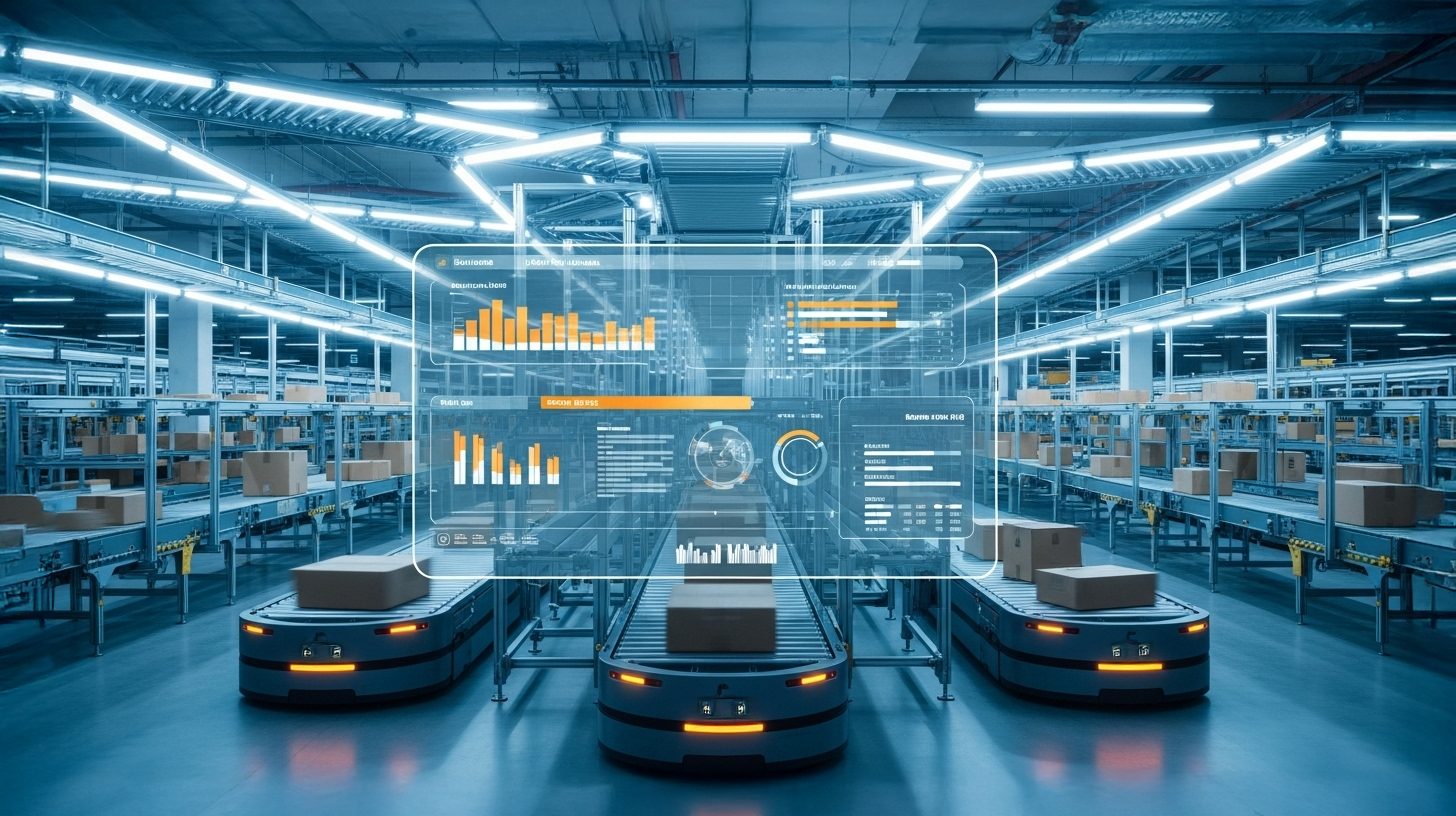
Logistics 4.0: Smart Logistics Backbone – Image: Xpert.Digital
From package to brain: How AI and IoT are forever changing our supply chains
The intelligent backbone system for modern logistics infrastructures
The Smart Logistics Backbone represents a fundamental revolution in how modern logistics systems are designed, developed, and operated. As an intelligent backbone system, it forms the central nervous system of a highly integrated, data-driven, and adaptive logistics landscape capable of serving both civilian and specialized applications.
Fundamentals and definition of the Smart Logistics Backbone
A smart logistics backbone is a comprehensive, technologically integrated system that serves as the fundamental infrastructure for modern logistics operations. It combines physical infrastructure such as terminals, transport routes, and transshipment points with digital technologies to create a unified, intelligent network. This fusion creates a dynamic system capable of optimizing and coordinating the flow of goods, information, and operational processes in real time.
The concept is based on the understanding that traditional logistics systems often operate in a fragmented and reactive manner. In contrast, the Smart Logistics Backbone enables proactive, predictive management through the integration of various technology layers. This architecture creates a cohesive ecosystem in which all supply chain stakeholders can communicate and interact seamlessly.
Technological cornerstones of the intelligent logistics system
Internet of Things as a sensory network
The Internet of Things (IoT) forms the sensory nervous system of the smart logistics backbone. IoT sensors are strategically placed on vehicles, containers, warehouse systems, and infrastructure elements to continuously collect data on location, condition, temperature, humidity, and other critical parameters. These sensors create unprecedented transparency across the entire supply chain, enabling logistics managers to maintain a complete overview of their operations at all times.
The collected data flows in real time into central processing systems, where it is analyzed and prepared for operational decisions. This continuous data collection makes it possible to detect problems early, predict maintenance needs, and identify optimization potential before they impact service quality.
Artificial intelligence as an intelligent brain
Artificial intelligence acts as the intelligent brain of the smart logistics backbone, processing the enormous amounts of data generated by IoT sensors and other sources. AI algorithms analyze historical data, recognize patterns, and create accurate predictions for future developments. These capabilities enable logistics companies to transition from reactive to proactive operating models.
Machine learning systems continuously optimize route planning, inventory management, and resource allocation. They can analyze traffic patterns, consider weather conditions, and even incorporate unforeseen events into their calculations to consistently find the most efficient solutions. This intelligent control leads to significant cost savings and efficiency gains.
Big Data Analytics for Strategic Insights
Big Data Analytics forms the analytical backbone of the Smart Logistics Backbone, enabling the extraction of strategically valuable insights from vast amounts of data. Modern analytics systems can identify complex relationships between various variables, helping to identify long-term trends and adapt business strategies accordingly.
These analytical capabilities not only support operational decisions but also enable strategic planning at the highest level. Companies can anticipate market developments, optimize capacity planning, and identify new business opportunities before they become apparent.
Digital twins as virtual representations
Digital twins are highly detailed, dynamic virtual representations of physical logistics systems. These virtual models are continuously synchronized with real-time data from the physical world, enabling the simulation of complex operational scenarios without impacting real-world operations. Logistics managers can test different strategies, identify bottlenecks, and implement optimizations before putting them into practice.
This technology is particularly valuable for predictive maintenance and strategic planning. By simulating different scenarios, companies can understand the impact of decisions, thereby minimizing risks and maximizing opportunities.
Physical infrastructure as intelligent nodes
The Smart Logistics Backbone transforms traditional logistics infrastructures into intelligent hubs known as Smart Logistics Nodes. These smart nodes integrate advanced technologies directly into the physical infrastructure, turning ports, terminals, warehouses, and transshipment points into active participants in the logistics network.
Smart Logistics Nodes feature automated handling systems, intelligent warehouse management, and adaptive capacity control. They can communicate autonomously with other nodes, optimize resources, and dynamically adapt to changing requirements. This infrastructure-level intelligence creates a self-optimizing network that continuously improves its performance.
Automation and robotic systems
Automation forms a central component of the Smart Logistics backbone and encompasses a wide range of robotic systems. Driverless transport systems move goods autonomously through storage and handling areas, while collaborative robots support humans in complex tasks. This automation not only reduces personnel costs but also increases the precision and speed of logistics operations.
Modern sorting and order picking systems operate around the clock with the highest accuracy and can flexibly adapt to different requirements. The integration of AI enables these systems to continuously learn and optimize their performance.
Cloud computing as an integrative platform
Cloud computing platforms act as the integrative backbone of the Smart Logistics Backbone, enabling the seamless connection of all system components. These cloud-based systems offer the necessary scalability and flexibility to keep pace with the dynamic demands of modern logistics operations.
Cloud platforms enable various stakeholders in the supply chain to access shared data repositories and collaborate in real time. This shared visibility creates transparency and facilitates coordinated decisions that optimize the entire network.
Your intralogistics experts

Consulting, planning and implementation of complete solutions for high-bay warehouses and automated storage systems - Image: Xpert.Digital
More information here:
Future-proof logistics solutions: The adaptive backbone of modern infrastructures
Application in various fields
Civil logistics applications
In civilian applications, the Smart Logistics Backbone is revolutionizing traditional supply chains through the introduction of intelligent, adaptive systems. E-commerce companies are using these technologies to achieve ultra-fast delivery times while simultaneously optimizing costs. Precise forecasting of demand patterns makes it possible to minimize inventory while still ensuring high availability.
Multimodal transport systems benefit particularly from the intelligent coordination of different modes of transport. The Smart Logistics Backbone can seamlessly link rail, road, and water transport, optimally utilizing the strengths of each mode.
Specific application areas and dual-use concepts
The Smart Logistics Backbone offers significant potential for specialized applications, enabling both civilian and other uses. This dual-use capability creates synergies between different user groups and maximizes the efficiency of the infrastructure.
Sharing infrastructure and systems makes it possible to optimize investments while simultaneously achieving higher utilization rates. Intelligent prioritization systems can prioritize critical transports when needed, without significantly impacting normal usage.
Interoperability and standardization
A crucial aspect of the Smart Logistics Backbone is ensuring interoperability between different systems and stakeholders. Standardized interfaces and protocols enable components from various manufacturers to work together seamlessly. This standardization is particularly important in international supply chains, where different technical standards and regulations intersect.
The development of common data formats and communication protocols creates the basis for a truly integrated logistics network in which information can flow freely and all actors operate on the same data basis.
Cybersecurity and data protection
The increasing digitalization and networking of the smart logistics backbone brings new challenges regarding cybersecurity and data protection. Robust security architectures must be implemented to protect sensitive data and ensure the integrity of the systems.
Blockchain technologies can help create trustworthy and transparent data flows, while modern encryption methods ensure the security of critical communications. The implementation of zero-trust architectures ensures that only authorized actors have access to relevant system components.
Sustainability and environmentally friendly logistics
The Smart Logistics Backbone makes a significant contribution to the development of sustainable logistics solutions. By optimizing routes and capacity utilization, fuel consumption and emissions can be significantly reduced. Intelligent systems can promote the use of environmentally friendly modes of transport such as rail, while simultaneously increasing the efficiency of the entire supply chain.
Predictive analytics makes it possible to optimize maintenance cycles and extend the lifespan of vehicles and infrastructure. This proactive maintenance not only reduces costs but also minimizes resource consumption and waste.
Challenges in implementation
Implementing a smart logistics backbone presents several challenges that must be carefully addressed. High initial investments can be a barrier for smaller companies, which is why phased implementation strategies need to be developed.
The complexity of integrating different systems and technologies requires specialized expertise and careful project planning. Change management processes are necessary to prepare employees for the new technologies and ensure successful adoption.
Future prospects and development trends
The future of the Smart Logistics Backbone will be shaped by continuous technological innovation. Advances in artificial intelligence will enable even more intelligent and autonomous systems, while 5G technologies will further accelerate communication between different components.
The integration of quantum computing could solve even more complex optimization problems in the future, achieving new levels of efficiency. Augmented reality and virtual reality will improve user interaction with the system and create new opportunities for training and maintenance.
Economic impact and added value
The Smart Logistics Backbone creates significant economic value through increased efficiency and cost savings. Companies can substantially reduce their operating costs while simultaneously improving their service quality. Enhanced planning and transparency enable them to minimize risks and unlock new business opportunities.
The increased efficiency of the entire logistics system leads to reduced transport costs and shorter delivery times, ultimately benefiting both consumers and businesses. The creation of new technology jobs and the strengthening of competitiveness contribute to overall economic development.
Scalability and adaptability
A key advantage of the Smart Logistics Backbone lies in its high scalability and adaptability. Its modular design allows the system to be expanded step by step and adapted to changing requirements. New technologies can be integrated without requiring a complete system redesign.
This flexibility is particularly important in a rapidly changing business world where new markets must be developed and evolving customer needs must be met. The Smart Logistics Backbone can dynamically adapt to these changes and continuously optimize its performance.
The Smart Logistics Backbone thus represents a paradigmatic shift in the logistics industry, going far beyond traditional automation approaches. It creates an intelligent, adaptive, and sustainable system that meets the demands of the 21st century while simultaneously laying the foundation for future innovations. The successful implementation of this concept will be crucial in determining how efficiently and resiliently our global supply chains will function in the future.

Xpert.Plus Warehouse Optimization - High-bay warehouses and pallet warehouses: Consulting and planning
A new dimension of digital transformation with 'Managed AI' (Artificial Intelligence) - Platform & B2B solution | Xpert Consulting

A new dimension of digital transformation with 'Managed AI' (Artificial Intelligence) – Platform & B2B solution | Xpert Consulting - Image: Xpert.Digital
Here you will learn how your company can implement customized AI solutions quickly, securely and without high entry barriers.
A managed AI platform is your all-inclusive, worry-free solution for artificial intelligence. Instead of dealing with complex technology, expensive infrastructure, and lengthy development processes, you receive a ready-made solution tailored to your needs from a specialized partner – often within just a few days.
The key advantages at a glance:
⚡ Rapid implementation: From idea to ready-to-use application in days, not months. We deliver practical solutions that create immediate added value.
🔒 Maximum data security: Your sensitive data stays with you. We guarantee secure and compliant processing without sharing data with third parties.
💸 No financial risk: You only pay for results. High upfront investments in hardware, software, or personnel are completely eliminated.
🎯 Focus on your core business: Concentrate on what you do best. We take care of the entire technical implementation, operation, and maintenance of your AI solution.
📈 Future-proof & scalable: Your AI grows with you. We ensure continuous optimization and scalability, and flexibly adapt the models to new requirements.
More information here:
We are here for you - Consulting - Planning - Implementation - Project Management
☑️ SME support in strategy, consulting, planning and implementation
☑️ Creation or realignment of the digital strategy and digitization
☑️ Expansion and optimization of international sales processes
☑️ Global & Digital B2B trading platforms
☑️ Pioneer Business Development

Konrad Wolfenstein
I would be happy to serve as your personal advisor.
You can contact me by filling out the contact form below or simply call me on +49 7348 4088 965 .
I'm looking forward to our joint project.
Write to me


Xpert.Digital - Konrad Wolfenstein
Xpert.Digital is a hub for industry focusing on digitalization, mechanical engineering, logistics/intralogistics and photovoltaics.
With our 360° Business Development solution, we support renowned companies from new business to after-sales.
Market intelligence, smarketing, marketing automation, content development, PR, mail campaigns, personalized social media and lead nurturing are part of our digital tools.
You can find more information at: www.xpert.digital - www.xpert.solar - www.xpert.plus
Keep in touch