Intelligent and suitable for everyday use: Full-color 4K smart glasses for augmented reality applications are only a matter of time – Creative image: Xpert.Digital
Advances in XR technology and their significance for the metaverse, AR and VR glasses
The world of technology is evolving rapidly, and one of the most exciting developments of recent years is XR technology, which encompasses Augmented Reality (AR), Virtual Reality (VR), and Mixed Reality (MR). These technologies blur the lines between the real and virtual worlds, creating immersive experiences that are finding applications in entertainment, industry, education, and many other fields. A key player in this area is TDK Corporation, a Japanese company specializing in the development of electronic components. Of particular note is TDK's development of an ultra-compact, full-color laser module (FCLM) designed for use in AR and VR headsets.
TDK and the ultra-compact full-color laser module
Advances in XR technology for the metaverse, AR and VR glasses: Full-color laser for 4K smart glasses from TDK – Image: TDK
TDK Corporation has developed a groundbreaking laser module specifically designed for use in AR and VR headsets. This module enables images to be projected directly onto the user's retina, resulting in a sharp and clear display without the need to refocus. This is a significant advancement over conventional displays, which often suffer from image sharpness issues, especially when the user needs to switch between different focal planes.
The full-color laser module (FCLM) developed by TDK is one of the smallest of its kind. It weighs just 0.38 grams and is about one-tenth the size of previous models. This miniaturization is crucial for the development of lightweight and elegant smart glasses that can be worn comfortably without burdening the user. The technology is based on so-called planar lightwave circuits (PLCs), developed in collaboration with the Nippon Telegraph and Telephone Corporation (NTT). These circuits enable the efficient mixing of laser light without the need for lenses or mirrors. This makes the module not only smaller but also more energy-efficient.
Suitable for:
Advantages of direct retina projection
One of the outstanding features of FCLM is its direct projection onto the user's retina. This technology offers several advantages:
Expanded perspective
Projecting the image onto both eyes allows for a wider viewing angle than with conventional displays.
Independence from visual acuity
Since the image is projected directly onto the retina, the user's visual acuity is no longer relevant. Even people with visual impairments can see clear images.
No focus change required
Users can simultaneously view virtual content and their real-world surroundings without having to shift focus. This significantly reduces eye strain.
These properties make FCLM particularly suitable for augmented reality (AR) and virtual reality (VR) applications. This technology could play a key role, especially in the growing metaverse segment.
The Metaverse and XR technologies
The metaverse is a concept of a virtual world where people can interact with each other via avatars. It combines elements of AR, VR, and MR to create an immersive environment where users can work, play, and socialize. XR technologies play a central role, as they enable the realistic rendering and interaction of these virtual worlds.
TDK's FCLM could play a crucial role in this. Direct projection onto the retina will make it possible to display virtual worlds with unprecedented clarity and sharpness. This could be significant not only in the entertainment sector – for example, in video games or virtual conferences – but also in fields such as education and medicine.
Applications of AR and VR glasses
The potential applications of AR and VR glasses are diverse:
1. Entertainment
VR headsets are already widespread in the gaming industry. They allow players to fully immerse themselves in virtual worlds and enjoy interactive experiences. With advanced technologies like FCLM, these experiences could become even more immersive.
2. Education
AR glasses could be used in schools and universities to create interactive learning environments. For example, students could experience historical events firsthand or visualize complex scientific concepts.
3. Medicine
In medicine, AR glasses could help surgeons project important information directly onto their field of vision during an operation. This could reduce the risk of errors and simultaneously increase efficiency.
4. Industry
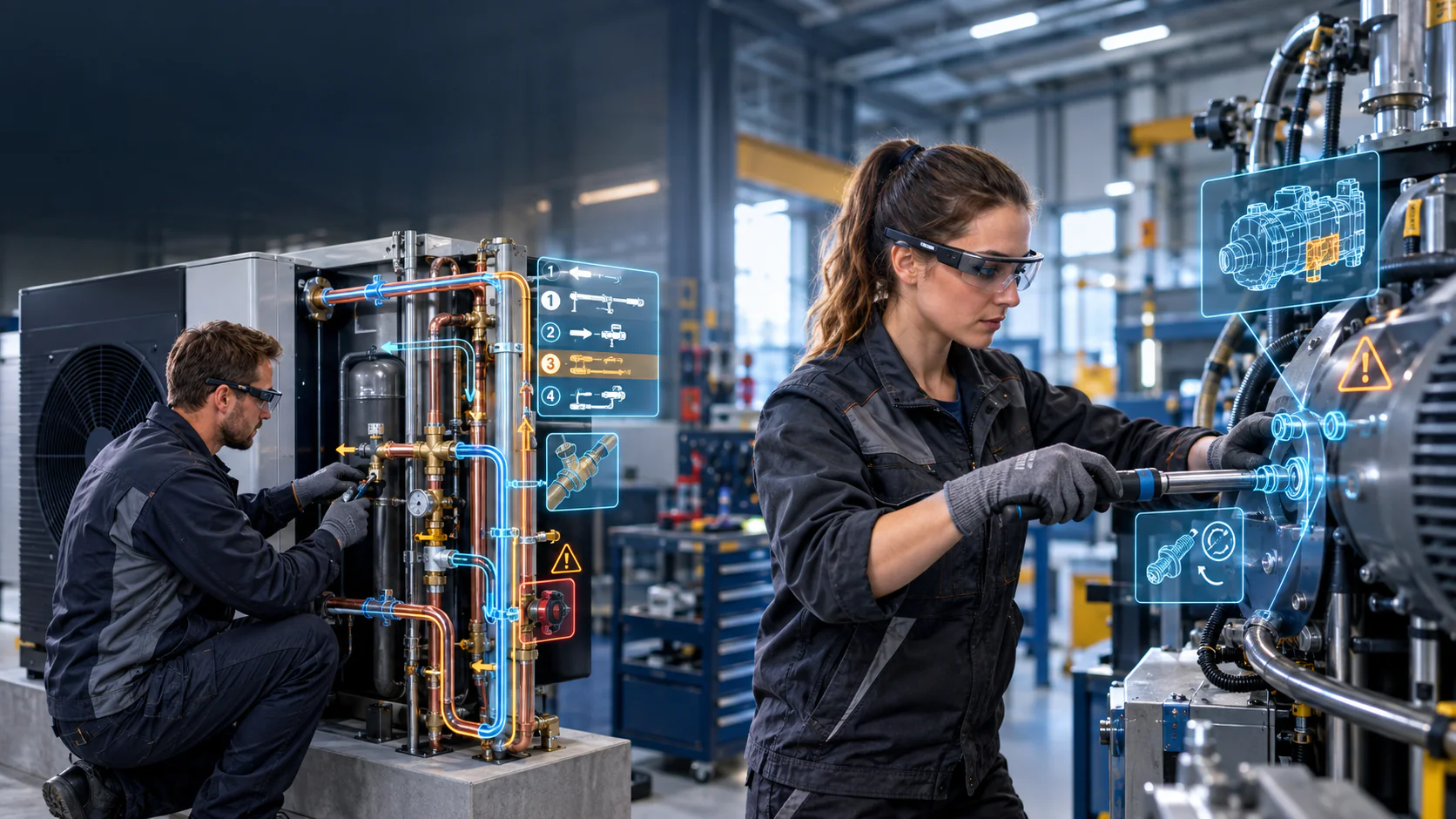
In industrial applications, AR glasses could be used to facilitate maintenance work or optimize production processes. For example, workers could have instructions projected directly onto their glasses or virtually inspect machines.
5. E-commerce (V-commerce)
In online retail, AR glasses could be used to virtually try on products. Customers could place furniture in their living room or try on clothes without having to leave the house.
Challenges with AR/VR glasses
Despite these promising applications, there are still some challenges in the development of AR and VR glasses:
size and weight
Many current models are still relatively large and heavy, which makes them difficult to use in everyday life.
Image quality
Although progress has been made, there is still room for improvement in resolution and image sharpness.
Interaction options
While VR systems often use special controllers, there are still no standardized methods for interacting with virtual content for AR glasses.
TDK's FCLM in focus
TDK's FCLM directly addresses some of these challenges through its compact design and high image quality.
Further improvements to the FCLM module
These technologies are expected to gain further importance in the coming years – both in the private and professional spheres. They could play a central role, particularly in connection with the metaverse.
TDK is already planning further improvements to its FCLM module. A 4K version is being developed that will deliver even sharper images. The first models with this technology could be released as early as 2026 or 2027.
Furthermore, TDK is working to further optimize its production technologies to enable mass production of these modules. This could help make AR and VR glasses more affordable and allow them to gain wider acceptance in the mass market more quickly.
Intelligent and suitable for everyday use
The development of TDK's ultra-compact, full-color laser module represents a significant milestone in the advancement of AR and VR technologies. By projecting directly onto the user's retina, it enables a clear display of virtual content without focus shifts – a crucial advantage over conventional displays.
Combined with the growing interest in the metaverse, this technology offers exciting possibilities for future applications in various fields such as entertainment, education, and medicine. While some technical challenges remain—particularly regarding size and interaction possibilities—the progress is promising.
It remains to be seen how these technologies will develop. But one thing is certain: the future of XR technologies looks bright – for both businesses and consumers
Suitable for: