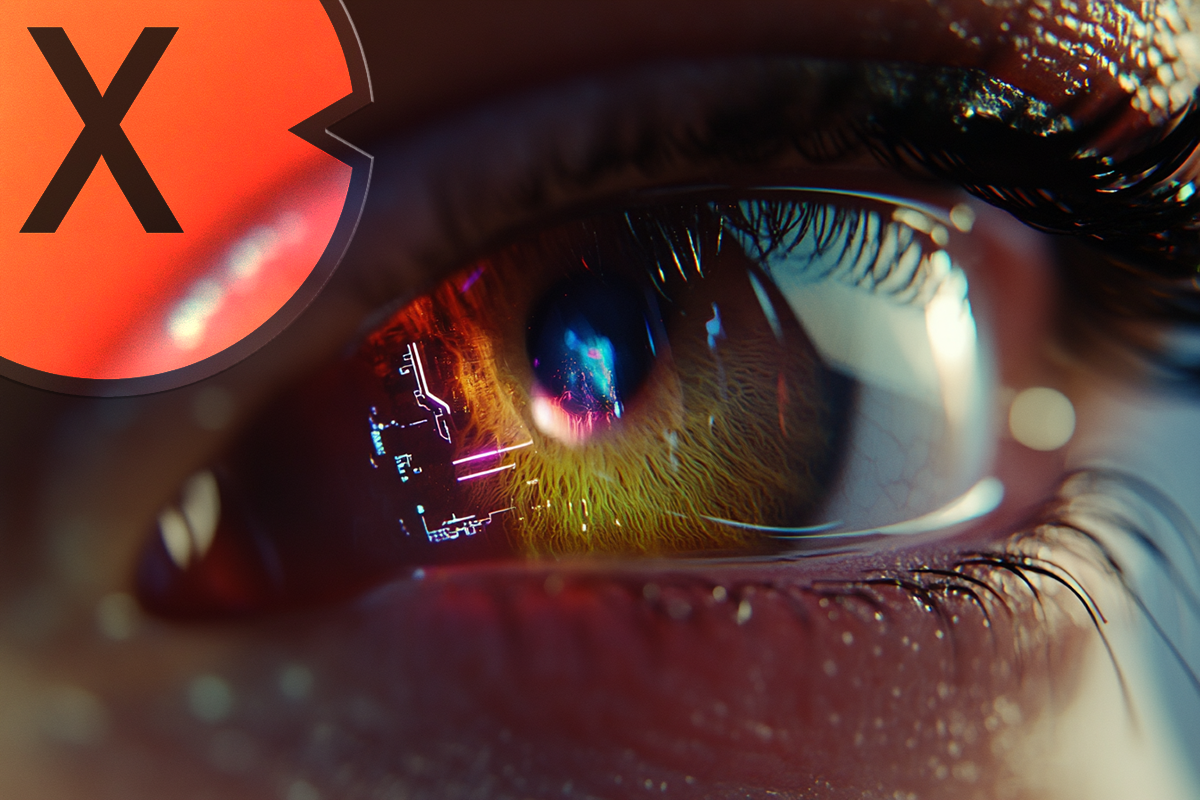
The development of smart contact lenses: Augmented Reality (AR) with Extended Computing (XC) – Image: Xpert.Digital
👁️ The future of vision: Smart contact lenses – more than just vision correction
🚀💡 Smart contact lenses are no longer science fiction, but a rapidly developing technology with the potential to fundamentally change our everyday lives. They go far beyond conventional vision correction, combining advanced electronics, miniaturization, and sensors in an unobtrusive format. From augmented reality (AR) and medical applications to performance optimization in sports – the possibilities seem endless.
🔍 A look into augmented reality: AR and VR through smart contact lenses
Perhaps the best-known application of smart contact lenses is augmented reality. Companies like Mojo Vision are working on lenses that project virtual information directly into the wearer's field of vision. Imagine seeing navigation instructions, news, or real-time translations right before your eyes, without needing a smartphone or bulky AR glasses. Micro-LED displays with extremely high pixel density, such as the 14,000 ppi targeted by Mojo Vision, are intended to provide razor-sharp images and enable an immersive experience. The technology could also find application in the field of virtual reality by completely blocking out the real world and replacing it with virtual environments.
🏥 Medical focus: Continuous health monitoring of the eye
Besides augmented reality (AR), smart contact lenses offer enormous potential in healthcare. They could become an inconspicuous yet powerful tool for the continuous monitoring of vital signs. Sensors in the lens could, for example, measure blood glucose levels in tear fluid, helping diabetics keep a constant eye on their blood sugar without the need for frequent finger pricks. Intraocular pressure, an important indicator of glaucoma, could also be continuously monitored. Other conceivable applications include measuring lactate levels in athletes or detecting eye diseases in their early stages. This non-invasive form of data measurement could significantly improve patients' quality of life and facilitate the early detection of diseases.
🔎 See more clearly: Vision improvement through intelligent lenses
Smart contact lenses could also open up new perspectives for people with visual impairments. Through electronic image processing, they could enhance contrast, sharpen edges, and even enlarge text. This would help people with age-related macular degeneration (AMD), cataracts, or other vision problems to perceive their surroundings more clearly and maintain their independence. The technology could also be used to correct refractive errors such as nearsightedness or farsightedness, thus replacing conventional glasses or contact lenses.
🏃♂️ Peak performance in focus: Sports and performance optimization
Smart contact lenses are also opening up new possibilities in sports. Training data such as heart rate, speed, or distance covered could be projected directly into the athlete's field of vision in real time, without distracting them from their training. The technology could also be used to improve concentration and optimize movement patterns. For example, golfers could analyze their swing, or runners could optimize their stride length.
🚧 Challenges on the way to the perfect lens
Despite the promising possibilities, developers of smart contact lenses still face some challenges:
Energy supply
The miniaturization of electronics simultaneously demands powerful and durable energy sources. Miniaturized batteries or innovative solutions such as energy harvesting through eye movements are needed here.
Miniaturization and comfort
Integrating electronics, sensors, and displays into a soft, flexible contact lens is a complex task. Wearing comfort must not be neglected. The lens must be comfortable to wear for extended periods without irritating or damaging the eye.
Data transmission
The collected data must be reliably transmitted to external devices such as smartphones or computers in real time. Efficient and energy-saving wireless communication technologies are essential for this.
Hygiene and safety
Since the lenses are worn directly on the eye, the highest hygiene standards must be maintained. The materials must be biocompatible and minimize any increased risk of infection or irritation. Data security also plays a crucial role. Sensitive health data must be protected from unauthorized access.
🔮 A glimpse into the future: When will smart contact lenses become a reality?
Companies like Mojo Vision and Inwith are working intensively on developing and perfecting their prototypes. Clinical trials are already underway, and the first products could hit the market in the coming years. It is expected that smart contact lenses will initially be used in the medical field and in specialized applications such as sports. In the long term, however, they could become an everyday companion and revolutionize our interaction with the digital world. The future of vision has only just begun.
📣 Similar topics
- 👓 The future of vision: Smart contact lenses and their applications
- 📱 Advanced technology for the eye: Smart lenses in everyday life
- 💡 Augmented Reality Revolution: Smart contact lenses in use
- 🩺 Rethinking health monitoring: Smart lenses in medicine
- 🔍 Innovative vision improvement: Electronic support through contact lenses
- 🏃♂️ Performance enhancement in sports: Smart lenses for athletes
- 🔋 Overcoming challenges: Power supply for smart lenses
- ⚙️ High-tech miniaturization: Smart lenses and comfort
- 📡 Data transmission in focus: Communication technologies for smart lenses
- 🔒 Safety and hygiene: Standards for the use of smart contact lenses
#️⃣ Hashtags: #SmartContactLenses #AugmentedReality #HealthMonitoring #SportsTechnology #FutureTechnology
🗒️ Xpert.Digital: A pioneer in the field of Extended and Augmented Reality

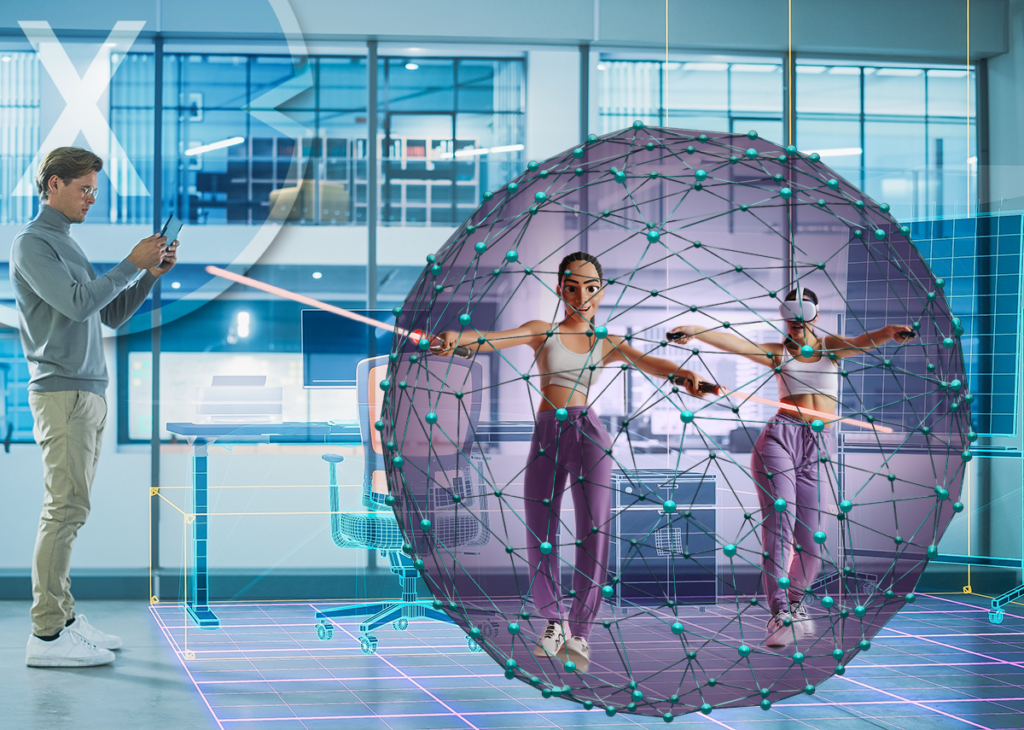
Finding the right Metaverse agency, planning office, or consulting firm - Image: Xpert.Digital
🗒️ Finding the right Metaverse agency, planning office, or consulting firm – Search and search: Top Ten Tips for Consulting & Planning
More information here:
🌟 Smart contact lenses: A technological revolution
🚀🕶️ Smart contact lenses represent a revolutionary technological innovation with the potential to fundamentally change everyday life. While conventional contact lenses serve only to correct vision, this new generation goes far beyond that. By integrating advanced electronics and sensors into the lens structure, entirely new applications are emerging, ranging from augmented reality (AR) and medical monitoring to performance enhancement in sports. Companies like Mojo Vision and Xpanceo are among the pioneers of this exciting development, driving research and prototype development to bring this vision to market.
🌟 Functionalities and applications of smart contact lenses
1. 🌟 Augmented Reality (AR) and Virtual Reality (VR)
One of the most fascinating applications of smart contact lenses lies in the field of augmented reality (AR). While current AR applications rely on devices such as smartphones or special glasses, smart contact lenses could project virtual information directly into the user's field of vision. This is made possible by extremely small micro-LED displays that achieve a pixel density of up to 14,000 ppi to deliver razor-sharp images.
Such lenses could allow users to integrate information like directions, news, notifications, or even entertainment content into their natural vision—all without having to wear additional devices. "Smart contact lenses allow users to see and interact with content naturally," is the stated goal of the manufacturers. Such applications could be particularly beneficial in professional or educational contexts. For example, medical personnel could read patient data in real time without having to look at a screen, or architects could see their blueprints projected directly in front of them.
2. 🌟 Medical monitoring and health applications
Besides their impressive AR capabilities, smart contact lenses also offer promising opportunities for health monitoring. They are particularly important for people with chronic illnesses, especially diabetics and those with glaucoma. Sensors in the lens could continuously measure physiological parameters such as blood sugar levels or intraocular pressure by analyzing the composition of the tear film. This method is non-invasive and therefore a significantly more comfortable alternative to conventional, invasive procedures, which are often unpleasant or painful.
By enabling real-time data monitoring and immediate alerts in case of abnormalities, smart contact lenses could make life easier and better for many patients. For example, diabetics could be warned of dangerous blood sugar fluctuations before they occur. In the future, these lenses could monitor even more vital parameters, thus becoming an important component of personal health management.
3. 🌟 Vision improvement for people with visual impairments
Besides monitoring health data, smart contact lenses also offer support for people with visual impairments. Those suffering from conditions such as age-related macular degeneration (AMD) or other vision problems could electronically improve their eyesight with such lenses. These lenses would be able to enhance contrast, sharpen edges, and even enlarge text, significantly improving everyday life for those affected.
The integration of such functions could also be a significant help for elderly people suffering from declining vision and consequently limited in their independence. The future of contact lenses therefore extends far beyond vision correction – they could play a crucial role in optical rehabilitation.
4. 🌟 Performance optimization in sports
Smart contact lens technology could also play a significant role in sports. Athletes could receive real-time information about their physical performance and progress directly in their field of vision. This includes data such as heart rate, running speed, calorie consumption, and more.
Smart contact lenses could also help optimize concentration and focus by providing athletes with targeted cues regarding breathing or posture. This could provide a competitive edge, particularly in professional sports, and help athletes reach their full performance potential. This type of personalized and discreet support could become a crucial component of professional training in the future.
🌟 Technological challenges and obstacles
Although progress in the development of smart contact lenses is impressive, researchers and developers face a number of technical challenges that must be overcome before the lenses can be widely marketed. Among the biggest challenges are:
Energy supply
The lenses require a sufficient power source to operate their integrated functions for extended periods without frequent recharging. Some prototypes are experimenting with miniaturized batteries or alternative energy harvesting methods, such as harnessing energy generated by eye movements. A major breakthrough in this field could significantly simplify the use of such lenses.
Miniaturization and comfort
Integrating complex electronics into the very limited space of a contact lens presents a significant challenge. Companies like Mojo Vision are therefore focusing on scleral lenses, which are larger than conventional contact lenses and offer more room for electronics. Other manufacturers, such as Inwith, are attempting to integrate flexible microelectronics into soft contact lenses to improve wearing comfort. The challenge, however, lies in balancing functionality and comfort without compromising lens safety.
Hygiene and safety
Because contact lenses are worn directly on the eye, there is an increased risk of infection and irritation. Protein and fat deposits on the lens can cause problems. Therefore, it is essential to use materials that are safe and suitable for long-term contact with the eye. Manufacturers must ensure that the lenses can be worn comfortably for extended periods without increasing the risk of infection or other side effects.
🌟 Future developments and societal implications
The rapid development of this technology suggests that smart contact lenses could be ready for market in the near future. Companies like Mojo Vision and Xpanceo are working intensively on refining their prototypes and are planning clinical trials and market launches by 2026. The implications of widespread use of smart contact lenses are far-reaching and affect both individuals and society.
The potential applications extend far beyond individual use: Smart contact lenses could also be useful in emergency situations, for example, for rapid initial medical diagnosis or to support rescue workers. Furthermore, they could become an important tool in modern communication by displaying information in an overview while simultaneously protecting privacy. These lenses, much like smartphones, could radically change how we interact with information and the environment, and even contribute to reducing our dependence on other mobile devices.
However, these possibilities also raise ethical and data protection concerns. The continuous data transmission necessary for many applications could pose data privacy risks. Therefore, it is essential to establish a legal framework to ensure the safe and transparent use of such technologies. Protecting privacy and guaranteeing voluntary use must be top priorities when introducing smart contact lenses in order to gain user trust and prevent potential misuse.
🌟 Development of smart contact lenses
The development of smart contact lenses demonstrates how far the miniaturization of electronics and sensors has already progressed and the potential inherent in the fusion of technology and biology. Applications range from practical augmented reality functions to life-changing possibilities in medicine and the everyday lives of people with visual impairments. Even though the technology is still in its infancy and technical and ethical questions remain to be addressed, the developments of recent years clearly show that the vision of smart contact lenses could soon become a reality.
📣 Similar topics
- 🔍 Revolutionary technology: Smart contact lenses
- 👀 The future of vision: From AR to health monitoring
- 🏥 Medical innovations: Contact lenses of the future
- 📈 Improved athletic performance through smart lenses
- ⚠️ Technological challenges and solutions
- 💡 Smart Electronics: The Miniaturization of the Future
- 🔬 Health management with smart lenses
- 🌟 Augmented Reality: Reality redefined through contact lenses
- 🏃♀️ Sport and technology combined: The role of smart lenses
- 🔒 Data protection and ethics in smart contact lenses
#️⃣ Hashtags: #SmartLenses #AugmentedReality #HealthMonitoring #TechnologicalInnovation #DataProtectionEthics
We are here for you - Consulting - Planning - Implementation - Project Management
Industry Hub Blog
An industry hub blog is a digital platform where content related to specific industries, sectors, or business areas is published. The term "hub" refers to a central location or meeting point where relevant information, news, insights, and resources are made available to professionals, entrepreneurs, investors, and other interested parties in a particular industry. An industry hub blog serves as an information source and discussion forum, connecting the community, sharing knowledge, and keeping track of the latest developments in the respective industry.

Konrad Wolfenstein
I would be happy to serve as your personal advisor.
You can contact me by filling out the contact form below or simply call me on +49 7348 4088 965 .
I'm looking forward to our joint project.
Features of an Industry Hub Blog
Industry-specific content
An industry hub blog focuses on a specific industry or economic sector. The published content covers topics relevant to professionals and those interested in that industry.
Latest news
The blog offers current news and updates on developments, trends, market events and happenings in the respective industry.
Expertise and insights
Industry hub blogs offer expertise, insights, and analysis from experts and industry insiders. This information can help develop a deeper understanding of the challenges and opportunities within the industry.
Best practices and tips
The blog can provide best practices, advice, and tips for companies and professionals in the industry. This can range from business strategies to technology trends.
Networking and community building
Readers often have the opportunity to leave comments and participate in discussions. This creates an online community of like-minded people who can exchange ideas and network with each other.
Resources and tools
Industry hub blogs can provide links to useful resources, tools, guides, and reports relevant to the industry.
Events and conferences
The blog can also provide information about upcoming industry events, conferences, trade fairs and webinars.
Write to me


Xpert.Digital - Konrad Wolfenstein
Xpert.Digital is a hub for industry focusing on digitalization, mechanical engineering, logistics/intralogistics and photovoltaics.
With our 360° Business Development solution, we support renowned companies from new business to after-sales.
Market intelligence, smarketing, marketing automation, content development, PR, mail campaigns, personalized social media and lead nurturing are part of our digital tools.
You can find more information at: www.xpert.digital - www.xpert.solar - www.xpert.plus
Keep in touch