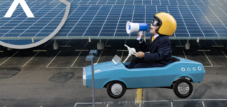
Seeing the metaverse through children's eyes – Pioneer Business Development – Image: Xpert.Digital
The Smart City Metaverse: How virtual and physical worlds merge to create intelligent cities
In the age of digitalization and the Internet of Things, the concept of the Smart City Metaverse has gained importance. The Smart City Metaverse refers to the seamless integration of virtual and physical worlds to create intelligent cities. It is based on advanced technologies such as the Internet of Things (IoT), artificial intelligence (AI), and augmented reality (AR) to improve efficiency, sustainability, and quality of life in urban areas.
The Smart City Metaverse connects various aspects of a city, including transportation systems, energy supply, public services, buildings, educational institutions, and much more. This creates an intelligent ecosystem where data is collected, analyzed, and used in real time to make better decisions and utilize resources more efficiently.
Smart logistics plays a crucial role in a smart city. It encompasses the use of digital technologies to optimize logistics processes. By employing IoT, big data analytics, and autonomous vehicles, transport routes can be optimized, deliveries tracked, and supply chain efficiency improved. Smart logistics enables the smooth movement of goods, reduces traffic congestion, and lowers emissions, contributing to more sustainable urban development.
Digitalization is a key driver for the development of smart cities. It refers to the use of digital technologies to collect, process, and provide information in real time. Through digitalization, cities can use data to manage traffic flow, improve energy efficiency, deliver public services more effectively, and facilitate interaction between citizens and city administration. Smart technologies such as intelligent traffic light systems, real-time parking availability, and mobile applications for citizen participation are just a few examples of how digitalization can improve urban life.
Urbanization is a global trend, with increasing numbers of people living in urban areas. This rapid population growth presents cities with enormous challenges. Smart cities offer solutions to meet these challenges. By integrating technologies and data-driven approaches, smart cities can optimize resource use, improve transportation infrastructure, reduce environmental impact, and enhance the quality of life for residents.
➡️ Implementing the Smart City Metaverse and developing smart cities comes with its own set of challenges. Data privacy and security concerns must be addressed to ensure the protection of personal data and the security of systems. Furthermore, implementing smart technologies requires significant investment in infrastructure and resources. Nevertheless, smart cities offer immense opportunities to make cities more sustainable, efficient, and livable, and to meet the needs of a rapidly growing urban population.
Our Industrial Metaverse Configurator
Simply try out our universally applicable (B2B/Business/Industrial) Metaverse Configurator for all CAD / 3D demo options:
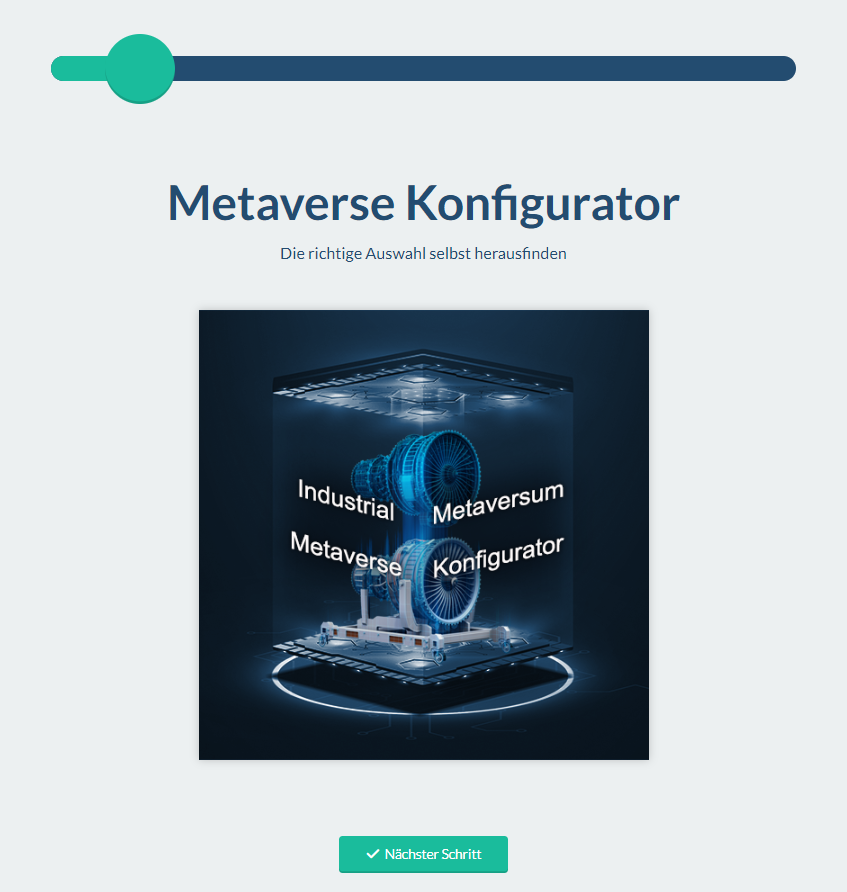

Xpert (B2B/Business/Industrial) Metaverse Configurator for all CAD / 3D data, usable on all end devices, one platform!
Related to this:
Creative minds in the metaverse: children, adults, and pioneers in search of added value
Adults in the Metaverse: The Rediscovery of Curiosity and Creativity – The Metaverse Beyond Entertainment: Potentials for Education, Health and the Economy
Children have a unique perspective on the world around them. They are curious, imaginative, and have a natural ability to look at things in unconventional ways. The metaverse, a virtual universe created through technology and digital innovations, offers an exciting opportunity to view the world from a child's point of view.
For children, the Metaverse is a place of discovery and playful learning. It allows them to explore new worlds, express their creativity, and interact with other children from all over the world. Through virtual reality, augmented reality, and gamified learning approaches, children can unleash their imaginations and move freely in virtual environments. The Metaverse offers them the opportunity to create their own stories, solve problems, and develop new skills.
But it's not just children who can view the Metaverse through their childlike eyes. Adults can also benefit from it by rediscovering their own curiosity and creativity. The Metaverse opens up new opportunities for adults to pursue their interests and passions, learn new skills, and interact with like-minded individuals in virtual communities. It allows for a deeper dive into various subject areas, be it art, music, science, or entrepreneurship.
Furthermore, a pioneering spirit transcends childhood or adulthood. Pioneers are individuals willing to forge new paths and push boundaries. They possess the ability to recognize added value and explore synergies across diverse fields. In the context of the metaverse, this translates to developing new applications and innovations that extend beyond entertainment. Pioneers can envision how the metaverse can drive genuine progress and advancement in areas such as education, healthcare, business, and communication.
One example of a pioneer in the field of the metaverse is Konrad Wolfenstein of Xpert.Digital. He recognized that the metaverse is not just a place for entertainment, but can also offer added value to various areas of life. He explores the possibilities of the metaverse in relation to education, digital transformation, and virtual collaboration. By approaching the metaverse with an entrepreneurial mindset, he is driving the development of this new digital universe.
➡️ The Metaverse offers an exciting future perspective. Whether you're a child or an adult, whether you want to rediscover your inner child or are a pioneer seeking new opportunities, the Metaverse opens up a universe of possibilities. It allows us to explore the world in innovative ways, unleash our imagination, and recognize synergies between different fields. The Metaverse is not just a place for fun and entertainment, but also a place for learning, growth, and progress.
Metaverse and Digital Europe: On the way to the EU Citiverse?
From the Industrial, Business and E-Commerce Metaverse to the Citiverse: A Digital Europe to the EU Citiverse?
Developments in virtual reality have made tremendous strides in recent years, creating a new paradigm for business and e-commerce. While initially focused on the entertainment sector, virtual reality is now increasingly used for industrial and business applications. The rise of the metaverse concept has led companies to engage more deeply with these new digital ecosystems, creating virtual spaces where people can interact, conduct business, and offer services.
The Industrial Metaverse represents a significant advancement by connecting the physical and digital worlds. Industrial processes can now be virtually visualized and optimized, leading to increased efficiency and productivity. For example, factories can be simulated and optimized in virtual environments to improve material flow, streamline workflows, and minimize production errors. Companies are also increasingly using Augmented Reality (AR) and Virtual Reality (VR) to engage employees in training and safety measures. The Industrial Metaverse thus has the potential to fundamentally transform the way we produce and work.
The business metaverse also offers a wealth of opportunities. Companies can set up virtual offices and conference rooms where employees from all over the world can collaborate without being physically present. This allows companies to expand their teams globally while saving on travel costs. Furthermore, business meetings and negotiations can be held in virtual spaces, saving time and resources. The business metaverse also provides the opportunity to showcase products and services in virtual stores or showrooms, enabling companies to expand their reach and connect with customers worldwide.
The e-commerce metaverse is another emerging field revolutionizing traditional online shopping experiences. Instead of just shopping on two-dimensional websites, consumers can now immerse themselves in interactive virtual shopping worlds. They can see, try on, or test products in 3D before buying them. This makes the shopping experience more personalized and realistic. Furthermore, the e-commerce metaverse also enables the integration of social interactions. Customers can invite friends to shop virtually together and exchange recommendations. Companies can also use virtual influencers or brand ambassadors to engage customers and promote their products.
Given these rapid developments in the metaverse, the question arises: what does the future hold? One interesting idea is the concept of a "Citiverse"—a digital Europe or an EU Citiverse. This concept transcends the boundaries of individual companies and encompasses a digital ecosystem that includes all member states of the European Union. By creating a shared metaverse network, European companies, institutions, and citizens could interact and collaborate. An EU Citiverse would enable the cross-border provision of digital services and foster cooperation in areas such as education, research, healthcare, and culture.
An EU Citiverse would also have the potential to strengthen Europe's digital sovereignty. It would enable European companies to compete with global players in the metaverse while maintaining European data protection and security standards. Furthermore, it could boost regional economies by expanding the European market for virtual products and services.
However, there are also challenges that must be considered when implementing an EU Citiverse. These include issues of interoperability, data security, legal frameworks, and infrastructure. Such a project requires close cooperation between governments, businesses, technical experts, and civil society to find a balanced and future-oriented solution.
➡️ The industrial, business, and e-commerce metaverse offers exciting perspectives for the future of the economy and digital life. From optimizing industrial processes and efficient collaboration in virtual offices to innovative shopping experiences – the possibilities are diverse. The idea of an EU Citiverse demonstrates that the future of the metaverse can also be shaped at the European level to make the benefits of these digital ecosystems accessible to all citizens of Europe.
The Smart City Index: A benchmark for smart cities and their performance
The Smart City Assessment: An Analysis of Administration, IT, Energy, Mobility and Society
The Smart City Index is a benchmark that assesses the performance of cities in terms of their smart city initiatives and their ability to utilize information and communication technologies (ICT) to improve the quality of life for their citizens. The index serves as a tool to measure the progress and effectiveness of smart city development and to compare cities with one another.
To determine the Smart City Index, various indicators are considered that cover the different aspects of a smart city. These indicators typically include areas such as administration, IT and communications, energy and environment, mobility, and society. Each area reflects different aspects that are important for the development and functioning of a smart city.
The area of administration refers to the efficiency and effectiveness of public administration in a city. This includes the digital transformation of administrative processes, electronic government services, transparent and participatory decision-making, and the use of technologies to improve administrative governance.
The IT and communications sector focuses on the digital infrastructure and the availability of broadband networks in a city. This indicator assesses access to high-speed internet, the connection of public facilities to the network, the availability of public Wi-Fi, and the use of digital technologies to improve communication and interaction between the city administration, citizens, and businesses.
The energy and environment sector refers to the sustainability and energy efficiency of a smart city. This includes measures to reduce energy consumption, promote renewable energies, use resources efficiently, protect the environment, and manage waste.
In the area of mobility, the focus is on improving transport infrastructure and promoting sustainable mobility solutions. This includes expanding public transport, implementing intelligent transport systems, promoting cycling and walking, and reducing traffic congestion and emissions.
The area of society refers to social innovations and citizen participation in the development of a smart city. This includes the promotion of education, healthcare, cultural diversity, security, and community engagement.
The Smart City Index enables cities to track and evaluate their progress with regard to these various indicators. It also serves as a benchmark to see how a city compares to others and where improvements can be made.
➡️ Different organizations and institutions can develop their own smart city indices, and the weighting and selection of indicators can vary. Therefore, the results and rankings can differ between various smart city indices. Nevertheless, the Smart City Index provides a framework for assessing the development of smart cities and tracking progress toward a sustainable, efficient, and livable city.
Smart Cities in Germany
In 2022, Hamburg was awarded the highest Smart City Index score of any major German city. With an index value of 86.1, the Hanseatic city topped the ranking. The Smart City Index provided a comprehensive comparison of all 81 German cities with more than 100,000 inhabitants regarding their progress and achievements in the field of smart city development.
The Smart City Index is based on an assessment of various indicators covering different aspects of a smart city. These include administration, IT and communication, energy and environment, mobility, and society. These indicators serve as a benchmark for a city's efficiency, sustainability, and quality of life in relation to its smart city initiatives.
In the area of administration, Hamburg stands out for the high efficiency and effectiveness of its public administration. Digital transformation, electronic government services, and transparent decision-making are some of the factors that have contributed to this positive assessment.
In terms of IT and communications, Hamburg boasts an outstanding digital infrastructure and widespread broadband availability. Access to high-speed internet, public Wi-Fi, and the use of digital technologies for communication between the city administration, citizens, and businesses are commonplace in the Hanseatic city.
Hamburg also demonstrates strong performance in the areas of energy and the environment. The city prioritizes sustainability and energy efficiency by implementing measures to reduce energy consumption and promote renewable energies. Environmental protection and the efficient use of resources are also actively promoted.
Mobility is another of Hamburg's strengths. The city has set itself the goal of improving its transport infrastructure and promoting sustainable mobility solutions. A well-developed public transport system, intelligent transport systems, and the promotion of cycling and walking are examples of the city's efforts to reduce traffic congestion and enable environmentally friendly mobility.
Hamburg also scored highly in the social sphere, thanks to social innovations and citizen participation. Education, healthcare, cultural diversity, and community engagement are actively promoted in the city, enabling citizens to enjoy a high quality of life and participate fully in society.
Hamburg's success in the 2022 Smart City Index is the result of a comprehensive strategy and a holistic approach to intelligent urban development. Through investments in infrastructure, technology, and innovation, Hamburg has made significant progress and positioned itself as a pioneer in the field of smart cities.
The ranking of other major German cities in the 2022 Smart City Index varies depending on their individual efforts and progress in the aforementioned indicator areas. The index results provide insights into potential areas for improvement and serve as an incentive for cities to further advance their Smart City initiatives and enhance their performance.
Major German cities according to the Smart City Index in 2022
- Hamburg – 86.10
- Munich – 85.30
- Dresden – 81.60
- Cologne – 79.40
- Stuttgart – 78.10
- Nuremberg – 77.60
- Aachen – 77.30
- Bochum – 77
- Düsseldorf – 76.60
- Darmstadt – 75.30
- Berlin – 75
- Trier – 74.90
- Mannheim – 74.70
- Karlsruhe – 73.50
- Osnabrück – 73.10
- Ulm – 72.80
- Gelsenkirchen – 72.70
- Münster – 72.50
- Dortmund – 71.80
- Freiburg im Breisgau – 71.10
- Bonn – 70.80
- Leipzig – 70.50
- Wuppertal – 70.40
- Hanover – 70.30
- Lübeck – 70
- Paderborn – 69.60
- Kiel – 68.50
- Heidelberg – 68
- Essen – 68
- Mainz – 68
- Oldenburg – 67.20
- Kaiserslautern – 66.40
- Frankfurt am Main – 66.40
- Regensburg – 66.20
- Solingen – 65.20
- Augsburg – 64.70
- Ingolstadt – 64.60
- Ludwigshafen am Rhein – 63.10
- Würzburg – 63.10
- Wiesbaden – 62.90
- Duisburg – 62.70
- Wolfsburg – 61.10
- Potsdam – 60.90
- Mönchengladbach – 59.40
- Kassel – 58.20
- Bielefeld – 58.10
- Neuss – 57.90
- Erlangen – 57.10
- Krefeld – 56.20
- Braunschweig – 56
- Hagen – 54.50
- Oberhausen – 53.80
- Heilbronn – 53.50
- Herne – 53
- Pforzheim – 52.70
- Chemnitz – 51
- Moers – 50.60
- Siegen – 50.40
- Jena – 50.40
- Recklinghausen – 49.80
- Hamm – 49.30
- Fürth – 48.50 Koblenz – 48.40
- Reutlingen – 48.40
- Bremen – 48.30
- Bergisch Gladbach – 47.90
- Halle (Saale) – 47.70
- Hildesheim – 47.30
- Bottrop – 46.70
- Magdeburg – 46.40
- Rostock – 45.80
- Oenbach am Main – 45.10
- Göttingen – 44.80
- Mülheim an der Ruhr – 42.30
- Gütersloh – 42
- Leverkusen – 41.60
- Saarbrücken – 41.40
- Remscheid – 40.20
- Salzgitter – 33.60
- Bremerhaven – 32.20
- Erfurt – 31.90
Smart Logistics and the Challenges of Urbanization
Urbanization is becoming an increasingly significant phenomenon worldwide, and both China and Japan have already reached impressive levels of this development. Regarding urbanization, we must be aware that enormous changes are still to come for us as well. The growing population and the influx of people into urban areas will present cities with new challenges.
A particularly important aspect of urbanization is smart logistics. With the growth of the urban population, the demands on supply chains and the transport of goods will increase exponentially. This is where Xpert.Digital comes in, a company that has been conducting extensive research for many years and already offers solutions for the challenges of smart logistics. Xpert.Digital recognizes the need to make the transport of goods more efficient and sustainable in order to meet the needs of the growing urban population.
While digitalization plays a crucial role in the development of smart cities, it's interesting to note that the media's focus on urbanization and its impacts often overshadows smart logistics. However, the smooth operation of supply chains and ensuring the efficient supply of urban areas should not be overlooked. It is essential that, alongside digitalization, the logistics infrastructure is also expanded and optimized to meet the increasing demands of urbanization.
Urbanization also carries the risk of supply gaps in rural areas. While the focus is often on urban development, it is important not to neglect the challenges and impacts on rural regions. Balanced development between urban and rural areas is crucial to ensuring a fair distribution of resources and opportunities.
In the coming decades, urbanization will become one of the main issues we must address. It is essential that we adapt our societal structure and vision for the future to the changing demands and needs of the growing urban population. Sustainable development, ensuring basic services, and creating livable cities are of crucial importance in this regard.
Xpert.Digital is already actively working on solutions for the challenges of smart logistics. Its aim is to contribute to making the transport of goods more efficient, environmentally friendly, and sustainable. At the same time, it is crucial that the wider public, the media, and government recognize urbanization and its impacts as pressing issues and take appropriate action.
Urbanization and its consequences require a holistic and coordinated approach. It is crucial that the various stakeholders, including governments, businesses, research institutions, and citizens, collaborate to create a sustainable and livable environment for the growing population. Only through these joint efforts can we overcome the challenges of urbanization and achieve sustainable development for our cities and regions.
The Smart City Metaverse and the EU's Citiverse plan: Digital answers to the challenges of urbanization
The Smart City Metaverse concept has the potential to address the challenges of urbanization by combining digitalization and digital twins. Similar to the European Union's new Citiverse approach, the Smart City Metaverse aims to create intelligent cities based on digital technologies and virtual worlds.
The Smart City Metaverse involves creating a digital environment that allows real cities to be mapped and simulated in virtual spaces. By integrating digital twins, which are virtual representations of physical cities, planners, city administrations, and citizens can test scenarios, make decisions, and predict potential impacts before implementing them in the real world.
Urbanization presents cities with enormous challenges, such as a growing population, the need for sustainable infrastructure, the efficient use of resources, and the management of traffic problems. The Smart City Metaverse offers solutions to these challenges by creating a platform on which various scenarios and planning options can be simulated.
The EU plan with its Citiverse approach reflects the European Union's commitment to promoting the development of smart cities. The Citiverse approach is based on the use of digital twins and data models to support urban planning and development. By leveraging data from diverse sources, decision-makers can gain better insights and make informed decisions to effectively address urbanization challenges.
The combination of Smart City Metaverse and the EU plan with the Citiverse approach opens up a multitude of possibilities. Firstly, digital twins enable comprehensive analysis and planning of urban infrastructure and services. Simulations allow for testing various scenarios to assess the impact of urban planning decisions, traffic flows, energy consumption, and environmental effects.
Furthermore, the Smart City Metaverse enables improved citizen participation. Through the virtual representation of the city, citizens can be actively involved in the planning and design of their environment. This promotes transparency, participation, and collaboration between city administrations and citizens.
The digital transformation, fostered by the Smart City Metaverse and the Citiverse approach, also offers economic benefits. New technologies and innovative solutions can be created to improve the efficiency, sustainability, and competitiveness of cities. Companies and startups can engage in this field and unlock new business opportunities.
However, there are also challenges that must be considered when implementing the Smart City Metaverse and the Citiverse approach. Data protection, data security, and ethics are important aspects that must be carefully addressed to ensure citizen trust and acceptance of the technologies. The interoperability of data and systems is another crucial factor to ensure that the various digital twins and platforms can communicate and integrate with each other.
➡️ The Smart City Metaverse and the Citiverse approach offer promising solutions to the challenges of urbanization. By combining digitalization, virtual worlds, and digital twins, smart cities can be effectively planned, developed, and managed. This enables a sustainable, efficient, and livable environment for the growing urban population.

Xpert.Digital – Pioneer Business Development

Konrad Wolfenstein
I would be happy to serve as your personal advisor.
You can contact me by filling out the contact form below or simply call me on +49 7348 4088 965 .
I'm looking forward to our joint project.
Write to me


Xpert.Digital – Konrad Wolfenstein
Xpert.Digital is a hub for industry focusing on digitalization, mechanical engineering, logistics/intralogistics and photovoltaics.
With our 360° Business Development solution, we support renowned companies from new business to after-sales.
Market intelligence, smarketing, marketing automation, content development, PR, mail campaigns, personalized social media and lead nurturing are part of our digital tools.
You can find more information at: www.xpert.digital – www.xpert.solar – www.xpert.plus
Keep in touch