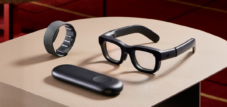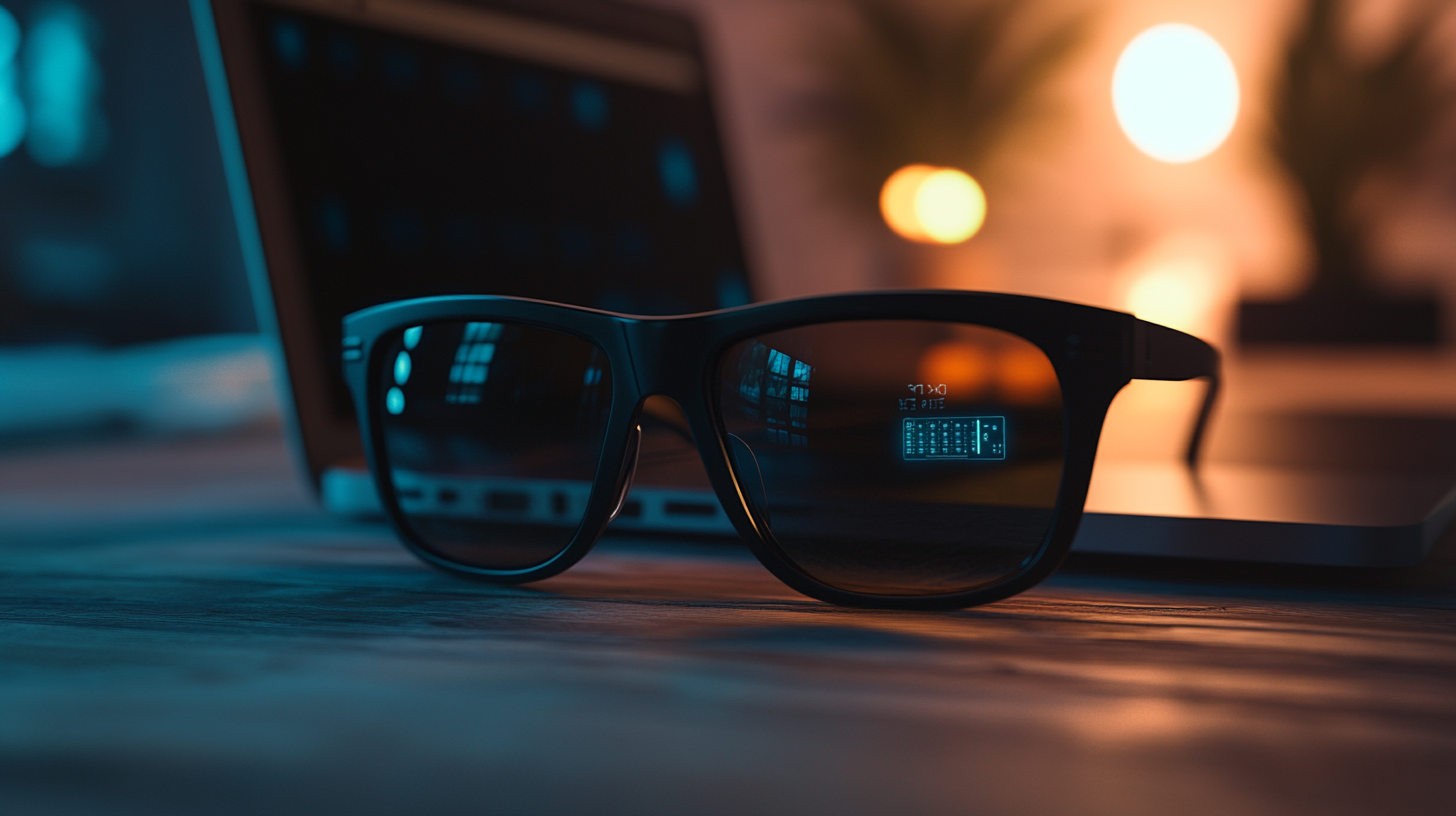
Smart glasses with augmented reality light version – Minimalist and powerful: Smart Meta Ray-Ban glasses as AR glasses – Creative image: Xpert.Digital
Meta x Ray-Ban: Why the new smart glasses could change the market
Smart glasses with augmented reality light version – Minimalist and powerful: Smart Meta Ray-Ban glasses as AR glasses
The announcement that Meta, in cooperation with Ray-Ban, is planning a new generation of smart glasses is generating considerable interest in the tech industry. Aiming to launch models with integrated displays in the second half of 2025, Meta intends to elevate not only the comfort but also the user experience of its wearables to a new level. Given the growing interest in augmented reality (AR) and mixed reality (MR), this development seems only logical. "We want to offer our customers a product that provides useful information in everyday life without sacrificing the aesthetics of classic glasses," sources close to the company stated. But what exactly are these plans, why are they important, and what does this mean for the future of wearable technologies? The following sections provide an overview of the key aspects surrounding Meta's new Ray-Ban glasses and also shed light on the broader market developments triggered by this announcement.
Background: Why Meta is focusing on smart glasses
Meta has already demonstrated its ambitious plans for wearables with the early versions of its Ray-Ban Stories. Previous models offered features such as photo and video recording, as well as audio playback via integrated speakers. "The goal has always been to bridge the gap between the smartphone and a hands-free, comfortable solution," company spokespeople emphasized at the time. This intention is also evident in the planned model: Instead of relying solely on audio or simple camera applications, Meta intends to incorporate an integrated display to project notifications and brief information directly into the user's field of vision.
It's no coincidence that Meta developed its smart glasses in collaboration with Ray-Ban: Ray-Ban stands for stylish design, high brand recognition, and widespread acceptance. Most users considering such glasses don't want to look like they're in a science fiction film, but rather wear a fashionable product. "Smart glasses must come as close as possible to the aesthetics of normal glasses to be accepted in everyday life," is a frequently quoted industry credo. This is precisely where Meta comes in, striving to harmonize comfort and design.
The integrated display: Small window, big impact
The upcoming glasses will have a display that, while relatively small, is still large enough to show notifications, AI responses, and navigation instructions. "We're focusing on the most important information people need while on the go," a senior engineer explained. This is intended to minimize distractions from the real world. For example, directions can be overlaid on the real world without the need to constantly look at a smartphone. Messages and warnings can also be displayed directly in the user's field of vision, offering practical benefits in many situations.
Another key advantage of this integration is the ability to interact with Meta's AI assistant. Previously, communication often relied on audio output and voice commands. With a built-in display, however, it would be possible to receive short answers or instructions visually. For example, when asking "What's the weather like today?", not only spoken information but also a small icon displaying the temperature and weather symbol could be shown. This step makes the glasses even more useful and independent of loud ambient noise, where purely acoustic interaction would be limited.
Technical basis: Snapdragon AR1 Gen1 and improved performance
The next generation of Ray-Ban Meta smart glasses will be based on the Qualcomm Snapdragon AR1 Gen1 platform. This hardware offers significantly more performance than its predecessor, enabling improved photo and video quality. It is also expected to provide longer battery life. "With the new platform, we can handle multiple functions simultaneously without any loss of performance, while also increasing energy efficiency," a product manager explained.
Related to this:
Especially with wearables, battery life plays a crucial role: no one wants to have to recharge their smart glasses after just a few hours. Meta's challenge is to integrate a sufficiently large battery module into a slim, fashionable frame. "It's a balancing act between minimalist design and maximum functionality," the development department repeatedly states. At the same time, they strive to keep the heat generated by the display as low as possible to ensure comfortable wear.
Market positioning: From gadget to lifestyle product
While the first generations of smart glasses were often perceived as experimental technology, Meta aims to take this product into the mainstream. The close collaboration with Ray-Ban underscores this approach. "Our glasses aren't meant to be a niche product that only excites tech enthusiasts, but rather a genuine part of everyday life," explains a marketing manager. However, to achieve this goal, Meta must not only design the hardware, but also the entire ecosystem.
This is where Meta's vision of a tightly networked platform comes into play: The smart glasses could seamlessly connect to social media platforms like Facebook and Instagram, allowing users to directly capture and post images or videos. Streaming services and messaging applications could also be integrated. "With such glasses, you move right in the heart of the digital ecosystem without constantly having to look at a screen," is the promise. Whether these features actually convince users will depend largely on how intuitive and stable the system is.
Competitive landscape: Google, Samsung and other players
Parallel to Meta's announcement, Google and Samsung have also detailed their plans for Android XR. It is said that Google and Samsung are working on their own headsets and glasses, which could also be released in 2025. This timing is no coincidence: The industry is in a race to tap into the new markets for AR and MR devices. "We want to be at the forefront from the very beginning," most manufacturers are stating.
It's no secret that Meta, with its upcoming Ray-Ban glasses, is competing against rivals with equally ambitious goals. Google, in particular, has extensive experience from projects like Google Glass, which, however, never achieved mass-market success. Samsung, on the other hand, boasts a vast hardware portfolio, ranging from smartphones and wearables to televisions. "We need a product that integrates seamlessly into our existing ecosystem," is a common refrain from Samsung. The new generation of Meta glasses will have to prove itself in this context while simultaneously striking a balance between being attractive in terms of price and technology.
Related to this:
Orion and other AR projects: Meta's long-term strategy
Meta had already offered a glimpse into the future of AR with its "Orion" prototype. These glasses were intended to offer a far more advanced display, but according to reports, they were initially too expensive for mass production. "Users expect innovation, but are often unwilling to spend thousands of euros on it right away," insiders admit. Therefore, Meta is focusing on a gradual development of its Ray-Ban glasses, which, while not offering fully immersive AR, still provides enough added value to justify the price.
Related to this:
The long-term plan is clear: Meta aims to establish itself as a leading provider of AR and MR technologies. "The future will bring us glasses that seamlessly merge our surroundings with digital information," is a common refrain from Meta's innovation department. The upcoming Ray-Ban glasses are therefore an important interim step, intended to gradually familiarize the general public with the advantages of AR. Those who already enjoy notifications and navigation aids within their field of vision today could opt for an even more advanced solution tomorrow.
Design and comfort: The balancing act between technology and style
A key feature that often determines the success or failure of smart glasses is the design. Ray-Ban, in particular, has an iconic design language that is appreciated by many people worldwide. "If we change the look of the classic models too much, we'll lose our core target group," designers behind the scenes point out. Therefore, Meta and Ray-Ban strive to keep the appearance as close to the original as possible while incorporating the latest technology inside.
But technology comes at a price – both in terms of manufacturing costs and space requirements. It remains to be seen how Meta and Ray-Ban will ensure that the glasses don't appear bulky or clunky. The developers face the challenge of cleverly integrating sensors, batteries, displays, and speakers without compromising the aesthetics. "We utilize every millimeter of the frame to house all the components," is a common refrain. This fine-tuning of the design will have a significant impact on how the glasses are ultimately received in everyday use.
Privacy and security: A sensitive issue
Besides the technical and aesthetic considerations, privacy is also a key concern. Wearables with cameras and microphones raise concerns for many people because they can potentially record information without those around them noticing. Meta and Ray-Ban attempted to create transparency with LED indicators or prominent signals in the first generations of their glasses. Nevertheless, skepticism and concern persist. "We are working on implementing clear guidelines and visible indicators so that everyone knows when filming or photography is taking place," is the gist of the company's statement.
Furthermore, the question arises of how to handle the collected data. Every recorded interaction, every photo or video creates digital traces that could be uploaded and processed in Meta's ecosystem. It is crucial to give users extensive control over their own data and strengthen trust in the platform. Only when people feel their privacy is protected will they be willing to wear glasses that operate so close to their face and can potentially record everything.
What could still happen by the second half of 2025
There's still some time before the planned market launch in the second half of 2025. In the tech world, major leaps can happen within a year or two. Display technology might become even more compact and energy-efficient by then, new collaboration models with other companies might emerge, or Meta might discover a new application that significantly increases the utility of its smart glasses. "We are continuously developing our product to respond to people's needs," industry representatives regularly emphasize.
The influence of other major players should not be underestimated. For example, if Apple were to announce or launch its own glasses system, it could dramatically alter the competitive landscape. Samsung and Google, in turn, could implement their Android XR initiatives faster than expected and also bring attractive products to market. Amidst all this turmoil, Meta must clearly define the advantages its Ray-Ban glasses offer and how they differentiate themselves from competing products.
Related to this:
A crucial step on the road to the AR revolution
The announced Ray-Ban smart glasses with integrated displays mark a significant milestone for Meta and the entire industry. While the glasses don't yet offer a fully immersive augmented reality experience, they represent a major step towards a future where AR applications permeate everyday life. "We want to integrate technology into everyday life without it being perceived as intrusive" is a key phrase heard in many AR projects. With these planned glasses, this approach could become a much more tangible reality.
Their pragmatic approach – notifications, AI responses, navigation assistance – should offer real benefits to many people. Never before has the prospect been so tangible that in just a few years we will be able to perceive traffic or our surroundings while simultaneously keeping track of important digital information. Let's hope that Meta, Ray-Ban, and the other players in the market handle data privacy and design issues wisely so that the future of smart glasses doesn't fail due to concerns or a lack of aesthetics.
Overall, it's safe to say that Meta is making a bold statement with these plans. "We're on a path that will lead us to true AR experiences," is the general consensus from within the company. Whether this vision comes to fruition will depend largely on how well Meta manages the balance between functionality, comfort, and data privacy. If they succeed, the next generation of Ray-Ban glasses could be a real trendsetter and give the entire market for wearables and AR technologies a significant boost. And who knows – perhaps such glasses will soon be as ubiquitous as smartphones are today. In any case, it will be exciting to see how Meta and its competitors shape the next steps in this rapidly growing market.
🎯🎯🎯 Benefit from Xpert.Digital's extensive, five-fold expertise in one comprehensive service package | BD, R&D, XR, PR & Digital Visibility Optimization


Benefit from Xpert.Digital's extensive, five-fold expertise in a comprehensive service package | R&D, XR, PR & Digital Visibility Optimization - Image: Xpert.Digital
Xpert.Digital possesses in-depth knowledge across various industries. This allows us to develop tailored strategies precisely aligned with the requirements and challenges of your specific market segment. By continuously analyzing market trends and monitoring industry developments, we can act proactively and offer innovative solutions. The combination of experience and expertise generates added value and provides our clients with a decisive competitive advantage.
More information here:
We are here for you - Consulting - Planning - Implementation - Project Management
☑️ SME support in strategy, consulting, planning and implementation
☑️ Creation or realignment of the digital strategy and digitization
☑️ Expansion and optimization of international sales processes
☑️ Global & Digital B2B trading platforms
☑️ Pioneer Business Development

Konrad Wolfenstein
I would be happy to serve as your personal advisor.
You can contact me by filling out the contact form below or simply call me on +49 7348 4088 965 .
I'm looking forward to our joint project.
Write to me


Xpert.Digital - Konrad Wolfenstein
Xpert.Digital is a hub for industry focusing on digitalization, mechanical engineering, logistics/intralogistics and photovoltaics.
With our 360° Business Development solution, we support renowned companies from new business to after-sales.
Market intelligence, smarketing, marketing automation, content development, PR, mail campaigns, personalized social media and lead nurturing are part of our digital tools.
You can find more information at: www.xpert.digital - www.xpert.solar - www.xpert.plus
Keep in touch