Shading resistant: What does shading resistance really mean for solar modules? More power even in the shade? – Image: Xpert.Digital
🌞🔋 What does shading resistance really mean for solar panels? A realistic look at performance and technology
⚡🏬 Many people have misconceptions about the term "shade-resistant." It's often assumed that such solar panels can still deliver high energy yields even under constant shade. But what exactly is behind this technology, and why can't even shade-resistant panels work miracles when they're permanently in the shade?
🌳🌇 The problem of shading
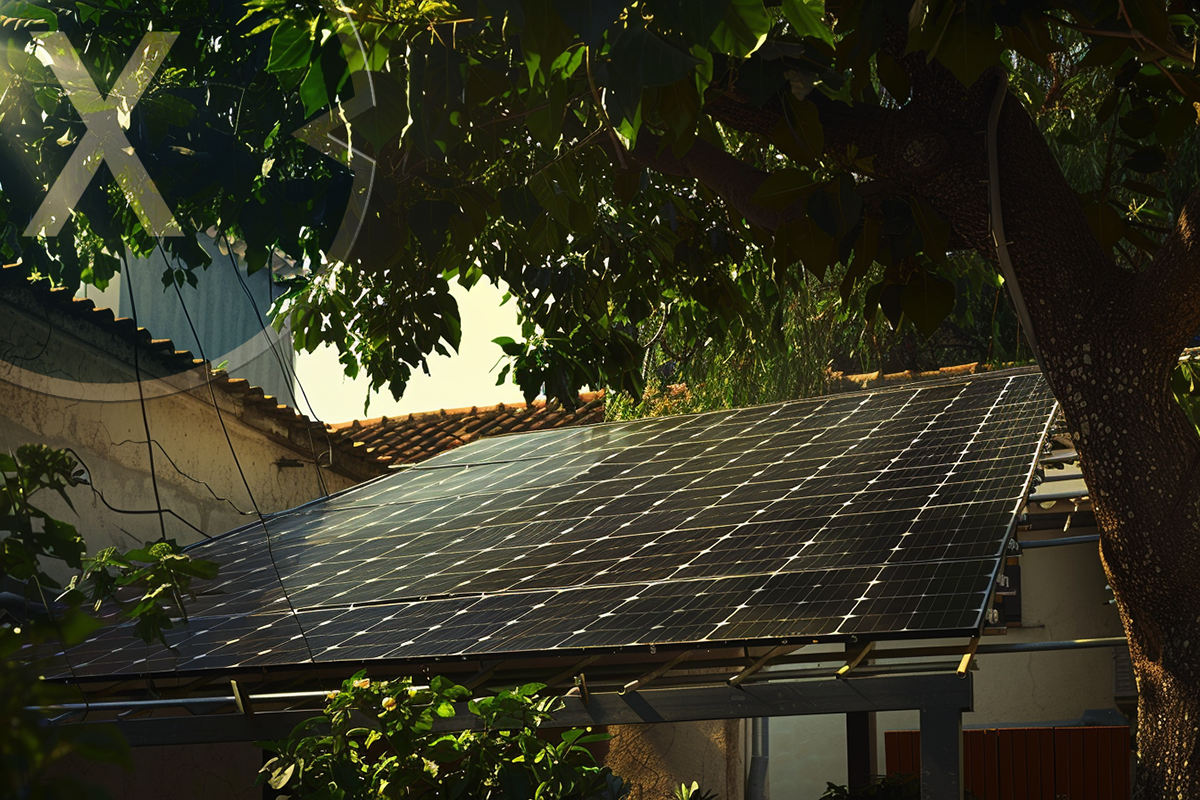
Shading is one of the biggest enemies of photovoltaic systems. It occurs when parts of a solar module are shaded by external objects such as trees, buildings, chimneys, or antennas. Even small amounts of shade can lead to significant power losses. This is because the solar cells within a module are usually connected in series. If one cell receives less light, it acts like a resistor and reduces the current flow in the entire string.
⚙️💡 What exactly does shading resistance mean?
Shading resistance refers to the ability of a solar module or photovoltaic system to minimize the negative effects of partial shading. Specific technical measures can prevent a shaded cell or module from excessively impacting the performance of the entire system.
🛠️🚀 Technologies to improve shading resistance
1. Bypass diodes
Modern solar modules often incorporate bypass diodes. These allow shaded cells to be bypassed, thus maintaining current flow in the unshaded cells. This reduces power loss.
2. Optimized cell interconnection
Some manufacturers rely on an optimized interconnection of the solar cells within the module. Instead of connecting all the cells in a single series, they are divided into smaller groups. This means that shading only affects a portion of the module.
3. Performance optimizers
Power optimizers are electronic devices attached to each module. They maximize energy yield by independently adjusting the optimal operating point of each individual module. This further reduces the effects of shading.
4. Micro-inverters
Similar to power optimizers, micro-inverters are installed at the module level. They convert the direct current of each module directly into alternating current, enabling independent power measurement and optimization.
Related to this:
🛑🔍 The limits of shading resistance
Despite these advanced technologies, there are clear limitations. Even shade-resistant modules can't work miracles if they are permanently shaded. Without sufficient sunlight, no solar module can generate energy. Shading resistance can mitigate the effects of partial shading, but it cannot compensate for a lack of light.
🚫❌ Common Misunderstandings
A common misconception is that shade-resistant modules still operate efficiently even under complete shade. This is not the case. The physics of photovoltaics is based on the photoelectric effect, in which light energy is converted into electrical energy. Without light, there is no energy production.
📈💭 Realistic expectations for solar power systems
It is important to have realistic expectations regarding the performance of solar power systems. Shading resistance does not mean that a system will deliver maximum performance under all conditions. Instead, it ensures that the system performs better under suboptimal conditions than it would without these technologies.
🗺️🔧 Tips for minimizing shadows
1. Careful planning
A shading analysis should be carried out when planning a photovoltaic system. This allows potential sources of shading to be identified and taken into account.
2. Site selection
Choose a location with as little shade as possible. Pay attention to surrounding buildings, trees, and other objects.
3. Adaptable mounting systems
With flexibly adjustable mounting systems, modules can be aligned so that they are exposed to less shading.
4. Regular maintenance
Trees grow and can become new sources of shade over time. Regular maintenance and pruning can remedy this.
☁️🔍 Reducing the effects of partial shading
Shading resistance is a valuable feature of modern solar modules that helps reduce the effects of partial shading. However, it is not a panacea. Even the best technology cannot completely compensate for persistent and complete shading.
For optimal results, solar power systems should be planned and installed to minimize shading. Shading resistance should be considered a complementary measure to improve system efficiency under less than ideal conditions.
A better understanding of the actual performance and limitations of shade-resistant modules allows plant operators to set realistic expectations and get the most out of their photovoltaic system.
📣 Similar topics
- 🌞 What does shade resistance really mean?
- 🏠 The problem of shading in solar modules
- ⚙️ Technologies to improve solar performance
- 🌿 Tips for minimizing shadows
- 🔋 Increased efficiency through power optimizers
- 🌤️ Realistic expectations for solar power systems
- 🛠️ Advantages of bypass diodes in shading situations
- 🌳 Site selection for minimal shading
- 💡 Optimized cell interconnection for better results
- 📉 The limits of shading resistance
#️⃣ Hashtags: #Shading #SolarPanels #Efficiency #Technology #RenewableEnergy
🎯🎯🎯 Benefit from Xpert.Digital's extensive, five-fold expertise in one comprehensive service package | BD, R&D, XR, PR & Digital Visibility Optimization


Benefit from Xpert.Digital's extensive, five-fold expertise in a comprehensive service package | R&D, XR, PR & Digital Visibility Optimization - Image: Xpert.Digital
Xpert.Digital possesses in-depth knowledge across various industries. This allows us to develop tailored strategies precisely aligned with the requirements and challenges of your specific market segment. By continuously analyzing market trends and monitoring industry developments, we can act proactively and offer innovative solutions. The combination of experience and expertise generates added value and provides our clients with a decisive competitive advantage.
More information here:
👷♂️🔧 Comparison: Bypass diodes and power optimizers
🔋 Bypass diodes and power optimizers in solar power systems ☀️
Bypass diodes and power optimizers are two technologies used in solar power systems to minimize the negative effects of shading. Both have specific advantages and applications.

A realistic look at performance and technology / Comparison: Bypass diodes and power optimizers – Image: Xpert.Digital
😊 Advantages of bypass diodes
Avoiding hotspots
Bypass diodes divert the current around shaded or defective cells. This prevents the formation of hotspots, which can lead to damage through overheating.
Protection against performance losses
They isolate affected cells and allow the other cells in the module to continue working efficiently, thus maintaining overall performance.
Increased reliability
By limiting damage and power losses, bypass diodes contribute to the longevity and reliability of solar modules.
Efficiency in temporary shading
Particularly effective in cases of temporary shading, such as that caused by clouds.
🌟 Advantages of power optimizers
Individual module optimization
Power optimizers individually adjust the operating point of each module to operate it close to its Maximum Power Point (MPP). This maximizes energy yield even under suboptimal conditions.
Independent module control
They allow each module to work independently of the others, which is particularly advantageous when some modules are shaded and others are not.
Maximizing yield under variable shading
Power optimizers are particularly effective when shading conditions change throughout the day. They prevent localized shading from affecting the entire string.
⚡🌤 Bypass diodes protect against temporary shading, power optimizers maximize yield under variable conditions
Bypass diodes are ideal for preventing hotspots and ensuring module reliability under temporary shading. Power optimizers, on the other hand, offer a more comprehensive solution for variable and permanent shading by individually optimizing the power output of each module. Both technologies complement each other and can be combined depending on the specific requirements of a solar power system.
📣 Similar topics
- 🌞 Efficient solutions for shading: Bypass diodes and power optimizers
- ⚡ Hotspot avoidance and reliability with bypass diodes
- 🔋 Power optimizers for maximum solar energy yields
- 🌤 Bypass diodes and power optimizers compared
- 🌟 Module optimization under variable conditions
- 🔧 Protection and efficiency in solar power systems: Two key technologies
- 🌥 Independent module control in case of shading
- 🔍 Prevention of power losses in solar modules
- 🛡️ Longevity and reliability thanks to bypass diodes
- ✨ Combined use for optimized solar system performance
#️⃣ Hashtags: #SolarTechnology #BypassDiodes #PowerOptimizers #ShadingManagement #EnergyEfficiency
We are here for you - Consulting - Planning - Implementation - Project Management
☑️ Industry expert, here with his own Xpert.Digital industry hub featuring over 2,500 specialist articles

Konrad Wolfenstein
I would be happy to serve as your personal advisor.
You can contact me by filling out the contact form below or simply call me on +49 7348 4088 965 .
I'm looking forward to our joint project.
Write to me


Xpert.Digital - Konrad Wolfenstein
Xpert.Digital is a hub for industry focusing on digitalization, mechanical engineering, logistics/intralogistics and photovoltaics.
With our 360° Business Development solution, we support renowned companies from new business to after-sales.
Market intelligence, smarketing, marketing automation, content development, PR, mail campaigns, personalized social media and lead nurturing are part of our digital tools.
You can find more information at: www.xpert.digital - www.xpert.solar - www.xpert.plus
Keep in touch