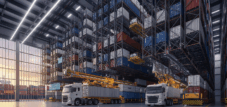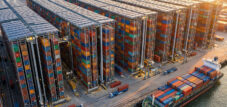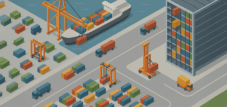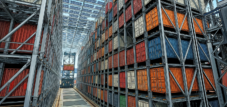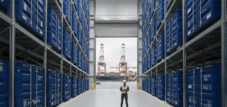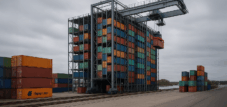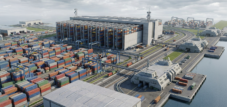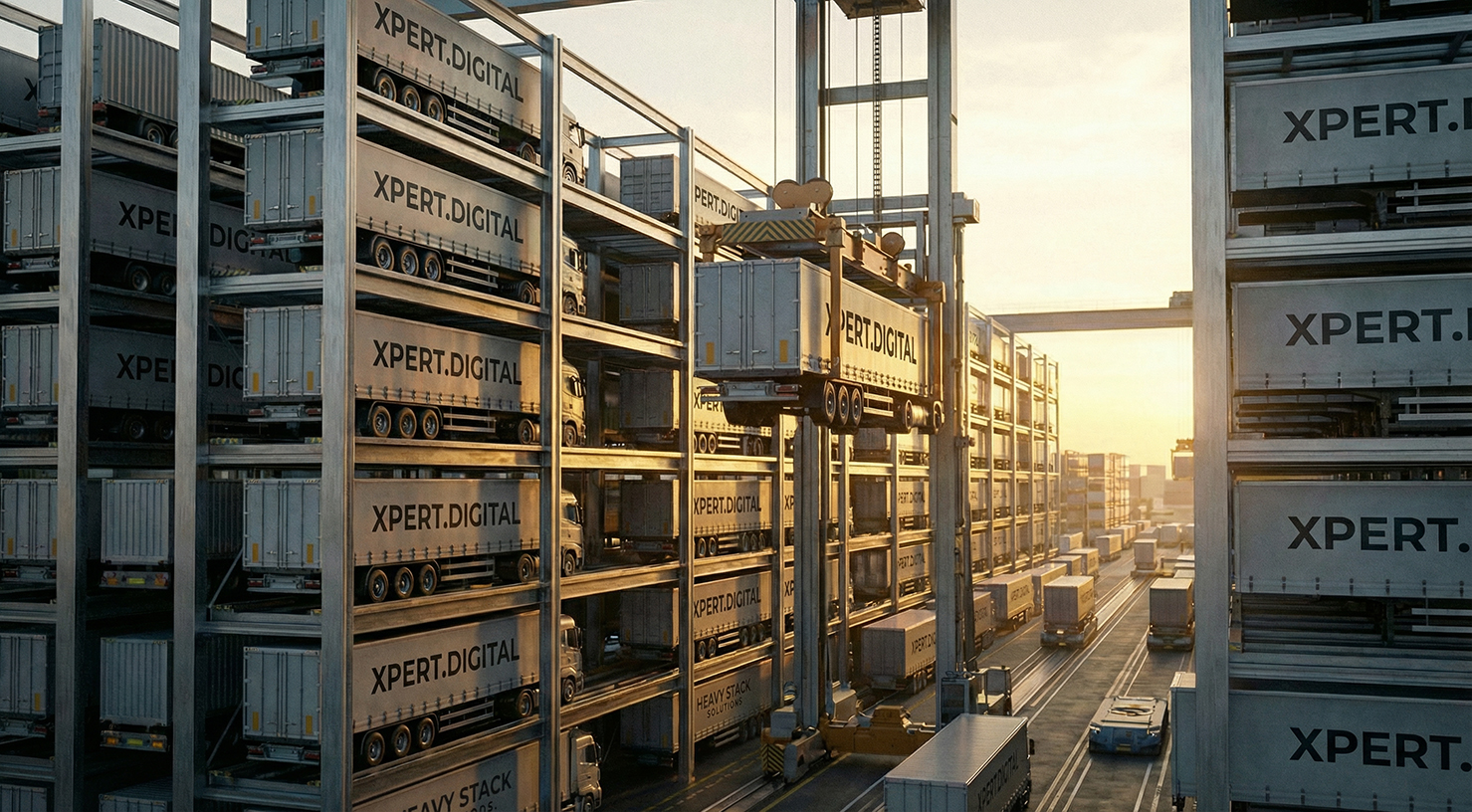
Not only containers and swap bodies, but also semi-trailers in the high-bay warehouse: When floor space becomes too valuable – Creative image: Xpert.Digital
Six times more space: These mega-towers are revolutionizing freight transport
Combating urban sprawl: The fully automated parking garage for complete truck trailers
The space crisis in European logistics has reached a critical point: Exploding land prices, increasingly scarce building sites in metropolitan areas, and political pressure to shift more freight traffic to rail are pushing conventional transshipment terminals to their physical and economic limits. The solution to this massive land consumption is as obvious as it is technologically spectacular: Where horizontal expansion becomes unaffordable, intralogistics is moving vertically. With fully automated heavy-duty high-bay warehouses, not just small boxes, but entire semi-trailers and shipping containers weighing up to 34 tons are stacked on top of each other in up to ten levels. This concept transforms bulky semi-trailers from dreaded "space hogs" into highly compact standard units – enabling up to six times the capacity on the same footprint. Discover how cutting-edge engineering and automation are making combined transport fit for the future.
The land crisis as a catalyst for a technological revolution
Space in European logistics terminals and intermodal hubs is scarce – and becoming more expensive. In Germany, prime rents for new logistics space rose to an average of €7.59 per square meter per month in 2025, with the eight leading logistics regions already reaching €9.04/m². In metropolitan areas like Munich, rents even reach €10.70 per square meter. Despite this price increase, nationwide take-up of space rose to approximately 5.78 to 6.1 million square meters in 2025 – an increase of six to fourteen percent compared to the previous year, depending on the source. This gap between rising demand and physically limited supply is the real economic driving force behind concepts like high-bay warehouses for semi-trailers.
The fundamental problem is structural: surface area cannot be increased indefinitely, but height can. This simple equation forms the economic basis for innovative solutions for fully automated heavy-duty storage.
LTW Intralogistics has developed a solution that was previously considered technically almost impossible in intralogistics: Semi-trailers are treated in the same way as containers – as standardized loading units that are stored, managed, and retrieved fully automatically in a high-bay warehouse. This is made possible by specially developed storage and retrieval machines that pick up loaded semi-trailers on so-called slave pallets and move them up to six levels high into the racking, while empty containers can be stacked up to the tenth level. The crucial difference to conventional container storage lies in the direct access: Each unit – whether container or trailer – can be individually retrieved at any time without having to rearrange other loading units. Up to 500 loaded semi-trailers can be stored on a footprint of approximately 9,000 square meters, which corresponds to six times the capacity of a conventional ground-level storage system – a paradigm shift that transforms the semi-trailer from a space hog into a stackable storage unit.
Semi-trailers as space hogs: The neglected core problem
The most pressing problem for everyone involved in combined transport is the lack of space at terminals: semi-trailers and swap bodies cannot be stacked conventionally and therefore require a disproportionate amount of flat space. While sea containers can be stacked to a limited extent, the effort involved in the handling process significantly restricts this option as well. A loaded semi-trailer, up to 13.60 meters long and 2.55 meters wide, needs its own fully accessible space on the ground – plus maneuvering room.
The result is that terminals are simply overflowing during peak periods. The volume of transport in combined transport is growing structurally, even if it is subject to short-term economic fluctuations: In 2024 alone, Kombiverkehr transported around 780,000 truck shipments – i.e., containers, swap bodies, and semi-trailers – by rail through Germany and Europe. Despite the temporary decline of around five percent in 2024, the long-term trend is upward. With every percentage point of growth in combined transport, the space problem at existing terminals becomes even more acute.
In addition, there is political pressure: Shifting freight transport from road to the more environmentally friendly rail is a declared goal of European transport policy. Anyone who takes this goal seriously must also create the necessary infrastructure – and this includes more efficient, space-saving terminals.
The technical answer: Ten levels instead of one
Thanks to decades of development in heavy-duty storage and retrieval systems, it is now technically possible to move gigantic payloads precisely and safely. The basic principle of a high-bay warehouse for large load units is strikingly clear: Instead of placing the units side by side on the floor, they are stacked on top of each other in a fully automated high-bay racking system – with direct access to each individual unit at any time.
Depending on the configuration, up to ten levels can be stacked. A storage and retrieval machine handles the storage and retrieval fully automatically, around the clock. Specific stacking capacities apply to the different types of loading units: Loaded swap bodies can be stored up to eight levels high in the high-bay warehouse, trailers on so-called slave pallets up to six levels. Empty containers can even be stacked up to the tenth level. The key advantage over conventional block storage is retained: Each transport unit can be accessed individually and without time-consuming rearrangement.
LTW Intralogistics Solutions

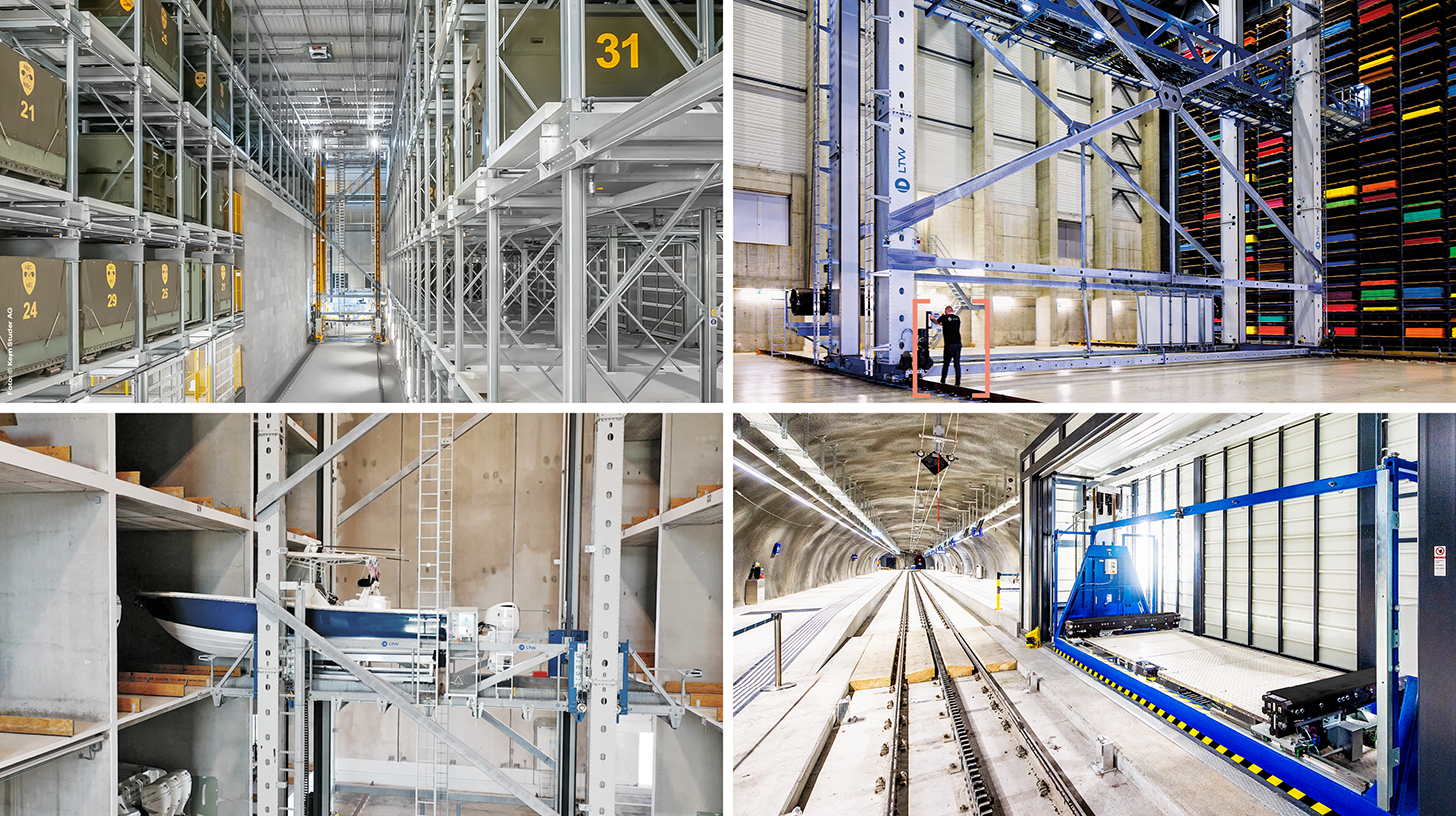
LTW Intralogistics – Engineers of Flow - Image: LTW Intralogistics GmbH
LTW offers its customers not individual components, but integrated complete solutions. Consulting, planning, mechanical and electrotechnical components, control and automation technology, as well as software and service – everything is networked and precisely coordinated.
In-house production of key components is particularly advantageous. This allows for optimal control of quality, supply chains, and interfaces.
LTW stands for reliability, transparency, and collaborative partnership. Loyalty and honesty are firmly anchored in the company's philosophy – a handshake still means something here.
Related to this:
Space miracle on a hectare scale: Trailer storage revolutionizes terminal construction
Six to one: The capacity calculation that is changing the market
The decisive economic argument lies in the area figures. A redundant high-bay warehouse, including all necessary transfer zones for up to 500 loaded semi-trailers, can be built on a footprint of approximately 9,000 square meters. This corresponds to roughly six times the storage capacity compared to a conventional semi-trailer parking area on the same footprint.
For comparison: 500 loaded semi-trailers correspond to the volume of twelve 700-meter-long trucks. Anyone who can provide this capacity on just 9,000 square meters – equivalent to slightly more than one hectare – creates a logistics infrastructure whose conventional equivalent would require six hectares of terminal space. In a market where developed logistics sites in metropolitan areas are scarce and command correspondingly high prices, this factor is crucial.
The economic appeal of this concept stems from several overlapping effects: The reduced space requirement either drastically lowers rental and land costs or makes it possible to operate terminals at locations where conventional concepts would simply be impossible due to space constraints. At the same time, the personnel costs for manual relocation processes, which are unavoidable with block storage, are eliminated.
The backbone of the system: storage and retrieval machines for extreme loads
The key technical challenge lies in the weight class: A loaded semi-trailer can reach a total weight of up to 34 tons. The storage and retrieval machines must transport these loads precisely, safely, and economically to higher levels. Comparable heavy-duty systems already exist in practice (for example, for military or industrial purposes) that store ISO containers, swap bodies, and roll-off containers in a minimal footprint and reliably handle payloads sometimes well over 18,000 kilograms.
A technical necessity of modern terminals: The drives of the storage and retrieval machines are generally redundant, ensuring continued operation even during maintenance or in the event of a malfunction. This high availability is not optional in the terminal business, which is designed for 24/7 operation, but essential. Furthermore, the storage locations can be equipped with electrical connections for refrigeration units – a feature that enables the system to be used for temperature-controlled cargo, thus addressing a significant market share in the food and pharmaceutical sectors.
Automated self-service: The operational paradigm shift
Beyond the sheer capacity figures lies another, operationally crucial advantage: The fully automated operation allows for the creation of integrated self-service transfer zones that are available around the clock. Truck drivers can deposit or retrieve their loading units at any time of day or night, without being dependent on terminal opening hours or available personnel.
Depending on the required level of complexity, the equipment options at these stations range from simple contour inspection of the unit to be stored to camera-based, fully automated damage detection. This is logistically significant, as automated storage documentation reduces liability disputes and considerably speeds up the entire handling process.
24/7 operation without personnel costs fundamentally transforms a terminal's cost structure: Instead of maintaining staff for rotating shifts, automation technology takes over the operational burden. In a labor market that suffers from a chronic shortage of skilled workers in the logistics sector, this aspect should not be underestimated.
Sustainability as an integrated feature
This approach is not only economically but also ecologically forward-looking. Thanks to enclosed construction, modern facilities produce no light or noise emissions from warehouse operations – a significant advantage for locations near residential areas, where regulations protecting residents would otherwise restrict or increase the cost of terminal operations.
The roof and wall surfaces of the facilities are ideally suited for the installation of large-scale photovoltaic systems, allowing a portion of the energy demand to be generated directly on-site. This is a crucial factor given the power requirements of heavy-duty stacker cranes. Partial self-sufficiency through renewable energy reduces operating costs and improves the overall CO2 balance of the terminal operation. Green facades, serving as ecological compensation areas, are also frequently incorporated into such concepts and facilitate permitting processes in urban areas.
Building over instead of avoiding: Gaining space without creating new ground
One of the most conceptually interesting features of such systems is the ability to build over existing infrastructure. Roadways, buildings, and even railway tracks can be integrated into or spanned by the high-bay warehouse. The loading track can be directly integrated into the system, enabling simultaneous automated loading and unloading of trains and trucks.
Within a width of just twelve meters, up to 100 13.60-meter swap bodies can be stored per 100 meters of length. This superstructure principle unlocks logistical potential in urban and suburban areas that would not be achievable with conventional storage methods – and transforms previously unused or underutilized transport infrastructure into highly productive logistics capacity.
Between investment amount and return on investment
High-bay warehouses are capital-intensive. The investment costs for a fully automated heavy-duty system of this size naturally exceed those of a conventional parking lot system many times over. This is the structural factor that must be honestly considered in any economic evaluation.
The decisive counter-argument lies in long-term operation: Drastically reduced space and rental costs, lower personnel expenses through automation, 24/7 operation without shift premiums, and potential additional revenue from higher throughput create a cumulative economic advantage that amortizes the initial investment over the plant's lifetime. In markets with continuously rising logistics rents, the amortization calculation improves with each year that no expensive new space needs to be leased.
For terminal operators located in areas with high land demand or expensive construction costs, the system therefore pays for itself much faster than in peripheral locations with affordable land markets. Profitability is location-dependent – and precisely for this reason, it is a powerful tool for strategically securing locations in metropolitan areas.
Market relevance and outlook: A systemic response to structural constraints
The logistics real estate market is facing a fundamental realignment process. The expansion of e-commerce, new requirements from various industries, and the structurally growing importance of combined transport are creating a demand dynamic that inevitably puts upward pressure on rents for modern logistics space.
In this context, fully automated heavy-duty high-bay warehouses are more than just a clever engineering solution. They represent a systemic answer to structural constraints: growing freight traffic meets limited space, rising energy costs meet a tight labor market, and climate regulations meet outdated terminal infrastructure. The vertical storage of trailers and containers addresses all these areas of tension simultaneously – through densification, automation, energy efficiency, and operation that is compatible with local residents.
The fact that initial heavy-lift projects of this scale have already been successfully implemented in logistics practice demonstrates that the technology has moved beyond the phase of pure vision. The economic logic for the future is clear: anyone who needs to increase capacity without sealing off new land has no option but to build upwards.
Consulting - Planning - Implementation

Konrad Wolfenstein
I would be happy to serve as your personal advisor.
You can contact me at wolfenstein∂xpert.digital or
Just call me on +49 7348 4088 965 .
Your container high-bay warehouse and container terminal experts
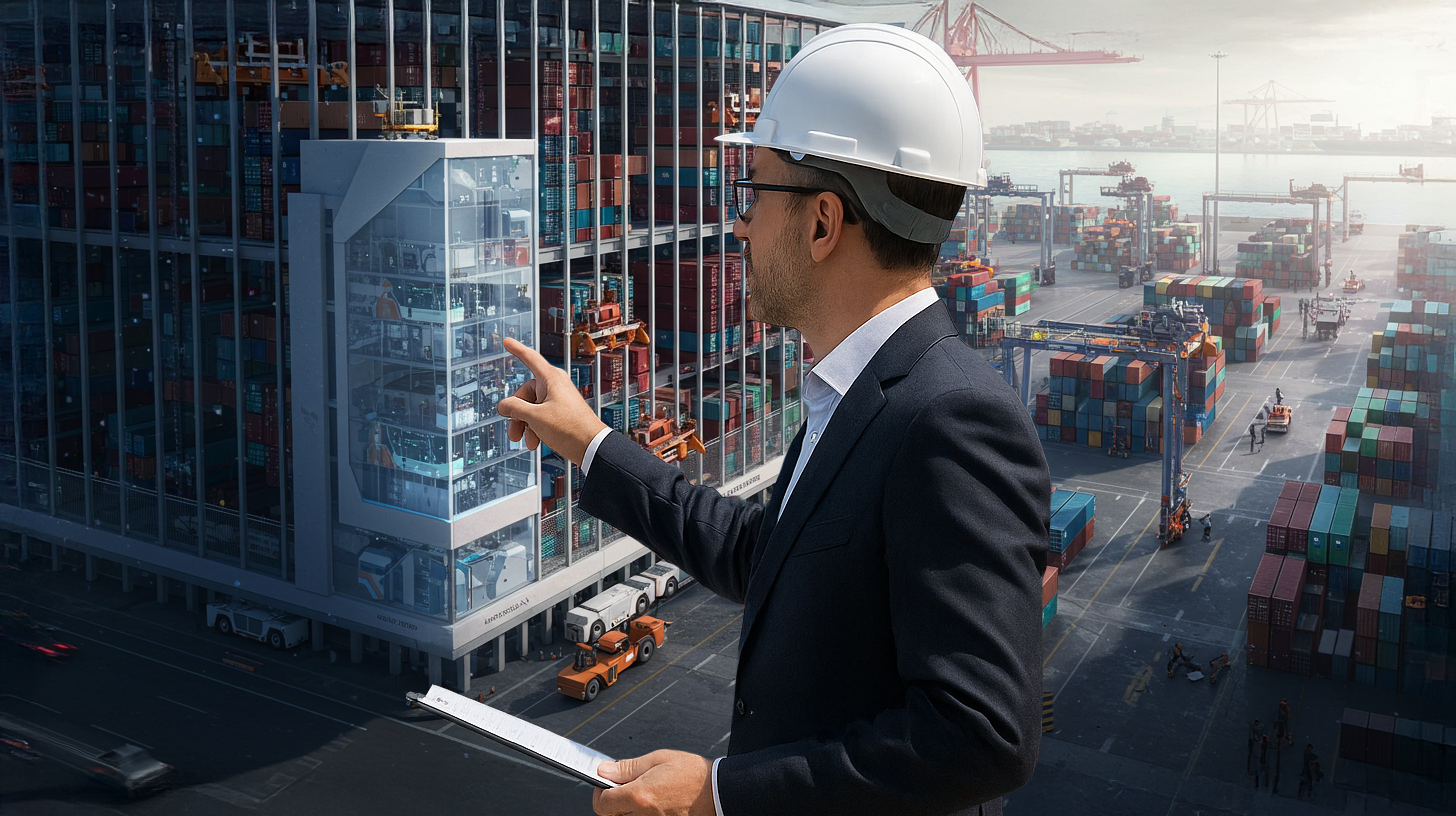
Container high-bay warehouses and container terminals: The logistical interplay – expert advice and solutions - Creative image: Xpert.Digital
This innovative technology promises to fundamentally change container logistics. Instead of stacking containers horizontally as before, they will be stored vertically in multi-story steel racking structures. This not only allows for a drastic increase in storage capacity within the same area, but also revolutionizes all processes at the container terminal.
More information here: