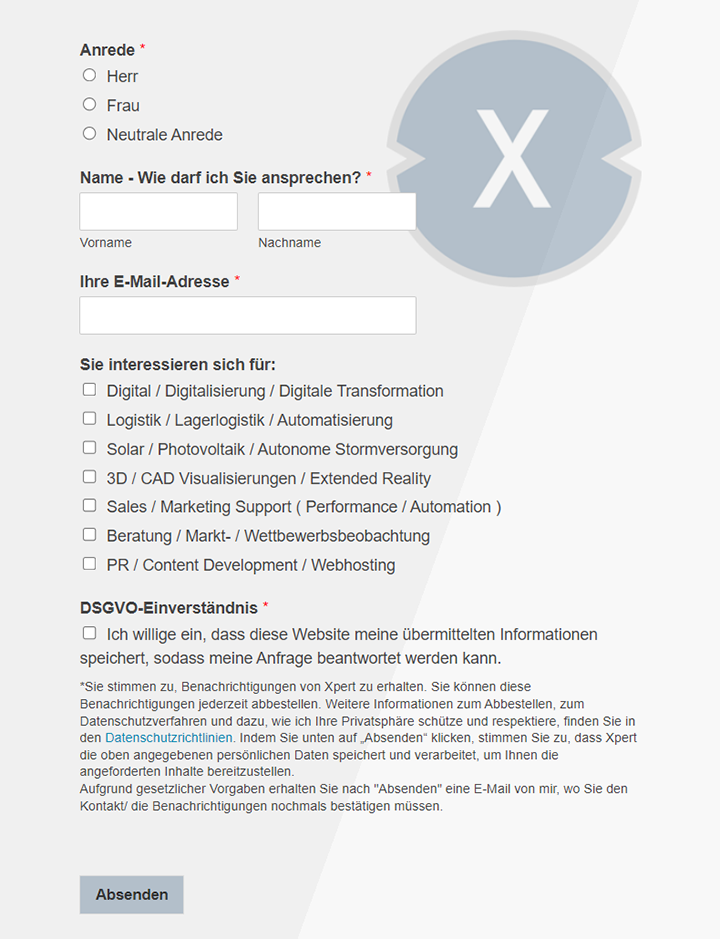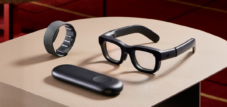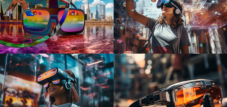
Smart glasses: Secret “Project Atlas” – Is Apple planning a major assault on the augmented reality glasses market? – Creative image: Xpert.Digital
Apple's "Project Atlas": The development of a new generation of smart glasses
Apple's entry into the world of smart glasses with augmented reality
Apple has apparently launched a new project called "Project Atlas," dedicated to developing smart glasses and taking a closer look at the market for wearable AR technology. This endeavor raises high expectations, as Apple has already demonstrated with products like the iPhone, Apple Watch, and AirPods how successful a well-designed hardware interface combined with appropriate software integration can be. "Project Atlas" represents a potential expansion of the Apple ecosystem: the goal is to provide users with a device that integrates seamlessly into everyday life and displays information directly before their eyes. Many see augmented reality glasses as the future of mobile communication and information processing. Whether the project will prove to be a new revolution in the tech market remains to be seen. Nevertheless, Apple's recent activities show that the company is actively seeking feedback and assembling initial focus groups to understand as early as possible how smart glasses could be designed and used in the future.
Internal feedback and research approach
"Project Atlas" is an internal initiative that has so far only been partially visible to the outside world. Internal Apple teams are currently gathering feedback from employees on various smart glasses already on the market. This information is intended to allow Apple to better understand what users value, which features are particularly relevant, and where weaknesses lie that need to be addressed. It is quite realistic that Apple is not only planning its own consumer product but also wants to first determine how this technology can be used and what innovations should accompany a potential market launch. The study is being led by the Product Systems Quality Team, which is located within the Hardware Engineering department. This team has already demonstrated its expertise in previous Apple devices by focusing on quality and reliability.
Speculation about possible features of the Apple glasses
Interestingly, there is already plenty of speculation about the potential features of a future Apple pair of glasses. Many observers suspect a kind of "improved AirPods concept." The AirPods are emblematic of Apple's ability to impress with minimalist design and a high degree of functionality. Glasses that could be considered an evolution of the AirPods would place an even greater emphasis on audio. After all, the glasses' shape allows for more space for sensors and a larger battery. This could result in a device that reaches a new level in terms of audio technology, battery life, and wearing comfort. An "integrated voice assistant" would be conceivable: Siri could be located directly in the temples of the glasses and would respond to voice commands. This offers the advantage that no additional headphones are needed to listen to music or take calls.
Integration into the Apple ecosystem
Furthermore, close integration into the Apple ecosystem is to be expected. Many people who already own an iPhone might see smart glasses as a complement, similar to the Apple Watch. Users are familiar with the seamless interaction of Apple products, be it AirDrop functionality or the easy synchronization of data via iCloud. "With Apple glasses, a seamless connection to the iPhone or Apple Watch would be virtually guaranteed," say some industry experts. This integration could facilitate not only data exchange but also access to notifications, calendar events, and health data.
Advanced sensor technology and camera functions
Another major topic in the AR field is sensor technology and camera capabilities. Apple already uses advanced cameras and sensors in iPhones and iPads, enabling impressive photos, videos, and AR applications. AR glasses could further refine this approach, for example, by supporting high-quality photography or using additional sensors to perceive the environment. This would be advantageous if users wanted information displayed directly in their field of vision. Particularly when it comes to navigation, the glasses could provide on-site directions, measure distances in real time, and recognize objects. The interplay of AR, camera, and sensors promises to enrich everyday life—whether through the display of relevant information, suitable routes, or interactive experiences with the environment.
Challenges regarding battery life and energy efficiency
Battery life is also a crucial factor for all smart glasses. "Project Atlas" could benefit from Apple's years of experience in energy efficiency. A larger form factor than AirPods would allow for a more powerful battery, which could positively impact both usage time and performance. At the same time, the question arises as to how Apple can design the components so efficiently that they are not too heavy and still provide sufficient power. After all, Apple is considered a pioneer in the development of processors and chips specifically tailored to its own hardware and software ecosystem. Energy-efficient glasses could greatly benefit from this expertise.
Stylish design as a crucial success factor
Design is always a key consideration for such devices. Apple is known for its minimalist aesthetic, which appears both functional and high-quality. However, with eyewear, style is even more important, as it's worn on the face and therefore makes a fashion statement. The challenge lies in striking a balance between functionality, comfort, and visual appeal. "Apple could draw inspiration from popular eyewear styles like Ray-Ban models," some insiders suggest. This would ensure that potential customers don't just feel like tech enthusiasts, but also appreciate the fashionable aspect. At the same time, it's safe to assume that Apple will strive to make the product as lightweight as possible so it can be worn comfortably for extended periods.
Additions to Apple's VR and AR strategy
At the same time, "Project Atlas" isn't Apple's only project in the field of AR and VR technology. With the Vision Pro, the company has already announced a mixed-reality headset, which, however, is positioned in the higher price segment and, with its wealth of features, could appeal to a more professional audience. The idea of an additional, lighter headset aimed at everyday use would therefore be a logical complement. While the Vision Pro is intended to offer an immersive experience, "Project Atlas" could focus more on everyday usability by providing notifications, navigation, and simple AR overlays without becoming too large or too expensive.
Competition in the smart glasses market
Looking at the smart glasses market, Apple potentially competes with companies like Meta and Google. Meta has already made several attempts to gain a foothold in this area by collaborating with well-known eyewear manufacturers and developing its own headsets. Google, in turn, launched an early, albeit controversial, version of smart glasses with Google Glass, thus gaining initial experience. However, none of these companies enjoys such a strong reputation for user-friendliness and design as Apple. This, in turn, opens up the opportunity to differentiate itself and drive a new generation of AR glasses. "Apple could focus on local data processing and stronger privacy," analysts speculate, given the company's reputation for protecting customer data to the best of its ability.
The global smart glasses market: A growing opportunity for innovation
The global market for smart glasses is expected to grow significantly, with estimates projecting billions in revenue in the coming years. This creates a tension: on the one hand, there is enormous potential; on the other, expectations are high. A company like Apple cannot afford to release an underdeveloped product. It is therefore likely that "Project Atlas" will pursue a deliberate, strategic course to precisely align with market desires and needs. Technical flaws or overly complicated operation would quickly lead to criticism and damage the image that Apple has cultivated for decades.
Added value through augmented reality: New possibilities in everyday life
A key success factor will be whether Apple manages to offer users genuine added value that goes beyond mere gimmicks. Especially in the area of AR applications, many hope for real-world benefits: "Imagine walking through an unfamiliar city, and the glasses show you in real time where interesting places, restaurants, or shops are located," is one such vision. Or consider the fitness sector, in which Apple is already active: The glasses could provide information about one's posture, display training progress, or offer helpful tips while jogging. All of this could be projected directly into the user's field of vision, without having to look at a smartphone.
Intuitive operation as a key feature
The user interface could also offer exciting possibilities. Besides Siri, for example, an intuitive gesture control system could be envisioned, using hand movements or head tilts as input methods. However, this technology would need to function very precisely to avoid being perceived as disruptive. Apple has proven itself a master of refinement in the past and could once again demonstrate the importance of a well-thought-out user experience. "Project Atlas" would thus exemplify Apple's ambition not only to enter new device categories but to significantly shape them.
Different approaches: Apple versus the competition
The potential differences between Apple's smart glasses and those from Meta and Google are particularly interesting. While Meta launched a lifestyle product with its Ray-Ban Stories, it largely foregoes an AR display. Google's glasses, on the other hand, featured a small prism that could display information in the user's field of vision, but were primarily relevant for business customers and professionals. Apple could take a middle ground here: on the one hand, a fashionable design suitable for everyday use, and on the other, a clever AR overlay that offers genuine added value. Furthermore, Apple is expected to integrate Siri directly into the glasses, while Meta relies on "Hey Meta" for its product. Apple could also implement advanced camera solutions, similar to those already used in iPhones.
Privacy and security: A key aspect
Data security and privacy protection are also areas where Apple could score points. The company will likely be keen to mitigate potential criticism from the outset, for example, through clear indicators when a camera is active or strict guidelines for applications that access the glasses' functions. It can be assumed that Apple will place a similarly high priority on protecting personal data as it does on its other products. This approach would strengthen customer trust and pave the way for the acceptance of new, camera-equipped devices.
Challenges and opportunities: Apple's premium claim
Considering the challenges and opportunities, it's clear that Apple needs to develop a product that stands out significantly enough from existing models to live up to its premium aspirations. While "Project Atlas" is just one of many initiatives the company is pursuing, it underscores Apple's commitment to AR headsets and glasses. Building on the expertise Apple has gained developing the Vision Pro and other devices, they could work towards a solution that is slimmer, lighter, and less obtrusive. Anyone who wears glasses daily will place a high value on comfort. Furthermore, the operation must be intuitive and the technology reliable.
“Project Atlas” as a promising milestone
In conclusion, it's clear that "Project Atlas" presents an exciting opportunity for Apple to redefine the still relatively young smart glasses market. If the product is actually released, it will likely appeal not only to Apple fans but also to those seeking sophisticated AR glasses that integrate seamlessly into everyday life without appearing bulky or complicated. The potential is enormous: navigation, messaging, fitness tracking, entertainment, and much more could be incorporated more naturally into daily routines. However, Apple must navigate the delicate balance between innovation, data privacy, design, and user-friendliness, a balancing act it has often performed admirably in the past.
"Project Atlas" thus symbolizes a phase of intensive exploration: Apple is thoroughly examining which features are sensible and practical for potential market readiness. Although the rumor mill is already churning, it's quite possible that the project will undergo several more transformations before a final product sees the light of day. Should Apple ultimately unveil glasses that are both lightweight and stylish as well as technologically advanced, "Project Atlas" could indeed become a milestone – not just for Apple, but for the entire industry. Until then, however, the tech world remains eagerly awaiting the official details Apple will eventually reveal. One thing is certain: "Project Atlas" suggests that Apple's commitment to AR technologies is far from over. Rather, the company seems ready to consistently pursue its course of innovation and expand its product range with another, potentially revolutionary device.
🎯🎯🎯 Benefit from Xpert.Digital's extensive, five-fold expertise in one comprehensive service package | BD, R&D, XR, PR & Digital Visibility Optimization

Benefit from Xpert.Digital's extensive, five-fold expertise in a comprehensive service package | R&D, XR, PR & Digital Visibility Optimization - Image: Xpert.Digital
Xpert.Digital possesses in-depth knowledge across various industries. This allows us to develop tailored strategies precisely aligned with the requirements and challenges of your specific market segment. By continuously analyzing market trends and monitoring industry developments, we can act proactively and offer innovative solutions. The combination of experience and expertise generates added value and provides our clients with a decisive competitive advantage.
More information here:
We are here for you - Consulting - Planning - Implementation - Project Management
☑️ SME support in strategy, consulting, planning and implementation
☑️ Creation or realignment of the digital strategy and digitization
☑️ Expansion and optimization of international sales processes
☑️ Global & Digital B2B trading platforms
☑️ Pioneer Business Development

Konrad Wolfenstein
I would be happy to serve as your personal advisor.
You can contact me by filling out the contact form below or simply call me on +49 7348 4088 965 .
I'm looking forward to our joint project.
Write to me



Xpert.Digital - Konrad Wolfenstein
Xpert.Digital is a hub for industry focusing on digitalization, mechanical engineering, logistics/intralogistics and photovoltaics.
With our 360° Business Development solution, we support renowned companies from new business to after-sales.
Market intelligence, smarketing, marketing automation, content development, PR, mail campaigns, personalized social media and lead nurturing are part of our digital tools.
You can find more information at: www.xpert.digital - www.xpert.solar - www.xpert.plus
Keep in touch