
Published on: April 16, 2025 / update from: April 16, 2025 - Author: Konrad Wolfenstein
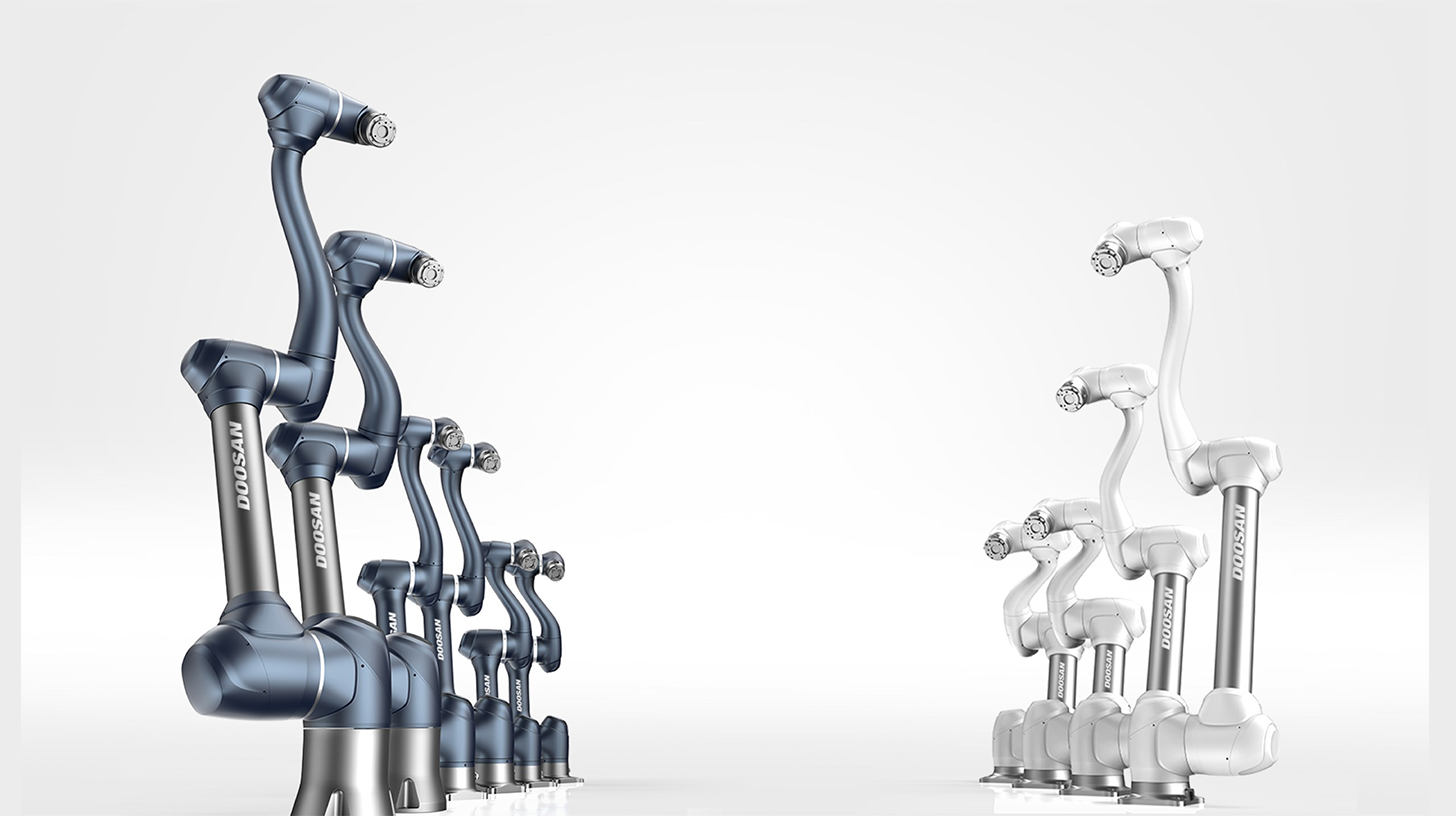
DOOSAN ROBOTICS in focus - world record: Nowhere is there more robots than in South Korea - Image: Doosan Robotics
South Korea's robotics sector: growth through billion dollar investments
Robot -density worldwide leaders: South Korea sets new standards - $ 2.2 billion by 2030
South Korea's robotics sector is currently experiencing a remarkable dynamic, led by companies such as Doosan Robotics, whose share price has significant fluctuations during a fundamentally positive trend. Despite short-term financial challenges, the industry shows overall growth potential, supported by massive state investments of over $ 2.2 billion by 2030 and the world's leading position in South Korea in the robot density. The shares of Doosan Robotics recorded a remarkable increase of almost 24% last week, which reflects the growing trust of investors in the future potential of the future, which predicts sales growth of up to 117% for the coming years.
Suitable for:

Doosan Robotics: Current market performance and future prospects
The Doosan Robotics share currently has a remarkable volatility. On April 16, 2025, the share closed at 50,400.00 KRW, which represents a decline in the day of 2.70%. Despite this slight decline, the paper recorded an impressive increase of 23.99% in the weekly perspective, while it has a decrease of 3.63% in the previous course. The price range of the current year is between 39,550.00 KRW and 109,300.00 KRW, which underlines the significant volatility of the stock.
The latest price increase is contrasting to the company's current financial challenges. In the last quarter of 2024, Doosan Robotics recorded a decline in sales of 30.69% compared to the same period last year, with sales of 11.70 billion KRW compared to 16.88 billion KRW in the previous year. This development reflects the current challenges with which the company is faced in an increasingly competitive market.
Strong stock exchange debut as the basis of trust
The trust of investors in Doosan Robotics can be partially attributed to the successful stock exchange debut. The company was able to collect 421.2 billion WON (about $ 317 million) during its IPO. The shares opened at 59,100 Won each and rose up to 67,600 in early trade, which was more than twice the IPO price of 26,000. This strong start reflected the trust of investors in the leading manufacturer of collaborative robots.
Impressive growth forecasts despite current losses
Despite the current financial challenges, the long -term development of Doosan Robotics looks extremely promising. Analysts forecast impressive sales growth in the coming years: In 2023, sales of 53.04 billion KrW will be expected, which corresponds to growth of 17.98 % compared to the previous year. For 2024, an increase is predicted to 97.32 billion KrW, which corresponds to an increase of 83.49 %. In 2025, sales are expected to reach 179.11 billion KRW, another growth of 84.04 %, and by 2026, KRW is expected to jump to 389.02 billion, which means an impressive plus of 117.19 %. At the same time, a positive development of the profit margins is expected. According to a negative value of -29.93 % in 2023, the Marge 2025e is expected to increase to 2.10 % and 2026e to 7.34 %. These forecasts underline the exponential growth potential and the promising perspectives of the company.
South Korea's robotics industry: a global pioneer with state support
World -leading robot density and government investments
South Korea has established itself as a global pioneer in the area of robotics. The country has the highest robot density in the world with 1,012 robots installed per 10,000 employees in the processing business - more than six times as much as the global average. In comparison, around 400 robots in Germany come to 10,000 employees and around 300 in the United States.
The South Korean government massively supports the development of the robotics industry. With the “fourth basic plan for intelligent robots from 2024 to 2028”, the government is planning to invest more than $ 2.24 billion by 2030 to promote robot technology in public and private sector. The ambitious goal is to integrate a million robots into different industrial and social areas.
Market growth and diversification
The South Korean market for industrial robots was estimated at $ 894.97 million in 2024 and is expected to grow to $ 1,874.65 million by 2033, with an average annual growth rate (CAGR) of 8.9% in the forecast period (2025–2033). This growth is promoted through progress in artificial intelligence, machine learning and sensor technologies.
According to official information, South Korea already produced robots and robot parts worth around 4.3 billion US dollars in 2020, with more than half of them being on industrial robots. Robot parts and service robots for professional services were particularly rapidly growing segments.
Important players in the Korean robotics market
In addition to Doosan Robotics, the ecosystem of the South Korean robotics industry includes several important companies:
- Industrial robot: HD Hyundai Robotics, Hyundai Wia, Hanwha Robotics, Higen Motor
- Service robots: LG Electronics, Samsung Electronics
- Specialized providers: Neuromeka, T-Robotics, Koh Young Technology, Robostar
This variety of companies reflects the width and depth of the South Korean robotics market and contributes to the international competitiveness of the country in this area.
Suitable for:

Driver of the market interesting: Why robotics shares are on the upper
Demographic change as a catalyst
An essential driver for the interest in robotics shares in South Korea is demographic change. The country has one of the lowest birth rates in the world and faces the challenge of an aging population. This leads to a decline in the employable population and increasing pressure on the social systems. The South Korean government sees a key technology in robotics to overcome these challenges.
Integration of AI and robotics as a growth driver
The combination of robotics and artificial intelligence is another important driver. South Korea has defined in its “digital strategy” that it wants to be one of the three leading AI strongholds worldwide by 2027, close to the USA and China. AI-supported robots can be used not only in production, but also in areas such as healthcare, agriculture and gastronomy.
Jong-Ho Lee, the Minister of Science and Information and Communication Technology, emphasized: “KI is not only a growth driver for digital industries such as cloud computing and the meta-verses, but also serves as a key factor for a drastic productivity improvement in traditional industries such as production and logistics".
Positive mood on Asian stock exchanges
The generally positive mood on the Asian stock exchanges also supports interest in robotics shares. Despite trade conflicts, the Asian financial markets currently have a phase of the upswing, which is largely influenced by the recent profits on Wall Street and optimistic signals in the trade dispute between the USA and China. This positive mood also benefits the shares in the robotic sector.
Growth prospects and long -term perspectives
Global trends and opportunities for South Korean companies
The global demand for robots is growing continuously, but with a forecast slow growth in the coming years. For the period 2024 to 2027, the forecast assumes an annual industry growth of around 4%. China remains the most important sales market for robots, followed by Japan, the USA, South Korea and Germany.
Despite this slowdown, there are considerable opportunities for South Korean companies, especially in new fields of application and through the integration of AI. Doosan Robotics as a leading manufacturer of collaborative robots is well positioned to benefit from the increasing demand for cobots that are designed to work in combination with people.
Cost control and competition: How robotic companies can exist
Despite the positive prospects, companies such as Doosan Robotics face considerable challenges. The current financial situation with declining sales and negative profit margins requires effective strategies for cost control and increase in sales. In addition, the competition in the robotic market is intensified, both by established actors and by new market participants.
Geopolitical tensions and trade conflicts, especially between the USA and China, could also affect the global supply chains and the export options for South Korean companies.
Robot shares in South Korea - volatile, but with potential
The robotics industry in South Korea, with Doosan Robotics as one of the leading companies, shows an impressive long -term potential despite short -term financial challenges. The clear increase in Doosan Robotics share in the past week reflects the trust of investors in the future viability of the company and the entire industry.
The massive state support, demographic change as a driving force and the integration of AI into robotic systems form a solid basis for future growth. With its worldwide leading robot density and the comprehensive ecosystem of robotics manufacturers, South Korea is well positioned to assert and expand its leading position in this future market.
For investors, South Korean robotic shares offer interesting, albeit volatile investment option with considerable long -term potential. The forecast growth rates for companies such as Doosan Robotics indicate a possible increase in value, which, however, should be weighed against the existing risks and challenges.
Your global marketing and business development partner
☑️ Our business language is English or German
☑️ NEW: Correspondence in your national language!

Konrad Wolfenstein
I would be happy to serve you and my team as a personal advisor.
You can contact me by filling out the contact form or simply call me on +49 7348 4088 965 (Munich) . My email address is: wolfenstein ∂ xpert.digital
I'm looking forward to our joint project.


