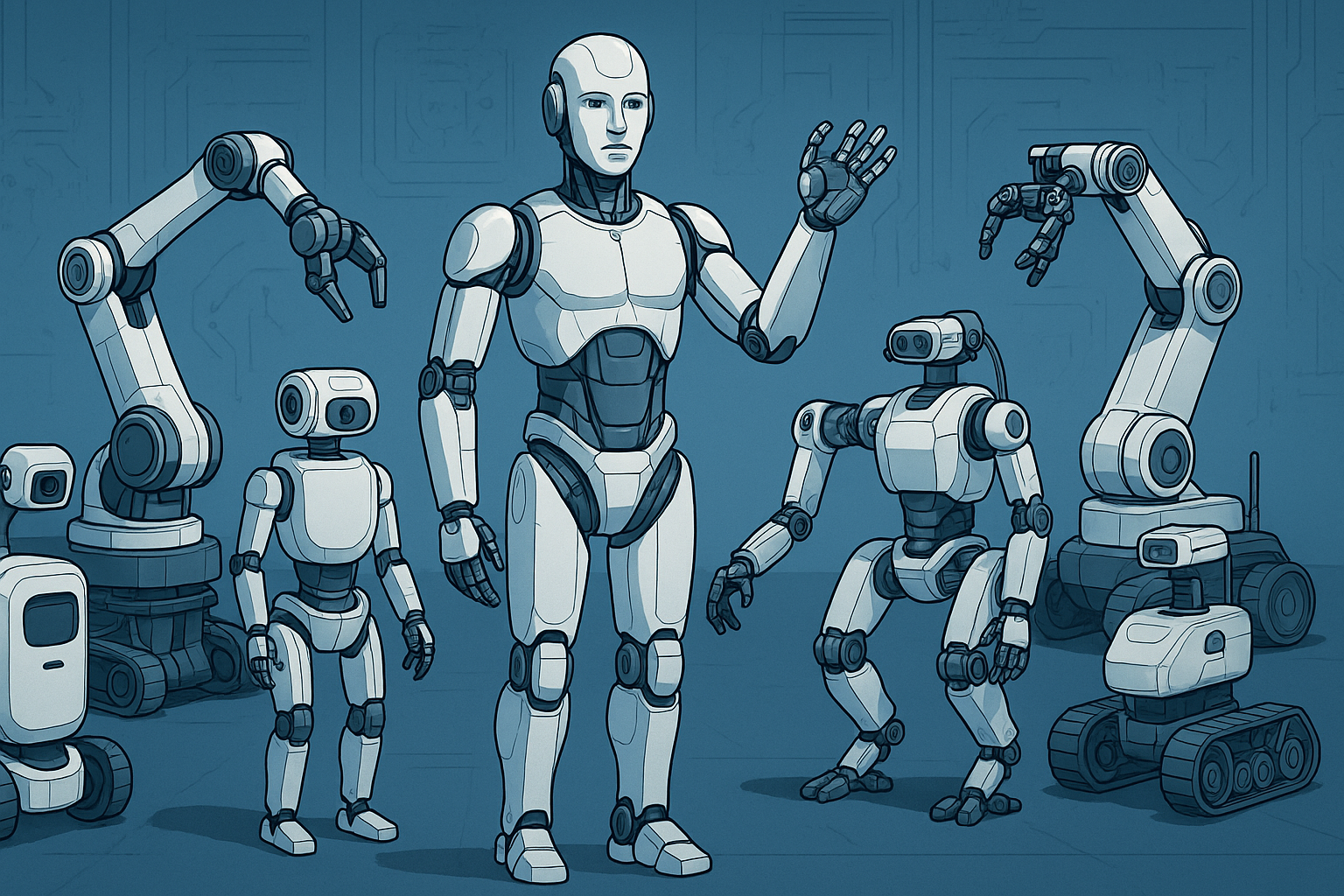
The entire field of robotics benefits from the innovations of humanoid robots – Image: Xpert.Digital
Catalyst Humanoid Technology: How humanoid robots are setting new standards in industry
Technological revolution through humanoids: Why humanoid robots will determine the future of automation
Robotics is at a crucial turning point, and the development of humanoid robots is driving innovative technologies that extend far beyond their original applications. These human-like robots are acting as catalysts for technological breakthroughs that are revolutionizing the entire robotics industry and setting new standards.
Related to this:

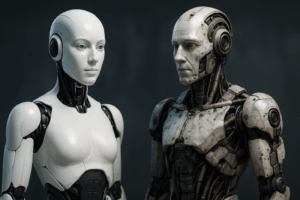
The importance of humanoid robots as drivers of innovation
The development of humanoid robots goes beyond simply imitating human movements. It presents a complex technological challenge that compels researchers and engineers to develop innovative solutions in various key areas. These innovations then find their way into the entire robotics industry, improving the performance of all types of robots.
Humanoid robots will be mass-produced by 2025, and their development is already having a measurable impact on the robotics industry. Technological advances in humanoid robotics improved by an impressive 35 to 40 percent between 2023 and 2025, illustrating the rapid pace of innovation.
Artificial intelligence as a core component of the robotics revolution
The integration of artificial intelligence into humanoid robots has initiated a paradigm shift across the entire robotics industry. These AI-powered systems are no longer limited to pre-programmed tasks but can learn independently and adapt to new situations. The development of AI algorithms for humanoid robots has led to advanced systems that can now be deployed in various types of robots.
Generative AI, originally developed for humanoid robots, now enables all types of robots to be programmed using natural language. This technology eliminates the need for specialized programming skills and makes robots accessible to small and medium-sized enterprises. Robot manufacturers have recognized that the AI systems developed for humanoid robots can simplify the programming of all robot types.
AI research for humanoid robots has also led to significant advances in predictive maintenance. This technology analyzes robot performance data to predict future failures and reduce maintenance costs. In the automotive supply industry, each unplanned hour of downtime costs approximately $1.3 million, highlighting the immense economic importance of these innovations.
Sensors and perception systems: Groundbreaking developments
The development of advanced sensors for humanoid robots has led to groundbreaking innovations that are now used throughout the robotics industry. Humanoid robots require highly precise sensors for environmental perception, balance, and manipulation, which has driven the development of new sensor technologies.
The visual systems developed for humanoid robots include RGB cameras, depth cameras, LiDAR, radar, and ultrasonic sensors. These technologies enable robots to perceive and analyze their environment in real time. Tesla Optimus, for example, uses a multi-camera setup similar to that found in Tesla vehicles, while Boston Dynamics' Atlas combines various sensor technologies.
The development of tactile sensors for humanoid robots has led to a new generation of force sensors used throughout the robotics industry. These sensors enable robots to measure forces and pressures and react accordingly, which is particularly crucial in human-robot collaboration.
Actuator technology: Precision and efficiency
The development of humanoid robots has led to significant advances in actuator technology. Humanoid robots require between 16 and 60 degrees of freedom, which has driven the development of highly precise and efficient actuators. These technologies are now finding their way into all types of robots, significantly improving their performance.
The development of electric actuators for humanoid robots has led to a new generation of motors characterized by high power density, low mass, and compact dimensions. Advances in permanent magnets, particularly neodymium-iron-boron magnets, have significantly increased the power density of electric motors and narrowed the gap with hydraulic systems.
Boston Dynamics' decision to power the new Atlas robot entirely electrically signals a trend toward commercialization and broader applicability. This development has implications for the entire robotics industry, as electric actuators offer higher efficiency (75-80%) and require less maintenance than hydraulic systems.
Materials science and structural design
The development of humanoid robots has led to innovative lightweight structures that are crucial for flexibility, energy efficiency, and extended battery life. Evolutionary structural optimization (ESO) methods have been developed to reduce the weight of frame structures by over 50 percent without compromising stiffness or vibration behavior.
Materials developed for humanoid robots, such as magnesium alloys and plastic resins, are now widely used throughout the robotics industry. These materials make it possible to construct robots that are lighter, stronger, and more energy-efficient.
Navigation systems and algorithms
The development of humanoid robots has led to advanced navigation systems, which are now used in all kinds of mobile robots. The SLAM (Simultaneous Localization and Mapping) algorithms developed for humanoid robots enable them to simultaneously determine their position and create a map of their environment.
The combination of LiDAR and image processing-based systems, originally developed for humanoid robots, offers robust performance in various scenarios. This hybrid navigation technology leverages the strengths of both technologies, enhancing robots' ability to understand and react to their environment.
Safety standards and norms
The development of humanoid robots has led to a revision of safety standards across the entire robotics industry. The revised ISO 10218 standard defines new robot classes and enhanced safety requirements. These standards take into account the new capabilities and applications that have emerged with humanoid robots.
Safety technologies developed for humanoid robots, particularly in human-robot collaboration, have led to the development of ISO TS 15066 for collaborative robots. This standard specifies the force and speed limits that must be observed during collaborative operation.
Impact on industrial robotics
Innovations from humanoid robotics have revolutionized industrial robotics. Modern industrial robots benefit from advanced AI systems originally developed for humanoid robots. This integration allows industrial robots to monitor their accuracy and performance and signal when maintenance is required.
The image processing systems developed for humanoid robots have led to intelligent gripping systems that are widely used in industrial robotics. These systems can recognize, sort, and manipulate objects without requiring complex programming.
Related to this:

Economic impact and market development
Innovations in humanoid robotics are having a significant economic impact on the entire robotics industry. Goldman Sachs estimates that the global market for humanoid robots will reach $38 billion by 2035. This growth is driving investment across the robotics sector and fostering further innovation.
Technologies developed for humanoid robots have reduced the costs of all types of robots. High-quality robotic systems have seen their prices decrease by 40 percent within a year, which is promoting the adoption of robotics technology in small and medium-sized enterprises.
Human-robot collaboration
The development of humanoid robots has led to groundbreaking advances in human-robot collaboration. The safety systems and interaction interfaces developed for humanoid robots have driven the development of collaborative robots (cobots). These technologies enable robots to work safely alongside humans and adapt to their needs.
The advanced sensors and AI systems developed for humanoid robots have led to the development of intuitive human-robot interfaces. These systems can understand human gestures and voice commands and respond accordingly.
Future prospects and technology transfer
Innovations in humanoid robotics will continue to shape the entire robotics industry. The development of generative AI models for humanoid robots will lead to even more intelligent and autonomous robotic systems. These technologies will be able to solve complex tasks and adapt to new situations.
Technologies developed for humanoid robots are also being used in new application areas. Soft robotics, originally developed for humanoid applications, is now finding widespread use in medical robotics and other sensitive fields.
Challenges and solutions
The development of humanoid robots has also led to innovative solutions for common challenges facing the robotics industry. Cybersecurity, which is crucial for humanoid robots, has resulted in the development of new security standards such as IEC 62443. These standards protect industrial automation systems from cyberattacks and are applied across the robotics industry.
Energy management systems developed for humanoid robots have led to more efficient battery technologies used in all types of mobile robots. These innovations extend operating time and reduce maintenance requirements.
Humanoid robots as drivers of innovation: From AI to sensors
The development of humanoid robots has proven to be a powerful driver of innovation for the entire robotics industry. From advanced AI systems and precise sensors to efficient actuators, the technologies developed for humanoid robots improve the performance of all types of robots. These innovations have not only expanded the technical possibilities but also improved the economic accessibility of robotics technology.
The future of robotics will be significantly shaped by the innovations emerging from humanoid robotics. With the anticipated mass production of humanoid robots starting in 2025, these technologies will become even more widely available and will enable further breakthroughs across the entire robotics industry. Humanoid robotics thus functions not only as an independent field of research but also as a catalyst for the further development of the entire robotics industry.
Investments in humanoid robots are therefore paying off far beyond their original scope. They are creating an ecosystem of innovations that is driving the entire robotics industry forward and opening up new possibilities for automation, productivity, and human-robot interaction. These technologies will fundamentally change the way we work, produce, and interact with machines.
Related to this:
Your global marketing and business development partner
☑️ Our business language is English or German
☑️ NEW: Correspondence in your native language!

Konrad Wolfenstein
I and my team are happy to be available to you as your personal advisor.
You can contact me by filling out the contact form here wolfenstein@xpert.digital:or simply call me at +49 7348 4088 965. My email address is
I'm looking forward to our joint project.