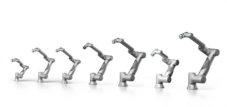
Balancing vision and reality: Neura Robotics in a competitive environment – Image: Xpert.Digital
Neura Robotics: Where the company still needs to score points in the competition
Challenges for Neura Robotics in the competitive environment
In the dynamic world of cognitive robotics, Neura Robotics has established itself as an ambitious player, attracting attention through innovative technologies and a clear vision. Despite impressive achievements, the company faces several challenges compared to its competitors. This analysis highlights the areas where Neura Robotics still has room for improvement compared to its competitors.
Related to this:

Work culture and employee satisfaction
Neura Robotics' internal corporate culture exhibits some weaknesses compared to modern employers in the tech industry. One striking criticism concerns the inflexible working hours. According to employee reviews (Indeed), the company completely prohibits working from home – even in exceptional circumstances such as sick children, no flexibility is offered. One software developer describes this as "an absolutely outdated image that does not reflect a modern work culture" and predicts that this rigid stance could lead to the loss of valuable employees in the long run.
Further criticisms concern management and work structures. A former employee rates these as "poor" and "chaotic," complaining about a lack of teamwork and insufficient job security, especially for interns and employees on probation. The average rating of 4.1 on kununu masks these individual critical voices, which could point to potential structural problems.
Energy costs and production location
A significant economic disadvantage arises from the strategic decision to relocate production from China to Germany. David Reger, the founder and CEO, himself admits that German energy prices represent "one of our biggest challenges" because "robotics and AI are very energy-intensive." These higher operating costs could negatively impact the competitiveness of the products, particularly in the price-sensitive market segment.
Relocating production also involves significant investment. Although Reger doesn't specify concrete figures, he admits that "relocating production is indeed costly." These financial burdens tie up resources that competitors might be able to invest more effectively in research and development or market expansion.
Balance between vision and reality
Neura Robotics is occasionally criticized for its strongly future-oriented approach. In a blog post, Reger responds to accusations that the company focuses too much on visionary future scenarios instead of concentrating on current industrial applications. This criticism is also reflected in internal assessments, which complain that "the company's goals are often set too high.".
This tension between ambitious visions of the future and the need to deliver market-ready products could put Neura Robotics at a disadvantage compared to competitors with more pragmatic business models. While visionary approaches are important for long-term success, investors and customers also need tangible, short-term results.
Resources in international comparison
Despite impressive funding rounds – most recently €120 million in a Series B financing – Neura Robotics lags behind some international competitors in terms of resources. The company positions itself as a "strong player against major players from the US and China," but this ambition faces significant challenges.
Reger himself acknowledges that a key objective is to become "a strong player in the global robotics landscape, competing with major players from the USA and China." This wording suggests that the company is still in a catching-up phase and is not yet operating on an equal footing with its leading international competitors.
Market entry barriers and scaling hurdles
Expanding into new markets presents Neura Robotics with particular challenges. The company has announced its intention to expand into the USA and Japan, for which part of the new financing will be used. This international expansion requires significant resources and adaptability, which is especially challenging for a relatively young company.
Compared to established robotics manufacturers with a global presence and extensive sales networks, Neura Robotics still needs to build these structures. The necessary investments in marketing, sales, and local adaptations could slow its growth rate and give competitors an advantage.
Collaboration with established players
While Neura Robotics develops impressive technologies, the company may lack the market penetration and reach of established competitors. Although it has partnered with major players like Kawasaki Robotics, the question remains whether these collaborations are sufficient to compete with fully integrated, large corporations.
The challenge lies in scaling one's own technology through these partnerships without relinquishing too much added value to the partners. This requires a delicate balance between cooperation and competition, which can be more difficult for a young company to navigate than for experienced market players.
Technological development areas at Neura Robotics
Neura Robotics has established itself as an innovative player in the world of cognitive robotics by developing numerous advanced technologies. However, there are some areas where Neura Robotics has not yet pursued independent developments or which are still in early stages of development.
Simulation technologies and AI training
A notable aspect is Neura Robotics' collaboration with Nvidia in the area of simulation environments. Instead of developing its own comprehensive simulation platform, the company utilizes Nvidia's Isaac robotics development platform for training its robots. Specifically, Neura relies on Isaac Lab and Isaac Sim to accelerate and optimize robot training through simulated scenarios. This strategic partnership suggests that Neura is leveraging external technologies in this area rather than developing its own solutions.
"By combining the Nvidia Isaac robotics development platform with its own Neuraverse platform, Neura Robotics aims to optimize the development of its cognitive and humanoid robots," the reports state. This wording indicates that Neura is leveraging the strengths of both platforms, with the simulation component coming from Nvidia.
Complete industrial automation platforms
Collaboration with established industrial companies reveals another technological gap. The partnership with OMRON illustrates that while Neura Robotics contributes the robot hardware and cognitive capabilities, it relies on the expertise of partners for integrated industrial solutions. The jointly developed OMRON iCR is based on NEURA Robotics' MAiRA series but is combined with OMRON's "all-in-one control platform Sysmac".
This integration suggests that Neura has not developed a standalone, comprehensive industrial automation platform and relies on collaborations in this area to offer complete solutions for industrial applications.
Energy-efficient technologies
Energy costs pose a major challenge for Neura Robotics. By deciding to relocate production from China to Germany, the company chose a location with significantly higher energy prices. David Reger, the founder and CEO, describes German energy prices as "one of our biggest challenges" because "robotics and AI are very energy-intensive."
This statement suggests that Neura Robotics may not yet have developed highly efficient energy management systems or energy-saving technologies that could compensate for this disadvantage. In a market increasingly focused on sustainability and energy efficiency, this could represent a significant technological gap.
Humanoid robot technology
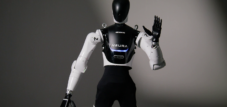
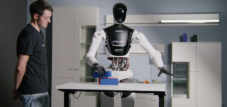
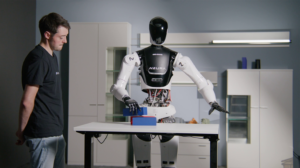
Although Neura Robotics is developing a humanoid robot, the 4NE-1 ("For Anyone"), this project is still in its early stages. Reports indicate that while the 4NE-1 model is already available for purchase, it is still under development. This suggests that the technology for fully autonomous, versatile humanoid robots is not yet mature.
The ambitious vision of producing up to 5 million humanoid and cognitive robotsunderscores that Neura Robotics still has a long way to go in this field. The realization of this vision will depend heavily on further technological development, market acceptance, and the company's ability to massively scale up its production. Although the goal seems very ambitious, Neura Robotics, with its innovative technology and strong financial backing, could certainly play a significant role in the future robotics landscape.
- Production capacity: Manufacturing 5 million robots in less than 5 years requires an enormous production capacity that first needs to be built up.
- Market acceptance: The actual acceptance of humanoid robots in everyday life and industry depends on factors such as price, reliability, design, and data protection.
- Global competition: Neura Robotics competes with established companies from Asia and the USA, which are also making great strides in robotics.
Producing and marketing such a large number of advanced robots in such a short time remains an enormous challenge
Open innovation and external technology development
One interesting aspect is the “Neura Robotics Challenge” (NRC), which “brings together the best talent from universities across Europe to promote creativity, collaboration, and innovation in the field of robotics in Europe.” This initiative could be interpreted as an indication that Neura Robotics is seeking external innovations to expand its technology portfolio.
The call for proposals invites participants to “propose new ideas, applications and research directions for modern robots in the categories of humanoid robots, cognitive robots and mobile manipulators”, suggesting that the company is open to external developments that could potentially fill its own technological gaps.
Neura Robotics: Visionary in cognitive robotics despite difficult market conditions
Neura Robotics has made impressive progress in the development of cognitive robotics by giving robots senses (sight, hearing, touch) and a form of intelligence. However, there are areas where the company has not yet developed its own technologies or relies on partnerships. These include comprehensive simulation environments, complete industrial automation platforms, energy-efficient systems, and fully developed humanoid robot technology.
These technological gaps could, on the one hand, reflect strategic decisions to focus on core competencies and forge partnerships in other areas. On the other hand, they could also represent development potential that Neura Robotics intends to explore in the future to further strengthen its position in the highly competitive cognitive robotics market.
Neura Robotics has positioned itself as an innovative company with impressive technology and vision, but faces several challenges in the competitive landscape. The company culture, high energy costs at its German location, the balance between vision and reality, and limited resources compared to international competitors represent significant hurdles.
Nevertheless, the company is showing remarkable development with considerable potential. The recently acquired funding and strategic realignment could help Neura Robotics overcome some of these challenges and strengthen its position in global competition. The coming years will show whether the company can achieve its ambitious goals and establish itself as a leading player in cognitive robotics.
Related to this: