

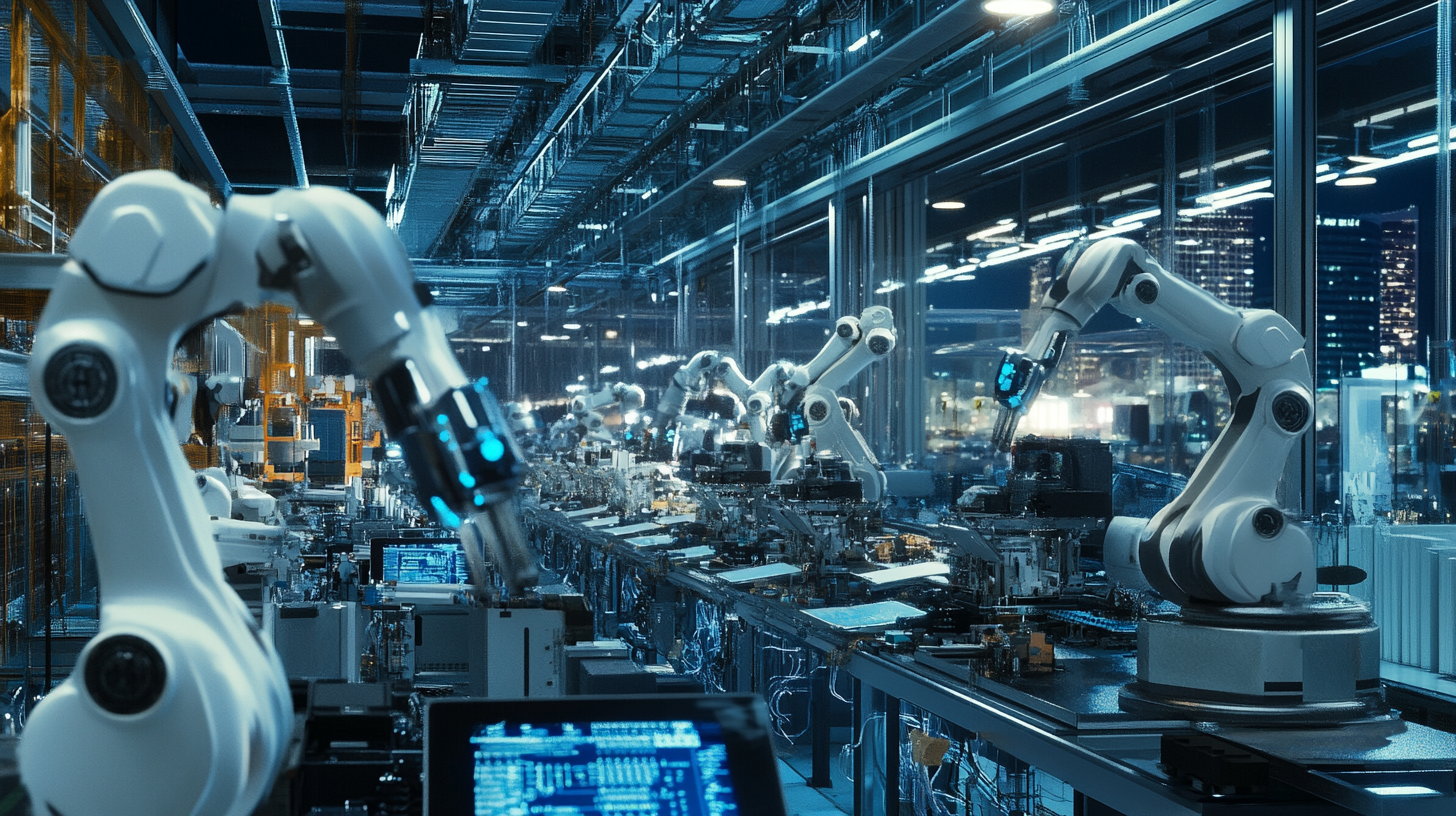
Automation under scrutiny: How Germany can secure its leading role in robotics and Industry 4.0 – Creative image: Xpert.Digital
Securing the future: How Germany can defend its leading position in robotics
Maintaining a leading role: Germany's paths to the future of industry
Germany faces the challenge of defending its leading position in robotics and Industry 4.0 in global competition. At the same time, technological transformation offers numerous opportunities that must be seized to secure the country's industrial future. The combination of technological innovation, political support, and sustainable development could be crucial for maintaining Germany's leadership role in the long term. The following sections highlight key areas of action and strategies that can contribute to this goal.
This goes well with:
1. Expansion of the robotics infrastructure
Germany has established itself as a European leader in industrial robotics. With a record 28,355 newly installed industrial robots in 2023 and a total of 269,427 units, the country remains a leader in Europe. Nevertheless, robot density is growing significantly faster in countries like China, posing a potential threat to Germany's competitiveness.
To maintain the technological lead, targeted investments in robotics infrastructure are necessary:
- Promotion of collaborative robots (cobots): Cobots enable close cooperation between humans and machines and could make it easier for small and medium-sized enterprises (SMEs) to access automation.
- Low-cost robotics: Cost-effective automation solutions could help SMEs remain competitive and take advantage of the benefits of robotics.
- Service robotics: In addition to classic industrial robotics, service robotics should also be promoted more strongly, for example in areas such as logistics, healthcare or cleaning.
2. National strategy and political support
A national robotics roadmap could be a crucial step in strengthening Germany's position in global competition. The German Engineering Federation (VDMA) has already proposed a strategy with ambitious goals:
- Increasing robot density: By 2028, the robot density in Germany is expected to exceed the global average.
- Focus on service robotics: Applications in logistics, laboratory automation and building cleaning, in particular, offer great potential.
- Tax incentives: Research and development as well as investments in domestic suppliers should be supported through tax breaks.
Politics plays a central role in this: through clear framework conditions and funding programs, it can stimulate innovation and support companies in their transformation.
3. Strengthening research and development
Germany boasts a strong research landscape with renowned institutions such as the Fraunhofer Institute and RWTH Aachen University. Nevertheless, further action is needed to expand its innovative capacity
- Expansion of university programs: Study programs in the field of robotics and automation should be expanded to counteract the shortage of skilled workers.
- Promoting Artificial Intelligence (AI): AI-powered automation is a key area for future innovations.
- Human-robot collaboration: Research programs for safe cooperation between humans and machines should be intensified.
Furthermore, public-private partnerships could help to translate research results into marketable products more quickly.
4. Integration of Industry 4.0 technologies
The digitalization of production is a core aspect of Industry 4.0, in which Germany is already a leader. To further expand this position, the following measures are crucial:
- Internet of Things (IoT): The networking of production facilities through IoT technologies enables more efficient processes and better data utilization.
- Big Data Analytics: Analyzing large amounts of data can optimize production processes and create new business models.
- Additive manufacturing (3D printing): This technology offers new possibilities for customized products and resource-saving production.
Small and medium-sized enterprises (SMEs) in particular need support in implementing digital solutions. Initiatives such as "Platform Industry 4.0" could play an important role here.
5. Securing international competitiveness
Global competition is characterized by massive investments from other countries – for example, through China's Five-Year Plan or the US Inflation Reduction Act. To remain internationally competitive, Germany must take strategic measures:
- Harmonisation of international standards: Uniform standards can facilitate market access and promote exports.
- European partnerships: Stronger cooperation within Europe could help reduce dependence on global supply chains.
- Promoting strategic alliances: Cooperation with other leading nations in the field of robotics could create synergies.
Another important aspect is ensuring a fair competitive environment through political measures at the international level.
6. Sustainability as a competitive advantage
Climate neutrality is not only a societal necessity, but also an opportunity for German industry. Sustainable automation solutions could be a decisive competitive advantage
- Robotics for renewable energies: Robots could be used, for example, in the installation of solar power plants or wind turbines.
- Resource-efficient production: Intelligent automation can reduce material consumption and minimize waste.
- Energy-efficient technologies: The use of energy-efficient robots could help to reduce production costs while simultaneously reducing environmental impact.
By linking sustainability and innovation, Germany could open up new markets and strengthen its competitiveness.
7. Education as the key to securing the future
An often underestimated aspect is the importance of education for technological progress. In addition to promoting specialized degree programs, general awareness of technologies such as robotics should also be strengthened
- Early education: Basic programming or robotics skills could be taught in schools.
- Further training opportunities: Working professionals should be prepared for new technologies through flexible further training opportunities.
- Promoting interdisciplinary skills: The combination of technical knowledge and entrepreneurial skills is becoming increasingly important.
A well-trained workforce is not only a competitive advantage, but also a guarantee for social stability in times of change.
Strong starting position with potential for further development
Germany has a solid foundation in robotics and Industry 4.0: a strong research landscape, innovative companies, and a well-developed infrastructure form the basis for future success. Nevertheless, the country cannot rest on its laurels. Global competition demands continuous innovation and targeted investments in key technologies.
Through a clear national strategy, the promotion of sustainable solutions, and the expansion of international partnerships, Germany can not only defend its leading role but also further strengthen it. The next phase of the industrial revolution offers enormous opportunities – it is up to Germany to seize them decisively.
Related to this: