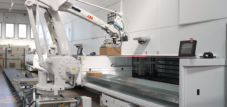
Robot-controlled process automation in office work: Efficiency and innovation through Robotic Process Automation – Image: Xpert.Digital
Transformation process of the modern working world through RPA
The modern workplace, particularly in administrative areas, is undergoing profound change. A key driver of this transformation is Robotic Process Automation (RPA), which has rapidly evolved from a promising technology to an indispensable tool for businesses. Industries with high transaction volumes and standardized processes, such as the insurance industry, benefit enormously from the opportunities offered by RPA. This technology enables the automation of repetitive and rule-based tasks, resulting in significant efficiency gains and cost savings. But RPA is more than just a cost-cutting tool. It frees employees from monotonous tasks, allowing them to focus on more challenging and value-adding activities, ultimately leading to increased employee motivation and satisfaction.
Application areas of RPA in office work
To fully grasp the potential of RPA, it is important to understand the various areas of application within an office. RPA systems are capable of taking over a wide range of routine tasks that were traditionally performed by human employees.
Example: Invoice verification
Consider, for example, invoice verification. Here, software robots can recognize incoming invoices, regardless of format, extract the information they contain, compare it with orders or contracts, and independently carry out the approval process all the way to payment release. This automation not only reduces manual effort but also minimizes the risk of human error and significantly speeds up the entire process.
Example: Processing customer inquiries
Another important application is handling customer inquiries. In times when customers expect fast and accurate answers, RPA bots can play a crucial role. They are able to identify standard inquiries, answer frequently asked questions, gather information from various systems, and even process simple transactions independently. This leads to a significant reduction in processing times and an improved customer experience, as inquiries can be handled faster and around the clock.
Data entry and data matching with RPA
RPA also proves extremely valuable in the areas of data entry and data matching. Many business processes require the entry of identical data into different systems or the reconciliation of data sets to identify inconsistencies. These tasks are not only time-consuming but also prone to errors. RPA robots can perform these tasks precisely and efficiently, thereby improving data quality and freeing up valuable employee resources.
RPA in the insurance industry: A paradigm for process optimization
The insurance industry is a prime example of how profoundly RPA can optimize processes. The complex and highly regulated operations in insurance companies offer an ideal environment for automation.
RPA in the underwriting process for risk assessment
A key area is the underwriting process, i.e., the risk assessment before an insurance policy is issued. Previously, this process was often manual and time-consuming, as underwriters had to gather, analyze, and evaluate information from various sources. Today, RPA robots can take over much of this work. They can automatically access external databases, collect relevant information about potential policyholders, and analyze it according to predefined criteria. This significantly accelerates risk assessment and improves the consistency of decisions. Experts estimate that using RPA in the underwriting process can free up approximately 30 percent of employees' work capacity. These freed-up resources can then be used for more complex cases or strategic tasks. Furthermore, automation minimizes the likelihood of individual errors, leading to a significant improvement in the quality of the underwriting process. It has been reported that some insurers have been able to reduce the processing time for underwriting applications by more than half through the use of RPA.
Improvements in claims processing through RPA
Another area where RPA is having a transformative impact is claims processing. The fast and efficient handling of insurance claims is crucial for customer satisfaction. Traditionally, however, this has been a complex process often associated with long waiting times. By using RPA, claims processing times can be significantly reduced. It is estimated that in some cases, an average reduction of 75 percent is possible. Software robots can, for example, automatically gather the necessary data for individual insurance claims from various systems, review the claim notification, verify the validity of the policy, and even independently process and approve simple claims up to a certain amount. This data collection and preprocessing by RPA bots accelerates the entire process and allows claims adjusters to focus on more complex cases that require human judgment. Automated processing makes a significant contribution to meeting high customer demands for fast and straightforward claims settlement. Insurance companies that have successfully implemented RPA in claims processing report a significant increase in customer satisfaction.
Benefits of RPA: Beyond increased efficiency
However, the advantages of RPA go beyond simply increasing efficiency.
Cost savings and increased productivity
Cost reduction is an obvious advantage. By automating repetitive tasks, insurers can lower personnel costs while simultaneously increasing productivity.
Shorter cycle times and competitive advantages
Reduced cycle times are also a crucial factor, especially for demanding processes such as claims processing and policy transfer. Faster processing times not only lead to more satisfied customers but also enable companies to react more quickly to market changes.
Intelligent automation with AI and machine learning
Furthermore, RPA opens up new business opportunities. Modern RPA applications increasingly integrate technologies such as artificial intelligence (AI) and machine learning. These intelligent robots can not only perform repetitive tasks but also recognize patterns, make predictions, and thus improve decision-making. For example, they can analyze large amounts of data to identify new risk factors or create personalized offers for customers.
The implementation of Robotic Process Automation (RPA)
Identification of suitable processes for automation
Implementing RPA requires careful planning and execution. First, it is crucial to identify viable business cases – that is, processes suitable for automation. These are typically rule-based, repetitive, high-volume, and standardized processes.
Process optimization before automation
The next step for companies should be to review and, if necessary, optimize their business processes before automating them. Automating an inefficient process will not lead to the desired result.
Design and development of software robots
The software robots are then designed using process design tools. These tools allow the individual steps of the automation process to be graphically modeled and configured. It is recommended to start by automating simple, high-volume processes to achieve initial successes and gain experience.
Employee involvement
Building internal expertise and involving employees are also crucial for a successful RPA implementation.
The impact of RPA on office work
Freedom from monotonous tasks
RPA is already fundamentally changing large areas of office work. It frees employees from monotonous and time-consuming tasks and allows them to concentrate on value-adding activities that require human creativity, empathy, and strategic thinking.
Potential in the insurance industry
Especially in the insurance industry, RPA has the potential to significantly improve efficiency, accuracy and customer satisfaction while simultaneously reducing costs.
Wide range of applications for RPA
The observation that robotics, especially RPA, plays an increasingly important role in modern office work is absolutely accurate. The possibilities extend far beyond the examples already mentioned.
Advantages of using RPA
Increased efficiency
Increasing efficiency is a key point. Robots can perform tasks around the clock, without breaks and at a constant speed, resulting in a significantly higher throughput rate.
Error reduction
Another significant advantage is the reduction of errors. Automated processes follow predefined rules and are therefore less susceptible to human error, typos, or negligence.
Cost reduction and employee satisfaction
Cost reduction is another important aspect. By automating tasks, personnel costs can be reduced and resources freed up for more important, strategic activities. Interestingly, RPA also contributes to improved employee satisfaction, as monotonous tasks are eliminated.
Supporting compliance
Furthermore, RPA can improve compliance. Automated processes can be configured to always adhere to predefined rules and regulations, thus reducing the risk of errors and penalties.
Improved scalability and data quality
The improved data quality resulting from the automation of data entry and processing leads to fewer inconsistencies and errors in company data. Furthermore, RPA offers high scalability, as bots can be flexibly scaled up and down to meet changing workloads.
Application areas of RPA in office work
Finance
In finance, for example, robots can automate invoice processing and payment, handle expense reports, create financial reports, and perform account reconciliations.
Human Resources
In human resources, RPA bots can help with employee onboarding and offboarding, automate vacation requests and management, support payroll processing, and make applicant management more efficient.
Customer service
In customer service, robots can answer frequently asked questions, speed up the processing of orders and returns, and update customer data.
IT and Logistics
In IT, RPA bots can automate tasks such as password resets, system monitoring, and software installations. There are also numerous applications in logistics and supply chain management, for example, in inventory management, shipping processes, and order tracking.
Expanded possibilities of robotics in office environments
Physical robots
Besides RPA, there are other forms of robotics that could be used in offices. Physical robots, for example, could be used for transport tasks within the office, such as bringing mail, documents, or materials.
Intelligent assistance systems
Intelligent assistance systems, i.e., software based on artificial intelligence, can support employees in complex tasks, such as project planning, data analysis, or decision-making.
Challenges in the introduction of robotics
Investment costs
Implementation costs can be high initially, as investments in software, hardware, and integration with existing systems are required.
Integration and security
Integration with existing systems is a critical factor. Seamless integration with the existing IT infrastructure is crucial for the success of RPA projects. Additionally, data protection and security must be guaranteed, especially when handling sensitive data.
Employee acceptance
Employee acceptance is also an important aspect. It is crucial to involve employees early in the implementation process, take their concerns seriously, and alleviate any fears of job loss.
Further education and retraining
Furthermore, further training and retraining are necessary to ensure that employees are able to work with the new technologies, monitor the robots, and use the freed-up resources for more demanding tasks.
Robotic Process Automation and robotics in general have the potential to fundamentally transform office work. They offer immense opportunities for increasing efficiency, reducing costs, and improving employee satisfaction. However, careful planning, thoughtful implementation, and consideration of the associated challenges are crucial for the successful integration of these technologies into the workplace.
Our recommendation: 🌍 Limitless reach 🔗 Connected 🌐 Multilingual 💪 Sales power: 💡 Authentic with strategy 🚀 Innovation meets 🧠 Intuition


From local to global: SMEs conquer the world market with a clever strategy - Image: Xpert.Digital
In an era where a company's digital presence determines its success, the challenge lies in creating an authentic, personalized, and far-reaching presence. Xpert.Digital offers an innovative solution that positions itself as the intersection of an industry hub, a blog, and a brand ambassador. It combines the advantages of communication and sales channels in a single platform and enables publication in 18 different languages. Cooperation with partner portals and the ability to publish articles on Google News and a press distribution list with approximately 8,000 journalists and readers maximize the reach and visibility of the content. This represents a crucial factor in external sales and marketing (SMarketing).
More information here:
What is Robotic Process Automation?
Robotic Process Automation (RPA) is revolutionizing office work and administrative processes in numerous industries, particularly in the insurance sector. This technology enables companies to automate monotonous and rule-based tasks, thereby increasing efficiency and saving costs. Furthermore, RPA has the potential to significantly improve the quality of services and create new opportunities for innovation.
Robotic Process Automation (RPA) refers to the use of software robots that can perform defined tasks without human intervention. These are not physical robots, but digital systems that utilize existing applications to automate processes. Examples include reading data, entering information into forms, or processing requests. The technology can support both simple and complex processes, thus offering a wide range of applications.
Application areas of RPA in the office
Implementing RPA in office processes has proven particularly effective. Key areas of application include:
Invoice audit
Software robots can recognize incoming invoices in various formats, automatically check them, and carry out the necessary steps until payment is authorized. This saves time and reduces errors.
Customer inquiries
RPA bots significantly speed up the processing of customer inquiries. Routine requests such as status inquiries or address changes can be handled fully automatically, drastically reducing processing time.
Data entry and comparison
Manual data entry and verification are among the most time-consuming tasks in an office environment. RPA can make these processes more efficient and minimize the error rate.
RPA in the insurance industry
The insurance industry in particular has benefited from the possibilities of RPA. By automating key processes, companies can increase both their efficiency and customer satisfaction.
Underwriting process
The underwriting process is a central component of the insurance industry. RPA can provide support in several areas:
- Risk assessment: RPA systems can quickly and accurately analyze data from various sources to assess risks.
- Increased efficiency: RPA can save up to 30 percent of working time, allowing employees to focus on strategic tasks.
- Error reduction: Automated processes minimize human errors and increase the accuracy of assessments.
Claims processing
Claims processing is one of the most complex processes in the insurance industry. RPA offers significant advantages here:
- Faster processing: By using software robots, insurance claims can be processed up to 75 percent faster.
- Efficient data collection: RPA bots collect relevant information on insurance claims and provide it to claims handlers in a structured format.
- Improved customer service: Automation allows customers to be informed more quickly and their requests to be processed faster.
Advantages of RPA
Implementing RPA offers companies numerous advantages:
- Cost savings: By automating repetitive tasks, personnel costs can be reduced and resources can be used more efficiently.
- Increased efficiency: RPA enables the rapid processing of tasks without pauses or delays.
- Error reduction: Automated systems always operate according to predefined rules and avoid errors that can arise from human carelessness.
- Improved compliance: Processes can be designed to always comply with applicable legal and regulatory requirements.
- Scalability: RPA bots can be flexibly adapted to changing workloads.
Challenges in implementing RPA
Despite the numerous advantages, there are also challenges that should be considered when implementing RPA:
- Initial costs: Implementing RPA systems can require high initial investments.
- Integration with existing systems: Seamless integration of RPA into existing IT infrastructures is essential to achieve maximum efficiency.
- Data protection and security: Handling sensitive information requires strict security measures.
- Employee acceptance: Employees may perceive RPA as a threat to their jobs. Transparent communication and training are necessary to address these concerns.
RPA and beyond: Intelligent automation
RPA can be further optimized through the use of artificial intelligence (AI) and machine learning. These technologies expand the capabilities of RPA by enabling it to handle more complex tasks such as decision-making or prediction. Examples include:
- Analysis of customer data: AI-based systems can provide deeper insights into customer needs and behavior.
- Predicting trends: Machine learning can detect patterns in data and help companies identify emerging trends early.
- Automated communication: Chatbots and virtual assistants can be seamlessly integrated into RPA processes to further improve customer service.
RPA as a game changer
Robotic Process Automation (RPA) has the potential to fundamentally change the world of work. By automating repetitive tasks, employees are relieved of these burdens and can concentrate on more strategically important activities. In the insurance industry in particular, RPA solutions contribute to increased efficiency, accuracy, and customer satisfaction.
With the continuous development of technologies like artificial intelligence, RPA will become even more powerful and versatile in the future. Companies that adopt these technologies early on not only secure a competitive advantage but also lay the foundation for sustainable growth in a digital future.
We are here for you - Consulting - Planning - Implementation - Project Management
☑️ SME support in strategy, consulting, planning and implementation
☑️ Creation or realignment of the digital strategy and digitization
☑️ Expansion and optimization of international sales processes
☑️ Global & Digital B2B trading platforms
☑️ Pioneer Business Development

Konrad Wolfenstein
I would be happy to serve as your personal advisor.
You can contact me by filling out the contact form below or simply call me on +49 7348 4088 965 .
I'm looking forward to our joint project.
Write to me


Xpert.Digital - Konrad Wolfenstein
Xpert.Digital is a hub for industry focusing on digitalization, mechanical engineering, logistics/intralogistics and photovoltaics.
With our 360° Business Development solution, we support renowned companies from new business to after-sales.
Market intelligence, smarketing, marketing automation, content development, PR, mail campaigns, personalized social media and lead nurturing are part of our digital tools.
You can find more information at: www.xpert.digital - www.xpert.solar - www.xpert.plus
Keep in touch