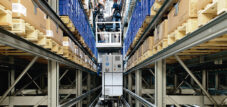
Is retrofitting already necessary in intralogistics automation? – Image: Xpert.Digital
Analysis of indicators that point to the necessity and the right time for a measure.
Brownfield Check: 5 silent indicators that your warehouse is eating into your margins (and what can help)
Intralogistics in Europe faces a strategic paradox: While the market (e-commerce growth, skills shortage, volatile supply chains) demands maximum automation and throughput speed, a significant part of the logistics infrastructure is based on plant concepts from the late 1990s and early 2000s.
This gap between requirements and technological reality is not only a business problem, but a massive competitive disadvantage.
The central question is therefore no longer whether modernization (retrofit) is necessary, but how much longer companies can afford to postpone it. Those who wait in a rapidly changing economy are essentially managing their own decline. Retrofitting has long since moved beyond the status of mere maintenance and has become a strategic imperative for minimizing risk and achieving operational excellence.
This article analyzes the economic tipping point at which a retrofit becomes unavoidable and identifies the most compelling indicators that force you to start your project now – from the impending obsolescence of critical control technology (e.g., Siemens S7-300) to the silent but costly early warning signs beyond plant shutdown. We demonstrate why the ideal starting point is often already in the past and how the opportunity costs of inaction are reaching their critical tipping point right now. From this point forward, waiting will cost you a fortune.
Related to this:


The Retrofit Economy 2025: The Strategic Imperative for Existing Plants
Intralogistics finds itself in a paradoxical situation. On the one hand, volatile markets, the e-commerce boom, and a massive shortage of skilled workers are forcing companies to pursue ever greater automation and throughput speeds. On the other hand, significant parts of the logistics infrastructure in Europe are based on plant concepts from the late 1990s and early 2000s. This gap between requirements and technological reality is not closing on its own, but rather widening exponentially. The question is no longer whether modernization is necessary, but how long companies can afford to delay. Retrofitting is no longer simply a maintenance measure, but a tool for strategic risk minimization and operational excellence. The available data clearly shows that the ideal time to initiate modernization often lies in the past, while the opportunity costs of inaction are now reaching their critical tipping point.
The economic tipping point: Changing cost structures
In traditional investment calculations, retrofit projects were often weighed against new builds (greenfield), with new builds being favored due to their seemingly simpler planning. This calculation has fundamentally changed due to the macroeconomic shifts of 2023 to 2025. Quantitative market analyses demonstrate that a systematic retrofit is, on average, 30 to 50 percent more cost-effective than a comparable new build. This cost advantage primarily results from the continued use of the existing, robust steel infrastructure. Steel racking and basic mechanical components often have a technical lifespan of over 30 years, while control electronics and IT systems reach the end of their economic life cycle after only 10 to 15 years.
However, operational risk costs (OpEx) are far more significant than capital expenditures (CapEx). Empirical data from German industry puts the median cost of unplanned downtime in highly automated environments at around €147,000 per hour. This figure illustrates the enormous leverage effect of reliability. A retrofit, which typically increases the technical availability of a plant by 10 to 20 percent, often pays for itself in less than three years simply by avoiding downtime. Furthermore, there is the aspect of inflation: In an environment of rising raw material prices and capital costs, the revitalization of existing assets (brownfield) represents a form of inflation protection, as it avoids expensive new acquisitions of steel and building materials.
Technological obsolescence as a hard time factor
An often underestimated driver of urgency is the lifecycle of control technology. The widely used Siemens SIMATIC S7-300 system family serves as a perfect indicator of the pressure to act. With the announcement of the product discontinuation and the end of series production in October 2025 (type discontinuation), the rules of the game for spare parts procurement are changing drastically. From this point on, components will only be available as spare parts, often at significantly higher prices, before the supply dries up completely in the 2030s.
For operators, this means that "the clock is ticking." A retrofit project often requires a lead time of 12 to 24 months, from the initial analysis and specification development to commissioning during ongoing operations. Those who only react when the first critical component is no longer available have missed the strategic opportunity. The analysis shows that companies that proactively modernize before the final discontinuation date not only avoid risks but also benefit from a buyer's market for integration services. Those who wait until the "last-minute panic," on the other hand, find themselves confronted with fully booked capacities among the few remaining experts. In this case, the technical risk directly transforms into a commercial risk.
LTW Intralogistics Solutions

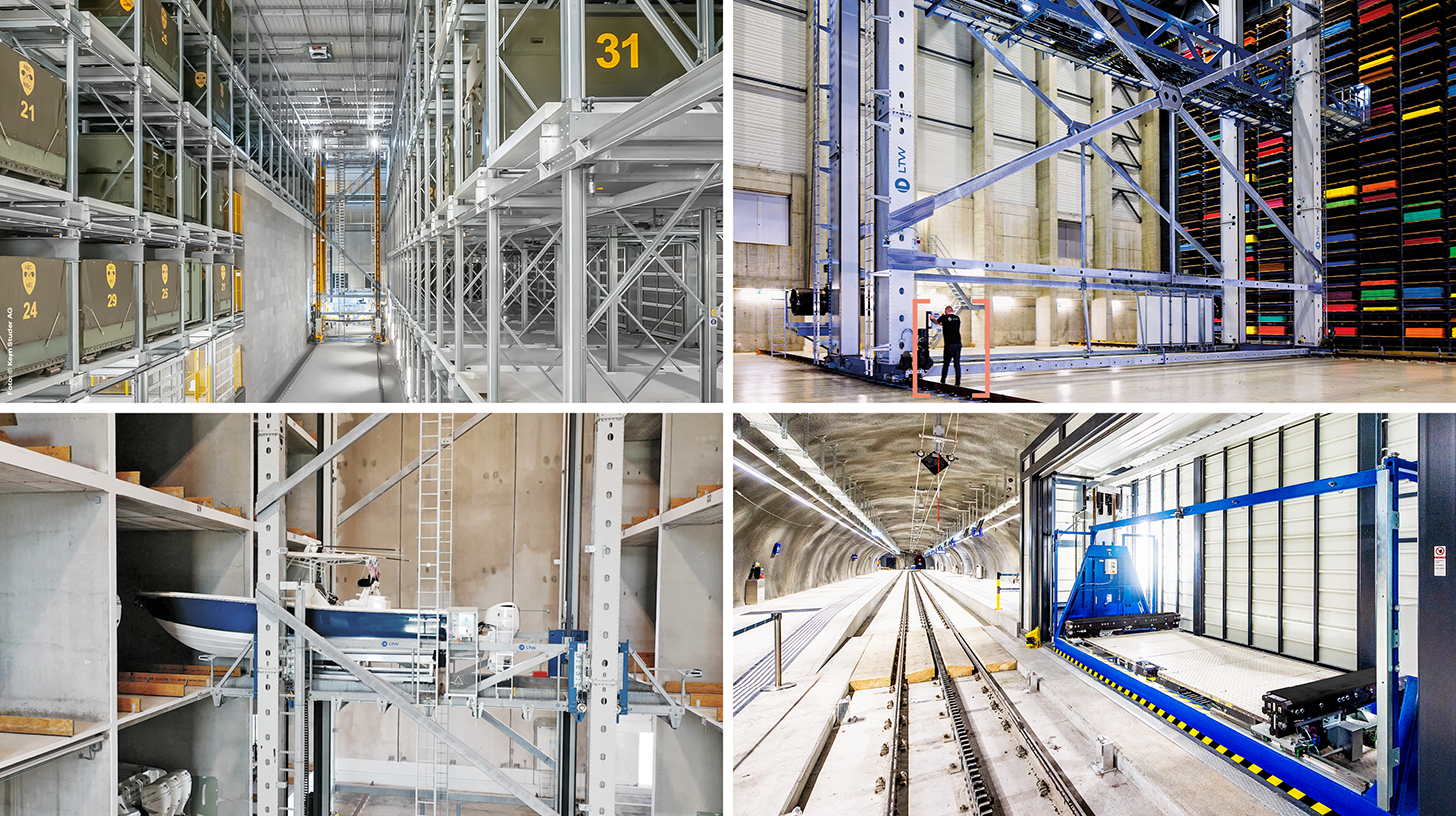
LTW Intralogistics – Engineers of Flow - Image: LTW Intralogistics GmbH
LTW offers its customers not individual components, but integrated complete solutions. Consulting, planning, mechanical and electrotechnical components, control and automation technology, as well as software and service – everything is networked and precisely coordinated.
In-house production of key components is particularly advantageous. This allows for optimal control of quality, supply chains, and interfaces.
LTW stands for reliability, transparency, and collaborative partnership. Loyalty and honesty are firmly anchored in the company's philosophy – a handshake still means something here.
Related to this:
Retrofit instead of stagnation: How hidden early indicators reveal the perfect time for modernization
Operational indicators beyond plant shutdown
When is the time to act? Long before a plant physically shuts down, operational processes send warning signals that can be identified as early indicators through in-depth analysis. A classic symptom is the emergence of so-called shadow IT or organizational workarounds. When warehouse employees begin to compensate for system shortcomings with manual Excel spreadsheets, sticky notes, or unofficial side processes, this is a clear sign that the rigid logic of the old warehouse management system (WMS) no longer meets dynamic market demands.
Another indicator is the discrepancy between energy consumption and throughput. Outdated drive technology without energy recuperation and intelligent load control unnecessarily drives up operating costs. Modern drive controllers and shuttle systems can reduce energy consumption by up to 30 percent. If the energy cost curve rises linearly or more sharply than the throughput curve, this indicates inefficient legacy systems. The order picking error rate is equally relevant. If this increases gradually, it is often not due to personnel issues, but rather to worn-out sensors or outdated pick-to-light systems that no longer provide clear signals. Retrofitting in this case is not just a repair, but a quality management measure.
Related to this:


The integration trap in the brownfield sector
The biggest challenge, and simultaneously the strongest indicator of the need for modernization, lies in the IT and data infrastructure. In Industry 4.0, data availability is the currency of success. However, legacy systems often operate as "black boxes." They perform their mechanical tasks but provide no granular data about their health or process parameters. This makes modern approaches like predictive maintenance impossible.
When a company plans to implement AI-powered analytics tools for inventory optimization, it often fails due to the lack of interface compatibility at the legacy PLC level. A retrofit must therefore be understood as an essential IT project. It involves the vertical integration of the fieldbus level into higher-level ERP and WMS systems. Without this seamless integration, data silos arise, hindering agile supply chain management. The trigger for initiating such a project is often externally driven: if customers demand real-time tracking or EDI connections that the legacy system cannot provide, a retrofit becomes a prerequisite for market access.
Sustainability and compliance as new drivers
In addition to purely economic and technical factors, regulatory and ecological aspects are gaining importance. Safety standards, such as DIN EN 15635 for racking systems or DIN EN 528 for storage and retrieval machines, are continuously being tightened. Existing systems often enjoy grandfathered status, but this expires in the event of significant modifications or after serious incidents. A proactive retrofit makes it possible to bring the system up to the current safety level (Performance Level PL d or e according to DIN EN ISO 13849) before the employers' liability insurance association threatens to shut it down.
From an ecological perspective, retrofitting is almost always superior to new construction. Preserving the steel structure saves massive amounts of embodied energy – in a typical high-bay warehouse scenario, this can amount to over 1,000 tons of CO2 equivalents. For companies that are required to report their carbon footprint as part of ESG (Environmental, Social, Governance) reporting, modernization instead of new construction is a valid argument for improving their sustainability record.
Recommendation for action: The path to a decision
The analysis leads to a clear conclusion: waiting is not a strategy, but an incalculable risk. The ideal time to start a retrofit project is precisely when the system is still running stably, but the first indicators – be it the discontinuation of components, increasing maintenance costs, or a lack of IT connectivity – become visible.
Companies should therefore establish a structured audit process. This begins with an inventory of the installed components and a comparison with the manufacturers' lifecycle data. This is followed by a risk analysis that quantifies the costs of a theoretical, multi-week total outage. This figure serves as a budget anchor for investment decisions. Finally, a phased plan should be developed that breaks down the modernization into manageable packages that can be implemented in parallel with ongoing operations or during periods of low activity. Those who plan today secure their competitiveness for tomorrow. Those who wait are merely managing their own decline.
Your global marketing and business development partner
☑️ Our business language is English or German
☑️ NEW: Correspondence in your native language!

Konrad Wolfenstein
I and my team are happy to be available to you as your personal advisor.
You can contact me by filling out the contact form here wolfenstein@xpert.digital:or simply call me at +49 7348 4088 965. My email address is
I'm looking forward to our joint project.
☑️ SME support in strategy, consulting, planning and implementation
☑️ Creation or realignment of the digital strategy and digitization
☑️ Expansion and optimization of international sales processes
☑️ Global & Digital B2B trading platforms
☑️ Pioneer Business Development / Marketing / PR / Trade Fairs
🎯🎯🎯 Benefit from Xpert.Digital's extensive, five-fold expertise in one comprehensive service package | BD, R&D, XR, PR & Digital Visibility Optimization

Benefit from Xpert.Digital's extensive, five-fold expertise in a comprehensive service package | R&D, XR, PR & Digital Visibility Optimization - Image: Xpert.Digital
Xpert.Digital possesses in-depth knowledge across various industries. This allows us to develop tailored strategies precisely aligned with the requirements and challenges of your specific market segment. By continuously analyzing market trends and monitoring industry developments, we can act proactively and offer innovative solutions. The combination of experience and expertise generates added value and provides our clients with a decisive competitive advantage.
More information here:
Our global industry and economic expertise in business development, sales and marketing

Our global industry and economic expertise in business development, sales and marketing - Image: Xpert.Digital
Industry focus areas: B2B, digitalization (from AI to XR), mechanical engineering, logistics, renewable energies and industry
More information here:
A thematic hub offering insights and expertise:
- Knowledge platform covering global and regional economies, innovation and industry-specific trends
- A collection of analyses, insights, and background information from our key areas of focus
- A place for expertise and information on current developments in business and technology
- A hub for companies seeking information on markets, digitalization, and industry innovations