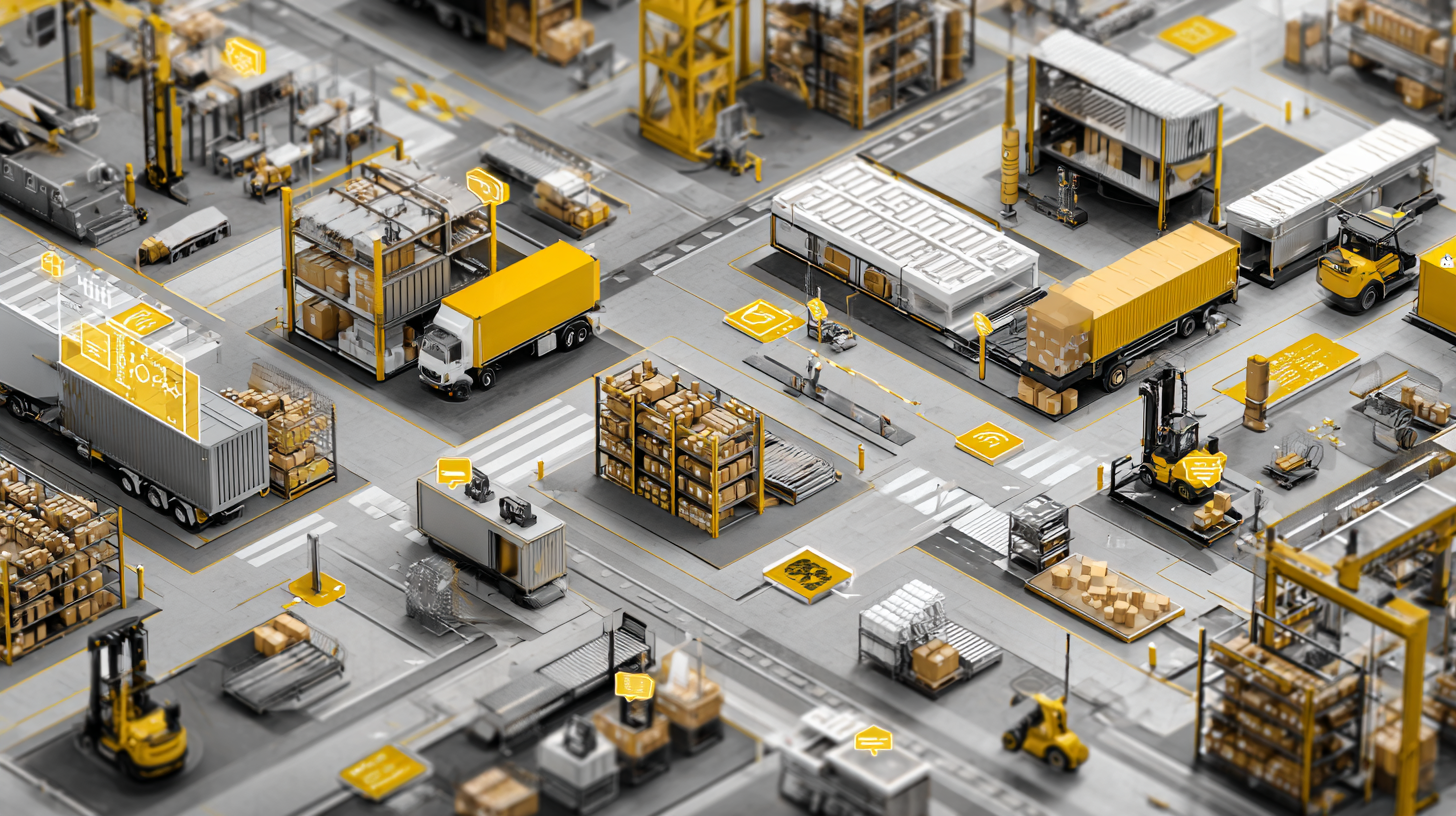
Europe's answer to supply chain chaos: How pre-buffer warehouses and Warehouse as a Service make logistics resilient – Creative image: Xpert.Digital
Logistics in transition: Why flexibility is now more valuable than ownership
From niche model to 25 billion market: The unstoppable rise of Warehouse as a Service
While for decades static long-term contracts and centralized large warehouses were considered the gold standard for efficiency, a new reality of geopolitical tensions, volatile markets, and exploding e-commerce volumes is forcing companies to radically rethink their strategies. In this context, "Warehouse as a Service" (WaaS) is establishing itself not merely as a technological trend, but as a strategic imperative for a resilient economy.
The concept of consuming warehouse space as a flexible utility resource, similar to electricity or water, breaks with the rigid structures of the past. It offers an answer to the most pressing question for modern supply chain managers: How do I manage unpredictable demand spikes and tariff uncertainties without tying up capital in unused concrete jungles? The figures underscore the urgency of this change: With a projected market volume of over US$25 billion by 2035 and growth rates far exceeding those of conventional logistics real estate, WaaS is evolving from a niche solution to the structural foundation of modern supply chains.
But WaaS is far more than just short-term warehouse rental. It's a technologically advanced orchestration of inventory, made possible by AI, real-time data, and robotics. Especially in Europe, where nearshoring strategies and strict ESG regulations are redrawing the logistics landscape, the ability to dynamically adjust warehouse capacity is becoming a crucial competitive advantage.
The following article analyzes in depth how Warehouse as a Service redefines the relationship between cost, risk and agility, what technological hurdles need to be overcome, and why companies that do not focus on flexibility now risk being overwhelmed by the next wave of volatility.
When inventory becomes strategy – or a constraint: Why WaaS is fundamentally transforming the logistics landscape
Warehouse as a Service (WaS) represents far more than just another service option in the logistics industry's already established portfolio. It is a fundamental recalibration of the relationship between storage capacity, capital allocation, and operational agility—a transformation both provoked and enabled by the converging forces of geopolitical uncertainty, tariff fragmentation, and the ongoing structural changes in e-commerce. The concept of logistics space as a consumable service resource based on the utility model is not merely a technological innovation, but reflects a profound reorientation of how companies must deal with scarcity, volatility, and unpredictability.
Market developments show accelerated growth dynamics that go beyond mere accumulation. The global Warehouse as a Service (WaaS) market was valued at approximately US$9.56 billion in 2024 and is projected to grow to US$10.46 billion by 2025, with forecasts suggesting a market volume of US$25.8 billion by 2035. This implies an average annual growth rate of 9.4 percent over the ten-year forecast period—a rate significantly higher than the general growth rate of logistics real estate and signaling that this sector is establishing itself as a structural reality, not a cyclical anomaly.
This exponential growth is not driven by mere demand expansion, but by a paradigm shift in procurement logic, driven by several convergent factors: the continued expansion of e-commerce, the realignment of supply chains under the pressure of geopolitical tensions and tariff fragmentation, the persistent volatility of demand in virtually all sectors, and the growing realization that centralized, static warehouse structures are structurally fragile in a world with multiple crisis vectors.
The core concept: What Warehouse as a Service really means
The concept of Warehouse as a Service differs fundamentally from traditional third-party logistics providers and conventional in-house warehousing solutions. The model is defined by four key elements: flexible space utilization based on actual demand instead of fixed contract agreements, consumption-based billing based on utilized capacity, inclusion of technological and operational services within the package, and drastically reduced commitment periods – typically monthly or quarterly instead of the traditional three to ten years.
In practical terms, Warehouse as a Service (WaaS) is billed based on units such as pallet spaces, boxes, or cubic meters, not on flat-rate space rentals. The service packages are comprehensive, ranging from inventory management and inbound and outbound fulfillment to insurance coverage. This model embodies a radical decoupling of capacity utilization and capacity commitment—a characteristic that generates immediate strategic value under conditions of extreme market volatility.
The implementation of such systems is carried out using specialized platforms, as demonstrated by the Flexxtra system from Prologis UK. This system was implemented at the Prologis Park Wellingborough West DC4 facility, a newly equipped site with a capacity of 70,000 pallet positions. The operational architecture consists of a multi-layered partnership: Prologis as the infrastructure owner, Kinaxia Logistics as the on-site operational management entity, and Visku as the supply chain orchestrator, using the Pallet Hotel platform to manage inbound logistics, insurance management, and shipment fulfillment. The system is calibrated by design to serve between 10 and 30 customers simultaneously, demonstrating the variable multiplex nature of the model.
The underlying technological substance is not trivial. Managing such fragmented inventory structures requires a high degree of digital integration: real-time inventory tracking, customer segmentation based on retrieval frequencies and demand profiles, automated invoicing based on actual usage, as well as security and liability issues that do not arise, or only in a rudimentary way, in traditional warehousing contexts. The digitalization requirements are substantial and create significant barriers for market participants who lack technical expertise or are limited in capital – a factor that leads to consolidation around specialized providers.
Basic principle of WaaS
Warehouse as a Service (WaaS) is an on-demand model in which companies flexibly book warehouse space, personnel, technology, and fulfillment services "as a service," instead of building their own warehouses or leasing them long-term. It transfers the cloud principle ("pay as you go") to physical warehousing and logistics services.
Warehouse as a Service (WaaS) providers pool warehouse space, personnel, and IT systems (WMS, interfaces to shops/marketplaces, carrier integration) and make these available to multiple customers on a usage-based basis. Typically, the model includes warehousing, order picking, packing, shipping, returns processing, and value-added services such as kitting or simple order fulfillment.
Billing is usually based on used volume (e.g., pallet spaces, cubic meters) and transactions (picking, packing, shipping), meaning storage costs correlate directly with actual utilization. Many providers operate a network of distributed warehouses, allowing inventory to be located close to customers and delivery times to be reduced.
Key advantages for companies:
- Reduced CAPEX: No need to invest in real estate or set up a complete warehouse operation; storage costs become variable OPEX.
- High scalability: Rapid scaling up and down during seasonal business, promotional peaks, product launches or temporary overflow.
- Faster market entry: Start-ups and new markets can be served more quickly because the service provider's infrastructure, processes and IT are immediately available.
Other frequently cited advantages include improved delivery times through distributed warehouse locations, higher process quality thanks to specialized logistics experts, and real-time transparency via cloud-based WMS and dashboards. This allows companies to focus more on product, sales, and marketing, while the service provider handles the operational warehouse logistics.
Market dynamics and regional dimensions of growth
The geographic distribution of the WaaS market reveals a highly heterogeneous landscape, reflecting both maturity and opportunity. North America dominates, with a market valuation of approximately $4 billion in 2024, projected to rise to $10 billion by 2035. This dominance reflects the pioneering role of American fintech and e-commerce companies, which face highly fragmented inventories, as well as a cultural and regulatory environment that favors the adoption of flexibility.
Europe, and particularly the German-speaking and Scandinavian regions, are undergoing a qualitatively different transformation process. The European logistics real estate market recorded a cumulative investment volume of approximately €17.4 billion in the first half of 2025, representing a four percent increase compared to the previous year. Regional investments are increasingly focused on nearshoring and the implementation of regionalization strategies: Germany, the Netherlands, Poland, the Czech Republic, and the Baltic states are experiencing heightened demand for modern, decentralized warehousing capacity.
The driving forces behind this European realignment are multifaceted. First, geopolitical realignments are manifesting themselves: The potential re-architecturing of transatlantic trade relations, growing tensions regarding supply chain dependencies on specific geographies, and scenarios involving asymmetric shocks (climate, security, geopolitics) are forcing a reassessment of supply chain footprints. Companies are also massively embracing nearshoring: The rate of companies undertaking nearshoring investments rose from 42 to 56 percent between 2024 and 2025 – a dramatic sign of structural change.
Such relocation trends demand enormous flexibility in warehouse equipment. A company exploring the possibility of distributing parts of its supply chain across multiple European locations cannot achieve this through traditional 5-year leases with high investment costs. Flexible warehouse solutions are operationally essential.
The drivers of expansion: geopolitics, tariffs and economic volatility as catalysts
The rise of Warehouse as a Service is not coincidentally linked to the moment when global uncertainty reached a multi-year high. The McKinsey Supply Chain Risk Survey of 2025 reveals a paradox: Although companies rate their supply chains as more resilient than ever, with 80 percent of respondents rating their supply chains as "very resilient," 65 percent actually consider themselves still vulnerable to future risks. This is not statistical noise—it reflects deep uncertainty about the nature of future shocks.
The immediate trigger for volatility is tariff fragmentation. Tariff fragmentation, encompassing potential US trade measures, new EU regulations, and countermeasures, is forcing inventory positions from two opposing directions. On the one hand, companies are preemptively moving inventories—directly or indirectly—to strategically located warehouses in anticipation of impending tariff increments. Forty-five percent of companies that foresee tariff locations are increasing their inventory positions as a mitigation measure. On the other hand, this uncertainty is driving hesitancy: according to the GEP Global Supply Chain Volatility Index, inventory activity fell to its lowest point in nine years in March 2025, with levels around July 2016 (the lowest point since then). This reflects massive uncertainty among purchasing managers, who are buffering inventory build-up before future demand collapses.
This volatility can only be rationally managed through flexible storage capacity. If demand and the regulatory landscape can change monthly, capital-intensive, multi-year inventory compartmentalization is not the optimal strategy – it is a source of liability.
Added to this is the persistent volume phenomenon of e-commerce. The e-commerce sector is experiencing structural expansion, not just cyclical growth. E-commerce merchandise volume, which reached approximately US$6.54 trillion in 2023, has grown by over 250 percent compared to 2015. This growth is not consistent: it is concentrated in specific phases (Christmas peaks with 100 percent above-average demand), geographies (certain countries and regions), as well as new product categories and retailer types. Meeting B2C demands today requires that inventory be located close to the consumer – in densely populated areas, near seaports, and in metropolitan areas. This raises enormous capacity questions: How can geographical proximity be achieved without massive capital investments? Flexible warehousing solutions answer this question.
Resilience mechanisms and crisis protection through decentralization
The strategic value of WaaS lies not primarily in cost savings – although these are relevant – but in the creation of resilience structures through decentralized inventory. This is a key insight that is increasingly recognized by logistics experts, supply chain leaders, and even geopolitical risk analysts.
Decentralized inventory architectures address a core vulnerability of centralized systems: the catalyst effect. A single event—sabotage, natural disaster, operational disruption, logistical blockage—can, if it strikes a centralized mega-facility, cripple a company or even an entire supply network. Distributed inventories fragment this vulnerability. If one warehouse fails, operations can be rerouted to other locations—there is redundancy without redundant, idiosyncratic structures.
This isn't theoretical. Following the COVID-19 pandemic, Cisco recalibrated its supply chain risk profile by geographically diversifying its sourcing and inventory. The company implemented a change that reduced lead time variability by 25 percent—a direct signal that decentralization, when orchestrated correctly from a technological and organizational perspective, delivers real operational benefits.
Decentralized structures also enable asymmetric responsiveness. With inventories positioned in multiple regions, companies can react more quickly to regional demand trends, local supply disruptions, or price and tariff fluctuations. A demand spike in Germany can be met immediately with inventory from German warehouses, instead of having to activate supply chains from the Far East – a crucial advantage for time-critical products or high-volume scenarios.
At the same time, decentralization without structural flexibility drives up costs. A company that commits to long-term warehousing contracts at multiple locations to achieve decentralization hasn't solved volatility—it has merely replicated and amplified it. WaaS transforms the decentralization equation: You can be decentralized without being constrained by rigid capital allocation.
🎯🎯🎯 Benefit from Xpert.Digital's extensive, five-fold expertise in one comprehensive service package | BD, R&D, XR, PR & Digital Visibility Optimization

Benefit from Xpert.Digital's extensive, five-fold expertise in a comprehensive service package | R&D, XR, PR & Digital Visibility Optimization - Image: Xpert.Digital
Xpert.Digital possesses in-depth knowledge across various industries. This allows us to develop tailored strategies precisely aligned with the requirements and challenges of your specific market segment. By continuously analyzing market trends and monitoring industry developments, we can act proactively and offer innovative solutions. The combination of experience and expertise generates added value and provides our clients with a decisive competitive advantage.
More information here:
Why WaaS is becoming a strategic imperative: Resilient supply chains in an age of permanent volatility
Technological integration and the critical role of visibility
The operationalization of WaaS depends on a technology infrastructure that is not required or prioritized in traditional warehouse models. Traditional warehouse operations function with Warehouse Management Systems (WMS) that are optimized for stable inventory levels and relatively homogeneous customer populations. WaaS requires multi-tenant orchestration: multiple customers, fragmented inventory, dense transaction flows, and diverse retrieval cycles.
The technological architectures necessary to manage this complexity rely on several elements:
First, advanced warehouse management with AI predictive capabilities. The system must not only track current inventory but also predict demand flows for individual customers in order to proactively reposition stock. Using machine learning algorithms for demand forecasting is not a luxury but a necessity, because otherwise the manual interfaces will become a bottleneck.
Secondly, real-time tracking and IoT integration. With decentralized inventories and multi-tenant operations, inventory accuracy is critical. IoT sensors that monitor temperature, location, movement, and integrity are essential. Platforms like Visku's Pallet Hotel integrate these capabilities.
Third, digital twins and scenario simulation. Companies with decentralized networks need to understand their network virtually in order to test operational fragments or scenarios. The use of digital twins—virtual replicas of physical supply chain networks—is becoming increasingly standard. UPS uses this technology to optimize routing and vehicle utilization, with results such as 26 percent faster average delivery times and significantly reduced fuel consumption.
Fourth, automation and robotics. In high-volume scenarios with fragmented inventory, manual pick-and-pack operations become a bottleneck. Autonomous mobile robots (AMRs) can perform goods-to-person workflows and increase picking productivity by 2 to 5 times. In advanced configurations, such as inVia Robotics systems, these productivity increases can reach 10 times.
This technological substance is not optional – it is constitutive for WaaS viability. This also means that barriers to entry are significant. Smaller or technologically immature providers cannot compete effectively. This leads to consolidation around technologically leading platforms – a trend evident across the industry.
Cost-comparative analyses: WaaS versus classical models
Cost comparisons between Warehouse as a Service and traditional in-house or 3PL models are nuanced and context-dependent, but show systematic patterns.
In the classic 3PL model, typical fee structures are as follows: Inbound receiving costs approximately $5–15 per pallet (averaging about $10.52), including put-away costs. Inventory costs approximately $15–40 per pallet per month (averaging about $20 per pallet), or about $0.46 per cubic meter. Pick-and-pack fees range from $0.20–2.00 per order for simple cases, but average higher, around $3.25 per order or more for e-commerce fulfillment. Shipping costs are subject to markups of 0 to 12 percent, but 3PLs typically negotiate 10–30 percent discounts on carrier rates—a cost saving relative to individual demand.
Cumulatively, this means that fulfillment costs can take up about 25–35 percent of each order – a huge premium that impacts many e-commerce operations.
In a purely self-managed storage scenario, companies pay for real estate (typically a 3-5 year lease), operation, labor, equipment, insurance, and maintenance. Capital costs are substantial: a security deposit equivalent to 3-6 months' rent, legal fees, and conversion costs for lighting, heating, and security. This quickly adds up to significant sunk costs with minimal flexibility.
WaaS models offer a different profile. The monthly fees per pallet, expressed as a percentage of traditional storage, are often similar to or slightly higher – but without the upfront costs, deposits, or lease penalties. The all-inclusive nature of WaaS reduces hidden costs. For businesses with high volatility or temporary inventory needs (such as seasonal peaks), WaaS can be dramatically cheaper because you don't pay for empty capacity during off-peak periods.
A practical scenario: An e-commerce company with high seasonality might sign a traditional 5-year lease for 100,000 cubic meters of storage space, with fixed costs regardless of actual usage. During off-peak periods, 40 percent of this capacity could be unused – a significant cost burden. With WaaS, the company only pays for the capacity it actually uses, saving approximately 40 percent of its costs during off-peak times.
Due to capital acquisition requirements, WaaS models are significantly cheaper in times of high volatility. A company that triples its inventory in 12 months, from 10,000 to 50,000 pallets to 20,000 pallets, faces a dilemma with traditional models: too much capacity for average periods or too little for peaks. WaaS alleviates this tension.
European market positioning and strategic opportunities
The European WaaS landscape is particularly dynamic for several reasons. First, geographically, distances are manageable – goods can be shipped within Europe in 2–10 days by road or rail, much faster than intercontinental sea freight. This means that nearshoring makes sense, but it also places enormous demands on decentralized warehousing. You can't store all your inventory in Hamburg and then ship it to Southern Europe on demand – the supply chain becomes too long. Multiple European storage locations become economically essential.
Secondly, from a regulatory perspective, European companies are under increased pressure to make their supply chains more resilient. The German Supply Chain Due Diligence Ordinance (LKSG) and the European Corporate Sustainability Due Diligence Directive require companies to monitor their entire supply chains for risks – a requirement that favors decentralized structures and visibility. Companies with a network of decentralized inventories are in a stronger position to mitigate risks ex ante.
Third, ESG requirements are driving innovation. Transportation is a major source of CO2 emissions – both within logistics and in distribution. Decentralized warehouse structures can reduce average transport distances and thus lower emissions. Green warehouses equipped with solar panels, LED lighting, and energy storage are becoming standard. FM Logistic, for example, reports a 22 percent reduction in electricity consumption in France through the Watt-Watchers program and has 15 active solar installations with 13 more under development.
Fourth, the European supply chain reality is fragmented. Large capital is concentrated in hubs like Hamburg, Rotterdam, Frankfurt, Munich, Warsaw, and Prague, but the entire system needs network depth. Medium-sized and smaller operations need local or regional warehousing capacity without the capital burden of ownership models.
For this situation, WaaS is not only attractive – it is strategically necessary.
The boundaries of volatility: Corporate evolutions and implications for action
While WaaS is elegant in concept, there are structural limitations and trade-offs that cannot be ignored.
First, the cost structure can become pathological under extreme volatility. A company with highly turbulent demand that fluctuates from day to day would generate rapid billing cycles with correspondingly high administrative costs. Dedicated warehousing capacity, although capital-intensive, amortizes such frictions over time.
Secondly, controllability is limited. In a WaaS model with multiplex tenancy and an external operator, the company has reduced control over operational parameters such as inventory accuracy, handling quality, or security. Quality guarantees are contractually defined, but reality can deviate. A company with extremely high quality standards or critical just-in-time requirements might be better served by dedicated, internally controlled operations.
Third, scale effects are inverted. A large company with high, stable volume finds economies of scale in its own or long-term 3PL operations. A small or volatile company finds them in WaaS. This means that WaaS models primarily thrive in the small to medium spectrum, not in megacorporations.
Fourth, technological dependency is a risk. If the WaaS platform fails, the entire operating model is compromised. Companies that rely heavily on WaaS are implicitly exposed to platform risk – a risk that can be controlled internally in standalone systems.
These border zones do not mean that WaaS does not work – they mean that it is a tool for specific contexts, not a universal solution.
Market morphology and competitive dynamics
The competitive landscape for WaaS is characterized by strong consolidation trends. Large, multinational logistics real estate managers (Prologis, CBRE, Catella) are moving into the space because they have the capital, infrastructure, and technology environments to scale multi-tenant models. Specialized providers like Visku or Kinaxia are moving into operational roles – orchestration, fulfillment management, customer relations. Pure tech platforms or marketplace providers are positioning themselves as intermediaries.
This structure is favored by the barriers. Building a WaaS operation requires significant capital expenditures (real estate purchase or long-term lease), technological equipment, operational expertise, and a customer base. This excludes secondary entrants and favors established players who can move beyond their existing logistics footprints.
At the same time, there is fragmentation by segment. Some suppliers focus on specific product categories (perishable, high-value, bulky), geographies (Europe, Asia-Pacific), or customer types (e-commerce, manufacturing). This specialization allows smaller or more focused players to survive by operating outside of key regions.
Competition is intensified by price pressure. As the market grows, margins decrease – a standard dynamic. Technological differentiation and service quality become key competitive factors. Providers who deliver AI optimization, real-time visibility, or sustainability more efficiently gain market share.
Perspectives on future development and critical scenarios
The medium-term direction of the WaaS market depends critically on several scenarios:
Scenario One: Geoeconomic Stabilization. If tariff fragmentation and geopolitical tensions moderate—for example, through a realignment of US trade policy or the de-escalation of certain conflicts—the reassessment of supply chain footprints could slow. The immediate urgency of decentralization could diminish, and WaaS growth could normalize. This is the most optimistic scenario for companies that prioritize long-term stability.
Scenario Two: Ongoing Volatility with Structural Adjustment. The more likely scenario is that companies anticipate permanent volatility and redesign their supply chains accordingly. This would accelerate WaaS growth as decentralized, flexible models become the norm. Digitalization and technology will permeate the market, and consolidation around technologically leading platforms will intensify.
Scenario Three: Crisis trigger and emergency transformation. A major geopolitical shock, a climate catastrophe, or a new pandemic could massively increase pressure for decentralization and lead to accelerated WaaS adoption. Companies that already have decentralized structures will have a competitive advantage.
Under all scenarios, structural growth for WaaS seems likely, albeit at different speeds.
WaaS as the key to an adaptive economy
Warehouse as a Service represents far more than mere business model innovation – it is a fundamental adaptation of logistics to the realities of a volatile, fragmented, and technologically intensive world. The market expansion from approximately $9.56 billion in 2024 to a projected $25.8 billion in 2035 reflects a genuine restructuring of the industry, not cyclical transitions.
The expansion is driven by convergent forces: geopolitical realignment and tariff uncertainty, the structural expansion of e-commerce, the understanding that decentralization and flexibility are key to resilience, and technological maturity in automation, AI and digital twins that makes multi-tenant orchestration feasible.
The European position is particularly interesting because regulatory pressure (LKSG, CSDD), neighborhood dynamics (nearshoring), ESG requirements, and fragmented market structures all point toward decentralized, flexible warehousing solutions. Germany and the German-speaking region, as major manufacturing and logistics hubs with strong local export demands, are likely to see WaaS adoption above the global average.
At the same time, the borderline areas are relevant. WaaS is not a universal model – it is optimized for specific contexts: volatility, small to medium scale, decentralized requirements, and technological maturity within the customer company. Large corporations with stable, centralized demand may still find dedicated or long-term 3PL models optimal.
The strategic implication is clear: Companies that want to future-proof their supply chains in an increasingly volatile environment should actively evaluate Warehouse as a Service (WaS) – not merely as a cost-cutting tool, but as a structural component of a resilience-oriented supply chain architecture. Those companies that successfully navigate this transition will have a competitive advantage when the next major disruption or shift occurs. And in a world of persistent geopolitical and economic turbulence, this preparation is not optional – it is a strategic necessity.
Consulting - Planning - Implementation

Markus Becker
I would be happy to serve as your personal advisor.
Head of Business Development
Consulting - Planning - Implementation
Konrad Wolfenstein
I would be happy to serve as your personal advisor.
You can contact me at wolfenstein∂xpert.digital or
Just call me on +49 7348 4088 965 .
Our global industry and economic expertise in business development, sales and marketing

Our global industry and economic expertise in business development, sales and marketing - Image: Xpert.Digital
Industry focus areas: B2B, digitalization (from AI to XR), mechanical engineering, logistics, renewable energies and industry
More information here:
A thematic hub offering insights and expertise:
- Knowledge platform covering global and regional economies, innovation and industry-specific trends
- A collection of analyses, insights, and background information from our key areas of focus
- A place for expertise and information on current developments in business and technology
- A hub for companies seeking information on markets, digitalization, and industry innovations