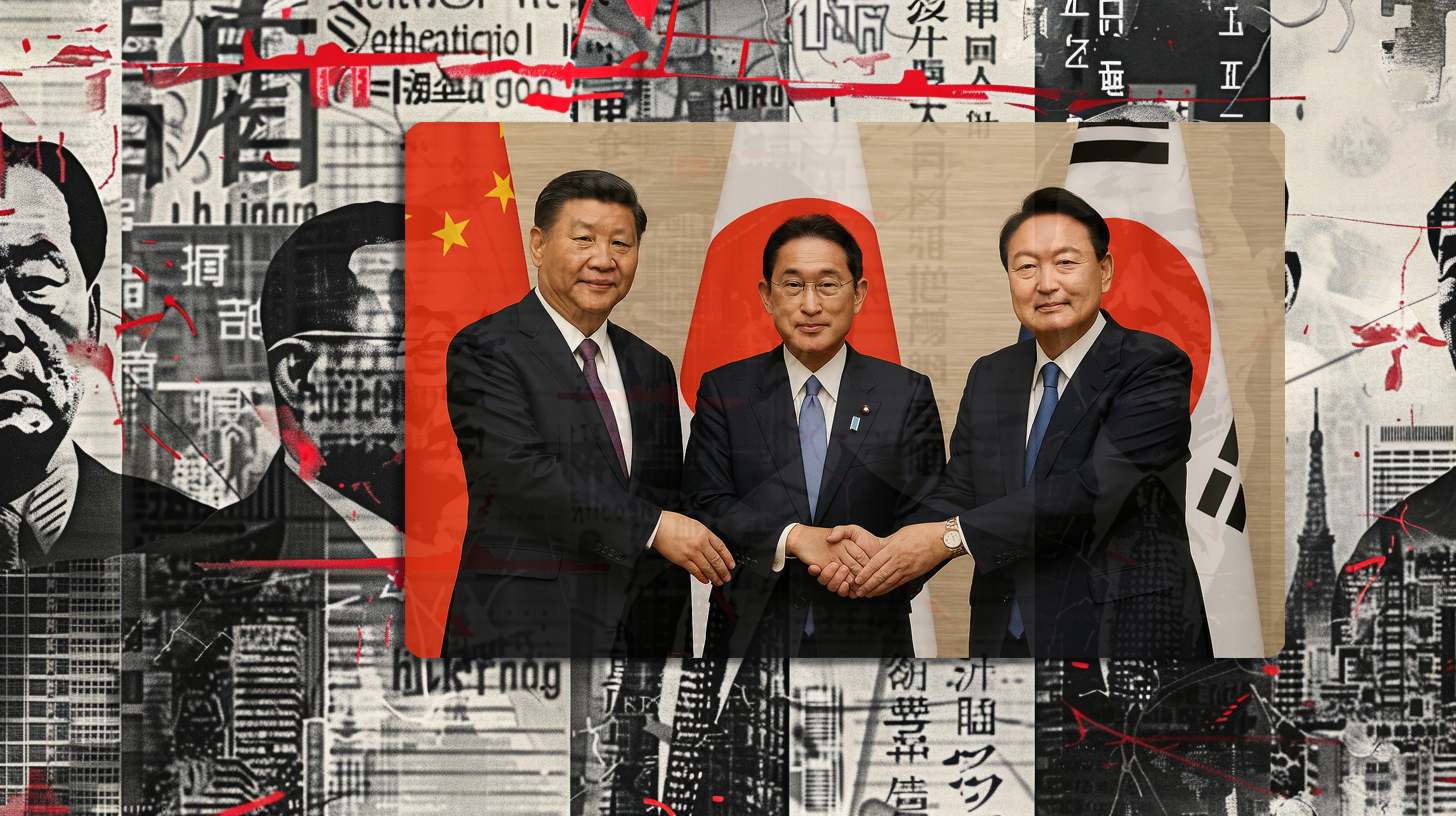
China, Japan and South Korea: Joint response to US tariffs and strengthening of regional economic cooperation – Creative image: Xpert.Digital
Trade turnaround in Asia: China, Japan and South Korea are pulling together
The three largest economies in East Asia—China, Japan, and South Korea—have agreed on a joint strategy to respond to the increasingly protectionist trade policies of the United States under President Donald Trump, following years of cautious cooperation. This first trilateral economic dialogue in five years marks a significant shift in regional economic relations and could have far-reaching implications for global trade flows.
The historic meeting of the three economic powers
At the end of March 2025, the trade ministers of China, Japan, and South Korea met in Beijing for their first trilateral economic dialogue since 2020. At this meeting, Wang Wentao (China), Yoji Muto (Japan), and Ahn Duk Geun (South Korea) agreed on a coordinated response to US tariff policy. This meeting represents a significant moment, as it was the first round of economic policy talks of this kind between the three countries in five years.
The three neighboring countries, whose relations have historically been strained by territorial disputes and political tensions, found a pragmatic path to cooperation in the face of the shared economic threat posed by US tariffs. The agreement comes just days before Donald Trump's announced speech in which he was expected to unveil further punitive tariffs. The US president had previously dubbed this day "Liberation Day," thereby reinforcing his intention to fundamentally reshape existing US trade relations.
In a joint statement, the three ministers emphasized their commitment to "working closely together for comprehensive and high-level" negotiations on a free trade agreement between their countries. The stated goal is to promote regional and global trade under increasingly challenging geopolitical conditions.
Related to this:

Specific areas of cooperation and agreements
The trilateral cooperation focuses on several specific areas that are of strategic importance to all three economies:
Semiconductor trading and technology cooperation
A key aspect of the agreement concerns the semiconductor industry, a crucial sector for all three countries. Japan and South Korea plan to increase their imports of semiconductor raw materials from China, while China has signaled interest in importing finished chip products from both countries. This agreement could represent a significant shift in regional technology supply chains and strengthen the resilience of this strategically important industry.
Cooperation in the semiconductor sector is particularly noteworthy given that both Japan and South Korea are close political allies of the US and are being pressured by Washington to align itself with its strategy of economically containing China. The three Asian neighbors are apparently trying to find their own path that protects their economic interests without compromising their respective geopolitical positions.
Strengthening supply chains and export controls
Another key focus of the agreement is strengthening regional supply chains. The three countries have agreed to closer cooperation on supply chains and plan to intensify exchanges on export controls. These measures aim to improve the resilience of their economies to external shocks such as trade disputes.
Following the meeting, the South Korean president emphasized the desire to jointly "build a transparent and predictable environment for trade and supply chains." This statement, although vaguely worded, represents a clear counterpoint to current US policy, which seeks to isolate China internationally and concentrate high-tech supply chains more heavily on the US.
The threat of US tariffs and their economic impact
Trump's aggressive tariff policy
The new cooperation between the three Asian economic powers is primarily motivated by the aggressive tariff policy of the Trump administration. Since January 2025, the US has proposed tariffs of up to 25 percent on key trading partners such as Canada and Mexico, while simultaneously raising tariffs on steel and aluminum imports from all countries to 25 percent.
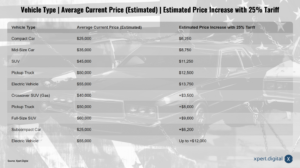
Particularly drastic is the 25 percent tariff on imports of motor vehicles and motor vehicle parts announced by Trump, which is to be levied starting April 2, 2025. "If you build your car in the United States, there is no tariff," the US president declared, making it clear that he intends to use the tariffs to strengthen the US as a manufacturing location and reduce trade deficits.
In addition, over the past two months Washington has drastically increased tariffs on Chinese imports from about 20 to 40 percent and announced a further tariff of 25 percent on imports from countries that purchase large quantities of Venezuelan oil, including China.
Economic consequences of trade tensions
The impact of this tariff policy could be significant. For Germany, which serves as an example of an export-oriented economy, the US market accounts for one-fifth of its total global exports and one-quarter of its global car exports. Simulations suggest that a transatlantic tariff conflict could halve EU exports to the US and shrink Germany's gross domestic product by approximately 0.33 percent in the long term.
Uncertainty is also palpable in Asian financial markets. Although Asian stock markets have recently seen a slight recovery, tensions surrounding the impending US import tariffs continue to dampen market sentiment. According to Landesbank Baden-Württemberg, the instability of political decisions in the US is causing concerns about potential disruptions to supply chains and price increases for US consumers.
Related to this:

Historical context and future prospects of trilateral cooperation
Background of trilateral cooperation
The current intensification of cooperation between China, Japan, and South Korea is part of a longer tradition of trilateral cooperation in East Asia. As early as 2011, the heads of state and government of the three countries agreed to conclude a trilateral investment protection agreement and to begin negotiations on a free trade agreement. In the same year, a secretariat for coordinating trilateral cooperation was opened in Seoul.
The first cooperation efforts were triggered by the Asian financial crisis of 1997/98, which made closer economic and political cooperation seem necessary. Regular meetings had taken place since the Asian financial crisis to minimize geopolitical risks, but these were suspended for several years in the recent past as a result of the COVID-19 pandemic and the US trade war against China.
Potential and challenges for the future
Together, these three countries already account for around 20 percent of global value creation and could become the world's largest economic area by 2020. A trilateral free trade agreement would further accelerate this development and could counterbalance the protectionist policies of the USA.
However, challenges to deeper cooperation remain. Relations between the three countries continue to be strained by territorial disputes and other conflicts, such as Japan's controversial release of treated cooling water from the damaged Fukushima nuclear power plant. Furthermore, differing views exist regarding the intensity of cooperation, as demonstrated by the South Korean Ministry of Commerce's statement that reports of a joint response to US tariffs were "somewhat exaggerated.".
New regional alliances in a changing global trade order
The rapprochement between China, Japan, and South Korea is part of a global trend toward the formation of new trade alliances in response to US protectionist policies. Besides these three Asian countries, there are also signs of deepening trade relations between Canada and the EU.
Economic experts see the intensification of regional free trade relations as a promising strategy for limiting the economic damage caused by US tariffs. The German Institute for Economic Research (DIW) recommends that the EU diversify its exports by deepening its trade relations with free trade partners and improving integration within the EU single market. Simulations show that such an approach could not only neutralize the economic damage of a tariff dispute with the US, but also lead to noticeable GDP gains in the long term.
The pragmatic cooperation between China, Japan, and South Korea in a growing number of policy areas could serve as a basis for further integration in Northeast Asia – a region that has so far lacked effective multilateral structures. As Commerzbank's chief economist Jörg Krämer emphasized to ZDF: "The goal is to save as much of free global trade as possible so that the entire system doesn't collapse.".
Pragmatism in times of protectionism
The new cooperation between China, Japan, and South Korea demonstrates that economic pragmatism can bridge political differences when common interests are at stake. Despite their historical rivalries, the three East Asian economic powers, facing increasing trade tensions with the United States, have found a way to deepen their economic collaboration and develop joint responses to the challenges of US protectionism.
The agreements to strengthen supply chains, expand semiconductor trade, and resume negotiations on a trilateral free trade agreement signal a new phase of regional economic integration in East Asia. Whether this pragmatic cooperation can endure in the long term and bridge existing political differences will depend significantly on how US trade policy develops under Trump and what economic benefits the three countries can derive from their intensified collaboration.
Related to this:
Your global marketing and business development partner
☑️ Our business language is English or German
☑️ NEW: Correspondence in your native language!

Konrad Wolfenstein
I and my team are happy to be available to you as your personal advisor.
You can contact me by filling out the contact form here wolfenstein@xpert.digital:or simply call me at +49 7348 4088 965. My email address is
I'm looking forward to our joint project.