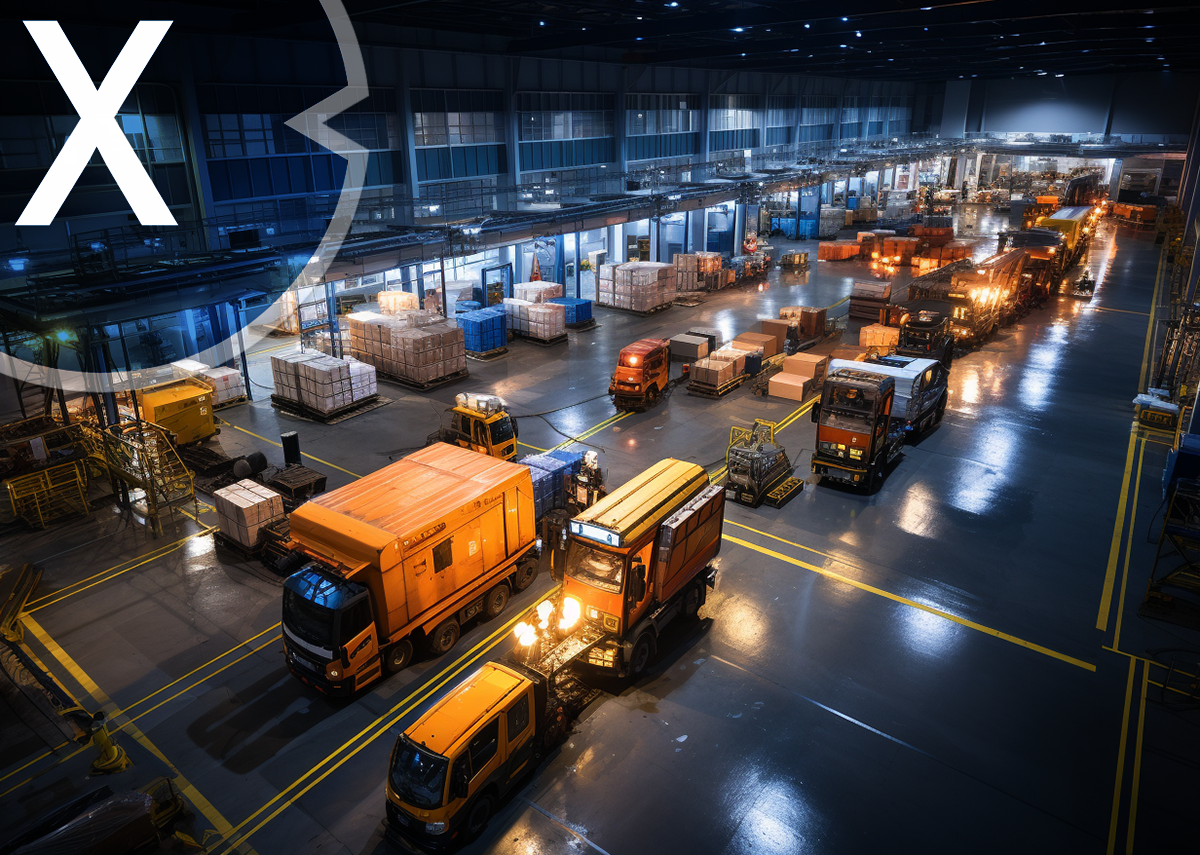
AI & XR 3D Rendering Machine: Staff shortage in cold chain logistics: Recruitment strategies and automation as a solution – Image: Xpert.Digital
🧊🔍 Cold chain expertise: Innovative solutions against the shortage of skilled workers in cold chain logistics with automation and AI
🥶 The shortage of skilled workers in the cold chain logistics industry presents companies with numerous challenges. Cold chain logistics is essential for the storage and transport of temperature-sensitive goods and forms a critical component in the supply chain of many industries – from food and pharmaceuticals to chemical products.
🧊 A key function within cold chain logistics is ensuring the cold chain, i.e., the uninterrupted chain of refrigerated processes that guarantees the quality and safety of the products. A disruption of this chain can lead to serious quality loss and associated health risks as well as economic losses.
👨🏭 The shortage of skilled workers in this sector can have various causes: unattractive working conditions, such as working in cold environments, irregular working hours or physically demanding tasks, as well as a general shortage of qualified workers as a result of demographic developments.
🤖 To address the staff shortage, a multi-dimensional strategy is needed. This strategy combines recruitment efforts with a focus on training and employee retention, as well as the use of automation technologies.
🤝 On the one hand, innovative recruitment strategies are necessary. Companies could expand their target groups by, for example, also appealing to career changers and offering incentives such as training and development programs. A truly effective diversity management approach can attract new talent and thus unite different skills and perspectives within the company. Employer branding also plays an important role in positioning the company as an attractive employer. This can be achieved through an active presence on social media, participation in job fairs, or collaborations with educational institutions.
🧠 On the other hand, automation solutions are gaining in importance. The use of automated storage and transport systems can reduce repetitive and ergonomically unfavorable tasks.
📚 Employee training and development remains an important aspect. Enhancing skills not only increases workforce effectiveness but also job satisfaction.
⏰ Furthermore, more flexible work arrangements could increase the attractiveness of jobs. Working time models that allow for a better work-life balance are in demand.
🤖 In terms of technological development, the use of artificial intelligence (AI) in the cold chain logistics industry could become even more important. Intelligent algorithms can help optimize supply chains, improve demand forecasts, and minimize downtime.
🧩 In summary, the cold chain logistics industry faces a complex set of challenges that require a combination of human-centered and technology-based solutions. Targeted investments in employee development, working conditions, and technological infrastructure can enable companies to effectively address the skills shortage and secure their competitiveness.
📣 Similar topics
- 🧊 Skilled worker shortage in cold chain logistics: Challenges and opportunities
- 🔗 The importance of the cold chain for product quality and safety
- ❄️ Unattractive working conditions as a cause of staff shortages
- 🤝 Multidimensional strategies against the skills shortage
- 🚀 Employer branding and recruitment in cold chain logistics
- 🤖 Automation as a solution to the labor shortage
- 📚 Importance of training and further education in cold chain logistics
- ⏰ More flexible working hours as an answer to the skills shortage
- 🌡️ Using AI to optimize cold chain logistics
- 💼 Innovative workplace design for greater employee satisfaction
#️⃣ Hashtags: #coldfreeze logistics #skills shortage #cold chain #automation #working conditions

Xpert.Plus Warehouse Optimization - High-bay warehouses and pallet warehouses: Consulting and planning
🧊🛒 Cold, commissioning and skills gaps: Solutions for the shortage of skilled workers in cold chain logistics
🤖👨🏭 The shortage of skilled workers is an acute problem affecting various industries, but especially fresh produce and refrigerated logistics. These sectors face particular challenges, not least due to the specific working conditions. Cold storage facilities and refrigerated transport require employees to work continuously in cold environments, which can be perceived as unpleasant. Furthermore, the work is characterized by irregular hours, often including night and weekend shifts, to ensure the continuous freshness and availability of the supply chain. Additionally, the work is often physically demanding, as handling fresh and refrigerated products frequently involves lifting and carrying heavy loads.
🧓🔢 This scenario is exacerbated by a general shortage of skilled workers, partly due to demographic change. With an aging population in many industrialized nations, the number of workers available on the labor market is declining. Furthermore, young people are often less interested in physically demanding jobs or those with working conditions perceived as unattractive.
🤖📈 An effective solution to the skills shortage therefore requires a multidimensional strategy that improves working conditions as well as increasing the efficiency and attractiveness of the industry.
🤖📦 A key approach is the automation of processes, which can reduce the workload for employees. Modern warehouse management systems, for example, enable the precise tracking of goods flows and facilitate planning through optimized inventory management. Automated conveyor systems and robot-assisted picking systems can reduce or completely eliminate heavy physical labor.
🤖👩💻 The integration of artificial intelligence (AI) can support this process by making predictions about the flow of goods to optimize resource utilization. AI-based systems can analyze order patterns to manage inventory efficiently and help avoid waste. These technologies enable predictive maintenance, which can reduce downtime and increase efficiency.
🏠🧑🏫 Investments in the work environment are also fundamental to creating more attractive conditions for employees. This includes adequate heating systems for break rooms, high-quality workwear, and ergonomic workplace design. Appropriate compensation and benefits such as health care, professional development opportunities, and flexible working hours can further enhance job appeal.
📚👨🎓 The focus should continue to be on education and training. Establishing partnerships with educational institutions related to apprenticeships and degree programs can be a way to inspire young people to enter the industry and show them career prospects. The industry can also benefit from increased use of training concepts that offer practical, dual-track education.
📢👨💼 Fresh food logistics companies should also play an active role in reshaping their image to attract potential new employees. A positive corporate culture that emphasizes teamwork, employee development, and the importance of each individual within the supply chain can significantly contribute to employee retention. By portraying cold chain logistics not only as an industry essential for supply security but also as one that drives innovative technologies and sustainable practices, interest can be sparked among the younger generation.
To effectively address the skills shortage, it is equally essential to increase diversity in the labor market. Access for women, older workers, and people with a migration background can be improved through targeted support programs and an inclusive corporate culture. This not only expands the pool of applicants but also contributes to a diverse, innovative, and resilient workforce. An open and inclusive work environment that values and promotes diversity will attract and retain more skilled workers in the long term.
📦🚚 In light of rising e-commerce activity and the increasing volume of online grocery shopping, scaling logistics systems is essential. This requires smart investments in modern warehousing and distribution technologies that enable rapid adaptation to changing customer needs and order volumes. Agile project management methods can support this process by fostering flexible and adaptable logistics operations.
Continuous analysis and optimization of supply chains are essential to react quickly to disruptions such as traffic problems, extreme weather, or supply bottlenecks. Robust risk management, which uses AI simulations to predict potential risks and develops strategies to mitigate them, is crucial for resilience in fresh produce logistics.
🌳🌏 In conclusion, it should be emphasized that measures to improve sustainability in cold chain logistics should be pursued not only for ethical reasons, but also as a competitive advantage in the fight for skilled workers. Sustainable business practices that focus on reducing resource consumption, minimizing waste, and using environmentally friendly refrigeration technologies and vehicles can increase a company's attractiveness in the job market. Young professionals today increasingly value the environmental footprint of their employers.
🤝👨👩👧👦 Implementing the described multidimensional strategies requires time, resources, and the commitment of all stakeholders within the industry. Through a combination of technological innovations, improved working conditions, promotion of training and professional development, a positive corporate culture, diversity, and sustainability, fresh food logistics can break free from the vicious cycle of skills shortages and establish itself as an attractive and future-oriented sector.
📣 Similar topics
- 📦 New challenges in fresh food logistics: The fight against the shortage of skilled workers
- ⚙️ Automation and AI: The future of cold chain logistics
- 👷♂️ Working in cold environments: Improving working conditions in logistics
- 🌙 Night and weekend shifts: The hidden costs of fresh food logistics
- 💡 Closing skills gaps: Education as the key to overcoming the skills shortage
- 🚀 Innovative technologies in logistics: attractive to young professionals
- 🤝 Diversity in the logistics industry: Key to employee retention
- 🌿 Sustainability as a competitive advantage in logistics
- 👩🎓 Partnerships with educational institutions: Future prospects in logistics
- 🧠 Artificial intelligence and preventive maintenance: Increasing efficiency in cold chain logistics
#️⃣ Hashtags: #SkillsShortage #FreshLogistics #ColdLogistics #LogisticsInnovation #SustainableLogistics
📣 Energy-efficient renovation and new construction, consulting, planning and implementation for industry, retail and municipalities

Our experienced team supports you in optimizing your buildings to reduce energy consumption and promote sustainable energy use with photovoltaics. We analyze your individual needs and develop customized concepts that are both economically and ecologically sound. Whether it's the energy-efficient renovation of existing buildings or the construction of new, energy-efficient structures, we are here to help. Industrial plants, retail buildings, and municipal facilities can reduce their energy costs, minimize their environmental impact, and simultaneously improve the comfort and efficiency of their buildings with our tailored solutions.
👨🏻 👩🏻 👴🏻 👵🏻 Energy-efficient renovation and new construction, consulting, planning and implementation for private households
We offer comprehensive support for private households in the energy-efficient renovation and new construction of buildings with photovoltaics. Our experienced team is at your side to assist you with consulting, planning, and implementing your sustainable energy solutions. We analyze your energy consumption, identify potential savings, and develop customized concepts to improve your energy efficiency. From improving building insulation and installing energy-efficient windows and doors to installing photovoltaic and solar thermal systems – we guide you step by step to make your home more energy-efficient and environmentally friendly. Trust in our expertise and benefit from the numerous advantages that energy-efficient renovation and the use of renewable energies offer. Together, we'll create a sustainable future for your home.
🔄🔑 Digital Transformation & Skilled Workers: The Future of Fresh Food Logistics 🍏💼
😀 Digital transformation also plays a key role in addressing the skilled labor shortage in fresh food logistics. Data analysis and networking of all stakeholders, from producers to consumers, enable process optimizations that not only increase efficiency but also improve product transparency and traceability. Digital platforms and apps that provide real-time information enhance the attractiveness of these sectors for tech-savvy workers and support inventory optimization, quality assurance, and demand-driven planning.
🤓 The transformation of work processes through training and the introduction of new technologies requires a shift in mindset among employees. Lifelong learning should therefore be established as part of the corporate culture. Workshops, seminars, and e-learning modules are tools that enable employees to continuously develop their skills and adapt to new technologies and processes.
👨🏫 The responsibility doesn't lie solely with companies. Policymakers also have a role to play in creating supportive frameworks, for example by promoting research and development, providing funding for further training measures, or creating incentives for investments in sustainable and digital infrastructure.
In summary, addressing the skills shortage in fresh food logistics requires a holistic approach that integrates technological innovations, structural improvements, education, and continuous adaptation to the changing world of work. This necessitates a strong corporate culture that recognizes and promotes the value of employees, celebrates diversity, and highlights the industry's importance for a sustainable future.
💪 By investing in their employees, creating attractive and future-oriented jobs, and simultaneously increasing the efficiency and sustainability of their operations, companies can not only address current shortages but also lay a solid foundation for meeting future challenges. The key lies in aligning people's needs with technological capabilities and the expectations of a globalized society. Only in this way can a robust, adaptable, and proactive fresh food logistics system be created that will continue to meet the demands of a dynamic market in the future.
To effectively counteract the skilled labor shortage in fresh food logistics, companies must continue to pursue innovative approaches to remain competitive in a fiercely contested labor market. Experience shows that this often requires a shift in management thinking. Proactive, forward-looking workforce planning that considers not only current but also future market demands is essential.
📢 Furthermore, the advantages and career opportunities offered by fresh food logistics must be clearly communicated. The public perception of logistics is often still shaped by outdated concepts; therefore, presenting it as a modern, technology-driven, and diverse sector is crucial. Marketing and image building play a decisive role in attracting talent and shaping their positive perception of the industry.
🌍 Furthermore, fresh food logistics is in direct contact with end consumers and therefore also has a social responsibility. Sustainable concepts that highlight the industry's added value to society, such as reducing food waste or using environmentally friendly packaging and vehicles, can have a positive impact on employer branding.
🤝 Within an organization, the use of agile methods and flat hierarchies can help create a dynamic work environment where employees can be more engaged and contribute directly to the company's success. The involvement and appreciation of each individual fosters motivation and satisfaction, which in turn increases productivity.
💰 To support this transformation, finding the right mix of incentives and leadership style remains crucial. Performance-based pay that is transparent and fair, along with recognition programs for outstanding achievements, can create incentives and lead to greater employee retention.
🌎 Ultimately, internationalization can also play a role. Recruiting skilled workers across national borders not only promotes diversity and innovation, but also makes it possible to draw from a larger talent pool and benefit from experience and knowledge from other markets.
🧩 Combined, all these measures not only counteract the shortage of skilled workers, but also lay the foundation for resilient, adaptive, and future-oriented fresh food logistics. The key to success lies in a balanced approach between people and machines, between traditional values and innovative technology.
📣 Similar topics
- 🍏 Digitalization in fresh food logistics: Ways to combat the shortage of skilled workers
- 🔍 Transparent processes and quality improvement through networking
- 🛠 Lifelong learning as a corporate culture for success
- 💡 Politics and business: Investing together for better education
- 🌐 Holistic solutions: Technology, education and corporate culture
- 🚀 Career paths in fresh food logistics: Attractiveness through technology
- 📈 Sustainably combating the skills shortage: Innovation as the key
- 🌟 Marketing for logistics: Creating a new image
- 💼 Agile working environments and dynamic teams in fresh food logistics
- 🌍 Recruiting skilled workers across borders for greater diversity
#️⃣ Hashtags: #DigitalTransformation #FreshLogistics #LifelongLearning #InnovativeWorkplace #SustainableFuture
Plan your solar system for the most common applications conveniently online with our solar system planner!
With our user-friendly solar system planner, you can design your individual solar system online. Whether you need a solar system for your home, your business, or for agricultural purposes, our planner allows you to consider your specific requirements and develop a customized solution.
The planning process is simple and intuitive. You simply enter the relevant information. Our planner takes this information into account and creates a customized solar system that meets your needs. You can try out different options and configurations to find the optimal solar system for your application.
Furthermore, you can save your plan to review it later or share it with others. Our customer service team is also available to answer any questions and provide support to ensure your solar system is optimally planned.
Use our solar system planner to design your individual solar system for the most common applications and accelerate the transition to clean energy. Get started now and take an important step towards sustainability and energy independence!


The solar system planner for the most common applications: Plan your solar system online here - Image: Xpert.Digital
More information here:
We are here for you - Consulting - Planning - Implementation - Project Management
☑️ Smart City & Factory: Industry expert for energy-efficient 5G buildings and halls, as well as consulting and installation of solar systems
☑️ Xpert.Plus - Logistics consulting and logistics optimization
☑️ Industry expert, here with his own Xpert.Digital industry hub with over 2,500 specialist articles

Konrad Wolfenstein
I would be happy to serve as your personal advisor.
You can contact me by filling out the contact form below or simply call me on +49 7348 4088 965 .
I'm looking forward to our joint project.
Write to me


Xpert.Digital - Konrad Wolfenstein
Xpert.Digital is a hub for industry focusing on digitalization, mechanical engineering, logistics/intralogistics and photovoltaics.
With our 360° Business Development solution, we support renowned companies from new business to after-sales.
Market intelligence, smarketing, marketing automation, content development, PR, mail campaigns, personalized social media and lead nurturing are part of our digital tools.
You can find more information at: www.xpert.digital - www.xpert.solar - www.xpert.plus
Keep in touch

Industrial & B2B Business Metaverse: Reduce costs with XR technology for photorealistic product images (XR 3D rendering machine)


Lathe in photorealistic rendering (3D product presentation) - Image: Xpert.Digital
XR technology offers a superior solution for creating photorealistic images, allowing companies to avoid the expensive fees charged by external media agencies. It's well known that media agencies charge high prices for creating such images, as this requires expertise, specialized software, and collaboration with various specialists.
More information here: