

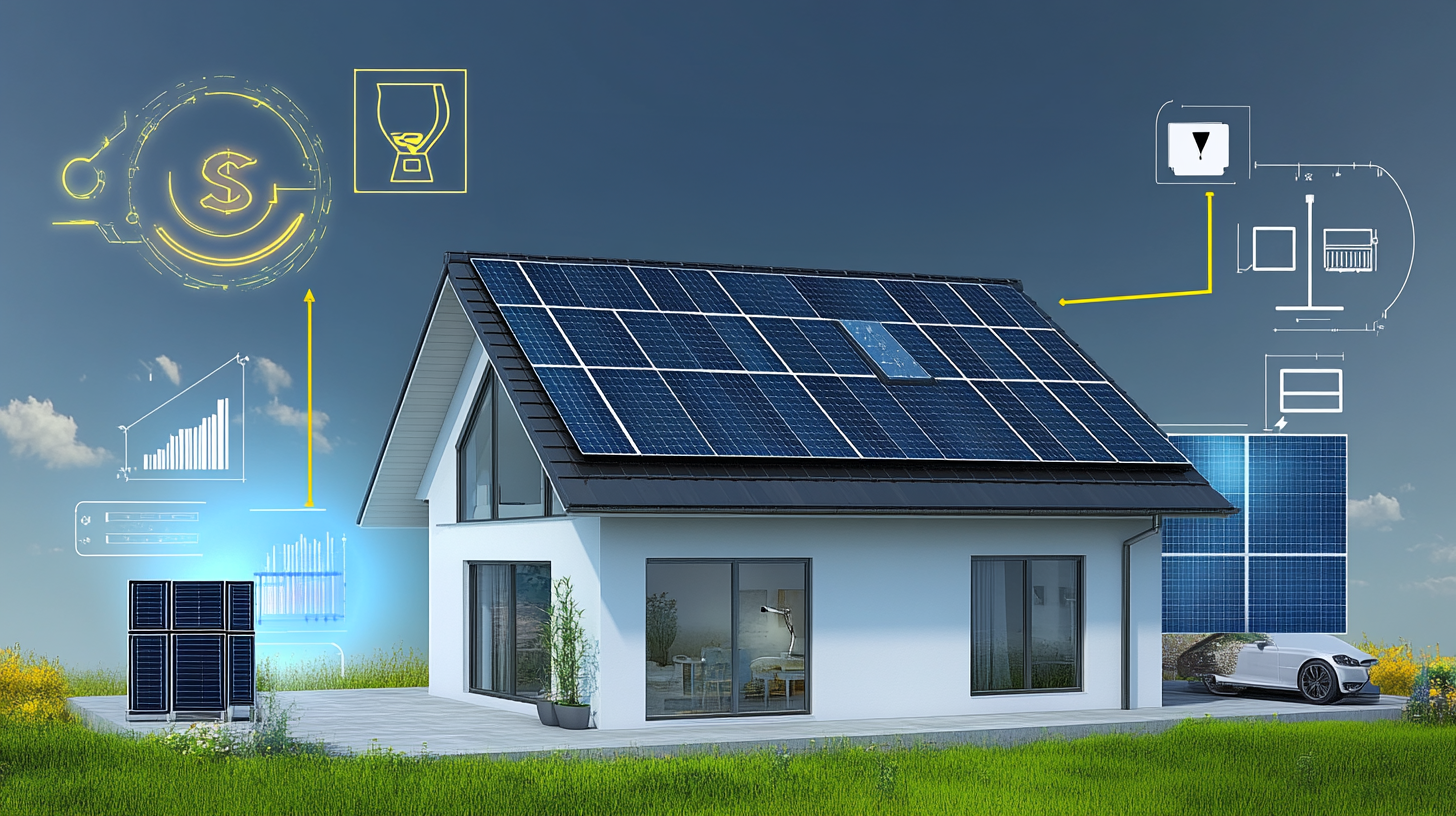
Is your solar power system running at full capacity? Here's how to turn your excess energy into cash (and avoid unnecessary costs) – Image: Xpert.Digital
Direct marketing instead of feed-in tariffs: How to maximize your solar yield
Optimize photovoltaics: Cleverly utilize revenue from direct marketing
Direct marketing of surplus solar power offers private households with photovoltaic (PV) systems an attractive alternative to the traditional feed-in tariff. But how exactly does direct marketing work, what requirements must be met, and when does this model truly pay off? Below, we examine these questions comprehensively and provide an overview of the most important aspects, opportunities, and challenges.
Fundamentals of direct marketing of PV electricity
One of the key options for PV system operators is to feed the self-generated electricity that is not consumed in the household into the grid, either via the legally mandated feed-in tariff or to sell it directly on the electricity exchange. This can be particularly attractive for newer systems, as feed-in tariffs have steadily declined in recent years.
Direct marketing is a model in which surplus solar power is brokered to the energy market via specialized companies. This offers operators the opportunity to potentially generate higher revenues, but also entails additional requirements and costs.
How does direct marketing work?
Contrary to what the name "direct marketing" might suggest, private PV system operators cannot trade their electricity independently on the exchange. Instead, they work with so-called direct marketers. These companies purchase the surplus energy, trade it on the electricity exchange, and pay the PV system operators a monthly fee, minus a service commission.
The remuneration depends heavily on the type of direct marketing:
- Subsidized direct marketing: This model is aimed at plants that are still eligible for subsidies under the Renewable Energy Sources Act (EEG). It is based on the so-called market premium model.
- Other direct marketing: This model is relevant for operators whose EEG subsidies have already expired.
The market premium model in detail
The market premium model is a government subsidy that ensures direct marketing is at least as lucrative as feed-in tariffs. The decisive factor here is the so-called "applicable value," which is generally 0.4 cents per kilowatt-hour (kWh) higher than the feed-in tariff.
If the market price for solar power falls below the fixed feed-in tariff, the market premium compensates for the difference. This provides operators with protection against price fluctuations on the electricity exchange and makes direct marketing predictable even during periods of low market prices.
Requirements for direct marketing
For a PV system to be suitable for direct marketing, both legal and technical requirements must be met:
1. Registration with authorities and network operators
- The PV system must be registered with the Federal Network Agency and the responsible network operator.
2. Contract with a direct marketer
- Operators conclude a contract with an approved direct marketer, who then registers the plant for energy trading.
3. Smart Metering System
- A so-called smart meter is essential to digitally record electricity generation every 15 minutes and automatically transmit it to the direct marketer.
- The installation of a smart meter is mandatory for systems with a power output exceeding 7 kW or an annual electricity consumption of more than 6000 kWh.
4. Optional: Remote controllability
- For systems with a capacity exceeding 25 kW, the option of remote control remains. This serves to stabilize the power grid in the event of a surplus of solar power.
Revenues and costs of direct marketing
Revenues from direct marketing vary considerably and depend on market developments and the performance of the PV system. The following factors play a role:
1. Market prices for solar power
- The market value of solar energy, which reflects the average stock market price, is subject to strong fluctuations. While it stood at 39.91 cents per kWh in August 2022, it fell to just 7.53 cents per kWh by August 2023.
2. Costs for direct marketers and technology
- Direct marketers usually charge a commission of 0.1 to 0.3 cents per kWh or a monthly flat fee of about 50 euros.
- Depending on the installation, a smart meter either costs up to 30 euros as a one-off or incurs annual operating costs of 20 to 50 euros.
3. Initial investments and ongoing costs
- Some providers charge a setup fee of around 200 euros. Comparing the terms and conditions is therefore essential.
When does direct marketing become worthwhile?
Direct marketing is particularly attractive for newer PV systems affected by the currently low feed-in tariffs. A fundamental requirement is that at least half of the generated solar power is sold to cover the additional costs.
As a guideline, the additional revenue from direct marketing should be at least 3 to 4 cents per kWh above the feed-in tariff in the long term. However, in times of low market prices – as is currently the case – subsidized direct marketing can only offer marginally higher revenues.
For older plants whose feed-in tariffs expire after 20 years, feeding electricity into the grid at market prices is often more lucrative than other forms of direct marketing. Until 2032, such plants are permitted to feed electricity into the grid at a maximum annual market value of 10 cents per kWh.
Opportunities and risks of direct marketing
Direct marketing offers several advantages
- Greater flexibility: Operators can react to market opportunities and potentially generate higher revenues.
- Hedging through market premium: The market premium model protects against losses due to low stock market prices.
- Tax exemption for income from smaller plants: Since 2023, income from the sale of solar power has been tax-free.
However, there are also risks
- Fluctuating market prices: Without EEG subsidies, low prices can drastically reduce revenues.
- Additional fixed costs: Costs for technology and direct marketers can reduce profitability.
Providers for direct marketing
The number of providers in the direct marketing sector is constantly growing. There are now numerous options, especially for smaller systems with a capacity of 5 to 50 kW. These include:
- Energy suppliers: Many municipal utilities and supra-regional providers offer corresponding programs.
- Wholesalers: These often also cater to larger PV systems.
- Platforms: Energy-as-a-Service providers offer innovative and often flexible solutions.
Comparing different providers is recommended, as commissions and additional costs vary considerably. Many companies offer online calculators to make potential earnings and costs transparent.
Direct marketing of solar power: Making optimal use of opportunities for PV systems
Direct marketing of solar power is a promising option that opens up additional revenue streams for PV system operators. In particular, the market premium model ensures stable revenues even when the market price falls. However, direct marketing should be approached with caution for older systems after the expiration of EEG subsidies, as these can be subject to greater fluctuations.
With the continued expansion of renewable energies, the role of direct marketing will evolve. In particular, innovative approaches such as the bundling of plants in virtual power plants could become more important in the future.
The decision for or against direct marketing should be based on a sound cost-benefit analysis. Those who want to react flexibly to market opportunities will find direct marketing an exciting way to maximize the benefits of their own PV system.
Related to this:
Your partner for business development in the fields of photovoltaics and construction
From industrial rooftop PV to solar parks and larger solar parking lots
☑️ Our business language is English or German
☑️ NEW: Correspondence in your native language!

Konrad Wolfenstein
I and my team are happy to be available to you as your personal advisor.
You can contact me by filling out the contact form here wolfenstein@xpert.digital:or simply call me at +49 7348 4088 965. My email address is
I'm looking forward to our joint project.