I am frequently asked what a 750 kWp photovoltaic (PV) system or solar power system delivers in terms of power output and how many households it can supply.

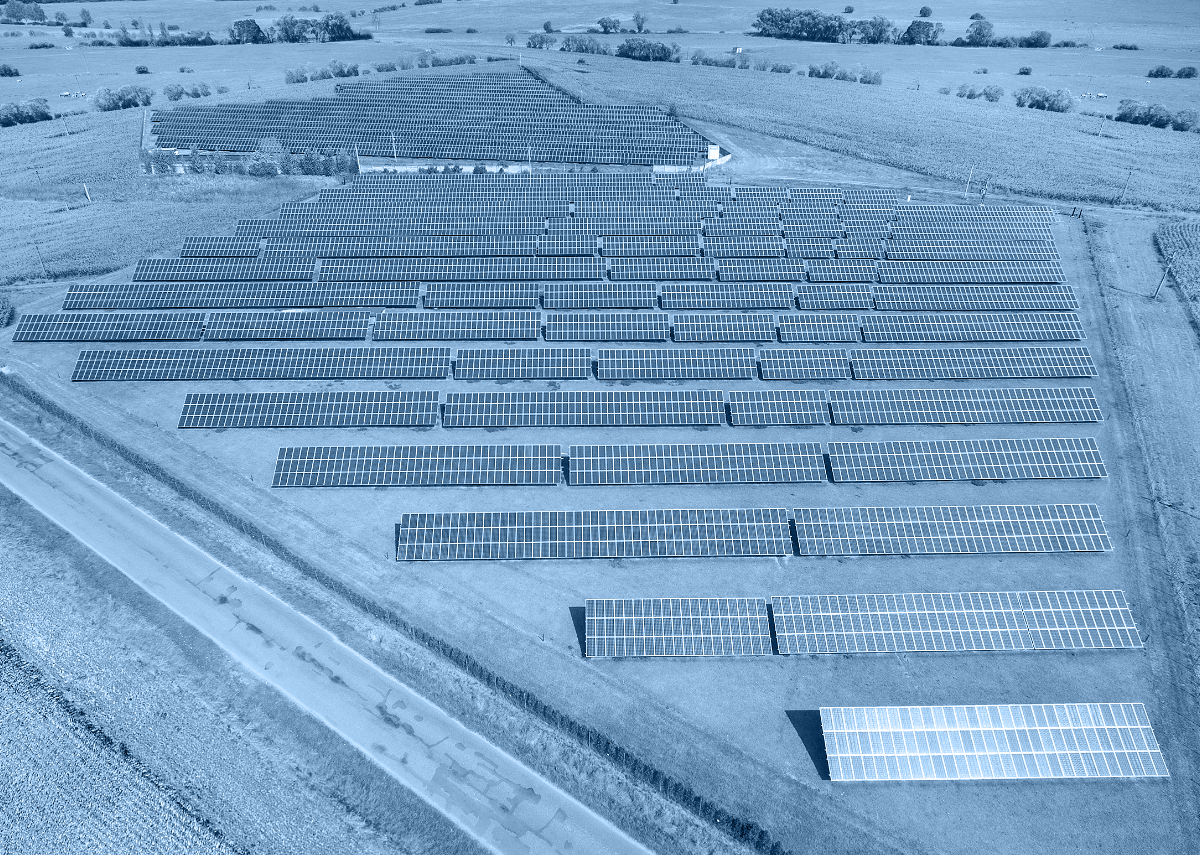
750 kWp photovoltaic system – ground-mounted/open-field system – Image: Kletr|Shutterstock.com
Many factors play a role in order to be able to make a reliable statement in the end.
The location for optimal sunlight exposure, the size of a ground-mounted photovoltaic system , and the power output of the solar modules used are particularly important. Generally, solar modules should be oriented southwest to southeast and tilted at an angle of 20 to 40 degrees. It is also crucial to avoid shading from the surrounding area. Brightness and temperature also influence the performance of solar installations.


Open-field plant planning and consulting – Image: Mark Agnor|Shutterstock.com
The examples given here are therefore only a guideline and are intended to help you get a better idea.
Therefore, I always recommend contacting me directly for a detailed analysis and more precise information. I also welcome private individuals whom I can assist through Xpert.Solar, either via the location search on the website or through direct recommendations. I can also support companies in the trade and industry sectors with my consulting services and connect them with suitable partners, from manufacturers to electrical contractors and solar installers.
Related to this:
How do kWp and kW differ?
Watt peak (from the English word "peak") is a term commonly used in photovoltaics, though not a standardized one, to describe the electrical power output (unit: watt) of solar cells. Multiples such as kilowatt peak, megawatt peak, and gigawatt peak are also common. Abbreviations include Wp, kWp, MWp, and GWp. This unit allows for the comparison of different solar cells and solar modules under standardized test conditions.
Phrases like "The photovoltaic system has a capacity of 10 kWp" or "This is a 1.2 MWp ground-mounted solar power plant" are colloquial. The formally correct formulations would be "The photovoltaic system has a nominal power output of 10 kW according to standard test conditions" or "This is a 1.2 MW ground-mounted solar power plant (nominal power output according to standard test conditions).".
Kilowatt peak (kWp) is therefore used exclusively for measuring and comparing photovoltaic systems and modules. A solar module delivers different power outputs under varying conditions, such as different ambient temperatures.
The statement "An area of approximately 6 to 10 m² is required per 1 kWp" means that for a desired system output of 1 kW, an area of approximately 6 to 10 m² is required under standard test conditions.
Accordingly, the notation “1 kW” for photovoltaic systems is preferable to the notation “1 kWp”, as adding suffixes to unit symbols is not standard practice.
In short: 1 kWp ≙ 1 kW ≙ 1,000 Wp ≙ 1,000 W
And what is the relationship between kWh and kWp?
Kilowatt hours (kWh) indicate the actual amount of electricity (generated/consumed) per hour, kilowatt peak the possible power output under standard test conditions.
What can 1 kWh do, or rather, what can you do with 1 kWh?
One kWh can, for example, power 7 hours of television, a full washing machine at 60°C, or cook a meal for 4 people. It can also power 1 hour of vacuuming or allow 2,500 men to shave electrically.
Or: Driving an electric car for approximately 6.7 kilometers (based on an average energy consumption of 15 kWh per 100 km).
According to statistics from Stromspiegel, a single-person household consumes an average of 2,300 kilowatt hours (kWh) per year.
A two-person household consumes around 3,200 kWh, a three-person household around 3,900 kWh, and a four-person household between 4,500 and 5,000 kWh. These figures can vary depending on individual circumstances.
How many modules are needed for 1 kWp or 1 kW?
As a standard starting point, I currently still use the length and width of a solar module with a module output of 185 Wp and dimensions of 1580 x 808 cm. That's approximately 1.28 m² per module.
185 Wp is, of course, a very conservative estimate. Polycrystalline models can achieve up to 330 Wp nominal power. Monocrystalline modules, on the other hand, now come with up to 400 Wp or even more.
A 750 kWp photovoltaic solar array requires 4,054 solar modules with a nominal output of 185 Wp each. Exactly half that number is needed if solar modules with a nominal output of 370 Wp are used. In this case, only half the area is required. This again illustrates the many factors that need to be considered and why thorough advance planning is highly recommended.
But for the sake of simplicity, let's return to our example:
1,000 Wp / 185 Wp ≙ rounded up to 6 (5.4054…) modules.
Six modules provide an area of 7.68 m².
For 1 kW or kWp, we need the power of 6 modules on an area of 7.68 m² to be able to cook food for 4 people, for example.
On average, 1 kWp delivers 1,000 to 1,200 kWh per year.
How many modules does a 4-person household need throughout the year?
With an annual energy consumption of 5,000 kWh, that would equate to a daily consumption of 13.7 kWh (assuming 365 days a year). That would be 0.57 kWh per hour. But that's not enough to simultaneously cook food, use the television, and all the other electricity needed for everyday tasks.
Therefore, a system size of 6-7 kWp is recommended for a 4-person household: With 6 modules (each with a nominal output of 185 Wp) for 1 kW, this would require 36-42 modules. With 3 modules (each with a nominal output of 370 Wp), this would require 18-21 modules.
Many of the points listed here are only guidelines and usually don't reflect the actual individual circumstances of each person. There are simply too many aspects to consider to provide precise information and planning. This information is only intended to help you better understand the figures and develop a sense of their significance.
How many households can be supplied with a 750 kWp ground-mounted PV system?
A 750 kWp solar park can produce up to 900,000 kWh of electricity per year (1 kWp up to 1200 kWh per year * 750). It's important to know that a 1 kWp photovoltaic system located in Germany can generate an average of about 1200 kWh annually.
Taking into account the different household sizes of 1 to 4 people, up to 230 households can be supplied.
Theoretically, 180 four-person households (900,000 kWh / 5,000 kWh) are possible, 280 two-person households or 230 three-person households.
As mentioned above, using modules with a higher nominal output than 185 Wp allows for more households! For example, with 370 Wp nominal output per module, this would double the number of households. However, it would then no longer be a 750 kWp ground-mounted photovoltaic system , but rather a 1.4 MWp ground-mounted system.
With Xpert.Solar, we offer consulting services for companies planning a photovoltaic system.

What are your advantages?
- A personal contact person with individual advice. This also applies to on-site consultations and site visits.
- We bring them together with long-standing solar experts and manufacturers in the industry.
- This saves you time searching for suitable experts.
- The consultation services are non-binding for you!
- All services tailored to your wishes.
- As consultants and solution providers, we are available to answer all your questions and help with any problems you may have.
- They have the projects and the space, we have the solutions. From mounting systems to energy storage and inverters, right through to the modules.
- Should something not be suitable, we will develop project-specific special solutions for you.
- If you wish, we can organize your photovoltaic projects and the construction site for you. This includes pile driving, frame or module installation, DC/AC installation, and renovations.
- As your partner, we support you in planning module layout, calculating shading, planning and occupancy of strings, as well as in creating plans and drawings.
- We help and support you with everything from soil surveys to planning and structural calculations.
- Safety is our top priority. Comprehensive service is equally important. We can provide a wide range of services, including soil surveys, structural analysis for projects, snow load assessments, acceptance tests, and damage reports.
- Increasingly important: the safety and security of your solar power system. We can create a security concept for you if required.
- We make your life a little easier and give you back time.
- We will help and support you in your work.
- We combine quality with effectiveness.
That's why Xpert.Solar offers consulting and planning services for ground-mounted PV systems / open-field installations / solar parks of 750 kWp and more
Xpert.Solar is a project of Xpert.Digital. We have many years of experience in supporting and consulting on warehouse solutions and logistics optimization, which we combine under the Xpert.Plus umbrella in a large network. With Xpert.Solar, we combine the same expertise in the field of photovoltaics and renewable energies.
If you wish, you can also access our extensive market research and market intelligence data in PDF format. Learn more.

Konrad Wolfenstein
I would be happy to serve as your personal advisor.
You can contact me by filling out the contact form below or simply call me on +49 7348 4088 965 .
I'm looking forward to our joint project.
Write to me



Extensive PDF library: Market monitoring and market intelligence on the topic of photovoltaics
Photovoltaics in Germany
Austria
Switzerland


More


Worldwide and various topics – some in English




Manufacturers of solar modules
Xpert.Digital – Konrad Wolfenstein
Xpert.Digital is a hub for industry focusing on digitalization, mechanical engineering, logistics/intralogistics and photovoltaics.
With our 360° Business Development solution, we support renowned companies from new business to after-sales.
Market intelligence, smarketing, marketing automation, content development, PR, mail campaigns, personalized social media and lead nurturing are part of our digital tools.
You can find more information at: www.xpert.digital – www.xpert.solar – www.xpert.plus
Keep in touch