Lower production costs for renewable energy are a competitive advantage – Image: KsanderDN|Shutterstock.com
🗒️ Renewable energy sources are often more cost-efficient than conventional alternatives
The energy production landscape has changed significantly in recent years. The transition to renewable energies has gained momentum worldwide, and a major reason for this is the economic attractiveness of these energy sources.
1. Falling costs for renewable technologies 📉
Over the past two decades, the cost of solar panels and wind turbines has fallen significantly. Technology has advanced, efficiency has increased, and mass production has further reduced prices.
2. Subsidies and government incentives 🏛️
Many governments worldwide offer incentives and subsidies for renewable energies, which further encourages investment in these technologies and reduces costs for consumers.
3. Unpredictable fuel costs ⛽
Conventional energy sources such as coal, oil, and gas are subject to fluctuations in the global market. In contrast, the "fuel costs" for wind, solar, and hydropower are zero, resulting in more stable and often lower prices.
4. Environmental impact and social responsibility 🌍
Businesses and consumers are increasingly recognizing the environmental impact of conventional energy sources and are seeking greener alternatives. Renewable energies offer this possibility and can often be more cost-effective when long-term environmental costs are taken into account.
5. Easier integration and storage solutions 🔋
Advances in energy storage solutions such as battery technologies make it easier to integrate renewable energies into the power grid, further improving their efficiency and economic viability.
📝 Expert opinions on renewable energies 🌿
1. Competitive advantage through renewable energies 🥇
In the global competition for investments and market share, companies that focus on renewable energies gain a clear advantage. This is not only due to cost efficiency, but also to an improved brand image.
2. Renewable energies as a driving force for jobs 💼
The introduction and spread of renewable energies is creating new jobs worldwide – from research and development to installation and maintenance.
3. Regional advantages and energy independence 🌐
Countries that rely on renewable energies can reduce their dependence on imported fuels and thus strengthen their energy independence.
4. Renewable energies and their role in climate protection 🌡️
Global warming is a serious threat, and renewable energies play a crucial role in reducing greenhouse gas emissions.
📣 Similar topics
- 🌍 Renewable energies: A revolution in the energy market
- 📉 The cost-efficiency of renewable energies: A paradigm shift
- 💼 Green energy creates green jobs
- 🌐 Local energy for a global future
- 🌡️ Renewable energies in the fight against climate change
- 🔋 Storage technologies: The missing puzzle piece
- 🏛️ Why governments should focus on renewable energies
- 🥇 Renewable energies as a competitive advantage
- ⛽ Conventional vs. renewable energies: A cost comparison
- 🌿 The green future: Why renewable energies are the answer
#️⃣ Hashtags: #RenewableEnergy #GreenFuture #ClimateProtection #EnergyIndependence #Sustainability
🗒️ The subsidies and real costs of nuclear power
Nuclear energy has long played a significant role in electricity generation in many countries. Several factors must be considered when discussing the true costs of nuclear power and its comparability with renewable energies.
1. Costs for accident insurance
Nuclear power plants carry inherent risks. Accidents like Chernobyl and Fukushima have not only caused devastating environmental damage but also incurred enormous financial costs. It is reasonable to assume that the cost of insurance against such accidents is substantial and is typically subsidized by governments.
2. Radioactive waste and final storage
Managing radioactive waste is one of the greatest challenges facing nuclear energy. Safe storage over long periods requires immense investment. Final disposal is a complex and expensive undertaking. These costs are often borne by taxpayers and are not reflected in electricity prices.
3. Decommissioning of nuclear power plants
When a nuclear power plant reaches the end of its operating life, the facilities must be dismantled and the site remediated. This process is expensive and can take decades.
Would nuclear power be significantly more expensive?
If all these costs, as well as the direct and indirect subsidies that nuclear power plants receive, were factored into the electricity price, nuclear power would be significantly more expensive than it is now. This would also change how it compares to renewable energies in terms of price.
🌍 Global context
It is important to understand that the transition to renewable energies is not solely driven by economic reasons. Environmental and health-related aspects must also be considered. The long-term consequences of nuclear energy are not yet fully understood, but the risks are considerable.
🌱 Renewable energies compared
In contrast, the costs of renewable energies have fallen considerably in recent years. Solar and wind power are becoming increasingly competitive. These forms of energy generation present their own challenges, but they are more sustainable and have a lower environmental impact.
📈 Economic considerations
It would be a mistake to consider only the direct costs of electricity generation. The external costs caused by environmental damage, health risks, and other factors must also be taken into account.
🤔 Conclusion
The debate about the cost of nuclear energy compared to renewable energies is complex. However, it is clear that when all costs are taken into account, nuclear energy is not as competitive as it is often portrayed.
📣 Similar topics
- 🌍 Nuclear power vs. renewables: A global comparison
- 🌱 The future belongs to renewable energies
- 📈 The hidden costs of nuclear energy
- 🤔 The real costs: What we actually pay for nuclear power
- 🔋 Energy transition: Why renewables are the better choice
- ⚠️ Radioactive waste: A burden for generations
- 🌦 From the atom to the sun: The transformation of the energy sector
- 💡 Light at the end of the atom: The shift to green energy
- 🏭 Decommissioning nuclear power plants: An expensive undertaking 💸 Subsidies in the energy sector: Who really pays?
#️⃣ Hashtags: #NuclearCosts #EnergyTransition #RenewableEnergies #NuclearRisks #RealElectricityPrices
📣 Energy-efficient renovation and new construction, consulting, planning and implementation for industry, retail and municipalities

Our experienced team supports you in optimizing your buildings to reduce energy consumption and promote sustainable energy use with photovoltaics. We analyze your individual needs and develop customized concepts that are both economically and ecologically sound. Whether it's the energy-efficient renovation of existing buildings or the construction of new, energy-efficient structures, we are here to help. Industrial plants, retail buildings, and municipal facilities can reduce their energy costs, minimize their environmental impact, and simultaneously improve the comfort and efficiency of their buildings with our tailored solutions.
👨🏻 👩🏻 👴🏻 👵🏻 Energy-efficient renovation and new construction, consulting, planning and implementation for private households
We offer comprehensive support for private households in the energy-efficient renovation and new construction of buildings with photovoltaics. Our experienced team is at your side to assist you with consulting, planning, and implementing your sustainable energy solutions. We analyze your energy consumption, identify potential savings, and develop customized concepts to improve your energy efficiency. From improving building insulation and installing energy-efficient windows and doors to installing photovoltaic and solar thermal systems – we guide you step by step to make your home more energy-efficient and environmentally friendly. Trust in our expertise and benefit from the numerous advantages that energy-efficient renovation and the use of renewable energies offer. Together, we'll create a sustainable future for your home.
Plan your solar system for the most common applications conveniently online with our solar system planner!
With our user-friendly solar system planner, you can design your individual solar system online. Whether you need a solar system for your home, your business, or for agricultural purposes, our planner allows you to consider your specific requirements and develop a customized solution.
The planning process is simple and intuitive. You simply enter the relevant information. Our planner takes this information into account and creates a customized solar system that meets your needs. You can try out different options and configurations to find the optimal solar system for your application.
Furthermore, you can save your plan to review it later or share it with others. Our customer service team is also available to answer any questions and provide support to ensure your solar system is optimally planned.
Use our solar system planner to design your individual solar system for the most common applications and accelerate the transition to clean energy. Get started now and take an important step towards sustainability and energy independence!

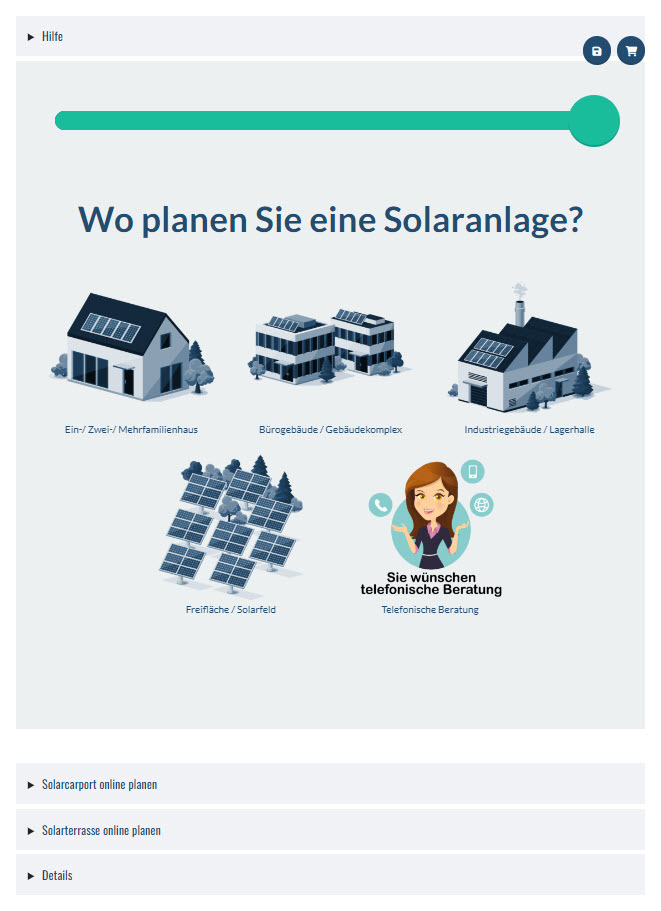
The solar system planner for the most common applications: Plan your solar system online here - Image: Xpert.Digital
More information here:
What are production costs?
Production costs are the total costs incurred in producing a product or providing a service. They include both direct costs (e.g., material costs, labor costs) and indirect costs (e.g., depreciation, general administrative costs).
Production costs are particularly important for companies to determine the break-even price of a product or to decide whether it makes economic sense to manufacture a product or offer a service. A product or service is considered profitable if the price achieved exceeds the production costs.
Related to this:
Production costs in comparison of nuclear power plants versus solar power plants
Comparing the levelized cost of energy (LCOE) between nuclear power plants and solar power plants is complex and can vary depending on the region, technology, financing conditions, fuel prices, and other factors. Here are some general considerations regarding the two technologies:
Nuclear power plants
Investment costs
The construction of a nuclear power plant requires high initial investments. These include costs for reactor construction, safety systems, fuel element management, and other factors.
Operating costs
Once a nuclear power plant is operational, the fuel costs (e.g., for uranium) are relatively low compared to the overall costs. However, there are also costs for maintenance and operation.
Long-term costs
Long-term costs include the safe storage of radioactive waste and the dismantling of the reactor after it is shut down.
Risks
In addition to the direct costs, the potential costs in the event of a serious accident and the associated liability risks must also be taken into account.
Solar systems
Investment costs
The cost of solar panels has fallen sharply in recent years, reducing the initial investment for solar projects. However, costs for installation and the mounting system still apply.
Operating costs
The operating costs of a solar power system are relatively low, since sunlight is free. However, maintenance costs are incurred to keep the system in good working order.
life
A solar power system typically has a lifespan of 20-30 years, with efficiency decreasing over time.
Scalability
One advantage of solar power systems is their scalability. You can start with a small installation and expand it over time.
Production costs
In summary, the levelized cost of solar power has decreased in many regions of the world in recent years and, in some cases, is already competitive with nuclear power or even cheaper. However, it is important to emphasize that costs depend heavily on local conditions, the specific technologies used, and the political framework. It should also be noted that the price of electricity is not the only factor in choosing a particular technology; aspects such as security of supply, environmental impact, and political considerations also play a significant role.
🗒️ Why couldn't the nuclear power plants in Germany be insured, and why would the state have had to step in?
Nuclear power and insurance are two topics that, at first glance, seem to have little in common. But upon closer inspection, one discovers that there are significant financial and security considerations that closely link both areas. Let's take a closer look!
😲 Incredible risks
1. Severe nuclear accidents are rare, but devastating
The probability of a major nuclear accident is low. But if it happens, the consequences will be catastrophic. We're not just talking about environmental damage, but also health risks and long-term economic repercussions.
2. Unpredictable costs
The damage could run into the billions or even trillions. Such sums are simply too high and unpredictable for insurance companies. Who wants to pay for something whose costs they can't estimate?
🤯 Limits of the insurance world
3. What about pools?
One might think that insurance companies could pool their resources to bear such high risks together. And they do, but even the largest insurance pool could not cover the costs of a major nuclear accident.
4. Profitability? Not a chance!
If nuclear power plants were actually required to insure against all potential risks, they simply couldn't afford it. The premiums would be astronomical!
🤝 The state as savior?
5. Emergency response
Many countries have introduced regulations that limit the liability of nuclear power plant operators. Why? Because nuclear energy is considered essential for national energy supply in many cases. However, this also means that the state (and ultimately the taxpayers) would have to step in in the event of a disaster.
6. National security and energy supply
Despite all the risks, nuclear energy also has advantages. It can help ensure energy independence and reduce CO2 emissions. But at what cost?
🤔 Conclusions
It is clear that insuring nuclear power plants is no simple undertaking. The potential risks are enormous, and the costs could be devastating for both insurers and plant operators. The question remains whether the benefits of nuclear energy are worth the potential risks.
📣 Similar topics
- 🤯 The unimaginable risks of nuclear power
- 😲 Why nuclear power plants cannot be insured
- 🤔 Nuclear power: A necessary evil?
- 🤝 The state as the last resort
- 🌍 Nuclear energy and its role in the energy future
- ⚠️ The high price of nuclear safety
- 💡 The advantages and disadvantages of nuclear energy
- 💰 The economic aspects of nuclear power
- ⚖️ Legal challenges in nuclear energy insurance
- 🌐 Nuclear energy in the global energy debate
#️⃣ Hashtags: #NuclearPowerRisks #EnergyFuture #InsuranceDebate #NationalSecurity #NuclearChallenges
🗒️ Subsidizing the nuclear energy industry
The energy sector is a complex field with diverse energy sources, each with its own advantages and disadvantages. In many countries, nuclear power has been subsidized over the years. The reasons for this are manifold:
1. Securing the energy supply
Nuclear power plants can produce energy continuously and are not dependent on weather conditions, as is the case with renewable energies, for example.
2. Reduction of CO2 emissions
Compared to coal-fired power plants, nuclear power plants produce less CO2 during operation.
3. Economic interests
The nuclear industry creates jobs and can promote economic growth.
However, there are also criticisms
💡 Cost to the taxpayer
Many governments have heavily subsidized nuclear energy. This often means that taxpayers bear a significant portion of the costs, whether through direct subsidies or indirect support such as tax breaks or government-guaranteed loans.
💡 Energy companies
Many energy companies have benefited from these subsidies, as they have been able to increase their profit margins without bearing the full costs of nuclear energy. This has led to accusations that they are profiting at the expense of taxpayers.
💡 Long-term commitments
The disposal of radioactive waste and the dismantling of nuclear power plants are costly processes that often have to be borne by the public sector, which in turn is financed by the taxpayer.
💡 Alternatives to nuclear power
Many argued that the subsidies for nuclear power could be better invested in renewable energies, which are more sustainable and safer in the long term.
➡️ What is completely forgotten in all the debates today after the shutdown of nuclear power plants
🌍 Impacts on the environment and society
Besides the economic aspects, nuclear power also has environmental and social consequences. Accidents at nuclear power plants can have catastrophic consequences, both for the environment and for the surrounding communities.
🏭 Energy companies and their role
It is important to consider the role of energy companies in the nuclear debate. While they benefit from the profits, they also bear a significant responsibility regarding safety standards and transparency towards the public.
However: Taking responsibility is not the same as taking risk!
📣 Similar topics
- 🏛️ The debate about subsidies in the nuclear energy industry
- 🍃 Nuclear power vs. renewable energies: A cost comparison
- 💸 Who pays the bill? Taxpayers vs. energy companies
- 🌪️ The true cost of nuclear accidents
- 🌱 The future of energy: Alternatives to nuclear power
- 🏢 Energy companies: Profiteers or partners?
- 📊 Economic impact of nuclear subsidies
- 🌍 Nuclear power: Environmental impacts and solutions
- 💡 The light and shadow of nuclear energy
- 🌎 A global look at nuclear power and its consequences
#️⃣ Hashtags: #NuclearEnergySubsidies #TaxpayerBurden #EnergyFuture #EnergyCompanies #RenewablesVsNuclearPower
🗒️ Taking responsibility is not the same as taking risks!
“Taking responsibility” and “taking risk” are two different concepts, even though they are sometimes linked. Here is a brief explanation:
bear responsibility
Accountability refers to the duty to be held accountable for a specific task, function, or role. A person or organization in a position of responsibility must ensure that certain tasks are performed correctly and according to established standards or expectations. If things go wrong, they are expected to resolve the situation or face the consequences.
bear the risk
This refers to the possibility of a negative event or outcome occurring that leads to losses or damages. Someone who takes a risk accepts the possibility of a negative outcome and is prepared to bear the associated consequences.
Responsibility without financial risk
In many situations, taking responsibility can also involve taking on risks. For example, a managing director can bear both the responsibility for the operation of the company and the risk of financial losses. But it is also possible to take on responsibility without significant risk, or risk without direct responsibility.
🗒️ Top ten tips and what you should know: Lower production costs of renewable energy are a competitive advantage
1. Benefits for the planet
Renewable energies are not only cost-effective but also environmentally friendly. Lower CO2 emissions and a clean energy source are essential for a sustainable future.
2. Independence from fossil fuels
A reduced dependence on fossil fuels can stabilize energy prices and protect the economy.
3. Competitive prices
With decreasing costs, renewable energies can undercut conventional energies in terms of price in many cases.
4. New jobs
Renewable energies create jobs, especially in the areas of research, development and installation.
5. Safety
Renewable energies are often decentralized, which makes the energy grid more resilient to major outages.
6. Technological progress
With decreasing costs and improved technologies, renewable energies could soon make up the largest part of the global energy mix.
7. Global Leadership
Countries that invest in renewable energy can take a leading role in the global energy transition.
8. Energy for all
Renewable energies can help ensure that more people have access to electricity, especially in remote areas.
9. Local economic boost
Local communities benefit from investments in renewable energy through taxes and jobs.
10. Endless energy source
Unlike fossil fuels, which are finite, renewable energies are virtually endless as long as the sun shines and the wind blows.
Expert opinions on renewable energy 🌍🔋
🌿 Sustainability & Environmental Awareness
The environmental benefits are obvious. Renewable energies produce less CO2 and help to achieve global warming targets.
🔌 Independence & Profitability
Many experts emphasize the advantages of reduced dependence on fossil fuels. This protects not only the environment but also the economy.
💼 Labor market advantages
The creation of new jobs, especially in research and development, is a significant advantage of renewable energies.
🛠 Technology & Innovation
Technological advances in the renewable energy sector are impressive. Many experts believe that this sector has the potential to dominate the global energy landscape.
🌏 Global influence
Countries that invest in renewable energies can take a dominant position in the global energy scene.
📣 Similar topics
- 🌿 Green Energy: Why Renewables Are the Way to the Future
- 🔌 Independent of oil: The cost advantages of renewable energies
- 💼 New energy, new jobs: The renewables job market boom
- 🛠 Technology meets environment: The green energy innovation wave
- 🌏 Global leadership in the energy transition: Who is at the top?
- 🌞 The infinite power of the sun: Solar energy as the future
- 💨 With wind in their sails: The rise of wind energy
- 🔋 Battery technology: Storing energy for a green future
- 🌍 A world without CO2: The contribution of renewables
- ⚡ Electrifying Revolution: The Rapid Change in the Energy Sector
#️⃣ Hashtags: #RenewableEnergy #GreenFuture #TechnologyTrend #GlobalImpact #SustainableGrowth
🗒️ Breaking the power of energy companies and their global lobby with renewable energies
Over the years, the energy sector has developed a deep connection with politics and global markets. The dominance of large energy companies and their lobbying groups often influences political decisions and regulations. Breaking these power structures through renewable energies can therefore be considered a key aspect of a sustainable transition to a green future.
1. 🌍 Global trend towards renewable energies
- More and more countries worldwide are recognizing the value of renewable energies and are investing in technologies such as wind, sun and water.
- The increased focus on renewable energies helps to reduce dependence on fossil fuels and thus undermine the power of traditional energy companies.
2. 🤝 Cooperation between governments and the private sector
- Governments are forming partnerships with the private sector to promote and financially support renewable energy projects.
- This type of collaboration can help challenge traditional energy companies and change the energy production landscape.
3. 💰 Economic advantages of renewable energies
- Renewable energies often offer cost-effective alternatives to fossil fuels.
- Price stability and decreasing costs for renewable technologies make them an attractive option for consumers and businesses alike.
4. 📚 Education and awareness raising
- A well-informed public can put pressure on the government to adopt greener policies and accelerate the transition to renewable energy.
- Education and awareness are crucial to raising awareness of the benefits of renewable energies and promoting their acceptance.
5. 🛡️ Legal framework
- Clear and supportive legislation can pave the way for the expansion of renewable energies.
- Legal incentives and subsidies can accelerate the transition to a greener energy supply.
📣 In-depth analysis: Expert opinions and further insights
🌱 Green planet, green economy
The switch to renewable energies not only promotes environmental protection, but can also create jobs and boost the economy.
🌞 Harnessing the power of the sun
Solar energy is becoming increasingly accessible and affordable, making it one of the leading renewable energy sources.
🌀 Wind power: A force to be reckoned with
Wind turbines are efficient and provide a constant energy source that can reduce the need for fossil fuels.
📖 Education: The key to change
Educating the public about the benefits of renewable energies is crucial for their success.
🤖 Technology as an accelerator
Advances in technology can accelerate the transition to renewable energies and increase their efficiency and profitability.
📣 Similar topics
- 🌿 The green transition: Why renewable energies are essential
- 🌍 The global movement towards renewable energies
- 🌞 The bright future of solar energy
- 🌀 Wind power: The invisible power plant
- 💡 Energy independence: Driving the power shift forward
- 📚 Education and awareness: Key to the energy transition
- 🛡️ Legislation: A solid foundation for renewable energies
- 🌱 Jobs through renewable energies
- 🤖 Technological revolution in the energy sector
- 🌊 Tidal and hydropower: The underestimated giants
#️⃣ Hashtags: #RenewableEnergy #EnergyTransition #GreenFuture #EducationForSustainability #TechnologyAndRenewables
The transition to renewable energies is essential not only for ecological, but also for economic and social reasons. The dominance of large energy companies and their lobby groups must be broken to prevent undemocratic influence on governments.
Expert advice on energy-efficient renovation and new construction with solar solutions and heat pumps/air conditioning systems

Konrad Wolfenstein
I would be happy to serve as your personal advisor.
You can contact me by filling out the contact form below or simply call me on +49 7348 4088 965 .
I'm looking forward to our joint project.
Write to me


Xpert.Digital – Konrad Wolfenstein
Xpert.Digital is a hub for industry focusing on digitalization, mechanical engineering, logistics/intralogistics and photovoltaics.
With our 360° Business Development solution, we support renowned companies from new business to after-sales.
Market intelligence, smarketing, marketing automation, content development, PR, mail campaigns, personalized social media and lead nurturing are part of our digital tools.
You can find more information at: www.xpert.digital – www.xpert.solar – www.xpert.plus
Keep in touch