Mini-PV systems – Balcony power plants – Balcony solar – Balcony PV systems – Plug-in PV systems – Plug & Play solar – Guerrilla PV – Plug-in solar devices

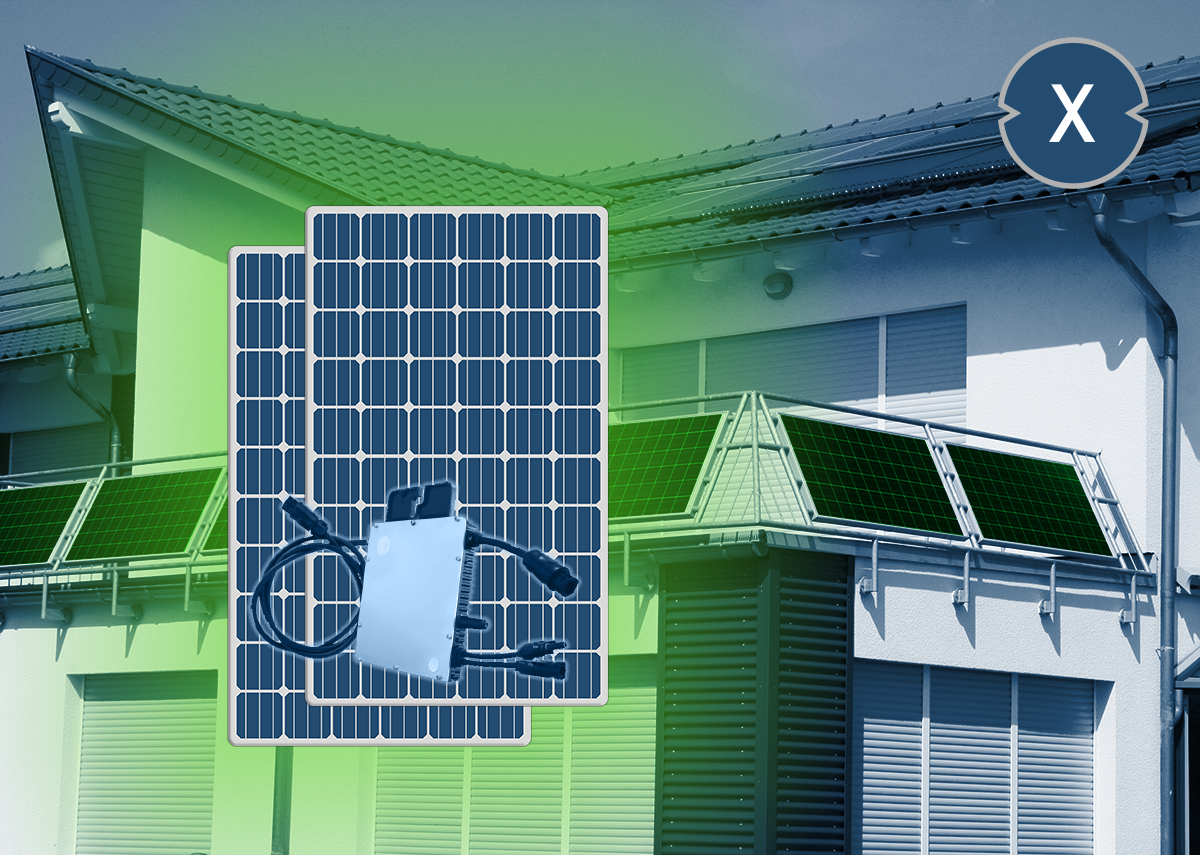
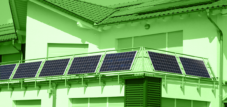
Plug-and-play mini-PV systems, balcony power plants or balcony solar – Image: Xpert.Digital
Permit-free, plug-and-play mini-PV systems are small solar installations with a maximum of two solar modules and an inverter with an output power of up to 600 VA (Germany) or 800 VA (EU regulation). They can be connected directly to a standard household socket or, via a suitable power outlet, to the user's own private electrical circuit.
The background: What you should know about it
On 14 April 2016, the EU Commission adopted a regulation establishing a network code with grid connection requirements for electricity producers (Regulation (EU) 2016/631).
On 17 May 2016, the EU Regulation establishing a network code with grid connection requirements for electricity producers (Regulation (EU) 2016/631) entered into force.
As regulations, these legal acts are binding for all affected EU member states and have direct effect in Germany, without the need for implementation into national law or national regulations.
This Regulation specifies in Article 5 (2a) a maximum capacity of at least 0.8 kW or 800 watts for electricity generating plants.
In Germany, this regulation was implemented at the national level through the Electrotechnical Properties Verification Ordinance (NELEV). It governs the procedures for verifying compliance with the electrotechnical properties of energy installations as defined in the Energy Industry Act.
“Operators of generation plants must demonstrate to the responsible network operator, within the framework of the operating permit procedure pursuant to Article 29 of Regulation (EU) 2016/631, that the general minimum technical requirements pursuant to Section 19 of the Energy Industry Act are complied with.”
The adoption of the NELEV is possible due to the national discretion granted to Member States in Articles 15, 16 and 32 of EU Regulation 2016/631.
The VDE, in turn, defines the rules for technology, such as how the NELEV verifications are to be provided, so that the electrotechnical properties of energy systems are complied with in accordance with the Energy Industry Act.
A brief note on DKE, VDE, DIN
In Germany, the German Commission for Electrical, Electronic & Information Technologies (DKE) is responsible for developing standards, norms, and safety regulations. As the German member of international and European organizations for electrical engineering standardization, the DKE represents German interests in the development and refinement of international and European standards to reduce trade barriers and promote global market access.
- The DKE is a body of the German Institute for Standardization (DIN) and the
- Association for Electrical, Electronic & Information Technologies (VDE).
VDE is neither mandatory nor a legal basis
The VDE regulations define the standards, among other things, for the proper electrotechnical properties of power installations. However, their application is not binding! The VDE standards, in turn, are considered generally accepted rules of technology and have a quasi-legally binding status.
More information here: DKE – Questions and Help
"The application of a standard is generally voluntary. A 1998 ruling by the Federal Court of Justice further clarified that standards are not inherently mandatory. According to this ruling, standards are considered private technical regulations with a recommendatory character, which do not definitively establish the generally accepted rules of technology. This means that, in principle, one can deviate from the technical specifications of a standard. If a solution other than the one described in the standard is implemented, the burden of proof in the event of damage lies with the responsible party. They must be able to demonstrate that the technical implementation they chose is equal to or better than the specifications of the standard."
The CE marking requirement!
Many products require CE marking before they can be sold in the EU. The CE mark indicates that a product has been tested by the manufacturer and meets all EU-wide requirements for safety, health, and environmental protection. It is mandatory for all products manufactured worldwide that are marketed in the EU.
By affixing the CE marking, the manufacturer, distributor or authorized representative in the EU declares, in accordance with Regulation (EC) No 765/2008, "that the product complies with the applicable requirements laid down in the Community harmonization legislation on its affixing" (and "that he/she assumes responsibility for the conformity of the product with all applicable requirements contained in the relevant Community harmonization legislation on its affixing"
The CE marking was primarily created to guarantee end consumers safe products within the European Economic Area, including the European Union (EU). The CE marking is also referred to as a "passport" for the European single market.
What is the difference between CE and GS?
The GS mark (Tested Safety) is still the only legally regulated test mark for product safety in Europe.
The GS mark is a voluntary certification mark for technical devices. It indicates that the devices comply with German and, where applicable, European safety requirements for such devices. The main difference between the GS mark and the CE mark isthat compliance with European safety requirements is tested and certified by a state-approved independent body. The GS mark is based on the German Product Safety Act (ProdSG).
The CE mark, on the other hand, is awarded for the signing of a declaration that the product complies with European legislation.
The CE marking is required for certain products, but it is "only" a declaration by the manufacturer or distributor that they comply with all European regulations (directives and/or ordinances). All other marks such as ENEC, VDE, ÖVE, TÜV, BG are private marks of individual testing or certification bodies or agreements between testing laboratories.
EU: Network rules should apply from 800 watts - not in Germany!
Article 5, paragraph 2, point a, "Determination of significance" (Regulation (EU) 2016/631), defines the power output threshold at which the regulation applies. The decisive factor is not the input power (DC) of the energy-generating solar modules, but the output power (AC) of the inverter.
This means that up to this wattage, everyone can decide for themselves how to feed their electricity generation into the home grid without needing professional help, provided that the devices used (solar modules and inverters) comply with the legal requirements.
The de minimis threshold of 800 watts granted by the EU does not exist in Germany, as Regulation (EU) 2016/631 is implemented here through the NELEV (National Electricity Supply Ordinance), which does not include a de minimis threshold. Plug-and-play PV systems in Germany always require registration!
👉🏼 However, the new regulations of VDE-AR-N 4105 have created a way to register mini-PV systems with a total output of up to 600 watts directly with the grid operator, instead of requiring registration by a qualified electrician as before. Most grid operators provide a registration contact form on their website for this purpose, with minimal bureaucracy.
👉🏼 It is also stipulated that consumers must register their mini-PV systems via the market master data register of the Federal Network Agency.
Anything beyond that may only be connected by a qualified electrician with knowledge of building installation and PV system technology. They will check whether the power line is designed for feeding electricity into the grid, including the relevant requirements for cable sizing, connection type, and protective devices.
Besides Switzerland, the 800 watt rule applies, for example, in the EU member states Austria and the Netherlands.
Cable fire due to power line overload?
In Germany, overcurrent protection of up to 16 amps is used. The mains voltage in almost all of Europe is 230 volts at a frequency of 50 hertz. This results in a maximum power of 3,680 watts (230 volts x 16 amps). It would take an enormous number of electrical appliances to exceed 16 amps and trigger the fuse.
Connecting a plug-and-play 600-watt mini-PV system to the house's electrical circuit provides a total of 4,280 watts, or 18.6 amps, for the various electrical consumers (household appliances). Even with outdated wiring, where the circuit is only protected by 13 or even 10 amp fuses, there is no risk of a cable fire if an additional 600 watts are available, even in the event of an overload of too many electrical consumers.
The EU Commission, in its regulation for electricity generators (Regulation (EU) 2016/631), even considers up to 800 watts to be unproblematic and insignificant (a minor issue).
Anyone who wants to be absolutely sure in accordance with VDE regulations can have an electrician check the actual line load and thereby also use a higher power output from a plug-and-play mini-PV system, provided that the electrician's check allows it.
Schuko or energy socket
Schuko is an acronym for Schutzkontakt (protective contact) and refers to a system of plugs and sockets that is predominantly used in Europe. Internationally, this system is also known as plug type F.
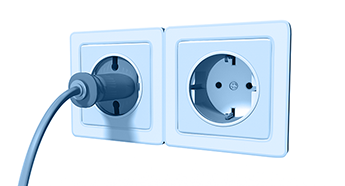
Schuko plug and socket – Image: Xpert.Digital
In countries like Switzerland, Austria, and the Netherlands, operating plug-and-play mini-PV systems with Schuko plugs is not a problem. I am also unaware of any deaths, fires, or personal injuries involving balcony solar systems that use these types of plugs. Many people in Germany also use the Schuko connection system for their mini-PV systems.
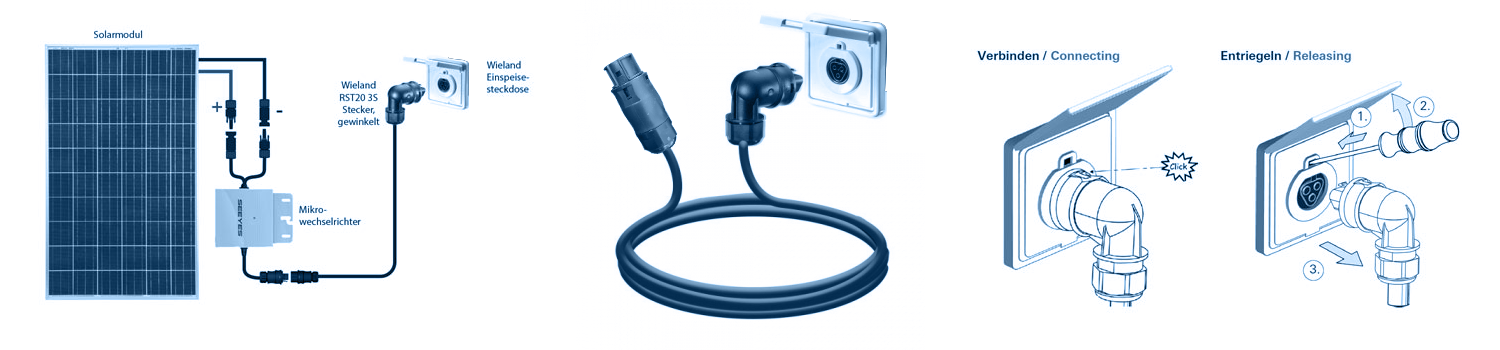
Wieland socket for balcony power plant | Balcony solar | Plug-and-play mini solar/PV system – Image: Xpert.Digital
Nevertheless, the VDE considers "connection via Schuko to be unsuitable." A compromise was found with the preliminary standard DIN VDE V 0100-551-1, which specifies an energy socket (Wieland socket).
This, in turn, incurs further costs for something that the actual EU regulation considers unproblematic and insignificant. And this applies even to loads up to 800 watts! The cost for such an installation with the Wieland socket is between 250 and 300 euros and must be installed by a qualified electrician with a dedicated power supply.
The following line of reasoning must be mentioned here
VDE standards are neither mandatory nor legally binding. Therefore, their application is generally voluntary. They are merely recommendations; see also above under "VDE is neither mandatory nor legally binding".
👉🏼 If, in the case of an individual deviation from the standard, i.e., operation with Schuko plugs instead of the Wieland socket, the burden of proof lies with the responsible party, EU Regulation (EU) 2016/631 can be used as a basis. This regulation states that anything below 800 watts is not significant and therefore irrelevant. This EU regulation is a powerful piece of evidence, as is the unproblematic classification in other EU countries such as Austria and the Netherlands, as well as in Switzerland.
However, the final word has not yet been spoken regarding the Schuko socket system in Germany. There is currently an objection procedure underway concerning the relevant preliminary standard.
Related to this:
The Schuko plug could become the standard. PV Magazine reports: "However, owners of balcony-mounted photovoltaic modules wouldn't have to wait for that. The future standard is irrelevant to the disputes with grid operators that plug-in solar users repeatedly face. According to a ruling by the clearinghouse, grid providers are already prohibited from prohibiting connections via a Schuko plug."
More information here:
The limit: Plug-and-play mini-PV systems with a maximum of 2 solar modules
For PV systems with or without plug-in devices exceeding 600 watts or 800 watts, an electrician or specialist company must be consulted in any case.
German building regulations stipulate that solar modules with a glass cover area may not exceed 2 m². The basis for building permits is the building code or state building code of the respective federal state, as authority for building regulations lies with the individual states. These regulations are based on model regulations adopted annually at the Conference of Building Ministers.
More information here:
The solar modules, which are actually the most economically attractive, measure just under 2 m² and have a power output of 375 to 420 watts. These can be used easily and simply for a plug-and-play mini-PV system. With this module size, significantly more power isn't really possible.
In addition, the required inverter with two connections for the solar modules and the crucial output power for connection to the private power grid are needed.
In the following comparisons and examples, the output power is limited to 800 watts. Of course, much more is possible and can be requested from me if needed.
600 Watt / VA balcony solar, plug-and-play mini-PV system

Hoymiles HM-600 inverter (expected to be available again in October)
- Max. 2 x 380 watts input power (DC)
- Max. 600 VA output power (AC)
Recommended solar panels:
- 2 x Viessmann – VITOVOLT_M375 AG – 375 Watt (currently available)
- 2 x Jinko – JKM375M-6RL3-B – 375 Watt (currently available)
- 2 x PhonoSolar – PS380M4-20/UH(30MM)BW – 380 Watt (currently available)
- 2 x Jinko – JKM 380M-6RL3-B_35MM – 380 Watt (currently available)
Recommended retail price:
900 € (Shipping costs approx. €80)
700 Watt / VA balcony solar, plug-and-play mini-PV system
Hoymiles HM-700 inverter (currently available)
- Max. 2 x 440 watts input power (DC)
- Max. 700 VA output power (AC)
Recommended solar panels:
- 2 x Jinko – JKM420N-54HL4-B – 420 Watt (currently unavailable)
- 2 x Jinko – JKM415N-54HL4-B – 415 Watt (currently unavailable)
- 2 x PhonoSolar – PS415M4-22/WH – 415 Watt (currently available)
- 2 x WattPower – WP-410/G8-108H W – 410 Watt (currently available)
- 2 x Kensol – KS410MB5-SBS – 410 Watt (currently available)
- 2 x Jinko – JKM410N-54HL4-B – 410 Watt (currently available)
- 2 x SHARP – NU-JC410 – 410 Watt (currently available)
- 2 x Kensol – KS405MB5-SBS – 405 Watt (currently available)
Recommended retail price:
1000 € (Shipping costs approx. €80)
800 Watt / VA balcony solar, plug-and-play mini-PV system
Hoymiles HM-800 inverter (expected to be available again in October)
- Max. 2 x 500 watts input power (DC)
- Max. 800 VA output power (AC)
Recommended solar panels:
- 2 x Jinko – JKM420N-54HL4-B – 420 Watt (currently unavailable)
- 2 x Jinko – JKM415N-54HL4-B – 415 Watt (currently unavailable)
- 2 x PhonoSolar – PS415M4-22/WH – 415 Watt (currently available)
- 2 x WattPower – WP-410/G8-108H W – 410 Watt (currently available)
- 2 x Kensol – KS410MB5-SBS – 410 Watt (currently available)
- 2 x Jinko – JKM410N-54HL4-B – 410 Watt (currently available)
- 2 x SHARP – NU-JC410 – 410 Watt (currently available)
- 2 x Kensol – KS405MB5-SBS – 405 Watt (currently available)
Recommended retail price:
1100 € (Shipping costs approx. €80)
Optional
- Alternative microinverters such as Envertech or APSystems
- Wi-Fi energy meter
- Mounting systems for balconies, facades and horizontal installation surfaces
- Connection cable or power connector
📣 Plug-and-play mini-PV systems for industry, retail and municipalities
Everything from a single source, specifically designed for solar solutions for large parking areas. Refinance or offset your future costs with your own electricity generation.
🎯 For solar installers, plumbers, electricians and roofers
Consultation and planning including a non-binding cost estimate. We connect you with strong partners in photovoltaics.
👨🏻 👩🏻 👴🏻 👵🏻 For private households
We have a regional presence throughout the German-speaking world. We have reliable partners who will advise you and implement your wishes.
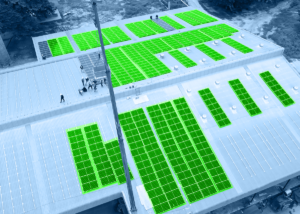
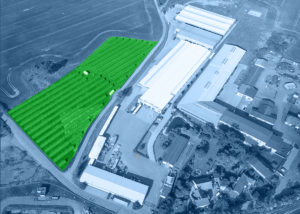


- Planning photovoltaics on warehouses, commercial buildings and industrial buildings
- Industrial plant: Planning a photovoltaic open-field system or open-area system
- Planning solar power systems with photovoltaic solutions for freight forwarding companies and contract logistics
- B2B Solar Systems and Photovoltaic Solutions & Consulting
That's why Xpert.Solar is the right choice for plug-and-play mini-PV systems – consultation and planning!

Konrad Wolfenstein
I would be happy to serve as your personal advisor.
You can contact me by filling out the contact form below. I will get back to you as soon as possible
I'm looking forward to our joint project.
Write to me


Xpert.Digital – Konrad Wolfenstein
Xpert.Digital is a hub for industry focusing on digitalization, mechanical engineering, logistics/intralogistics and photovoltaics.
With our 360° Business Development solution, we support renowned companies from new business to after-sales.
Market intelligence, smarketing, marketing automation, content development, PR, mail campaigns, personalized social media and lead nurturing are part of our digital tools.
You can find more information at: www.xpert.digital – www.xpert.solar – www.xpert.plus
Keep in touch