


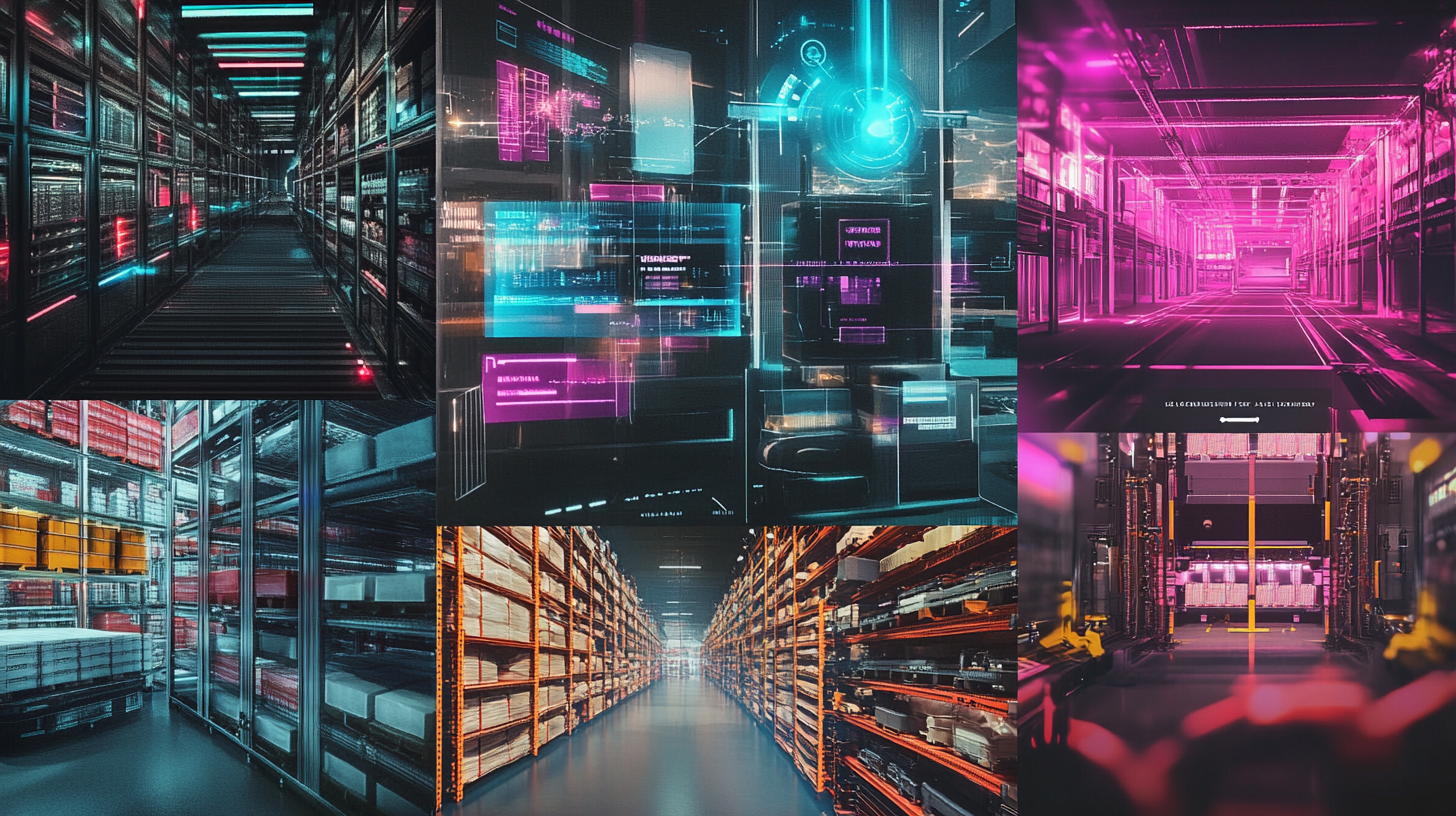
Planning correctly and efficiently: AI, robotics and automation for transit storage, buffer storage and long-term storage – Image: Xpert.Digital
Intelligent storage strategies: Buffer and long-term storage in transition
Efficient planning and optimization: The use of AI, robotics and automation in transit, buffer and long-term storage facilities
The logistics industry is on the cusp of a revolution: the targeted use of artificial intelligence (AI), robotics, and automation technologies is fundamentally changing processes in transit warehouses, buffer warehouses, and long-term storage facilities. These innovations not only optimize efficiency but also increase flexibility and precision throughout the entire supply chain. The following provides a comprehensive overview of the effective implementation and immense potential of these technologies.
Related to this:
AI as the key to warehouse optimization
Intelligent warehouse management systems (WMS)
AI-powered warehouse management systems are at the heart of modern logistics. These systems act as the "brain" of warehousing, analyzing real-time data from various sources to make accurate predictions and streamline processes.
1. Inventory optimization
AI algorithms analyze historical data, current trends, and demand fluctuations. This allows inventory levels to be automatically adjusted to current demand, preventing overstocking and minimizing supply bottlenecks.
2. Dynamic storage location allocation
Products are optimally positioned in the warehouse based on parameters such as size, weight, and turnover rate. This not only reduces picking times but also maximizes space utilization.
3. Predictive Maintenance
Analyzing sensor data allows for the early detection of impending failures in warehouse equipment such as conveyor belts or stacker cranes. This significantly reduces downtime and unplanned repair costs.
Increased efficiency through data-driven analyses
The strength of AI lies in its ability to process large amounts of data in real time and extract valuable insights from it. These insights help companies to continuously optimize their warehouse processes
- Optimized order processing: AI systems recognize patterns in order data and plan picking in such a way that routes and time are minimized.
- More precise forecasts: External factors such as weather data, seasonal trends or economic indicators are included to predict warehouse requirements and personnel planning even more accurately.
- Simulation and scenario planning: Companies can use AI to simulate potential disruptions in the supply chain and plan preventive measures based on this.
Robotics and Automation: Redefining Physical Efficiency
Automated conveyor systems
Automation is a key element of modern warehouse logistics. Intelligent conveyor systems ensure faster goods movements, greater accuracy, and fewer errors
- Autonomous Mobile Robots (AMRs): These flexible robots navigate independently through the warehouse and handle transport between different stations. Using sensors and AI, they dynamically adapt to changing warehouse conditions.
- Automated guided vehicles (AGVs): For larger loads, AGVs are suitable, which operate on pre-programmed routes and ensure high reliability in transport.
Picking robots and cobots
Integrating robotics into order picking improves both speed and accuracy:
- Picking robots: With AI-supported image recognition and precise gripping systems, picking robots can efficiently handle a wide variety of products.
- Cobots (Collaborative Robots): These robots work hand in hand with human employees and take over monotonous or ergonomically demanding tasks. This reduces the risk of accidents and increases employee productivity.
Tailor-made solutions for different bearing types
transit camp
In transit warehouses, where goods are only stored temporarily, speed is crucial. Automation and AI contribute significantly to meeting this requirement
- Cross-docking systems: Automated sorting systems allow incoming goods to be quickly redistributed without the need for long-term storage.
- Route optimization: AI-powered algorithms are used to calculate the most efficient routes for goods distribution. This minimizes lead times and maximizes warehouse throughput rates.
Buffer bearing
Buffer stocks serve to balance supply and demand. Flexibility and rapid response times are particularly important here
- Shuttle systems: Dynamic storage and retrieval machines enable quick access to goods and optimize space utilization.
- Real-time inventory adjustment: AI systems allow inventory levels to be continuously adjusted to production fluctuations and demand peaks, making warehouse operations more efficient.
Long-term storage
Long-term storage requires optimal use of available storage space and precise management:
- Automated high-bay warehouses: Robot-controlled systems maximize the use of vertical storage areas while reducing manual effort.
- Sustainable warehousing strategies: By using AI, products can be intelligently managed according to criteria such as shelf life or demand frequency, which reduces waste and supports sustainability goals.
Related to this:
Implementation strategies and challenges
The introduction of AI, robotics, and automation is a complex process that requires careful planning. The following aspects are crucial:
- Pilot projects and scalability: The gradual rollout of technologies minimizes risks and enables targeted optimization.
- Seamless integration: New systems must be compatible with existing technologies to ensure smooth implementation.
- Employee qualification: Training and further education prepare the workforce for working with new technologies and promote acceptance.
- Data security: The increasing networking of systems requires robust security measures to protect sensitive warehouse data from cyberattacks.
The future of warehouse logistics
The convergence of AI, robotics, and automation has the potential to fundamentally transform the logistics industry. Companies that invest in these technologies early on not only secure a competitive advantage but also create a more efficient and sustainable supply chain. With the ongoing development of new innovations such as edge computing, 5G connectivity, and advanced AI applications, the future of warehouse logistics is becoming even more promising.
By strategically deploying these technologies, companies can reduce their warehousing costs, stabilize their supply chains, and simultaneously meet rising consumer demands. In this way, a well-planned warehouse becomes a crucial success factor in a rapidly changing global economy.
Related to this:
We are here for you - Consulting - Planning - Implementation - Project Management
☑️ Our business language is English or German
☑️ NEW: Correspondence in your native language!

Konrad Wolfenstein
I and my team are happy to be available to you as your personal advisor.
You can contact me by filling out the contact form here wolfenstein@xpert.digital:or simply call me at +49 7348 4088 965. My email address is
I'm looking forward to our joint project.