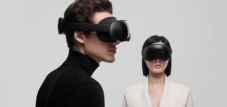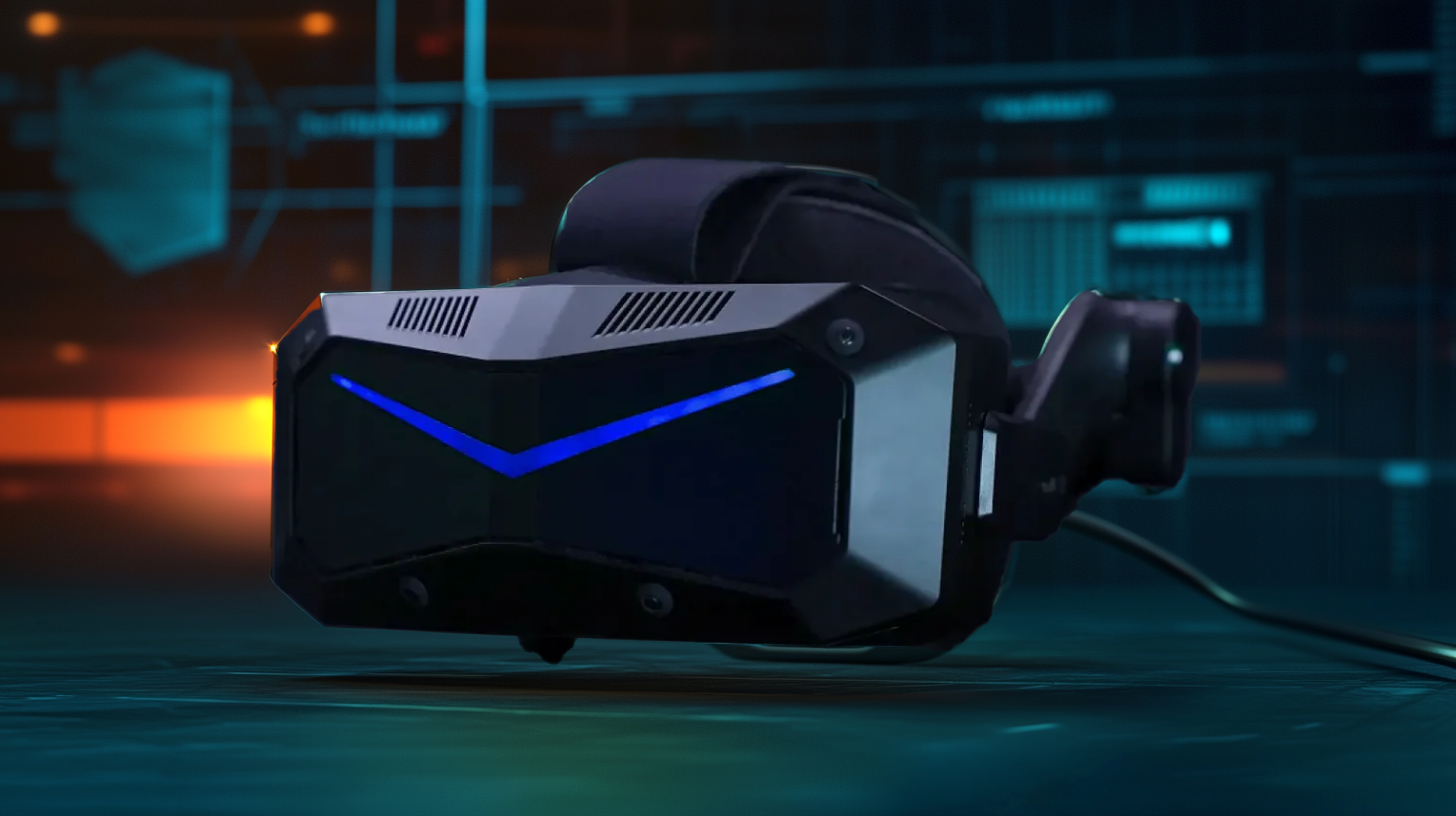
Pimax Crystal Super VR headset: An in-depth analysis of the high-end VR headset – Image: Pimax / Xpert.Digital
High-end VR with Pimax Crystal Super: A new benchmark?
Pimax Crystal Super comparison: Outstanding or overrated?
The Pimax Crystal Super enters the virtual reality (VR) arena as a high-resolution, PC-based VR headset that claims to offer a top-tier visual experience. With interchangeable optical modules, impressive resolution, and a wide field of view, it aims to appeal to both VR enthusiasts and professional users. But how does this ambitious device fare in the fiercely competitive VR market?
Related to this:

The promise of clarity and immersion
The Pimax Crystal Super's core focus is the pursuit of unparalleled visual clarity. With a resolution of 3840×3840 pixels per eye (or 3840×3552 for the Micro-OLED version), it significantly surpasses many competing products. This high pixel density, combined with a wide field of view of up to 135 degrees, is designed to immerse the user more deeply in the virtual world than ever before.
But the Crystal Super is more than just raw pixel power. It offers a variety of display options, including QLED panels with mini-LED backlighting and local dimming, as well as micro-OLED displays for even deeper blacks and higher contrast. It also features eye-tracking with foveated rendering, which reduces the processing load by focusing on the area the user is looking at.
A declaration of war on the competition
With these impressive specifications, the Pimax Crystal Super positions itself as a high-end VR headset specifically tailored to the needs of VR enthusiasts, sim racers, and professional users. It is the latest flagship of Pimax's "Crystal" product line and surpasses the Crystal Light in terms of features and performance.
Compared to the original Crystal, the Super offers improvements in areas such as eye tracking, IPD adjustment, and display options. But it's not just an incremental upgrade. Pimax seems to be aiming to set a new standard for visual quality and immersion in VR with the Crystal Super.
Technical details in detail
To truly understand the potential of the Pimax Crystal Super, a closer look at the technical specifications is essential:
resolution
3840 x 3840 pixels per eye (QLED) / 3840 x 3552 pixels per eye (Micro-OLED)
refresh rate
72 Hz – 90 Hz (QLED, up to 120 Hz possible), 72 Hz – 90 Hz (Micro-OLED)
Display technology
QLED with Mini-LED backlighting and local dimming, Micro-OLED
Field of view (FOV)
120° horizontal (QLED 57 PPD), 135° horizontal (QLED 50 PPD), 102° horizontal (Micro-OLED)
Pixel density (PPD)
57 PPD / 50 PPD (QLED), advertised as "Retina-level" clarity
lenses
Glass aspherical lenses (QLED), pancake lenses (Micro-OLED)
Tracking
Inside-out tracking with integrated cameras, optional Lighthouse faceplate
Eye-tracking
200 Hz refresh rate, Dynamic Foveated Rendering 2.0, automatic IPD adjustment (58-72 mm)
Audio
Replaceable 3.5 mm audio jack, two built-in microphones, compatible with DMAS
Controller
Two controllers included in the package
Connectivity
DisplayPort (DP)
Miscellaneous
No wireless streaming, PCVR-only headset, reduced size and weight compared to the Crystal
The importance of details
The high resolution and refresh rate require a powerful PC configuration, ideally with an Nvidia RTX 3080 or better. The modular design with interchangeable optical modules allows the user to optimize the headset for different applications. For example, one can choose between a wider field of view and a higher pixel density.
The integrated eye-tracking is not only useful for automatic IPD adjustment, but also enables dynamic foveated rendering. This reduces the processing load on the graphics card, as only the area the user is looking at is displayed in sharp focus. This can lead to a higher frame rate and a smoother VR experience.
Critical voices: What do the experts say?
Initial impressions of the Pimax Crystal Super were promising. The sharpness and clarity of the image were praised, as were the high brightness levels, which could make the headset one of the brightest on the market. Comfort was also said to be improved compared to previous Pimax models.
However, there were also criticisms. Pre-production models exhibited mura effects (unevenness in the screen) and "tiger stripes" (vertical lines). Furthermore, distortions and a "pupil swim" effect were observed, where the geometry of objects changes with head movements.
Some reviewers expressed concerns about whether Pimax could resolve these issues in time. Past experience has shown that the company has struggled to deliver on its promises and maintain consistently high quality. The price of around $2000 was also considered high by some.
The dilemma of high expectations
The use of high-resolution and very bright displays can exacerbate problems like mura. This necessitates careful calibration and quality control during manufacturing. The success of the Crystal Super hinges on whether Pimax can refine the hardware and software before final release to address the reported issues and justify the premium price.
The repeated mention of past problems with Pimax products and their software indicates a lack of trust within the VR community. Pimax must overcome this in order to successfully establish the Crystal Super in the market.
Related to this:
Comparison with the competition: Who is ahead?
To better understand the Pimax Crystal Super, a comparison with other high-end VR headsets is essential:
Varjo Aero
There are similarities in terms of resolution, eye-tracking, and automatic IPD adjustment. However, the Crystal Super offers higher resolution and a wider field of view. The Varjo Aero, on the other hand, is considered more comfortable and features more sophisticated software.
Valve Index
The Crystal Super significantly surpasses the Valve Index in terms of resolution and field of view. However, the Index scores points with a higher refresh rate, an excellent integrated audio system, and greater wearing comfort. Furthermore, the Index is generally less expensive.
Meta Quest 3
The Crystal Super offers a higher resolution than the Meta Quest 3. However, the Quest 3 is a standalone headset and significantly cheaper. The Crystal Super, on the other hand, requires a PC.
Related to this:
- Samsung Android XR headset Project Moohan premieres at Mobile World Congress (MWC) 2025 in Barcelona
The agony of choice
The choice between these headsets depends heavily on budget, priorities (visuals, comfort, tracking type, standalone capability), and the user's tolerance for potential software and hardware quirks. The Pimax Crystal Super is undoubtedly a top-of-the-line product in terms of visual specifications. However, there are compromises regarding price, comfort, and the software ecosystem.
What does the community say?
The VR community is showing cautious interest in the Pimax Crystal Super. Its high pixel density and potential visual clarity are being praised. However, there are significant concerns due to Pimax's past issues with software, build quality, adherence to delivery dates, and customer support.
Many users are expressing their disappointment that the Lighthouse faceplate for the Super is not immediately available. Others are questioning whether the price increase compared to the Crystal Light justifies the incremental improvements.
Pimax at a crossroads
Overall, there is strong interest in the VR community for a headset with the specifications of the Crystal Super. However, Pimax needs to overcome its reputation for broken promises and quality control issues to gain widespread trust and acceptance.
Negative experiences with previous Pimax products directly influence user expectations and the level of skepticism towards new releases. Pimax must prioritize software stability, fix hardware bugs reported in early units, and provide reliable customer support to succeed with the Crystal Super.
Pricing and availability: A complicated issue
The Pimax Crystal Super's pricing is unconventional. The base price is $999 upfront for the headset. However, full ownership requires a "Pimax Prime" membership, which involves monthly payments or a one-time payment after a trial period.
The total price for the Crystal Super QLED 57PPD ranges from $1696 to $1791. The monthly payment option is $32.99 for 24 months, and the one-time payment after the trial period is $696 or $697.
A VR subscription?
This pricing model could be confusing for consumers accustomed to traditional one-time purchases. The lower initial price might attract some buyers, but the long-term costs of the subscription need to be carefully considered.
Pimax ships to the European Union. Shipping costs and taxes are calculated at checkout. Potential buyers should take into account shipping costs, import duties, and the fluctuating USD/EUR exchange rate.
The ecosystem: Accessories and expansions
Pimax offers a range of accessories for the Crystal Super, including the Micro-OLED Optical Engine, DMAS headphones, Comfort Topstrap, and Facial Foam Kit. A 6M fiber optic cable and a hand tracking module are also available.
Third-party vendors like Studioform Creative and Hans VR also offer accessories that may be compatible with the Crystal Super. Potential buyers should factor in the cost of additional accessories when evaluating their overall investment in the Pimax Crystal Super ecosystem.
The agony of choice: Which version is the right one?
There are three main variants of the Pimax Crystal Super:
50 PPD QLED
Offers a wider field of view (135°) and is ideal for users who prefer an immersive experience.
57 PPD QLED
It offers a higher pixel density (57 PPD) and is ideal for users seeking maximum visual clarity.
Choosing the right version depends on individual preferences. Users who appreciate a wider, more immersive experience might prefer the 50 PPD QLED version, while those seeking maximum clarity might opt for the 57 PPD QLED or Micro-OLED version.
Potential with question marks
The Pimax Crystal Super boasts impressive strengths such as high resolution, a wide field of view, various display options, and eye-tracking. Weaknesses include its unconventional pricing model, the potential for technical issues, and the company's existing reputation.
For enthusiasts seeking a top-tier visual experience, the Crystal Super offers impressive specifications. However, it requires a powerful PC and a willingness to troubleshoot any issues that may arise. Users who have concerns about Pimax's past performance should proceed with caution and await independent reviews of the final retail versions before making a purchase decision.
The Pimax Crystal Super represents a significant advancement in VR display technology. However, its ultimate success will depend on factors beyond mere specifications, including reliability, user experience, and value for money. Whether Pimax can fully realize this potential remains to be seen.
Related to this:
Your global marketing and business development partner
☑️ Our business language is English or German
☑️ NEW: Correspondence in your native language!

Konrad Wolfenstein
I and my team are happy to be available to you as your personal advisor.
You can contact me by filling out the contact form here wolfenstein@xpert.digital:or simply call me at +49 7348 4088 965. My email address is
I'm looking forward to our joint project.